26 Best Vertical Storage Ideas to Maximize Small Spaces
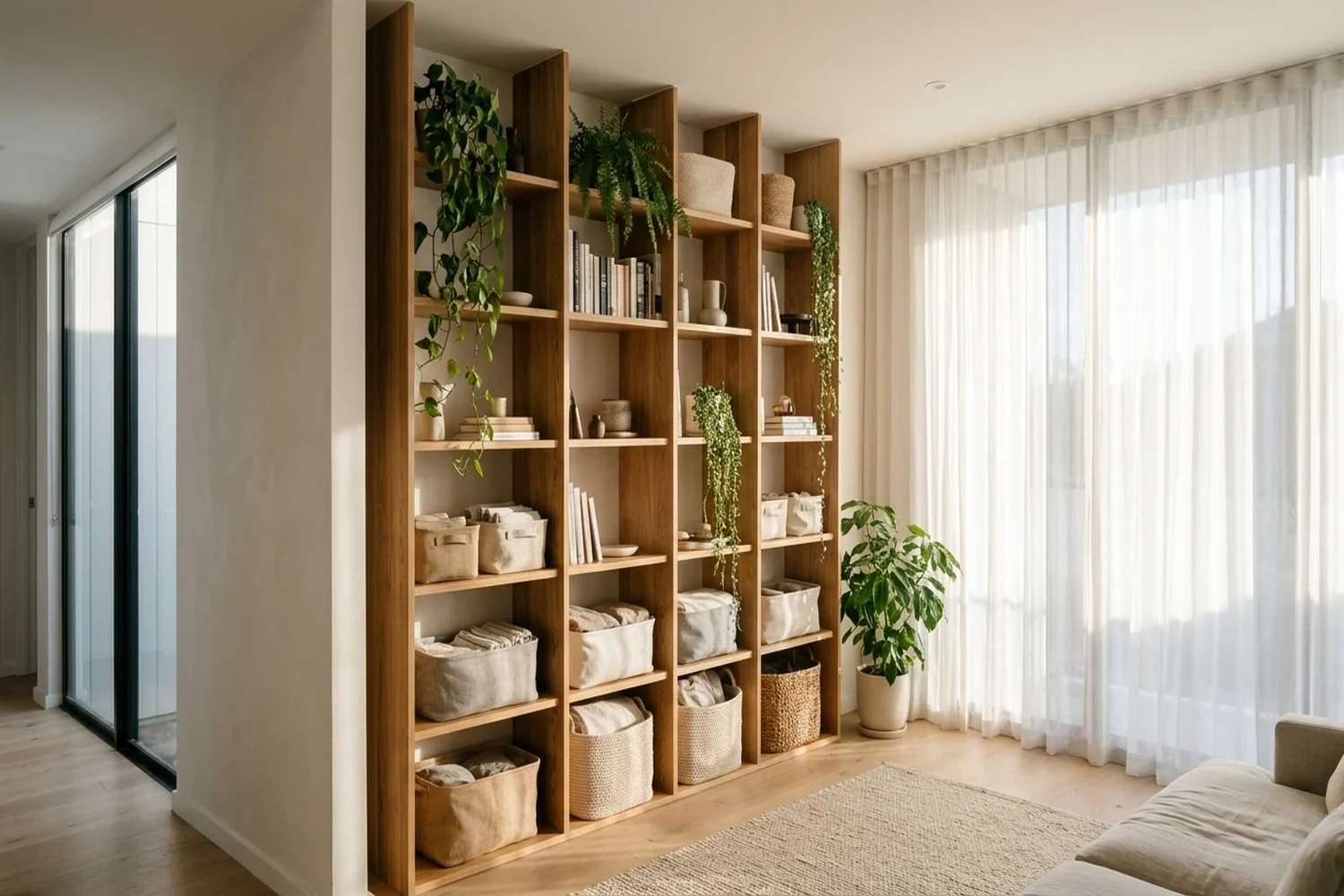

Vertical storage maximizes usable room capacity by shifting organization from overcrowded floor footprints to underutilized wall height and door surfaces. Implementing floor-to-ceiling shelving, over-the-door racks, and tiered modular organizers instantly frees up valuable floor space while keeping everyday essentials accessible.
How to Maximize Vertical Storage in a Small Room for Maximum Floor Space
To maximize vertical storage in a small room, homeowners must utilize wall height above standard eye level rather than expanding floor footprints. Standard interior rooms offer between eight and ten feet of vertical elevation, yet conventional furniture rarely extends past four feet, abandoning up to sixty percent of usable air volume.
- Vertical Zone Allocation: Divide wall height into three distinct functional tiers by placing everyday essentials between waist and eye level (30 to 60 inches), secondary gear slightly above reach (60 to 80 inches), and seasonal archival items on overhead platforms above 80 inches.
- Unused Perimeter Real Estate: Mount floating platforms over interior doorway headers and above window frames, which typically yields 12 to 14 inches of depth across four feet of dead architectural space.
- Wall Stud Anchoring Protocol: Secure vertical brackets directly into wooden wall framing studs spaced 16 inches on center using heavy-duty structural screws, supporting loads exceeding 50 pounds per linear foot.
- Visual Weight Mitigation: Pair slender open steel brackets with pale timber shelves matching wall paint to retain ambient light bounce and prevent cramped boxiness in rooms under 120 square feet.
- Upright Sorting Habit: Swap horizontal stacking bins for forward-facing files and upright baskets, cutting retrieval friction by over 40 percent across daily routines.
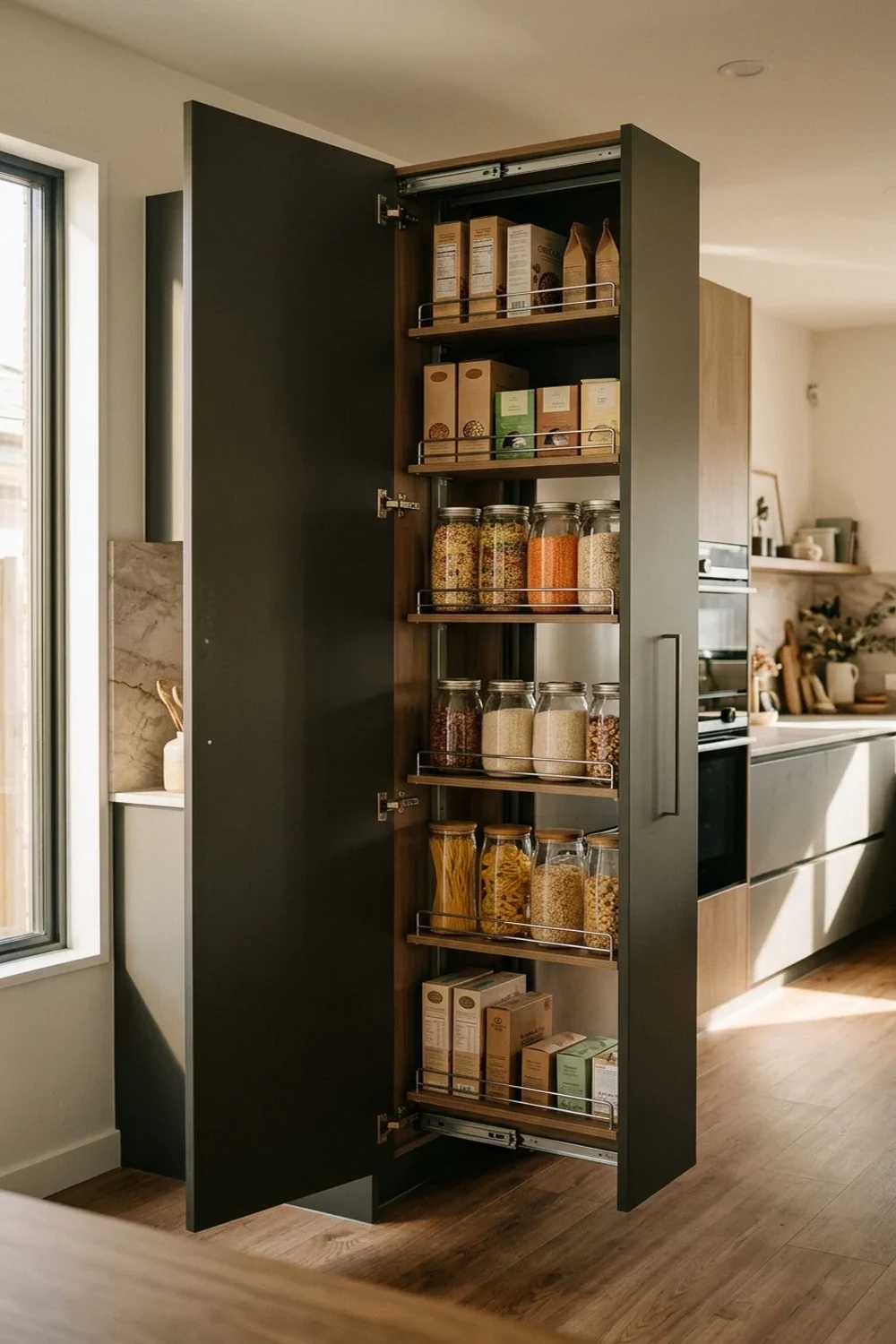
Full-Height Pantry Cabinet Ideas for Deep Kitchen Storage
A full-height pantry cabinet is an engineered floor-to-ceiling kitchen tower that maximizes storage density by replacing deep static shelving with gliding hardware. Conventional 24-inch base cabinets frequently hide expired canned goods and forgotten boxed ingredients in inaccessible back corners.
- Full-Extension Slide Hardware: Install heavy-duty ball-bearing side runners rated for 150 to 200 pounds to expose all 24 inches of internal depth in one effortless motion.
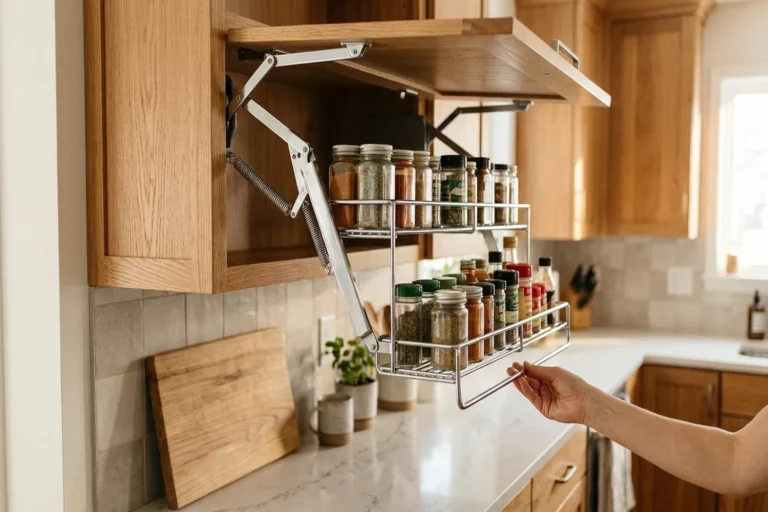
- Narrow Gap Capitalization: Fit a specialized 6-inch to 9-inch wide pull-out spice tower between the refrigerator and perimeter wall to house over 40 standard seasoning containers.
- Clear Perimeter Containment: Equip internal drawer trays with four-inch clear acrylic side baffles that prevent small bottles from toppling during rapid pull-out cycles.
- Integrated Vertical Illumination: Route low-voltage 2700K warm LED strip channels inside the vertical cabinet stiles to illuminate bottom bins without casting harsh cabinet shadows.
- Vertical Clearance Calibration: Space adjustable shelves across two-inch vertical peg intervals to tailor heights for tall olive oil bottles below and shallow tuna cans above.
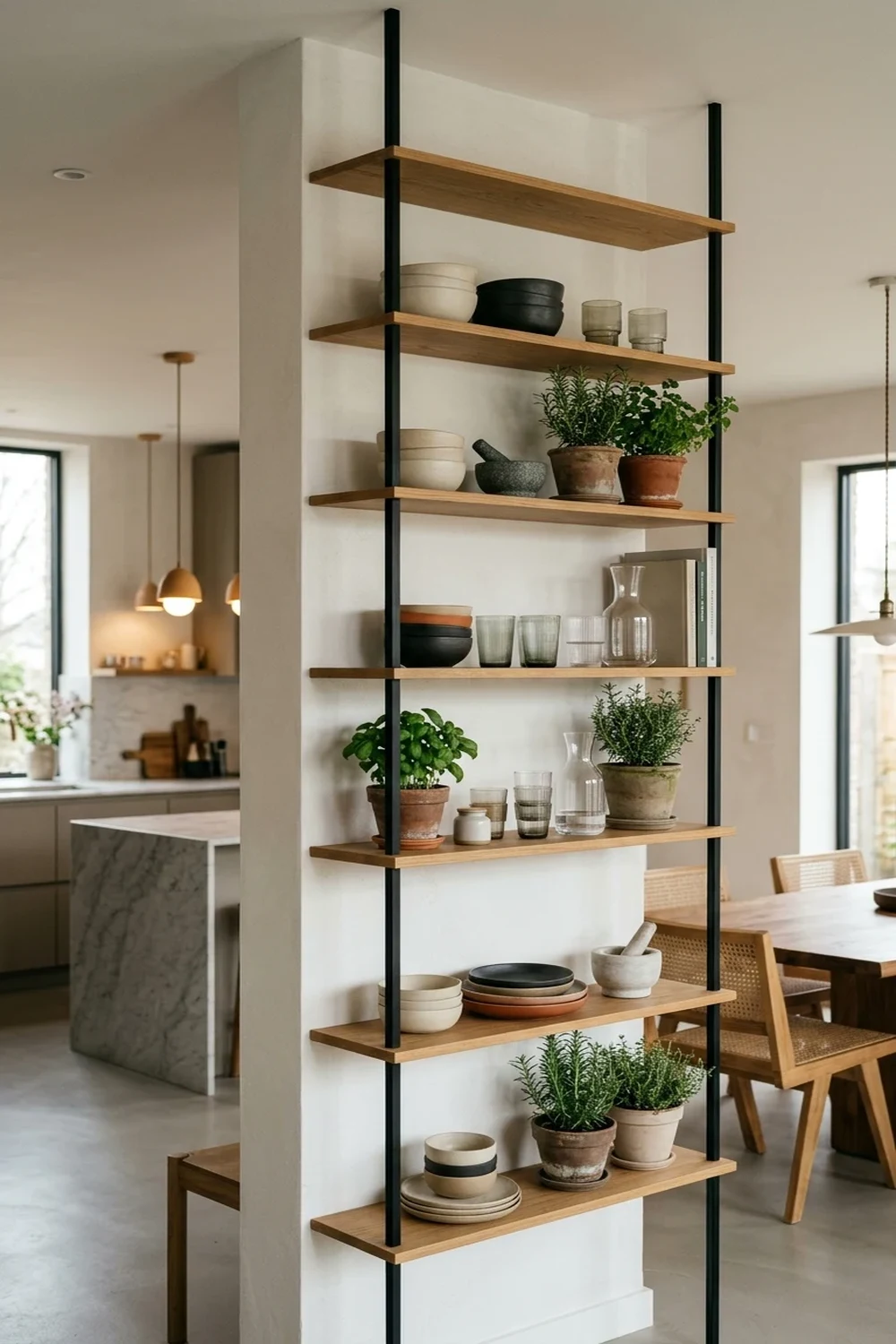
Open Vertical Wall Systems to Organize High-Traffic Living Zones
An open vertical wall system utilizes modular perimeter standards and floating bays to transform broad drywall partitions into multi-functional organizational hubs. Unlike heavy enclosed credenzas, open vertical wall tracks distribute storage weight upward while preserving open transit paths between kitchens and dining nooks.
- Track-and-Bracket Modularity: Anchor vertical steel standards along boundary walls to allow rapid tool-free reconfiguration of wooden shelves, wire baskets, and hooks.
- Zoned Boundary Transition: Mount shallow 10-inch oak planks directly above dining banquette seats to display dinnerware without interfering with shoulder clearance or seated diners.
- Concealed Linear Task Lighting: Recess diffused LED channel extrusions underneath horizontal tier edges to cast direct 300-lumen task downlight onto lower surface counters.
- Uniform Aesthetic Containers: Group assorted domestic goods into matching woven rattan or canvas storage baskets to establish clean visual symmetry across exposed bays.
- Multi-Level Object Segregation: Dedicate lower hanging bays to kitchen linens and flat platters, holding middle tiers for glassware and top ledges for rare serving ceramics.

Tall Open Shelving Units for Flexible Small Space Organization
Tall open shelving units are freestanding or wall-anchored storage towers that utilize vertical volume up to ceiling height while maintaining an airy, transparent visual profile. These upright units deliver flexible multi-tier organization across living rooms, bedrooms, and home offices without closing off precious natural light.
- Mandatory Structural Tethering: Fasten the top rails of open towers to solid structural wall studs with steel anti-tip brackets to eliminate tipping hazards.
- Mixed Storage Ratios: Follow a 60-40 organization balance by keeping sixty percent of shelf volume open for books and art while reserving forty percent for enclosed bins.
- Slender Metal and Wood Framing: Select matte powder-coated steel frameworks under one inch in cross-section to keep physical profiles lightweight against small-room corners.
- Floor-Clearing Leg Clearance: Choose open units elevated on four- to six-inch tapered base legs to preserve visible floor area and streamline robot vacuum navigation.
- Strategic Ambient Illuminations: Position a tall slim floor lamp adjacent to top shelf corners to scatter light down through glass or slatted wood panels.
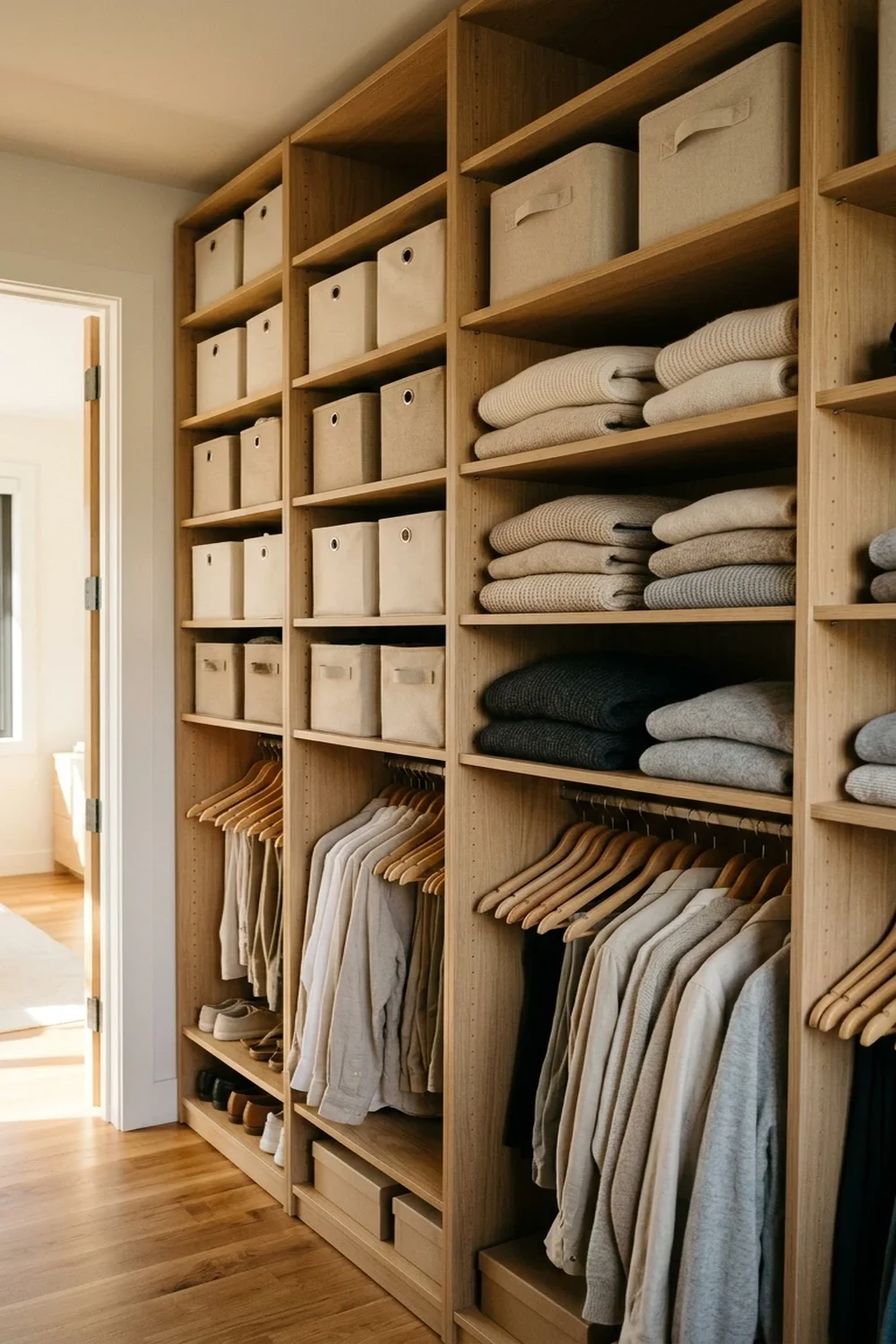
How to Maximize Closet Shelf Stacks for Small Bedroom Storage
Floor-to-ceiling closet shelf stacks maximize vertical storage in tight wardrobes by reclaiming up to 40 percent of unused overhead air space above standard garment hanging rods. Installing full-height adjustable shelving enables homeowners and renters to replace dead ceiling pockets with designated tiers for folded knits, heavy linens, and seasonal storage bins.
- Vertical Height Clearance: Mount adjustable wire or solid laminate track standards from baseboard to ceiling joists to eliminate vacant 24-inch ceiling cavities.
- Weight-Bearing Density: Anchor primary brackets directly into wall studs to safely support stack loads exceeding 50 pounds per linear foot.
- Bin Standardization: Pair deep clear acrylic or breathable canvas bins on upper tiers to conceal off-season gear while preserving visual uniformity.
- Zoned Retrieval Frequency: Position everyday folded apparel between waist and shoulder heights, reserving zones above 7 feet for rare-access items.
- Integrated Illumination: Add rechargeable motion-sensor LED light bars underneath each tier to eradicate deep closet shadow zones.

Upright Dish Storage: Organize Deep Kitchen Cabinets Vertically
Upright dish storage organizes heavy cookware and dinner plates along vertical axes rather than nested horizontal pyramids, boosting interior kitchen cabinet efficiency by 50 percent. Inserting vertical steel dividers or tension partitions inside standard lower base cabinets allows cooks to retrieve specific baking pans, cutting boards, and serving platters without lifting stacked weight.
- Access Velocity: Slide sheet pans, cast-iron skillets, and ceramic platters into individual vertical slots to eliminate dangerous cupboard unstacking.
- Divider Tension Strength: Install heavy-gauge steel vertical dividers spaced 2 to 3 inches apart to keep dense cutting boards perfectly upright.
- Surface Protection: Line cabinet bottoms with ribbed rubber dampening mats to prevent rim chipping and protect wooden cabinetry from moisture.
- Lid Separation: Dedicate a narrow 4-inch vertical bay specifically for pot lids and saute pan covers to end loose lid tumble.
- Under-Cabinet Illumination: Mount slim magnetic LED strip lights along the interior cabinet ceiling to clearly illuminate back-corner dividers.

Slim Laundry Wall Systems: Vertical Storage for Compact Utility Rooms
Slim laundry wall shelving transforms cramped utility passages into high-density storage zones by anchoring modular track shelving directly above washing machines and open wall studs. Running steel rail channels up to ceiling height frees up 100 percent of walking floor space while keeping high-frequency detergents, stain removers, and mesh wash bags accessible at arm level.
- Track Wall Anchoring: Secure horizontal metal suspension rails into structural wall studs to distribute the heavy load of gallon-sized liquid detergents.
- Modular Tier Spacing: Adjust open wire shelving brackets to clear appliance lids while accommodating tall spray bottles and iron caddies.
- Ventilated Moisture Control: Deploy coated wire or perforated metal baskets that allow continuous airflow around damp utility towels and laundry pods.
- Fold-Down Sorting Surface: Mount a wall-hinged drop-leaf wooden board directly beneath lower shelves to provide a pop-up clothes folding surface.
- Overhead Task Illumination: Install bright 4000K daylight recessed LED ceiling fixtures to ensure clear visibility for garment stain treatment.
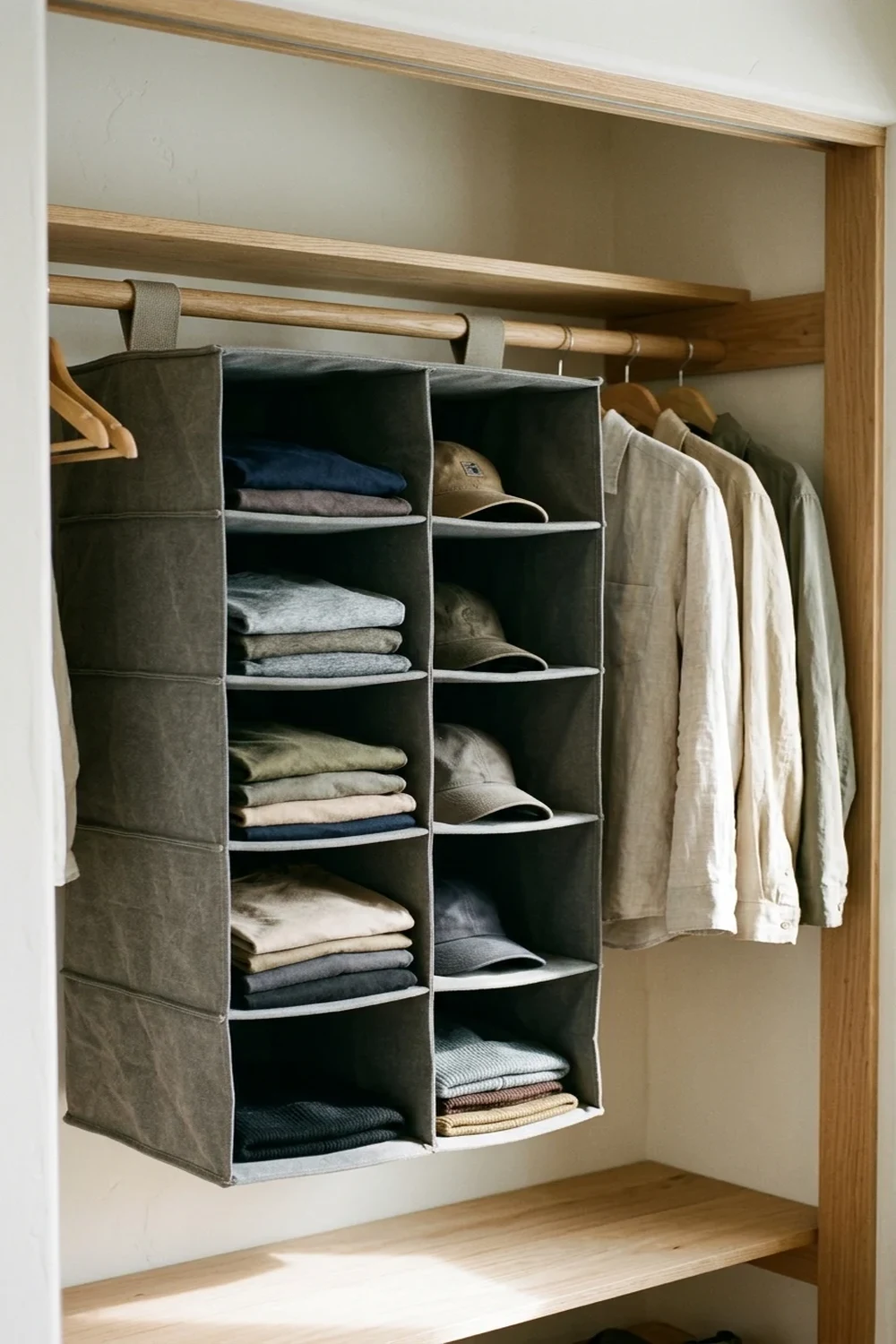
Hanging Closet Cubes: Instant Vertical Rod Organization for Renters
Hanging closet cubes convert standard horizontal garment rods into tiered vertical organizers in seconds without requiring wall anchors, power tools, or permanent structural modifications. Fabric cube towers drop downward to create 4 to 6 compartments that organize bulky sweaters, hats, and everyday accessories within a compact 12-inch footprint.
- Zero-Tool Installation: Fasten reinforced hook-and-loop wrap collars over any standard 1-inch wardrobe rod to gain instant multi-shelf capacity.
- Sag-Resistant Shelving: Select organizer units engineered with rigid MDF internal shelf inserts to prevent canvas shelves from bowing under denim weight.
- Drawer Insert Adaptability: Slide removable fabric bins into bottom compartments to conceal undergarments, socks, and loose winter accessories.
- Side Pocket Utility: Utilize external mesh side pouches on the organizer exterior for small grooming tools, lint rollers, and belts.
- Vertical Balance Alignment: Center hanging cube towers between hanging garment sets to maintain balanced weight distribution across closet dowels.
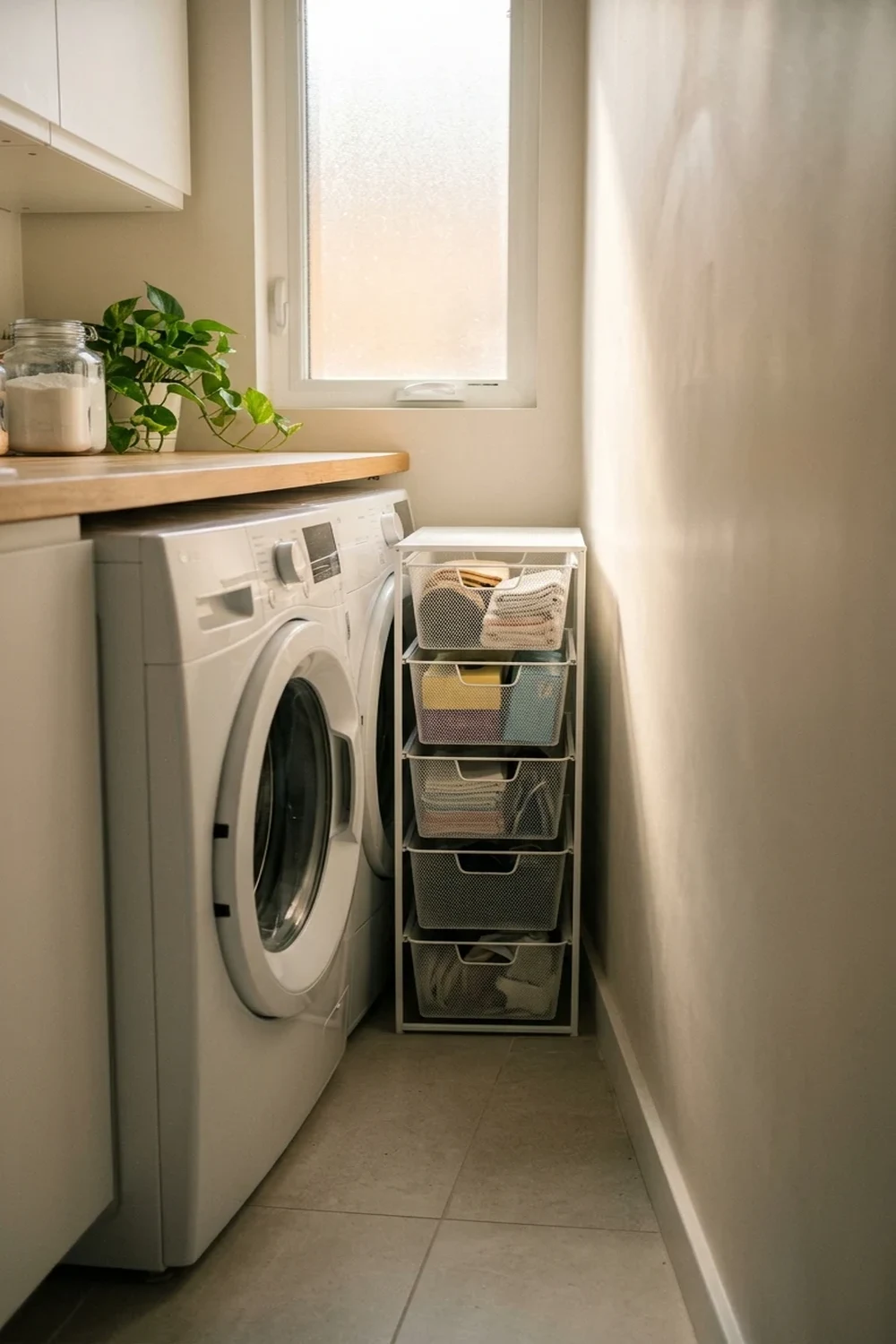
Stackable Laundry Drawers: How to Maximize Vertical Space in Compact Utility Rooms
Stackable laundry drawers provide modular vertical storage that converts unused narrow gaps beside washing machines into high-capacity utility hubs. Stacking storage units upward allows homeowners to reclaim up to 4 square feet of floor space while keeping essential cleaning supplies organized at waist and eye level.
- Ventilated Mesh Construction: Breathable wire or coated mesh baskets promote consistent airflow around damp utility areas, preventing trapped moisture and mold buildup on stored linens and cleaning cloths.
- Narrow Footprint Integration: Slim tower profiles measuring 8 to 12 inches wide slide effortlessly into dead space between side-by-side appliances or tight laundry alcoves.
- Rolling Base Mobility: Locking caster wheels allow smooth pull-out access for floor cleaning, appliance maintenance, and quick detergent refills without heavy lifting.
- Weight-Distributed Stacking: Heavy liquid detergents and bulk jugs remain secure on reinforced bottom levels, while lighter dryer sheets and stain sticks occupy upper tiers for ergonomic access.
- Task-Illuminated Visibility: Under-shelf magnetic LED light bars illuminate tiered drawer labels, ensuring fast visual sorting during evening wash cycles.
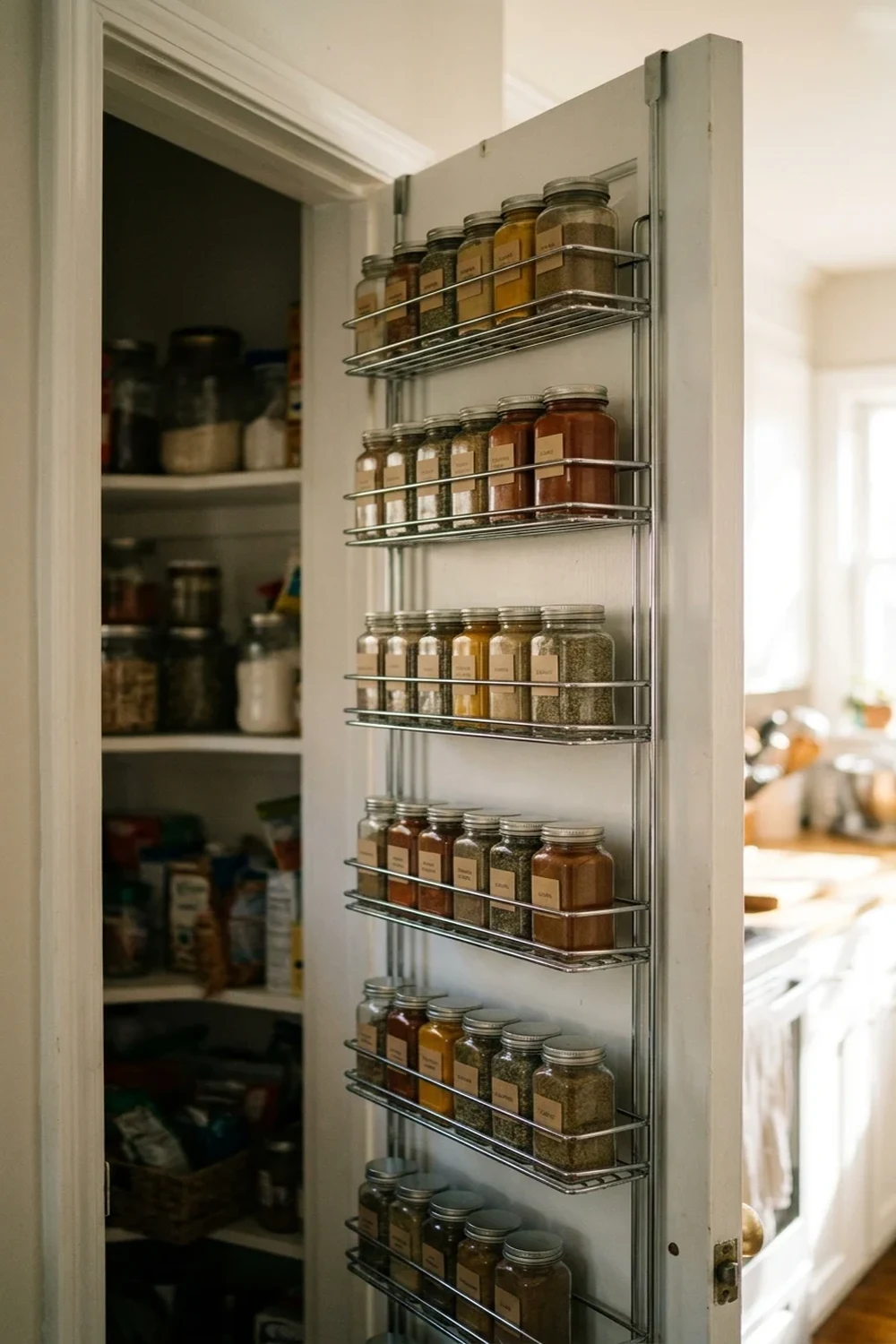
Door Spice Racks: Why Over-the-Door Organizers Double Pantry Capacity
Door spice racks are wall- or hook-mounted vertical organizers that utilize the unexploited surface area of interior pantry doors to clear cluttered shelves. Mounting multi-tier racks on standard 80-inch doors reclaims up to 15 linear feet of storage while ensuring 40 to 60 spice containers remain instantly visible at eye level.
- Zero-Footprint Vertical Storage: Sturdy metal over-the-door hooks utilize interior door surfaces without requiring any drywall cutting or deep shelf sacrifices.
- Tiered Height Spacing: Adjustable basket rails accommodate tall oil bottles on bottom tiers and compact 4-ounce glass jars on upper levels to eliminate dead air.
- Label-Forward Organization: Front-facing wire retainers secure containers during door swings while keeping printed labels fully legible for effortless recipe prep.
- Heavy-Gauge Stability: Anchored lower brackets and tension mounting screws eliminate swinging, rattling, and wall abrasions during frequent daily openings.
- Integrated Task Lighting: Battery-operated overhead LED strip lighting illuminates every spice tier, preventing shadowed containers in dark walk-in pantries.
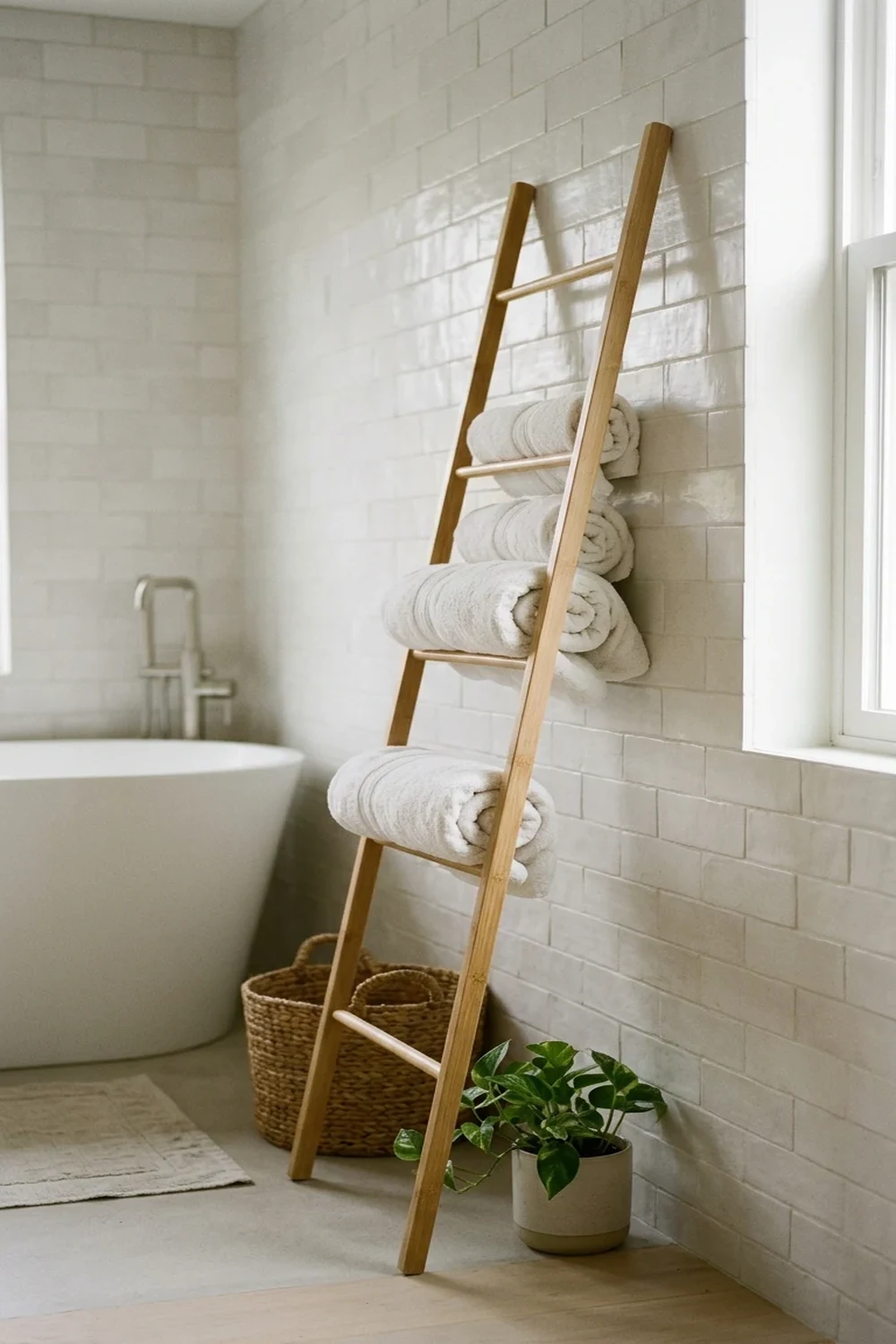
Vertical Towel Ladder: How to Store Rolled Linens in Small Bathrooms
A vertical towel ladder is a lean, wall-leaning or wall-mounted framework that organizes bath linens upright using minimal floor depth. Positioning a vertical towel ladder in dead wall zones behind bathroom doors or beside vanities keeps 4 to 8 full-sized bath sheets aerated, dry, and easily reachable.
- Minimal Floor Intrusion: Slender 16-inch-wide rungs lean against standard vertical walls at an 80-degree angle, requiring less than 8 inches of base floor depth.
- Continuous Fabric Aeration: Open rungs provide generous 10-inch vertical gaps between rungs, accelerating towel drying times by 35% compared to closed linen closets.
- Rolled Hotel-Style Organization: Stacking rolled bath towels horizontally on individual tiers creates a tidy boutique hotel appearance that simplifies inventory monitoring.
- Slip-Resistant Wall Anchoring: Protective rubber base pads and concealed top wall-anchor straps ensure structural stability on slick porcelain bathroom tiles.
- Moisture-Resistant Materials: Powder-coated steel or sealed bamboo frames withstand high-humidity shower zones without warping, rusting, or staining delicate textiles.
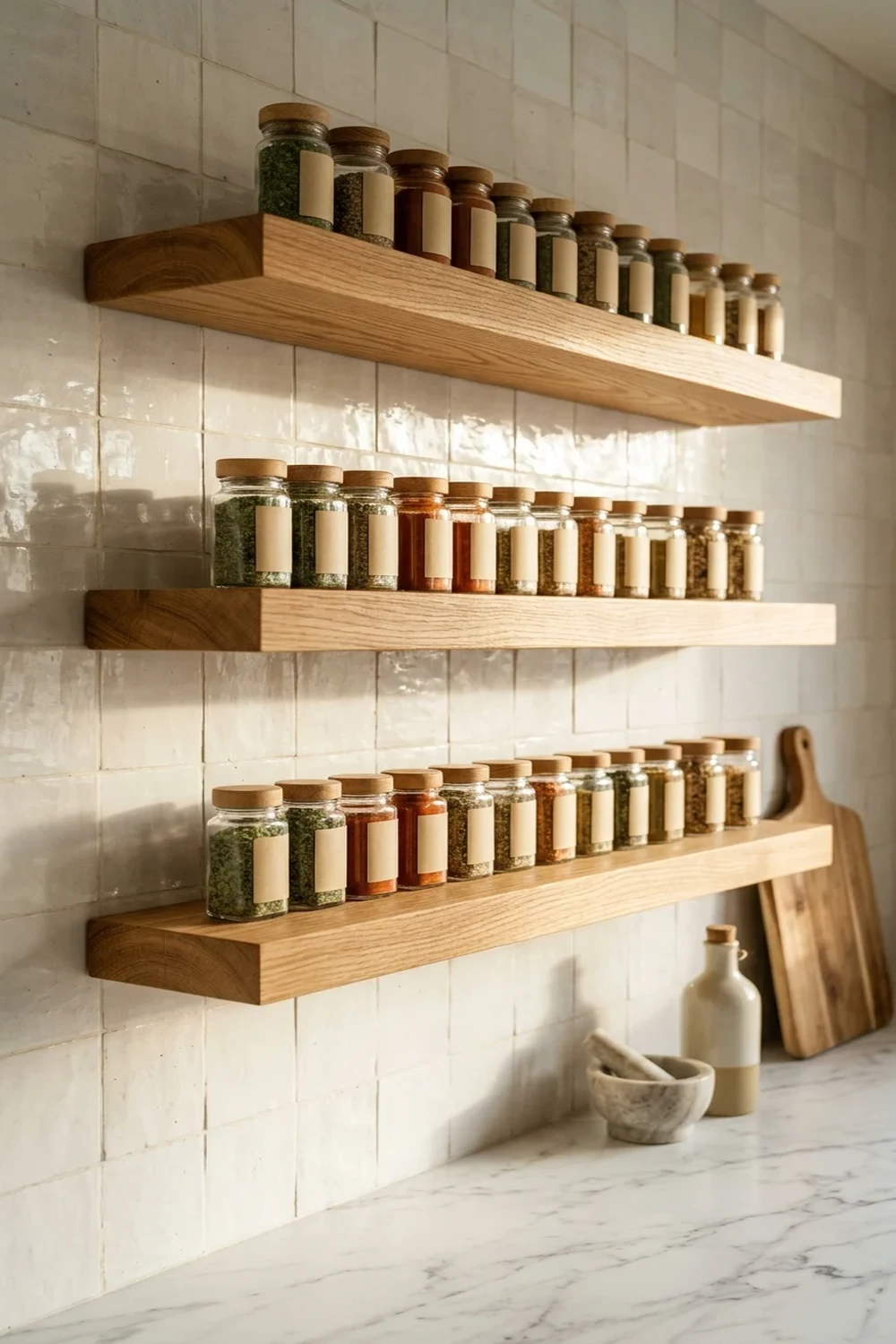
Floating Spice Shelves: How Slim Wall Racks Free Up Kitchen Countertops
Floating spice shelves are shallow wall-mounted ledges that elevate seasonings directly above prep surfaces to liberate prime countertop real estate. Installing shallow 3-inch-deep floating ledges across kitchen backsplashes or unused side-cabinet panels puts essential cooking seasonings within immediate arm reach.
- Instant Counter Clearance: Moving everyday seasoning jars onto vertical wall ledges frees up to 30% of usable countertop space around cooktops and food prep zones.
- Shallow Backsplash Profiles: Ultra-slim 2.5- to 3.5-inch shelf depths prevent head bumps and maintain unrestricted movement near stove burners.
- Clear Acrylic or Timber Rails: Low-profile front guardrails prevent glass bottles from sliding off while maintaining 100% label visibility from any cooking angle.
- Modular Vertical Tiering: Mounting shelves in stacked vertical intervals of 6 to 8 inches accommodates tall herb grinders, vinegars, and standard spice tins alike.
- Under-Shelf Accent Lighting: Slim warm-white LED tape lights mounted beneath lower ledges provide glare-free task illumination across countertop work surfaces.
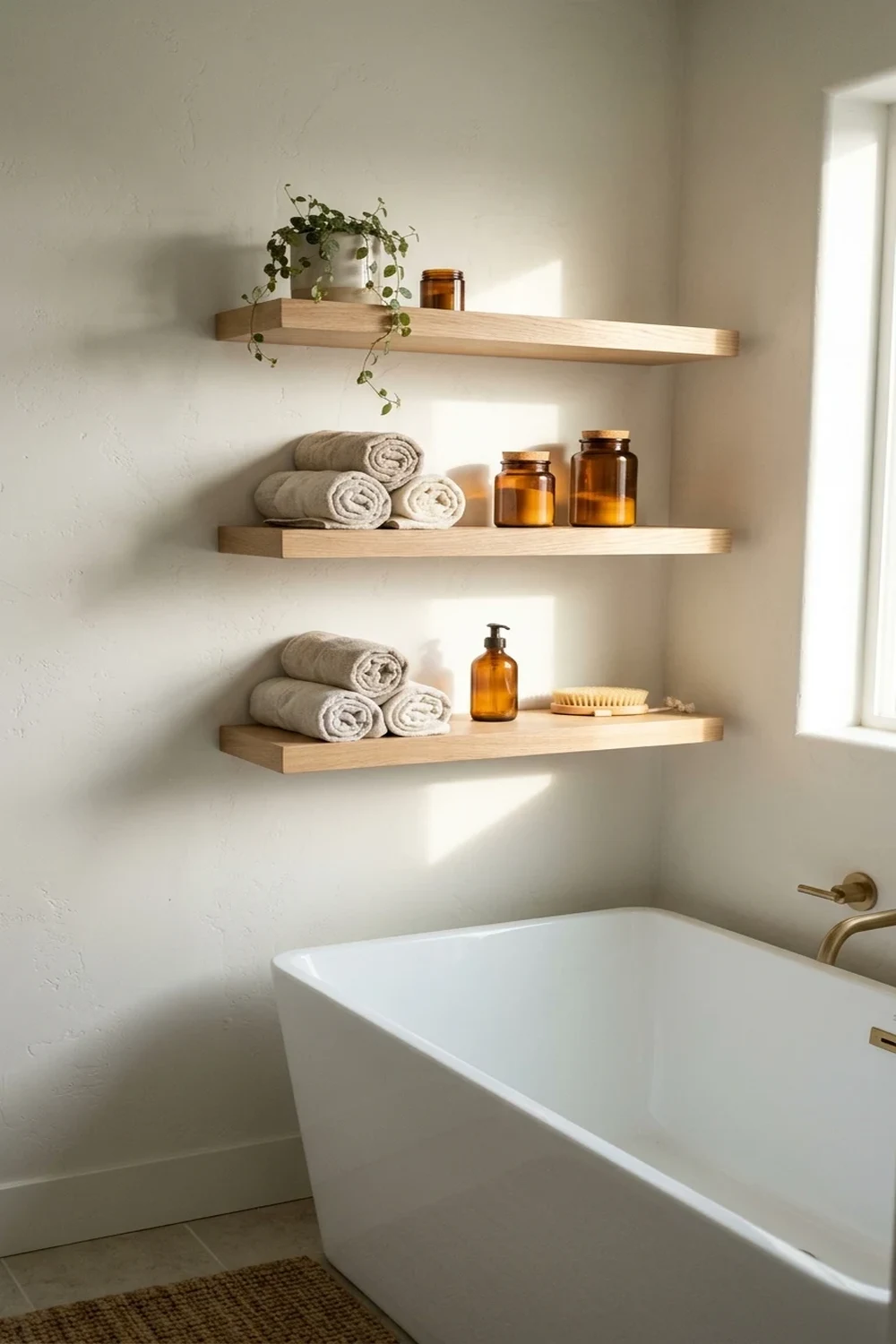
13. Bathroom Wall Shelves: How to Maximize Vertical Space Above Vanities and Tubs
Bathroom wall shelves convert underutilized vertical wall space above tubs, vanities, and toilets into functional, high-capacity storage without encroaching on limited floor footprints. In tight powder rooms and guest baths, installing open horizontal shelving eliminates bulky floor cabinets while keeping daily toiletries within arm’s reach.
- Moisture-Resistant Shelving: Solid teak, sealed cedar, or powder-coated steel brackets resist bathroom humidity and prevent warping over time.
- Vertical Tier Stacking: Spacing 2 to 3 tiers approximately 10 to 12 inches apart creates sufficient vertical clearance for tall shampoo bottles, rolled bath towels, and woven organization baskets.
- Integrated Bottom Hooks: Under-shelf rail attachments and brass S-hooks introduce secondary hanging utility for loofahs, washcloths, and robes.
- Wall Stud Anchoring: Heavy-duty toggle bolts or direct mounting into wood studs secure floating shelves to support loads up to 40 pounds safely.
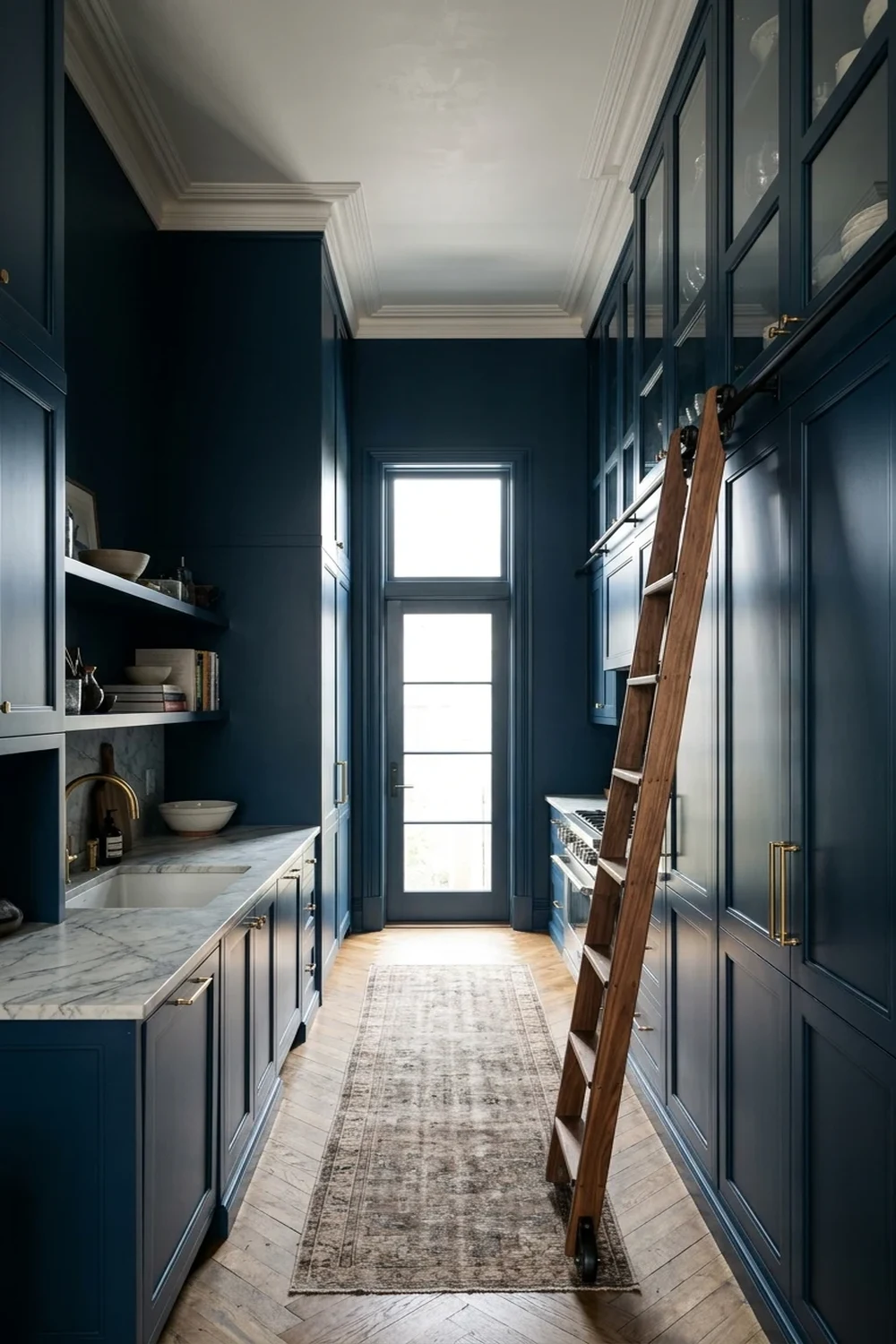
14. Ladder Cabinet Access: Utilizing Ceiling-Height Kitchen Storage with Rolling Rails
Ladder cabinet access systems enable homeowners to safely utilize ceiling-height cabinetry up to 10 or 12 feet, reclaiming upper storage volume that typically sits abandoned in compact floor plans. By pairing custom high-rise cabinetry with a dedicated rolling or hooked library ladder, seasonal cookware and specialty pantry reserves become instantly reachable.
- Rolling Track Hardware: Heavy-duty steel guide rails mounted along the cabinet soffit allow smooth lateral ladder glide across extended wall runs.
- Non-Slip Ladder Tread: Wide hardwood steps with recessed rubber grip treads ensure stable foot placement during vertical ascents with pantry goods.
- Vertical Parking Position: Brake mechanisms and vertical stowing brackets park the ladder upright against cabinetry when not in use, preserving kitchen aisle clearance.
- High-Shelf Storage Mapping: The top 24 inches of cabinetry house rarely used holiday dishware, bulk dry goods, and specialty appliances in labeled storage bins.

15. Vertical Desk Shelving: Compact Home Office Wall Integration for Small Workstations
Vertical desk shelving builds overhead organizational capacity directly above a workstation surface, clearing desktop real estate for laptops, monitors, and active writing tasks. Utilizing modular wall-mounted uprights or integrated ladder-desk frameworks ensures office files, reference books, and tech peripherals stay organized in compact home office nooks.
- Monitor Clearance Zone: Setting the first overhead shelf at least 22 inches above the desktop accommodates large desktop monitors and dynamic monitor arms.
- Cable Management Channels: Integrated rear wire raceways and grommet drops conceal monitor cords, charging bricks, and power strips inside the upright supports.
- Adjustable Heavy-Load Standards: Twin-track steel wall standards permit custom shelf re-spacing every 1.25 inches to accommodate varying book heights and storage bins.
- Top-Tier Document Archiving: Upper shelves hold matching archival file boxes and magazine holders, keeping critical paperwork dust-free and out of primary sightlines.

16. Modular Wall System: Configurable Rail and Pegboard Storage for Dynamic Small Spaces
A modular wall system is an adjustable vertical storage architecture composed of slotted steel standards, hang tracks, or perforated panels that reconfigures on demand to match changing household storage requirements. Installing a floor-to-ceiling modular layout transforms passive drywall into an adaptable storage grid suitable for walk-in closets, utility rooms, or living areas.
- Horizontal Top Track Anchor: A single level horizontal top rail anchored across multiple wall studs carries the entire system’s vertical load without requiring redundant wall punctures.
- Interchangeable Component Grid: Wire baskets, solid wood shelves, hanging garment rods, and magnetic panels swap positions in seconds using tool-free locking brackets.
- Perforated Pegboard Utility: Heavy-gauge steel pegboard inserts provide dedicated hook stations for tools, cords, crafting scissors, and headphones.
- Vertical Zone Customization: Low zones support heavy sliding mesh drawers, mid-level zones offer immediate eye-level shelf display, and high zones capture bulk long-term storage.

How to Organize Pantry Shelf Zones for Maximum Vertical Storage
Pantry shelf zones maximize vertical storage by dividing tall cabinet height into distinct functional tiers based on usage frequency and item weight. Organizing kitchen supplies into dedicated horizontal bands prevents vertical dead space and eliminates food waste by keeping every dry good clearly visible.
- Eye-Level Prime Zone: Position everyday essentials like breakfast grains, coffee canisters, and snacks between 38 and 60 inches from the floor for zero-friction retrieval.
- Lower Heavy Tier: Reserve bottom shelves for bulk liquid jugs, small kitchen appliances, and cast-iron cookware to anchor the cabinet center of gravity.
- Upper Lightweight Storage: Store paper goods, seasonal holiday platters, and overflow paper towels on top tiers exceeding 6 feet in height.
- Modular Wire Dividers: Insert stackable wire shelf risers into 14-inch shelf cavities to instantly double vertical plate and can capacity.
- Clear Decanting Canisters: Transfer loose dried beans, rice, and pasta into uniform airtight vertical canisters to standardize vertical shelf heights.
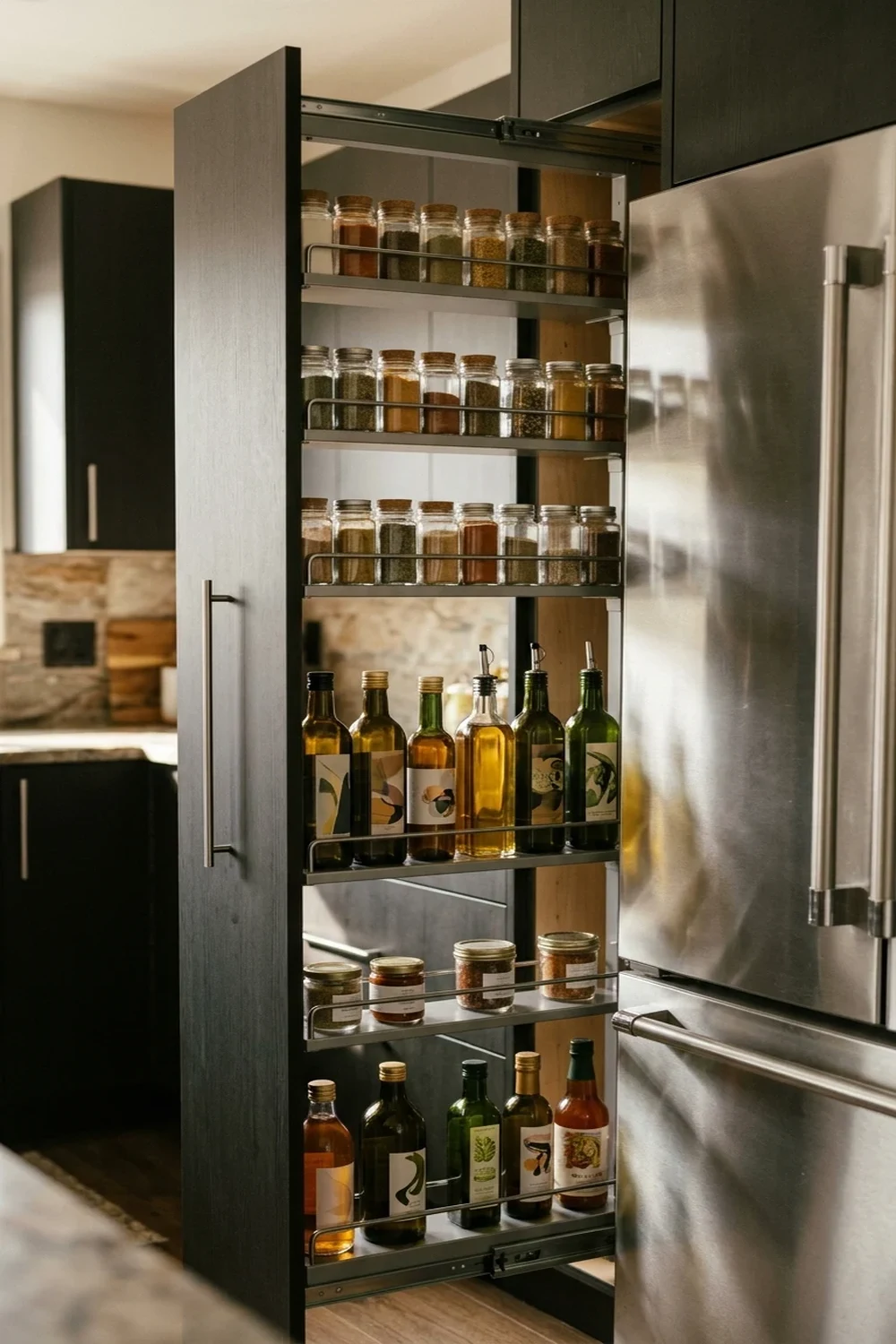
Why Install a Pull-Out Pantry Tower in Narrow Kitchen Gaps?
A pull-out pantry tower turns neglected 6-inch to 12-inch gaps between appliances into high-density storage that accesses tall vertical planes from either side. Installing full-extension vertical hardware ensures deep pantry contents remain visible and reachable without digging behind front-row containers.
- Zero Wasted Clearance: Transform narrow 8-inch awkward spaces beside refrigerators into full-height sliding pantries holding up to 150 pounds of canned inventory.
- Dual-Sided Visibility: Access spices, oils, and dry goods from both left and right flanks using wire-basket railings that secure tall bottles during movement.
- Heavy-Duty Ball-Bearing Slides: Mount full-extension soft-close bottom slides paired with top stabilizing tracks to eliminate sway when fully extended.
- Adjustable Basket Heights: Reconfigure vertical wire basket heights every 3 inches to adapt seamlessly between tall balsamic vinegar bottles and compact spice jars.
- Seamless Architectural Integration: Fasten matching cabinet face panels over the exterior tower frame to maintain unbroken kitchen millwork lines.

How to Configure Vertical Cleaning Drawers Under Deep Sinks
Vertical cleaning drawers eliminate under-sink clutter by utilizing tall cabinet height around central plumbing pipes with tiered, pull-out storage tracks. Stacking dual-level acrylic bins vertically keeps corrosive cleaning chemicals, sponges, and spray bottles systematically segregated and instantly accessible.
- Plumbing-Safe Bypass: Arrange narrow dual-tier drawer towers to flank central P-traps, converting wasted perimeter vertical clearance into organized utility space.
- Clear Acrylic Visibility: Utilize shatterproof transparent pull-out bins so specialty cleaners and microfiber refills remain identifiable from standing eye level.
- Segregated Spray Bottle Caddies: Fasten high-walled vertical slide-out racks designed specifically to keep 32-ounce spray bottles upright and spill-free.
- Removable Drip Trays: Select slide-out drawer bases with washable silicone tray liners that catch stray liquid drips and preserve interior cabinet wood.
- Grab-and-Go Caddy Functionality: Incorporate top drawers equipped with integrated wire handles that detach swiftly for carrying cleaning solutions between household rooms.

Best Ways to Use Vertical Cabinet Dividers for Cookware and Bakeware
Vertical cabinet dividers transform low kitchen base cabinets into upright filing systems that store sheet pans, cutting boards, and heavy skillets on edge. Storing flat cookware vertically prevents noisy, scratch-inducing piles and cuts retrieval time down to a single one-handed motion.
- Filing System Efficiency: Slide muffin tins, cooling racks, and heavy baking stones upright between rigid steel uprights to avoid unstable nested stacks.
- Adjustable Wire Channels: Mount customizable tension bars or slotted wooden baseplates that adjust spacing from 1.5 inches to 4 inches for bulky Dutch oven lids.
- Surface-Safe Coating: Choose vinyl-coated steel or sanded hardwood divider fins to shield nonstick coatings and wooden boards from metal friction scratches.
- Ergonomic Retrieval: Position high-use wooden cutting boards near the outermost cabinet edge for effortless single-second retrieval during meal preparation.
- Deep Drawer Utilization: Insert vertical slotted dividers directly into deep 14-inch pull-out base drawers to create an overhead-accessible baking tray filing station.

Cabinet Shelf Risers for Doubling Vertical Kitchen Storage
Cabinet shelf risers expand usable vertical cabinet space by up to 100% by inserting freestanding elevated platforms between fixed shelving tiers. Placing these tiered wire or bamboo organizers directly into 12-inch or 15-inch standard kitchen cupboards prevents messy dish stacking and eliminates dead vertical airspace.
- Instant Space Expansion: Cabinet shelf risers immediately double plate and mug capacity by creating a secondary tier across unused upper cabinet clearance.
- Damage-Free Separation: Independent platforms eliminate precarious stacking of dissimilar ceramic bowls and delicate glassware, reducing chip risks.
- Clear Access Ergonomics: Everyday dinnerware remains visible and individually reachable without unstacking nested stoneware sets.
- Adaptable Footprint Sizing: Expandable metal or bamboo units adjust between 14 and 28 inches in width to fit varied cupboard dimensions.
- Zero-Tool Installation: Freestanding risers sit directly on existing cabinetry shelves without screws, adhesives, or permanent modifications.

Double Closet Rods for Maximizing Vertical Hanging Capacity
Double closet rods increase garment hanging capacity by 100% by positioning two parallel bars vertically within a standard 84-inch closet enclosure. Installing an upper rail at 80 inches and a lower rail at 40 inches captures empty floor clearance to systematically organize shirts, jackets, and folded trousers.
- Capacity Multiplication: Dual horizontal bars instantly accommodate double the quantity of short garments within the identical horizontal closet footprint.
- Strategic Vertical Zoning: Top rails neatly store button-up shirts and blouses, while lower rails keep skirts and slacks visible.
- Adjustable Hanging Systems: Tension-suspended rods hook directly onto existing upper closet poles without requiring stud drilling or wall anchors.
- Ergonomic Reach Heights: Standard 40-inch separation allows comfortable arm reach across both hanging tiers for adults and children alike.
- Garment Preservation: Generous vertical spacing prevents hemlines from dragging across lower hangers, minimizing garment wrinkling and fabric wear.

Vanity Shelf Stacking for Tiered Bathroom Countertop Storage
Vanity shelf stacking organizes cosmetic clutter by elevating skincare jars, perfumes, and daily essentials across compact vertical tiers. Placing clear acrylic or wooden tier organizers on limited bathroom counters preserves up to 65% of horizontal surface space while keeping morning hygiene routines streamlined.
- Counter Surface Preservation: Stacked multi-tier risers reclaim critical sink edge space by consolidating daily beauty products onto vertical footprints.
- Direct Product Visibility: Clear stepped acrylic trays display serum bottles and cosmetic labels clearly to expedite morning preparations.
- Moisture-Resistant Durability: Tiered waterproof acrylic and sealed bamboo risers withstand humid bathroom conditions without warping or corroding.
- Compartmentalized Grouping: Dedicated shelf levels separate daily cleansers from evening skincare regimens for structured personal care storage.
- Mobile Tray Convenience: Modular stacking caddies allow swift relocation during countertop sanitization routines.
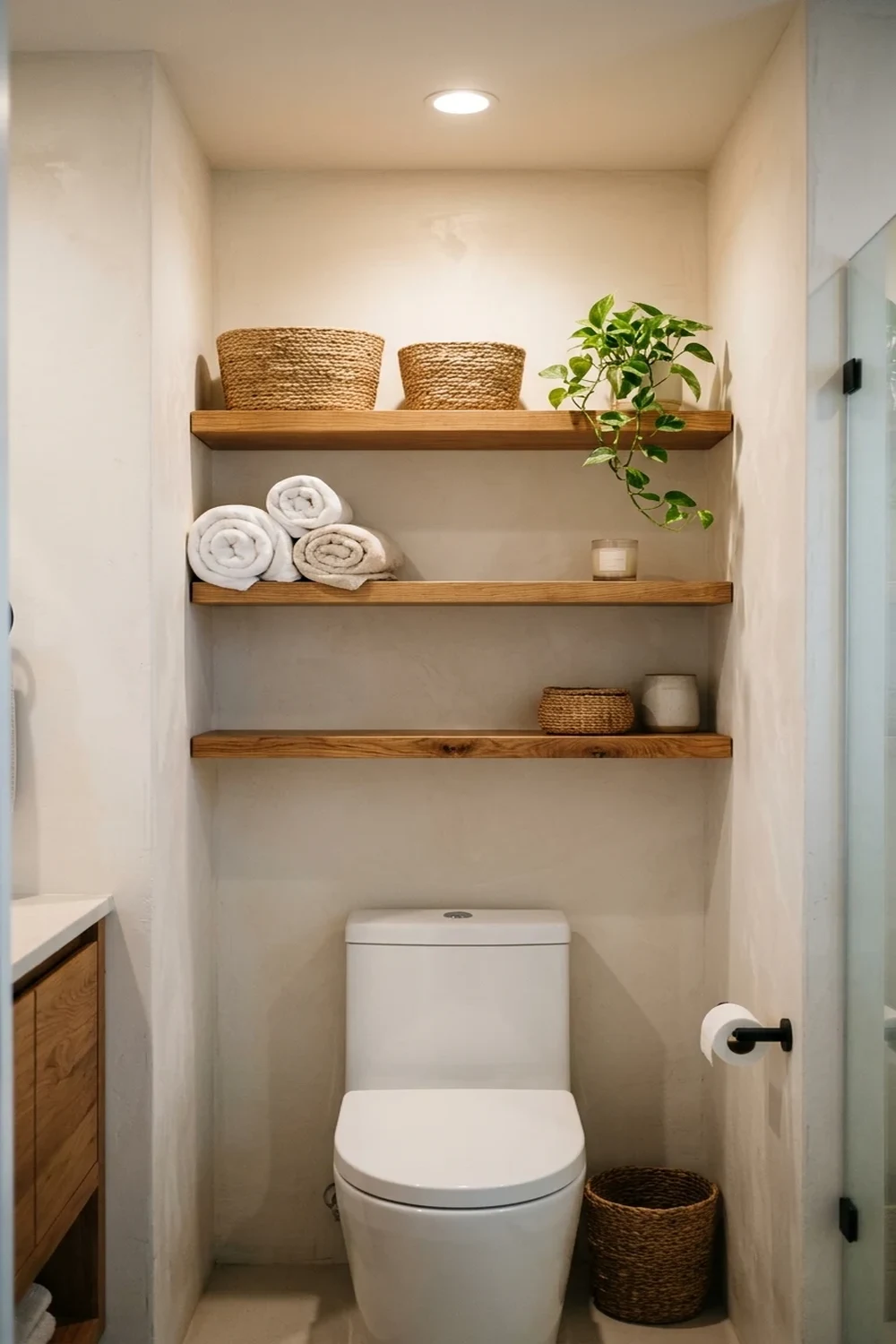
Above-Toilet Shelves for Reclaiming Wasted Bathroom Wall Space
Above-toilet shelves convert 4 to 6 square feet of dead vertical wall space into high-utility storage above standard plumbing fixtures. Installing either over-the-toilet étagères or anchored floating wood shelves holds spare bath towels, toilet tissue baskets, and decorative toiletries without impeding commode mechanics.
- Unused Zone Utilization: Floating tiers or floor-supported ladder frames transform bare drywall above toilet tanks into essential storage reserves.
- Clean Aesthetic Concealment: Woven seagrass baskets positioned across upper shelves conceal extra toilet paper rolls and sanitary supplies.
- Safe Clearance Anchoring: Shelving mounted 8 to 12 inches above tank lids guarantees unobstructed access for internal plumbing maintenance.
- Textured Linen Stacking: Open slatted shelves provide proper airflow for rolled guest towels, eliminating damp odors in small powder rooms.
- Sturdy Stud Support: Wall-anchored bracket shelving safely supports heavy glass storage canisters and ceramic bathroom accessories.
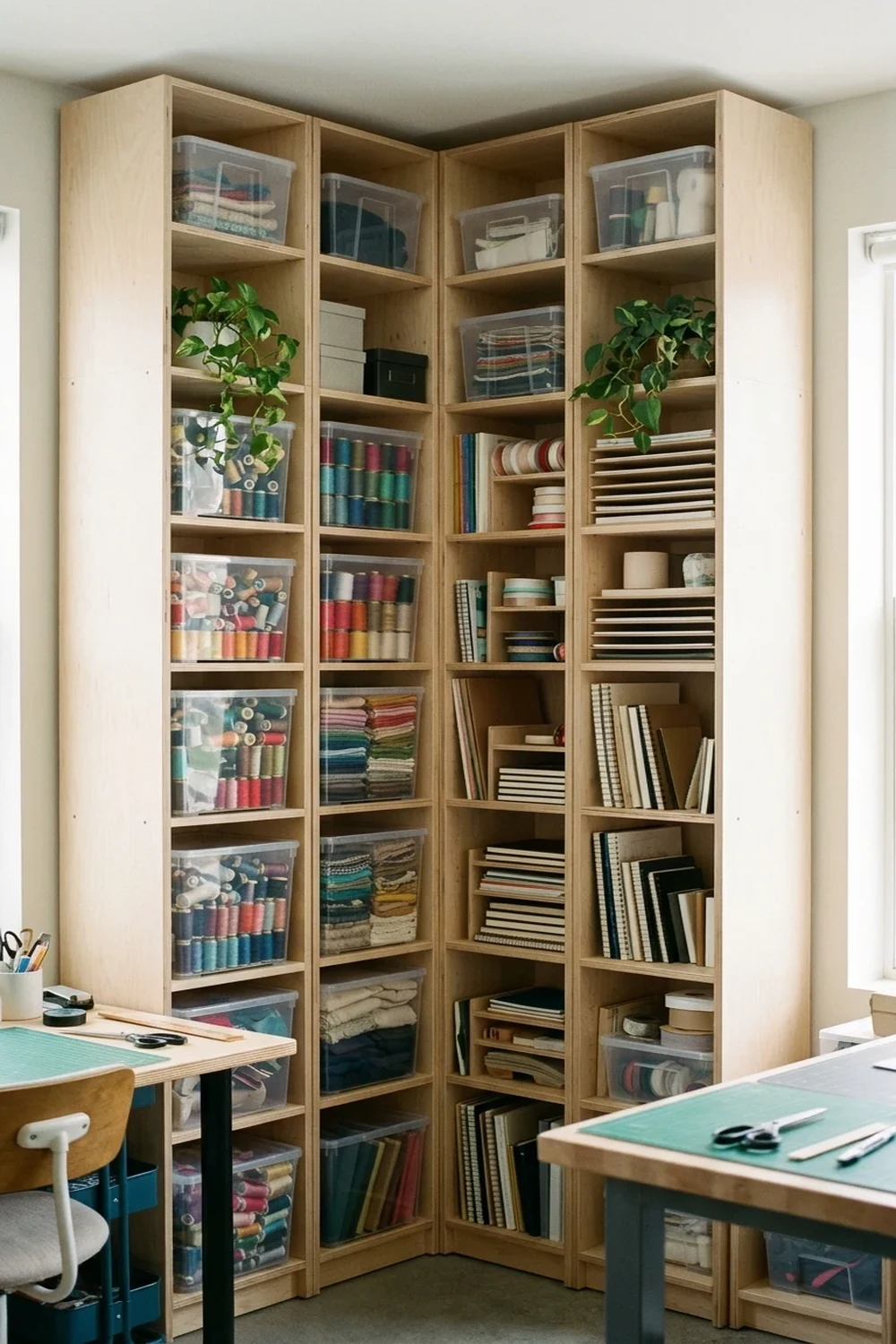
Craft Supply Columns for Compact Creative Studios
Craft supply columns maximize vertical storage by stacking compartmentalized modular cubes and pull-out trays from floor to ceiling, recovering up to 80% of unused corner space in creative workstations. By elevating art materials onto slim vertical pillars, makers keep delicate papers, paints, and tools organized without sacrificing valuable table workspace.
- Modular Cube Towers: Assemble interlocking wood or heavy-duty acrylic cubes with 12×12 inch footprints to hold standard cardstock and vinyl rolls upright.
- Color-Coded Clear Bins: Insert transparent slide-out bins labeled by medium to ensure instant visual identification and eliminate digging through supplies.
- Adjustable Shelf Dividers: Add slotted upright inserts inside individual cubes to separate flat sketchpads and fabric remnants without creasing.
- Dedicated Weight Distribution: Position heavy pottery clay and gallon jugs on the bottom tier while reserving upper tiers for lightweight yarn and brushes.
- Side-Mounted Tool Hooks: Attach magnetic rails or adhesive utility hooks along exterior column flanks for hanging rotary cutters and crafting shears.
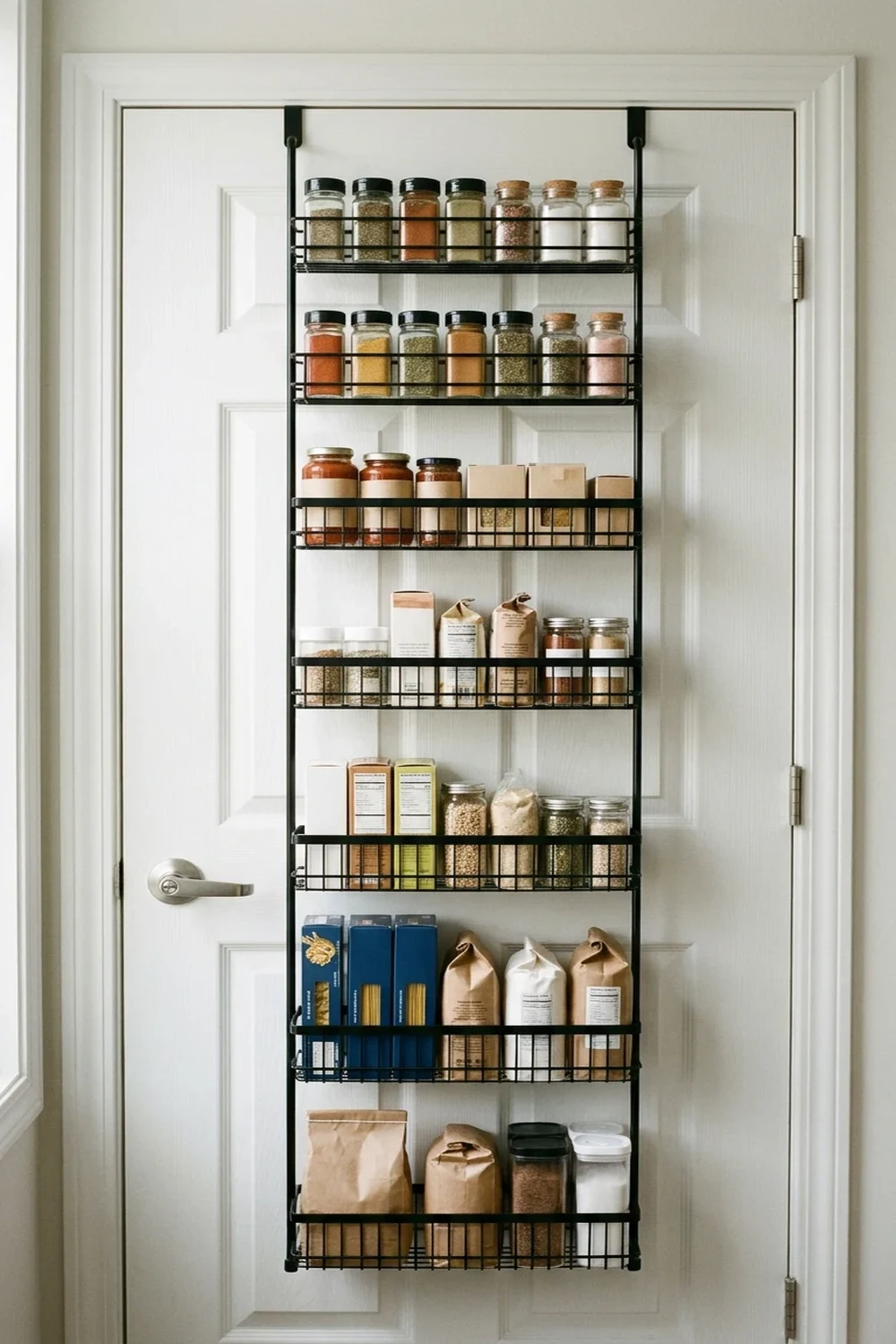
Door Shelf Stack Systems for Over-the-Door Organization
Door shelf stack systems transform standard interior doors into high-capacity vertical pantries using multi-tiered hanging basket tracks that require zero floor footprint. This over-the-door framework captures six to eight vertical tiers of storage along previously wasted door frames, making it ideal for compact closets and small utility rooms.
- Heavy-Duty Top Brackets: Anchor tension-fitted steel brackets over door edges to suspend vertical tracks without drilling holes into solid wood frames.
- Adjustable Basket Spacing: Snap repositionable wire or clear resin baskets into slotted vertical rails to accommodate tall aerosol cans and compact jars.
- Stabilizing Bottom Adhesives: Secure the lowest basket bracket with removable foam adhesive strips to eliminate door swing wobble and rattling.
- Categorized Tier Zones: Arrange grab-and-go morning essentials at chest level, placing bulk reserves on top tiers and children items down low.
- Depth Clearance Checks: Select slim 4-to-5 inch deep baskets to ensure internal closet shelves do not collide when the door swings shut.
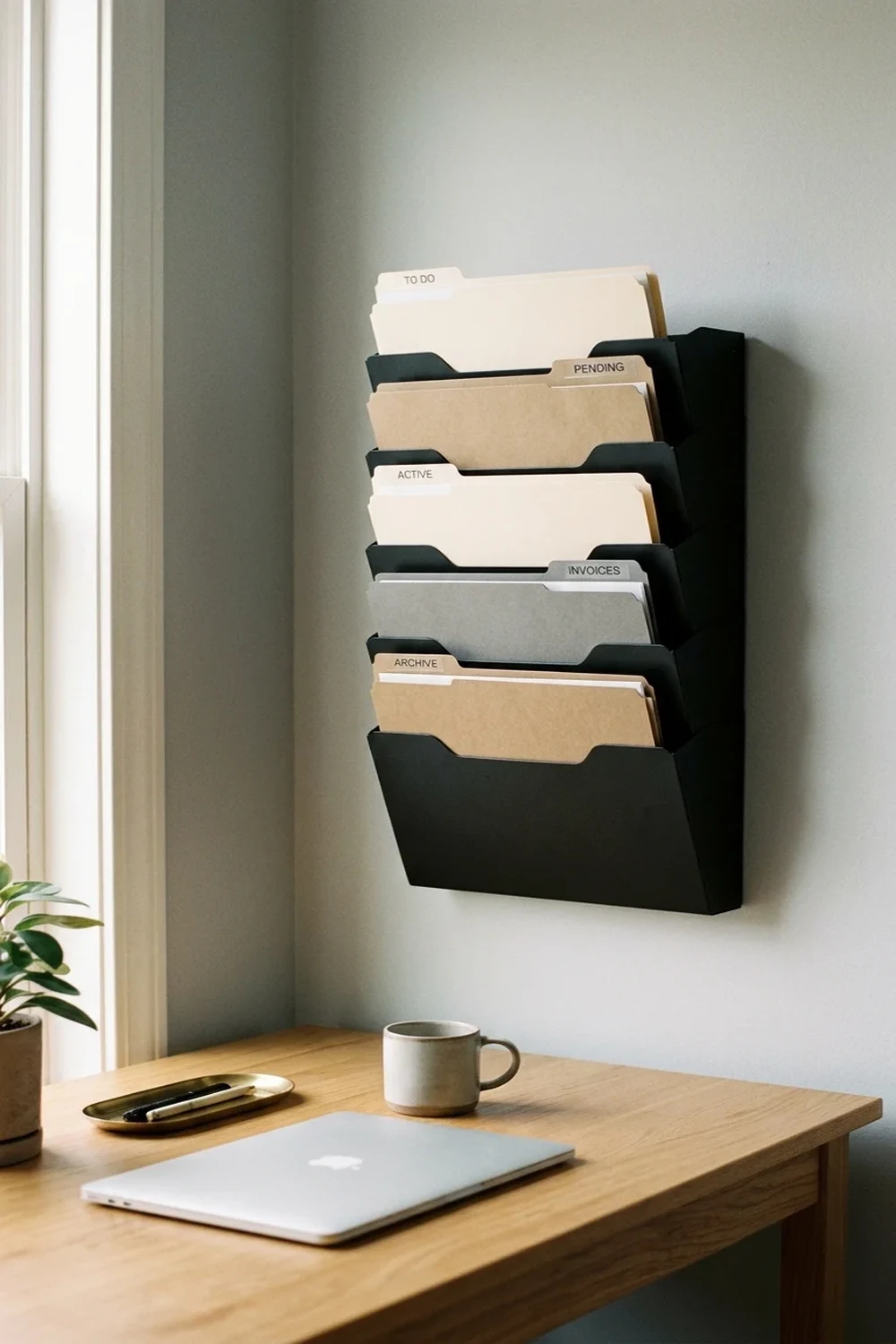
Vertical Paper Files for Clutter-Free Desks and Home Offices
Vertical paper files eliminate messy horizontal desktop stacks by orienting active documents, incoming mail, and file folders upright within tier-stepped wall pockets or slim upright sorters. Converting flat paper piles into upright vertical columns reduces desktop clutter by 75% and accelerates daily record retrieval.
- Stepped Wall Pockets: Mount cascading steel mesh wall pockets directly beside desks to keep active client files visible and within arm reach.
- Color-Coded File Folders: Assign distinct colored tabs for invoices, medical records, and household receipts to enable zero-second document identification.
- Tiered Desktop Sorters: Deploy vertical wire letter racks on work surfaces to catch daily loose mail before paperwork accumulates into flat piles.
- Vertical Accordion Organizers: Utilize upright expanding file wallets with tabbed sections for durable, high-density tax document archiving.
- Weekly Purge Routine: Review vertical file tiers every Friday to shred expired paperwork and preserve unobstructed folder capacity.

FAQs About Maximizing Vertical Storage in Small Spaces
Implementing vertical storage transforms cramped rooms into functional environments, but selecting appropriate mounting hardware and styling methods determines long-term success. Understanding safe weight limitations, renter-friendly anchors, and visual balance allows homeowners and tenants to optimize height without damaging property or creating visual clutter.
- Renter Safety Hardware: Install heavy-duty tension poles, freestanding ladder shelves, and removable adhesive hooks to secure upright units without drilling drywall.
- Visual Clutter Control: Use uniform closed baskets, opaque matching bins, and neutral monochromatic bins across upper tiers to conceal chaotic small items.
- Wall Stud Anchoring: Anchor tall vertical bookcases and heavy modular wall columns directly into structural wall studs using anti-tip safety brackets.
- Accessibility Organization: Store daily high-frequency essentials between waist and eye levels, leaving top shelves for seasonal holiday items and archive boxes.
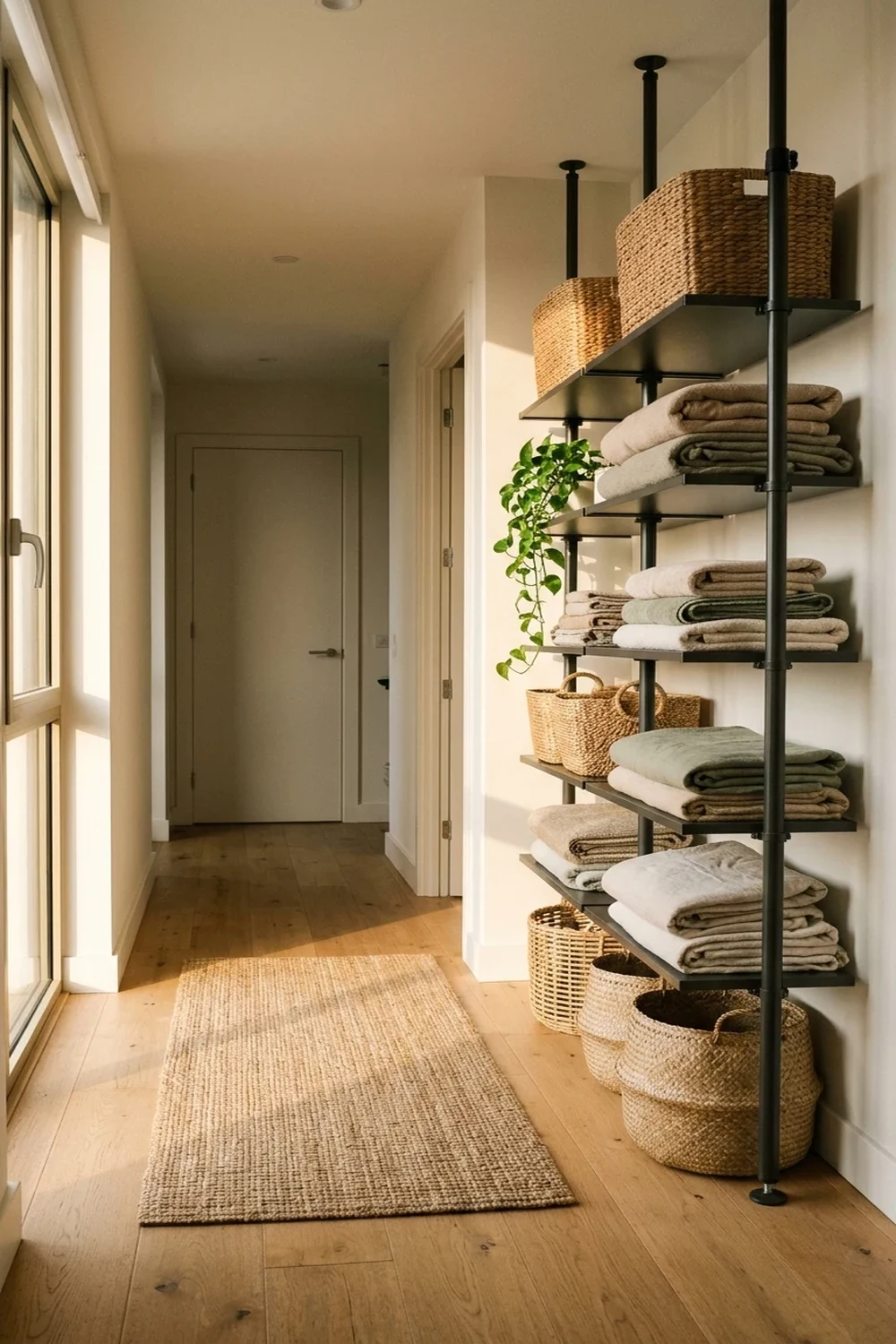
Can Renters Add Vertical Storage Safely Without Losing Deposits?
Renters can safely install high-capacity vertical storage by using non-invasive hardware that supports substantial weight without causing wall damage.
- Over-Door Organizers: Heavy-duty tension brackets hook over standard doors to support spice racks, shoes, and cleaning tools with zero wall penetrations.
- Freestanding Leaning Ladders: Angled blanket and towel ladders use rubber non-slip feet to distribute weight against baseboards without anchors.
- Tension-Mounted Pole Units: Floor-to-ceiling spring tension rods provide customizable modular shelving for bathroom corners, laundry areas, and entryways.
- Heavy-Duty Adhesive Strips: Modern interlocking mounting strips support up to sixteen pounds per set on smooth, painted drywall without stripping paint upon removal.
- Freestanding Bookcase Stacks: Anti-tip furniture straps anchored with tiny screw pins secure tall shelving towers into drywall while leaving pinholes that patch in seconds.
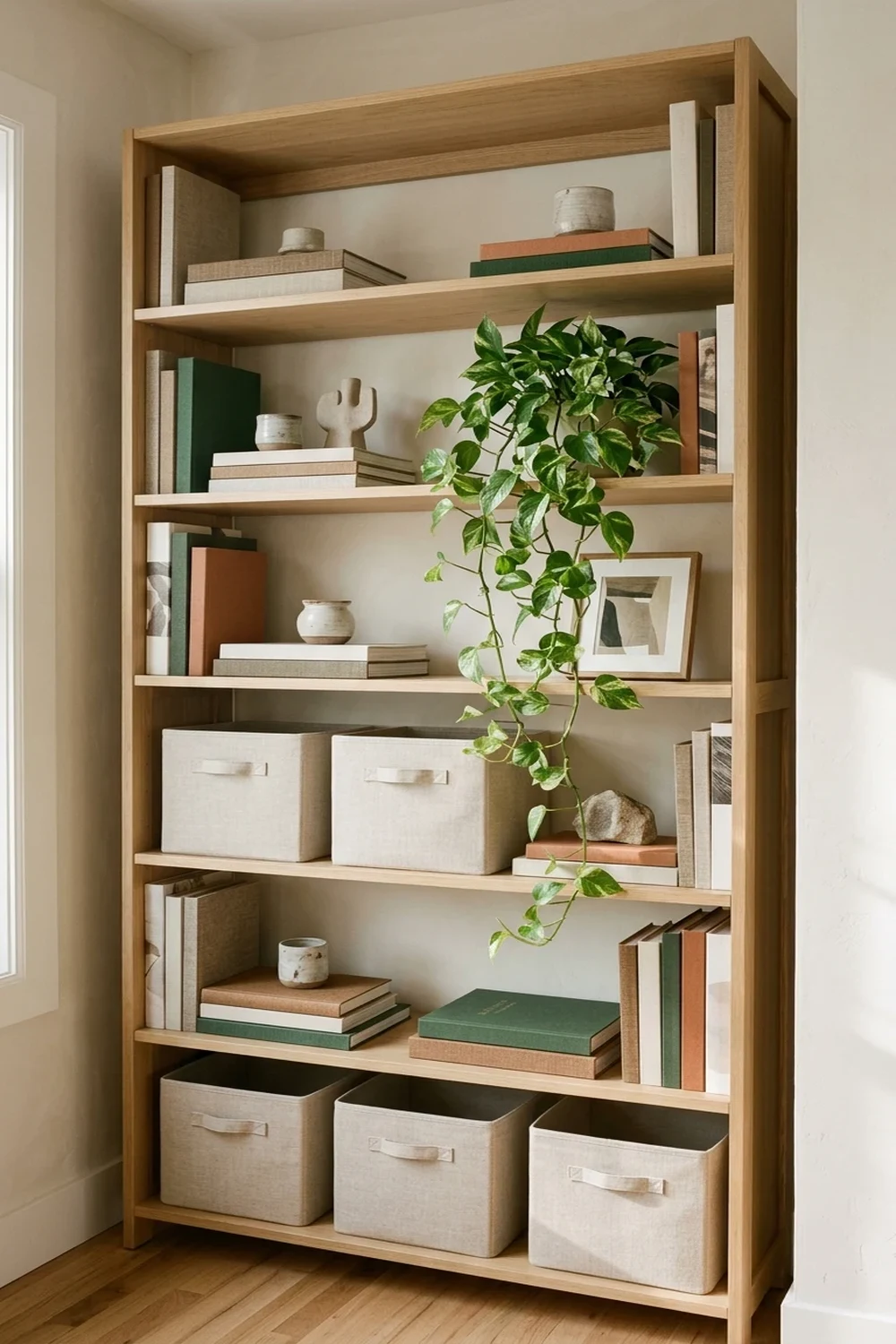
How Do I Stop Vertical Storage from Looking Messy in Small Spaces?
Vertical storage stays visually organized when you enclose visual clutter inside uniform containers and maintain deliberate negative space across every tier.
- Uniform Storage Baskets: Matching fabric, wicker, or wire bins conceal loose, mismatched essentials while creating clean, rhythmic horizontal sightlines.
- The 80/20 Clearance Rule: Leaving twenty percent of each shelf empty prevents vertical towers from overwhelming small rooms visually.
- Consistent Color Palettes: Grouping book spines and daily containers by tone creates cohesive vertical bands that blend into the wall surface.
- Vertical Height Zones: Storing heavy, bulky storage bins on lower tiers and lighter decorative accents on higher levels balances room proportions naturally.
- Integrated Strip Lighting: Concealed warm LED light strips under individual shelves illuminate recessed edges and eliminate dark, shadowy clutter corners.
Key Takeaways & Final Thoughts
- Prioritize Unused Height: Transitioning storage from floor plans to empty vertical wall planes instantly doubles functional room capacity.
- Implement Zone-Based Access: Store everyday essentials at eye level while utilizing high upper shelving for seasonal or rarely used items.
- Invest in Adaptable Fixtures: Modular rails, tension poles, and adjustable brackets ensure vertical systems evolve alongside your storage needs.
- Maintain Visual Balance: Combine closed bins on lower shelves with open, minimalist displays higher up to keep tall vertical storage from looking cluttered.