26 Best Japanese Organization Ideas for 2026
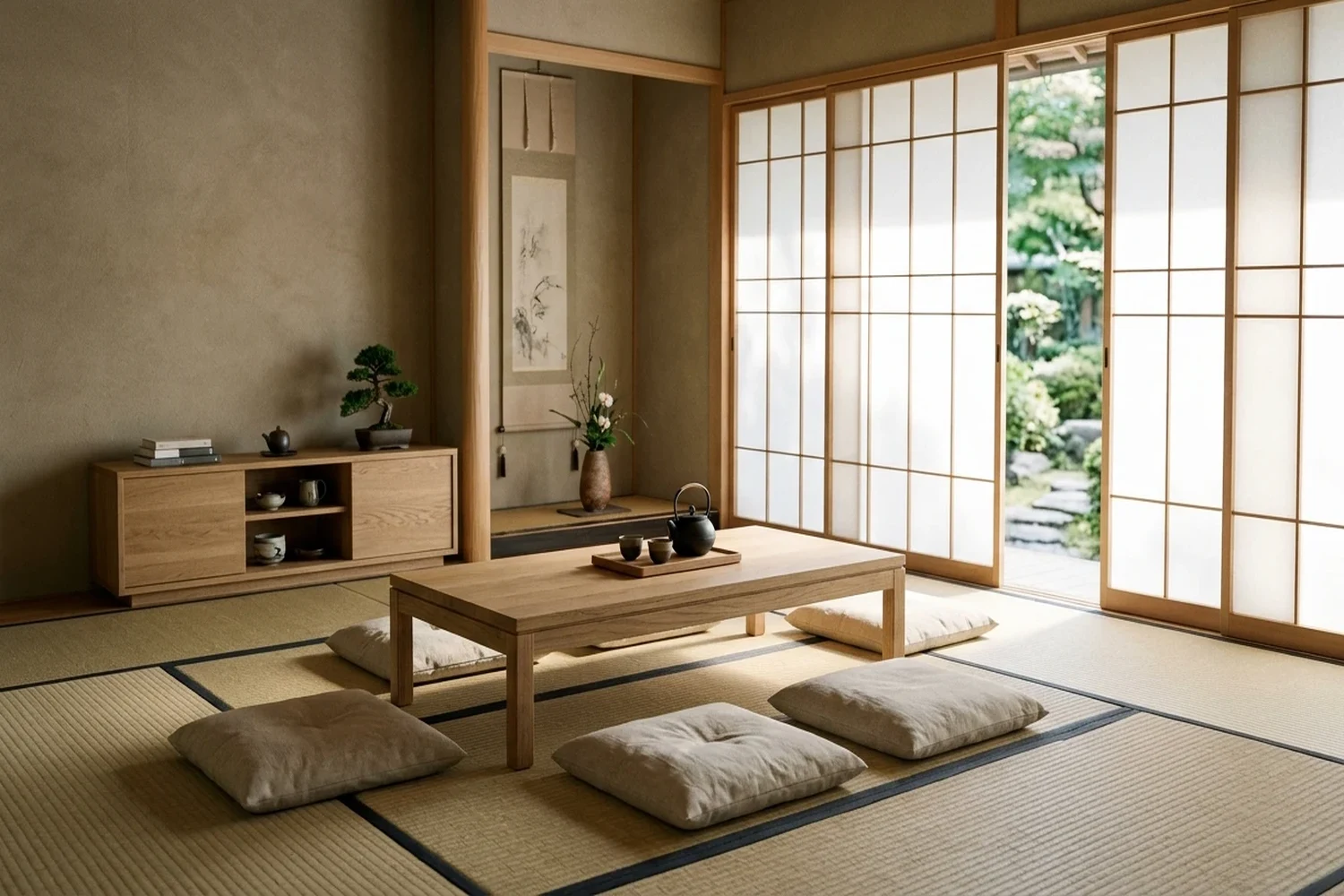
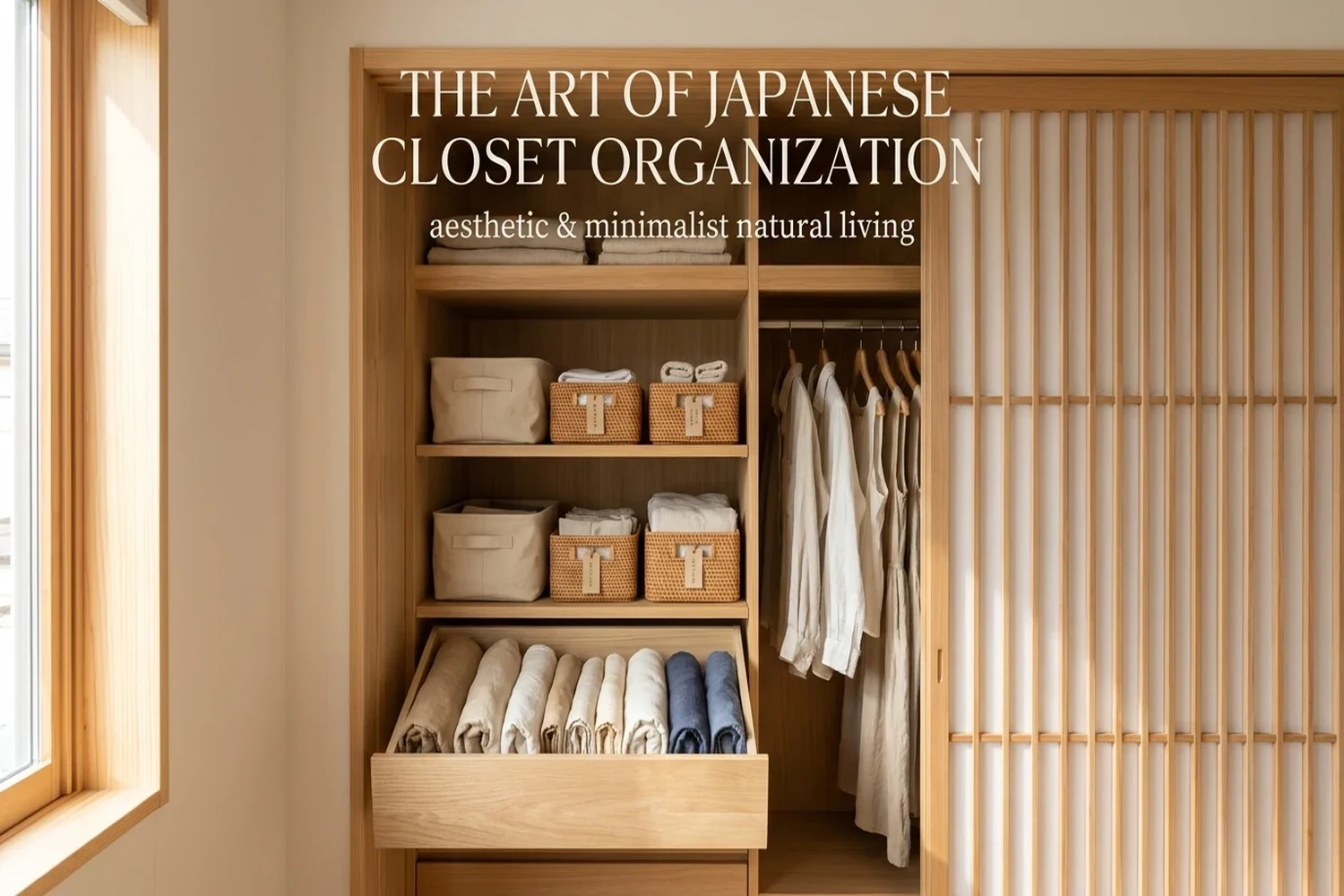
Japanese organization resolves household clutter by reducing item volume at the root rather than endlessly buying storage bins. By prioritizing intentional necessity, low-profile living, and dedicated micro-zones, these 26 proven Japanese organizing ideas create naturally serene spaces that stay tidy with minimal daily effort.
How Is Japanese Organization Different from Western Organizing Methods?
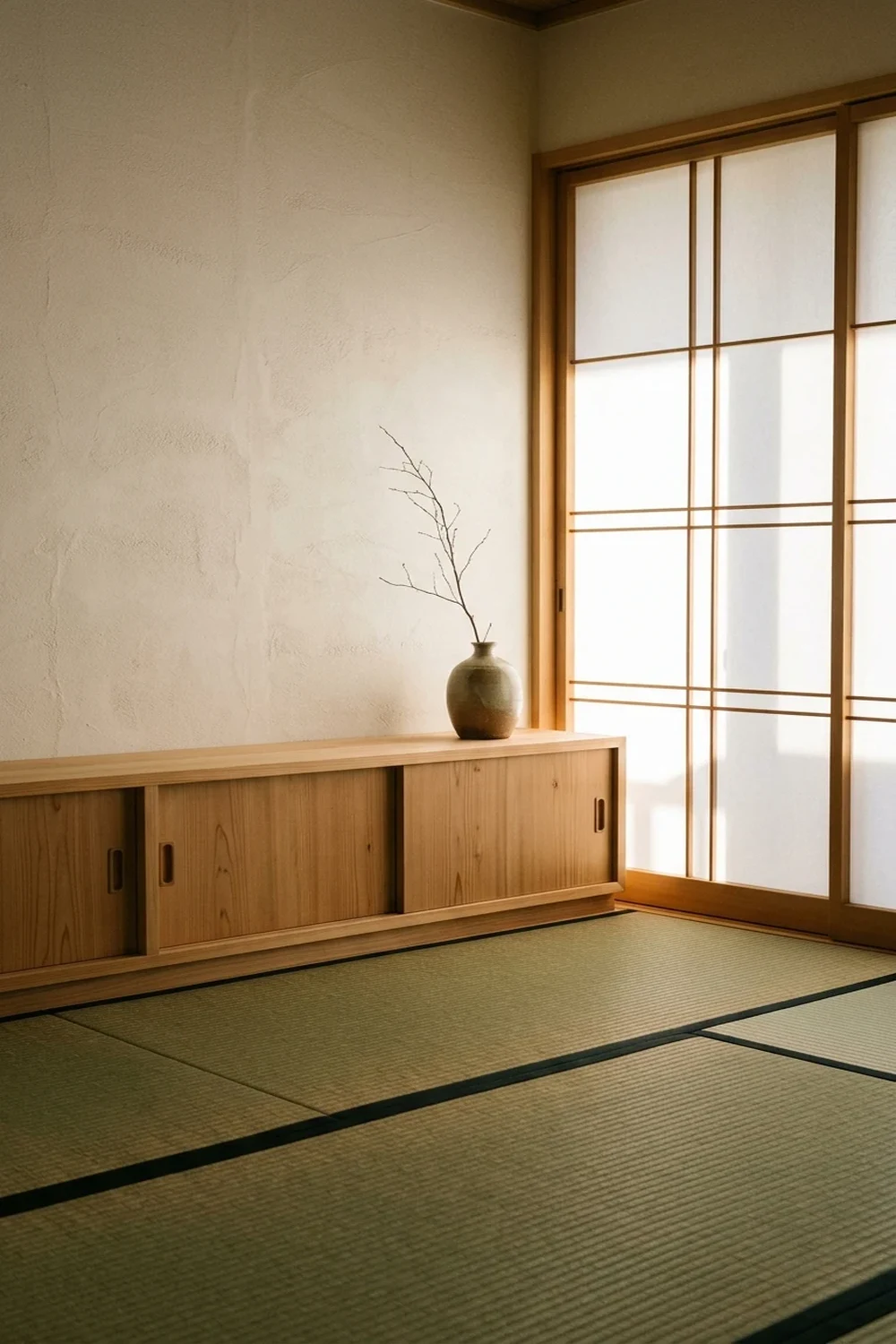
Japanese organization prioritizes radical volume reduction and intentional placement over purchasing additional storage bins. While conventional Western organizing methods focus on fitting existing belongings into expanded shelving units, Japanese methodology addresses volume before containerization. By eliminating non-essential possessions first, homeowners establish sustainable order without experiencing recurring clutter cycles.
- Volume Elimination Precedes Storage: Japanese systems resolve clutter by questioning possession necessity rather than adding storage furniture.
- Root-Cause Resolution: Possessions without clear daily utility leave the home permanently instead of moving into secondary bins.
- Spatial Breathing Room: Storage capacity remains capped at 70 to 80 percent full to maintain effortless retrieval.
- Intentional Home Design: Daily rituals dictate storage placement so items return to fixed spots automatically.
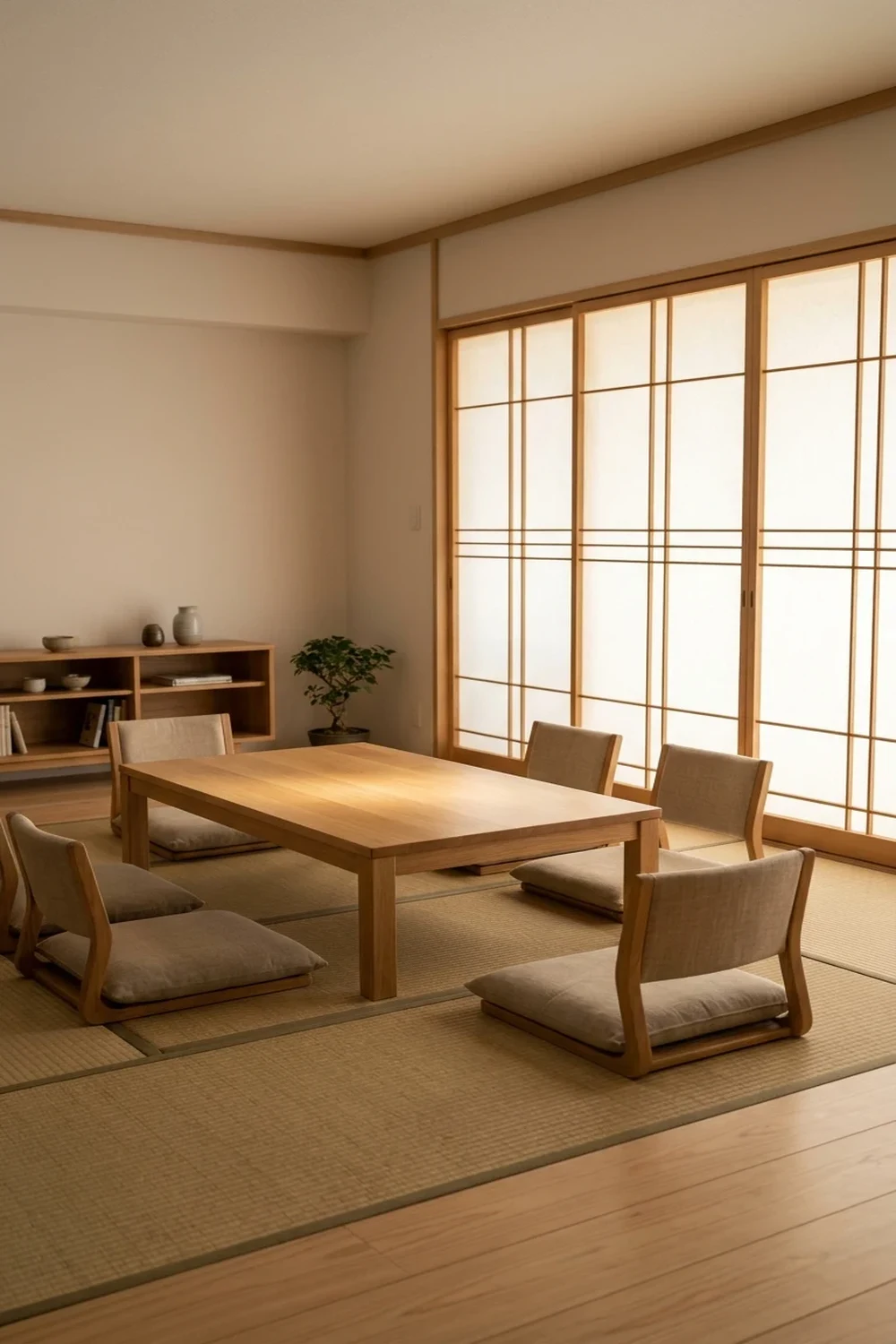
Low-Profile Living: Maximize Open Sightlines with Ground-Level Furniture
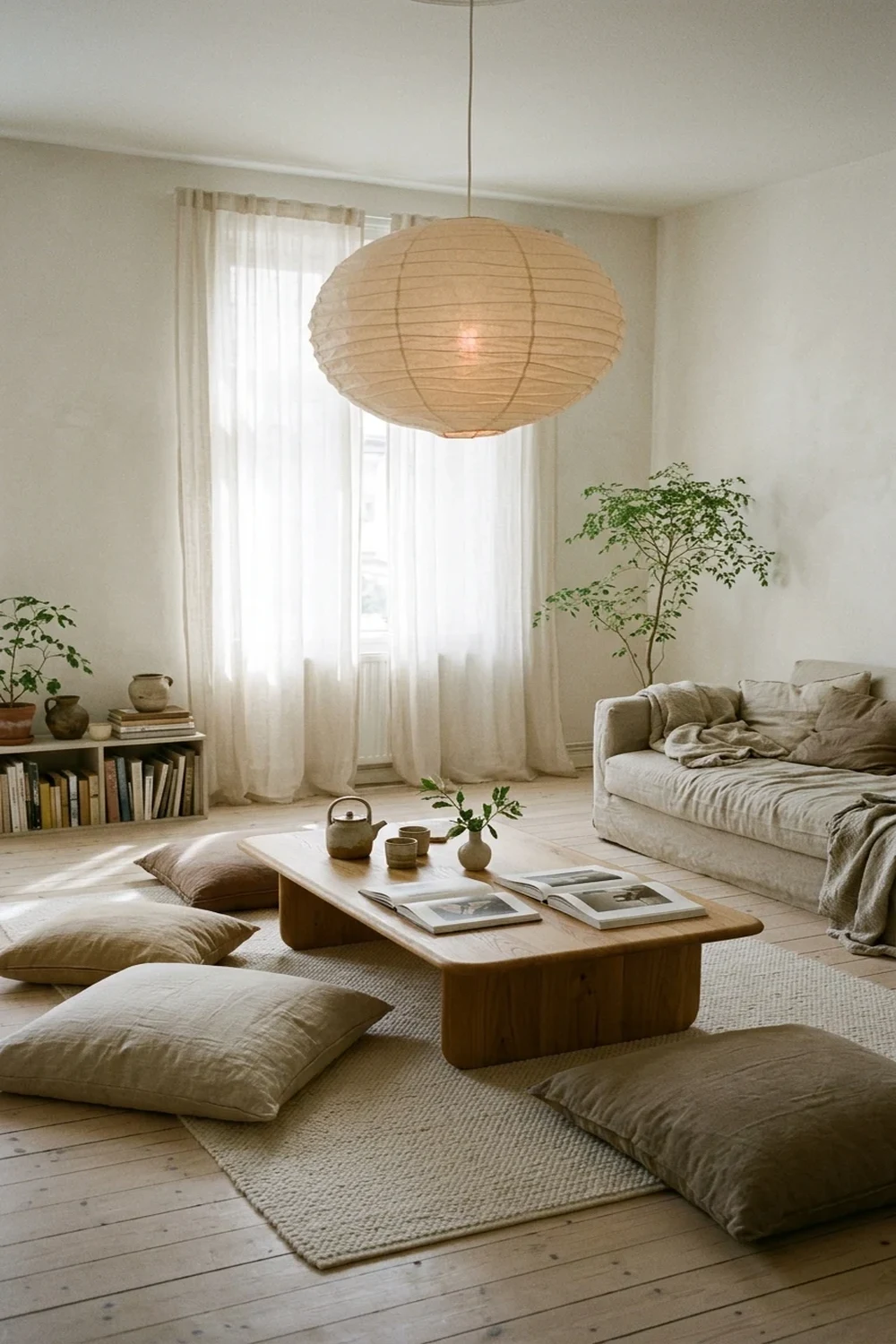
Low-profile living uses ground-level furniture to preserve vertical sightlines and reduce immediate visual clutter in common areas. Placing furniture low expands the perceived ceiling height and calms high-traffic living rooms by eliminating looming vertical mass. This layout creates an open, grounded sanctuary centered around natural materials and unobstructed daylight.
- Unobstructed Sightlines: Low coffee tables and floor seating keep eye-level walls open and airy.
- Surface Restraint: Table tops feature no more than two functional objects at any time.
- Natural Lighting Focus: Open room height allows gentle daylight to diffuse evenly across wood floors.
- Tactile Comfort: Woven rugs and floor cushions establish warm, functional relaxation zones without bulky sofas.
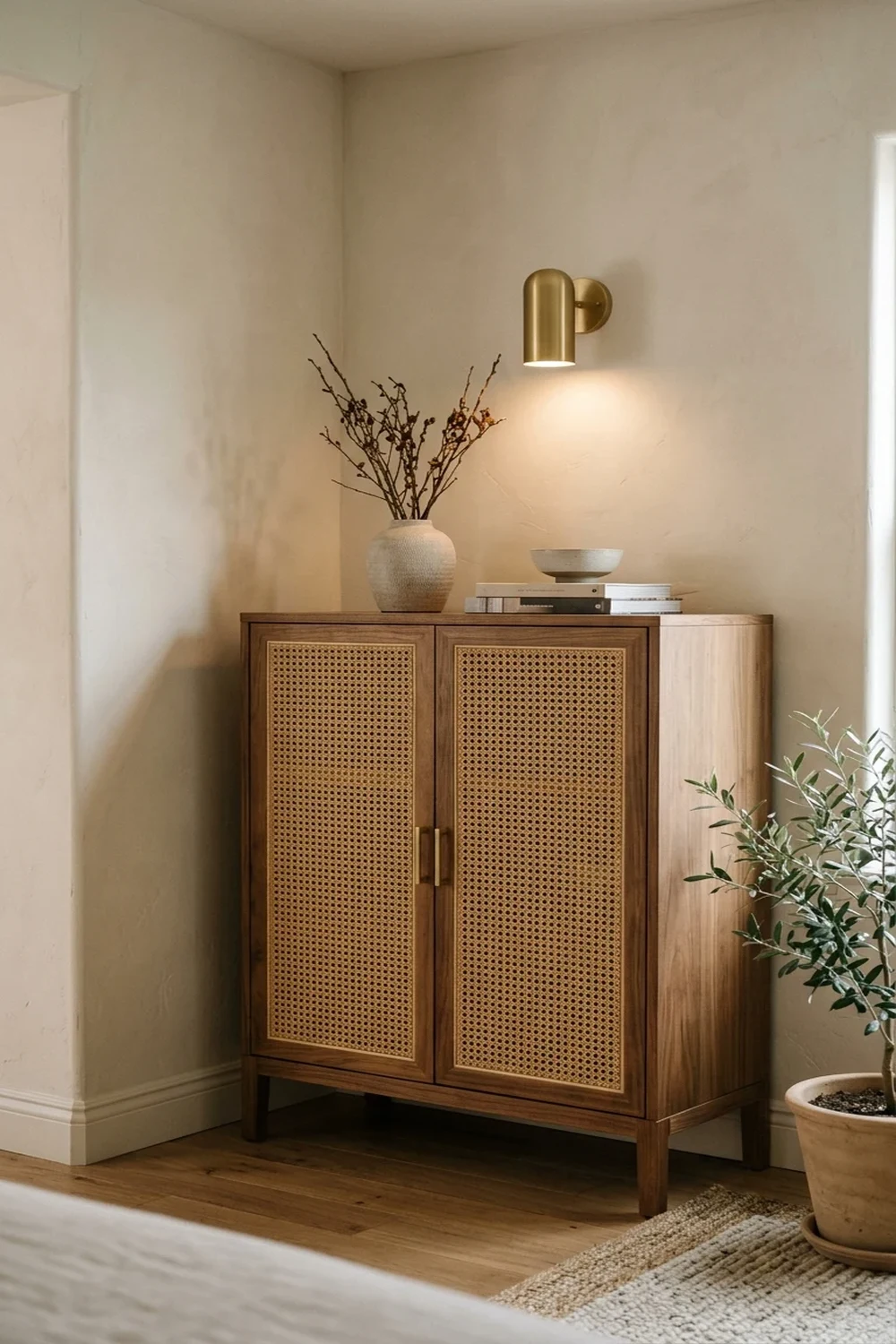
Closed Storage Calm: Hide Visual Noise Behind Seamless Cabinet Fronts
Closed storage calm eliminates domestic visual chaos by concealing irregular everyday possessions behind uniform, solid cabinet doors. Open shelving invites ocular fatigue through clashing book spines, electrical cords, and mismatched packaging. Concealing functional tools behind cane-front or handle-free panels maintains architectural calm across dining areas and living rooms.
- Visual Erasure: Everyday cords, electronic devices, and textbooks remain fully hidden from sight.
- Breathable Materials: Woven cane or slat-front cabinet doors allow ventilation while blocking visual disorder.
- Architectural Uniformity: Handle-free cabinet surfaces blend seamlessly directly into surrounding drywall.
- Soft Ambient Balance: Gentle wall sconces replace harsh overhead lighting to complement smooth wood textures.
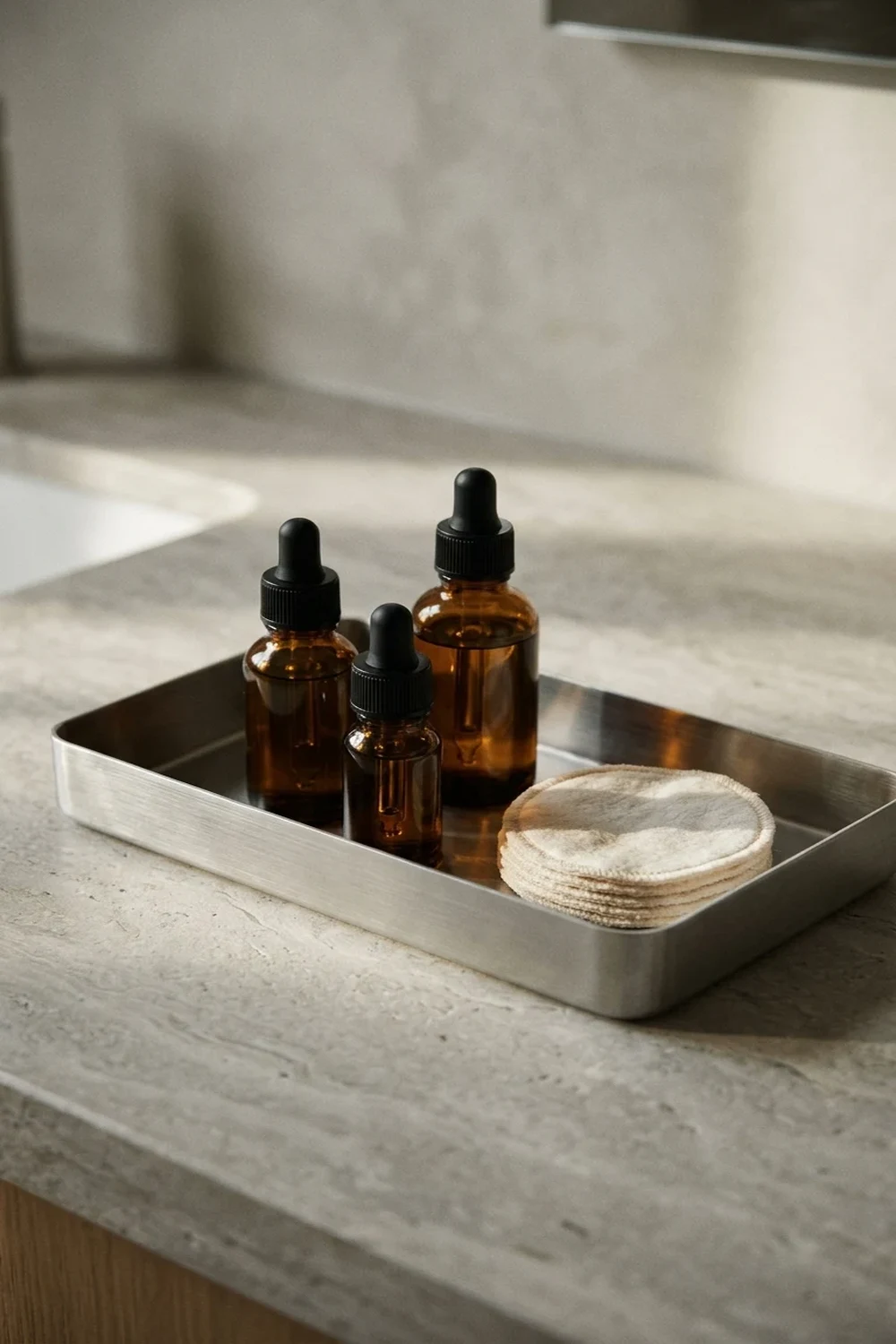
Contained Essentials: Group Daily Skincare and Tools in Defined Trays
Contained essentials streamline morning and evening rituals by grouping high-frequency items into single, shallow metal or wood containers. Organizing personal items by frequency of use rather than strict product type prevents cluttered vanity surfaces and misplaced accessories. When every primary item shares one defined vessel, maintenance takes seconds.
- Frequency-Based Sorting: Daily skincare and tools occupy one shallow box while backup stock stays tucked away.
- Compact Boundaries: Shallow metal or hinoki wood trays prevent small bottles from tipping over.
- Zero Counter Drift: Returning items directly to the shared tray prevents cosmetic surface scatter.
- Fast Reset Routine: Morning preparation resets instantly by restoring a single tray to its resting place.
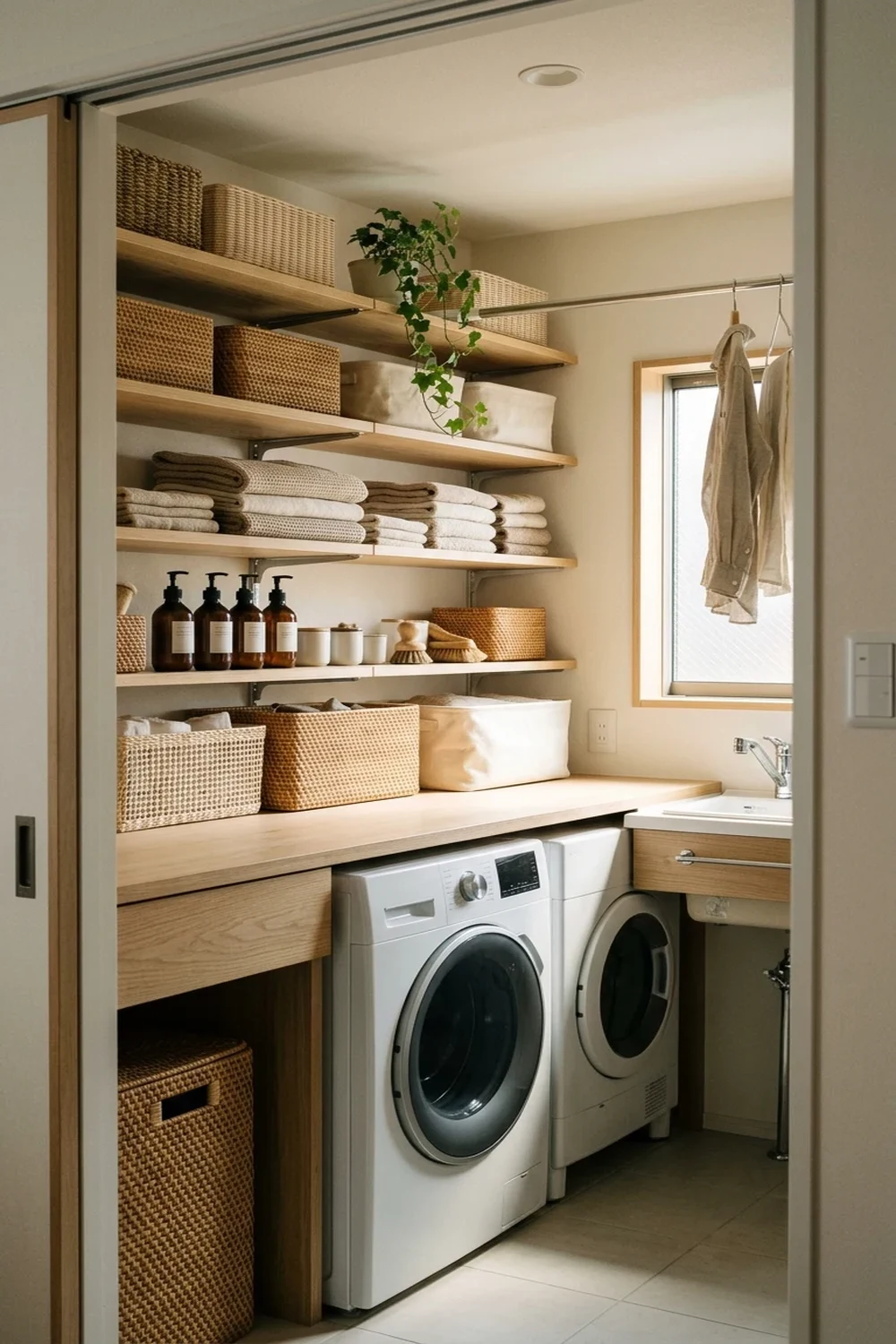
How to Optimize Laundry Rooms with a Shelf Zoning System
A shelf zoning system is a structured storage method that groups household utility supplies into task-specific vertical tiers to eliminate workflow friction. By assigning every detergent, stain remover, and linen basket to a designated operational tier above your appliances, you stop surface clutter from accumulating across wash counters.
- Ergonomic Eye-Level Zone: Place daily detergents, measuring scoops, and immediate spot treatments on the lowest open shelf directly within arm reach to speed up wash cycles.
- Upper Bulk Storage Zone: Store extra paper products, seasonal linens, and backup cleaning concentrates on top shelves inside uniform woven bins to reduce visual clutter.
- Task-Dedicated Sorting Baskets: Dedicate individual labeled baskets to washing, drying, and pre-treating garments so loose items never scatter across folding tables.
- Clear Surface Mandate: Keep appliance tops and utility counters 100% empty between laundry routines to guarantee immediate folding space and prevent clutter creep.

Curated Display Storage: Why Showcasing Meaningful Pieces Creates Visual Calm
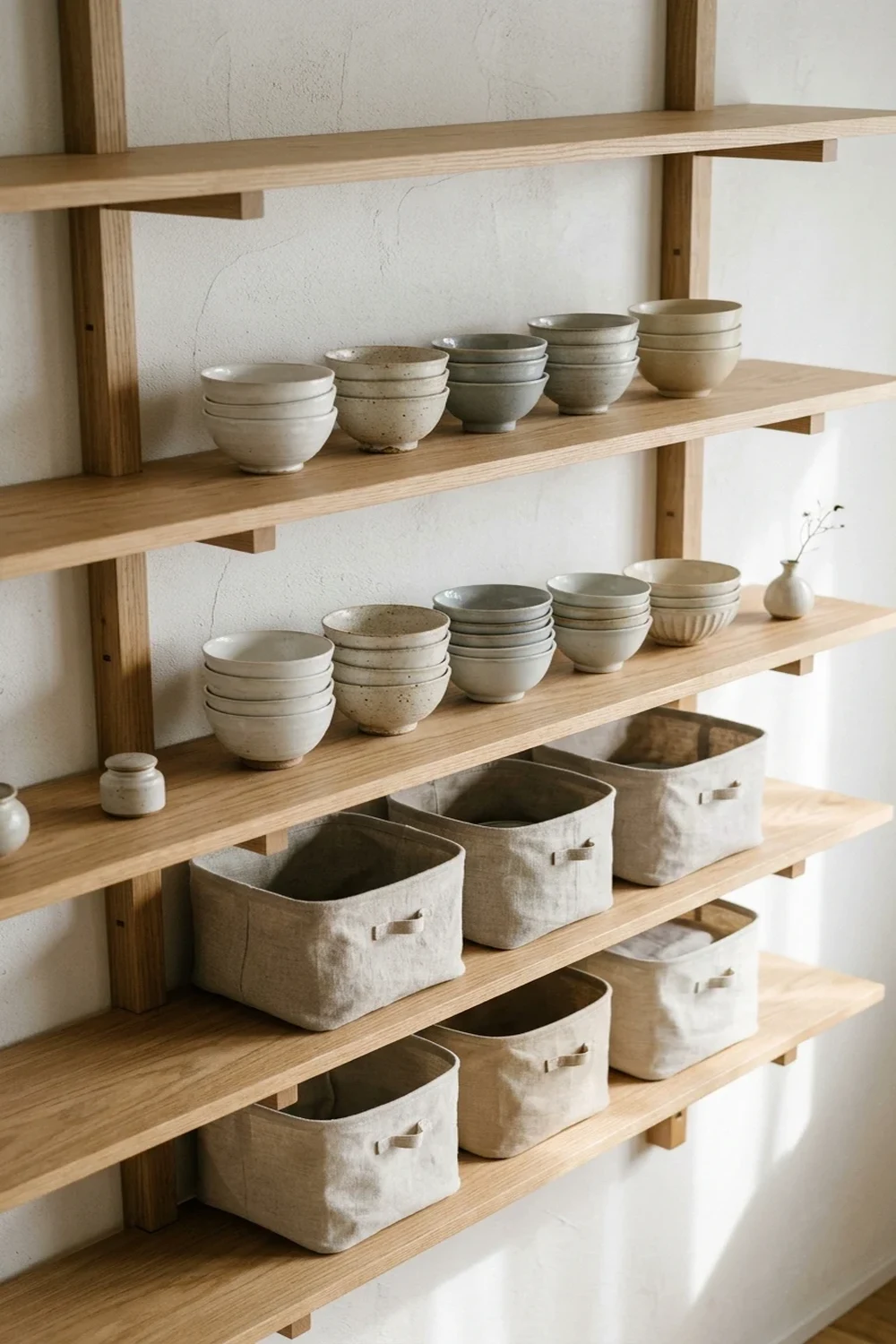
Curated display storage is an intentional organizing technique where everyday utility wares remain concealed behind solid doors while a small selection of meaningful objects is displayed openly. This hybrid method leverages the Japanese aesthetic concept of ma (negative space), ensuring open shelves deliver decorative tranquility rather than sensory overload.
- Closed Cabinet Foundation: House miscellaneous kitchenware, mismatched cookware, and secondary dinner plates inside lower opaque cabinets to eliminate background distractions.
- Controlled Open Exhibition: Restrict upper shelving displays to three to five handcrafted ceramic vessels, artisanal tea bowls, or sculptural stoneware items.
- The Rule of Negative Space: Dedicate at least 40 percent of visible shelf real estate to empty space so each curated piece stands out as intentional art.
- Soft Ambient Illumination: Position low-lumen lamps or gentle wall sconces to illuminate curated textures without casting stark, harsh shadows across living spaces.
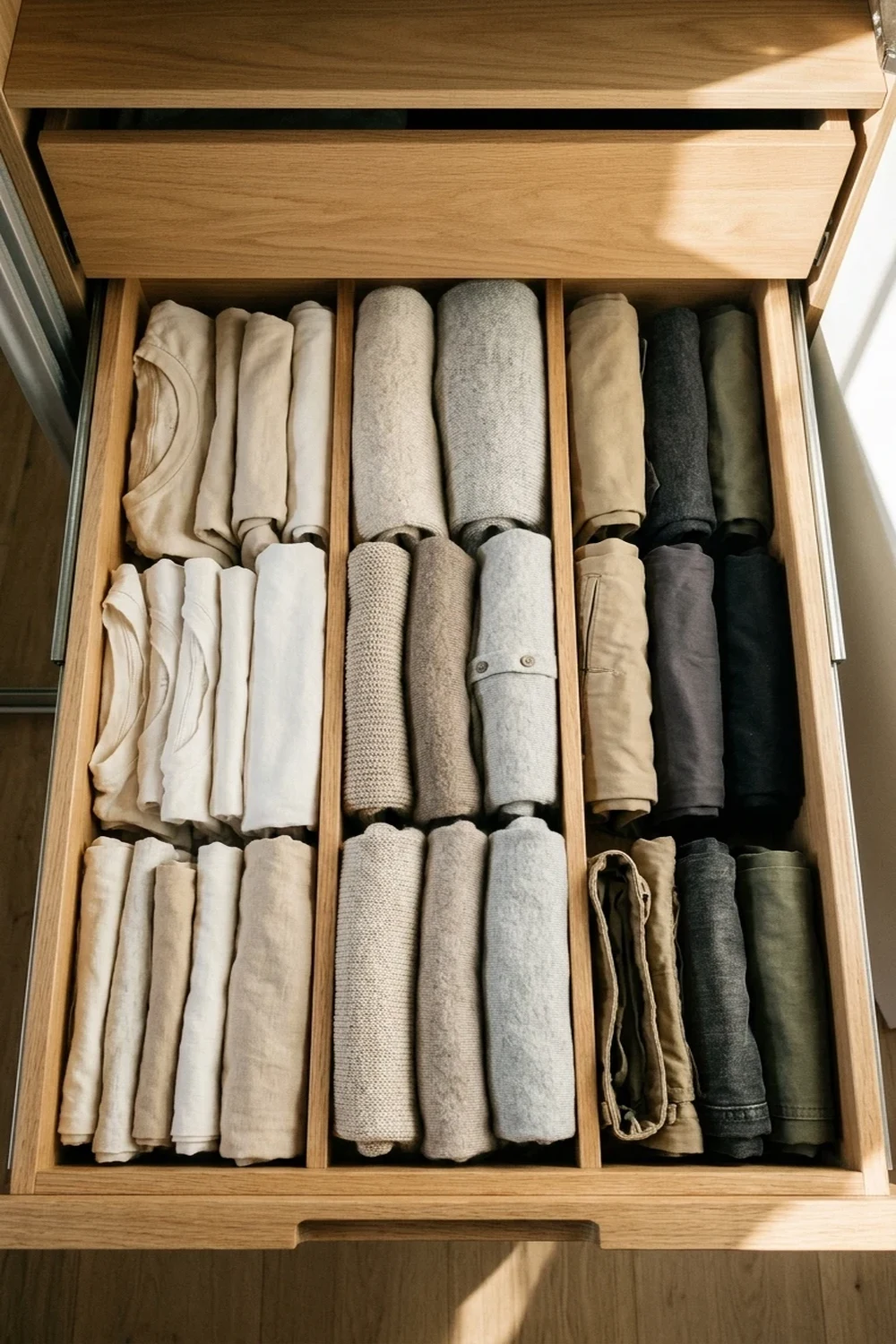
How the Vertical Fold Method Transforms Crowded Wardrobe Drawers
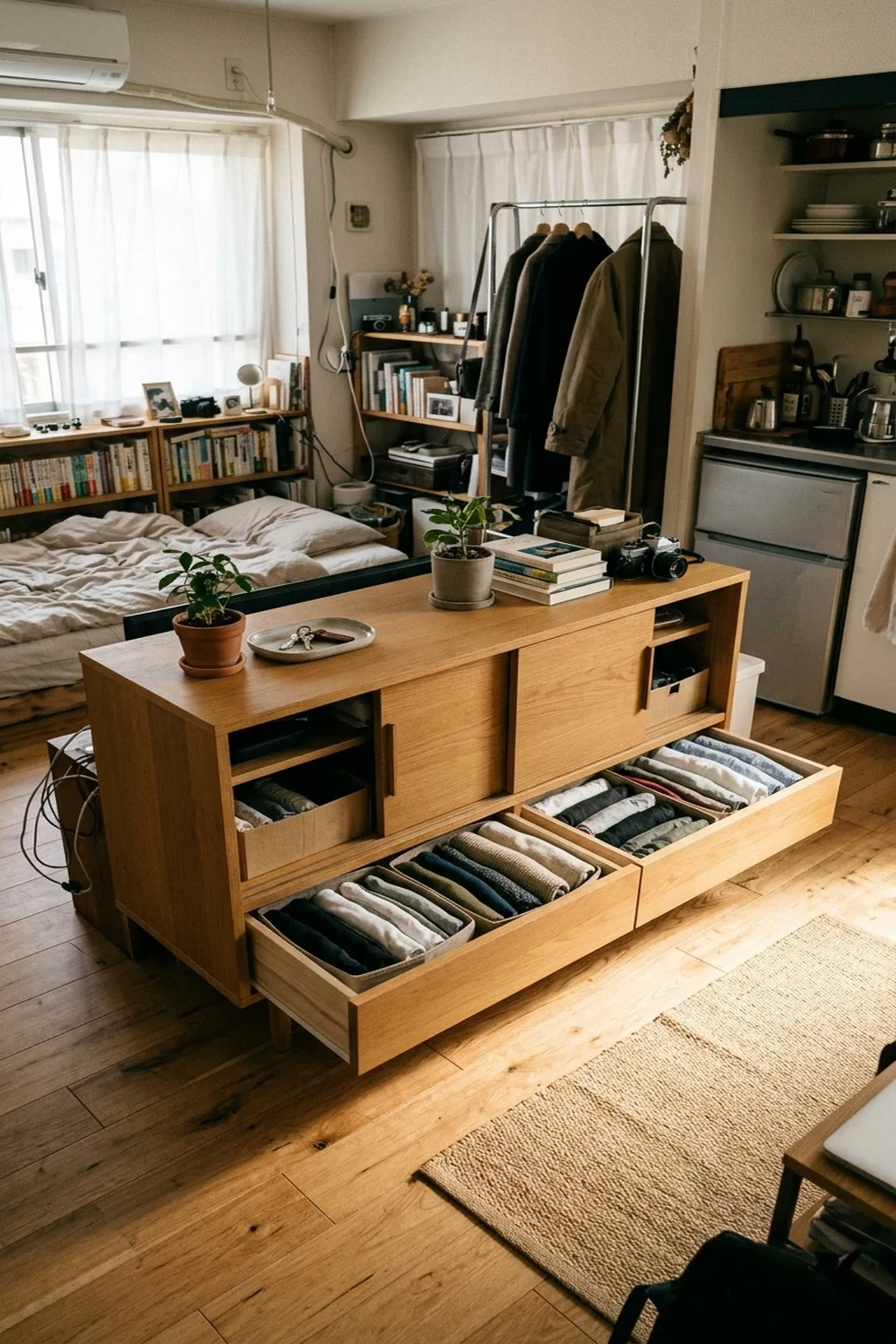
The vertical fold method is an apparel storage practice where garments are folded into compact rectangular parcels and stood upright like library catalog cards inside drawers. Unlike traditional horizontal stacking that leads to wardrobe compression and wrinkles, vertical filing ensures every garment remains instantly visible and accessible without disturbing neighboring clothing.
- Uniform Rectangular Base: Fold shirts, trousers, and knitwear into smooth, self-standing rectangular packets sized precisely to match your drawer depth.
- Zero-Disturbance Retrieval: Pull any individual garment straight upward from the row without shifting, creasing, or messing up adjacent folded pieces.
- Clear Sub-Divided Bins: Insert shallow acrylic or wooden drawer partitions to support vertical fabric files and stop lightweight shirts from flopping over.
- Instant Visual Inventory: Scan your complete wardrobe collection in two seconds to eliminate forgotten garments and cut morning dressing time in half.

Category Shelf Order: The Systematic Japanese Rule for Quiet Closets
Category shelf order is an architectural closet management framework that assigns distinct horizontal shelves to single, unmixed merchandise classifications rather than coordinating mixed outfits together. Grouping shoes, structured leather bags, and folded textiles by typology creates rhythmic visual cohesion that makes returning possessions effortless.
- Single-Category Allocation: Dedicate each closet shelf exclusively to one item category such as knitwear, structured handbags, or everyday footwear.
- Monochromatic Hue Alignment: Arrange garments within each designated category row from light cream tones to darker charcoal shades to establish visual rhythm.
- Strict Spacing Boundaries: Maintain two inches of breathing room between boxed footwear and hanging hems to preserve a boutique-style atmosphere.
- Predictable Habit Formation: Return washed garments directly to their assigned category anchor to prevent misplaced accessories and end daily decision fatigue.
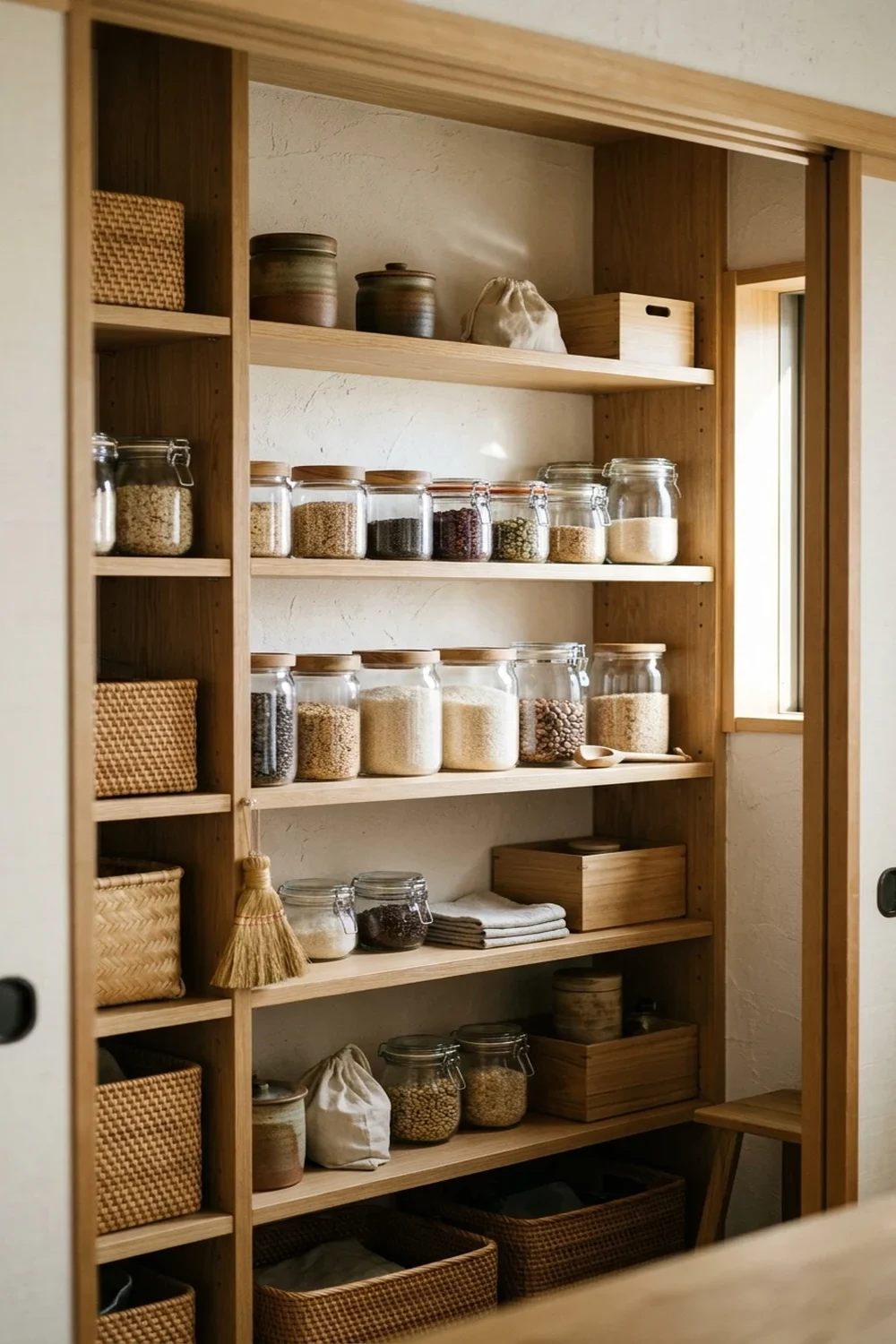
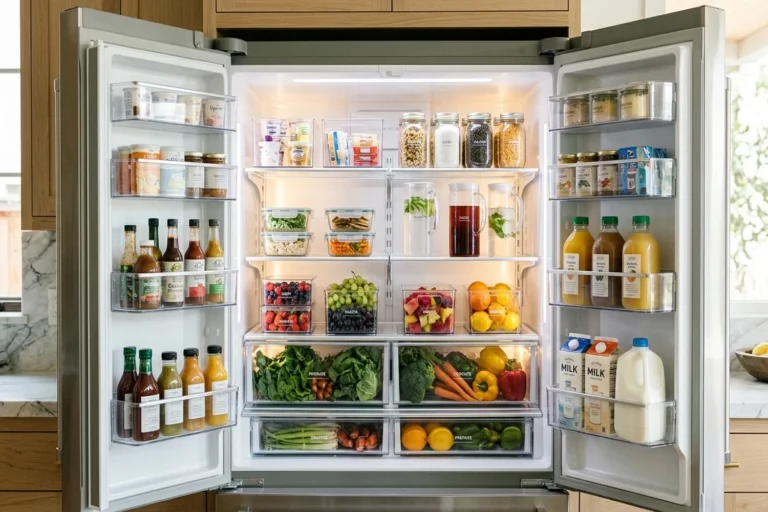
How to Create Clear Pantry Zones with Japanese Decanting Methods
Clear pantry zones eliminate kitchen food waste by grouping dry goods into transparent containers categorized strictly by meal frequency and item type. Unlike standard storage cabinets where mismatched boxes get pushed to dark corners, Japanese pantry zoning relies on uniform clear glass or acrylic vessels paired with shallow pull-out crates. This structural clarity guarantees that household members can inventory ingredients in under five seconds, preventing overbuying and keeping meal preparation seamless.
- Standardized Decanting Jars: Transfer bulk grains, rice, and dried legumes into identical airtight glass canisters with minimalist top-facing labels to streamline visual scanning.
- Task-Based Shelf Allocation: Position everyday cooking staples at chest level, reserve high shelves for backstock reserves, and dedicate lower bins to heavy bulk liquids.
- Breathable Woven Sorting Trays: Group odd-shaped snack pouches and spice refill packets into lightweight wire or cedar baskets to eliminate shelf tumbling.
- Strict First-In First-Out Rotation: Place newly purchased dry provisions at the rear of each zonal lane while drawing daily portions from the front container.
- Integrated Under-Shelf Task Glow: Mount discreet 3000K warm LED strip lights beneath cabinet dividers to erase shadows across deep cupboard corners.
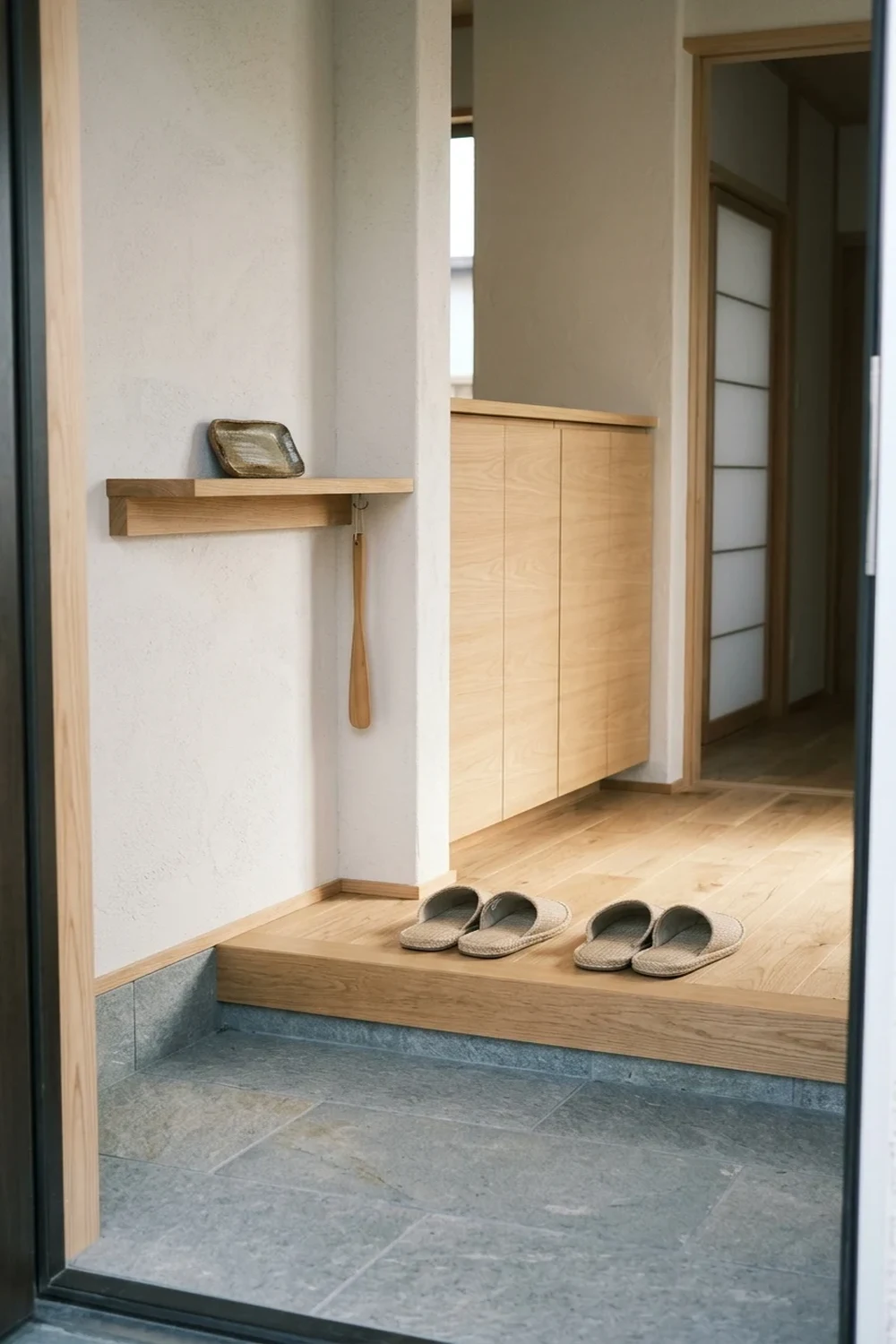
How Japanese Genkan Entryway Drop Zones Stop Household Clutter
A Japanese entryway drop zone acts as a disciplined transitional threshold that prevents exterior street dirt, bags, and daily miscellany from breaching living quarters. Modeled after the traditional genkan step-up entry, this dedicated station establishes immediate resting places for shoes, mail, keys, and daily outerwear before anyone steps onto interior flooring. Installing disciplined single-purpose drop boundaries eliminates the common pile-up of coats and footwear across main hallways.
- Dedicated Footwear Getabako Cabinets: House daily outdoor shoes inside a slim slatted wooden shoe console while arranging guest indoor slippers neatly along the threshold line.
- Singular Key and Coin Catchall Trays: Rest a carved hinoki wood dish or matte ceramic bowl on a waist-height floating ledge for keys, transit cards, and loose change.
- Individual Wall Hook Allocations: Assign exactly one wall peg per family member to hold a single primary daily jacket or work satchel without layer stacking.
- Concealed Mail and Delivery Sorting Slots: Slip incoming letters, catalogs, and packages directly into an upright vertical folder bin to keep horizontal surfaces bare.
- Low-Footprint Umbrella and Tool Stands: Secure wet walking umbrellas and shoe horns in a weighted ceramic floor cylinder positioned flush against the corner wall.
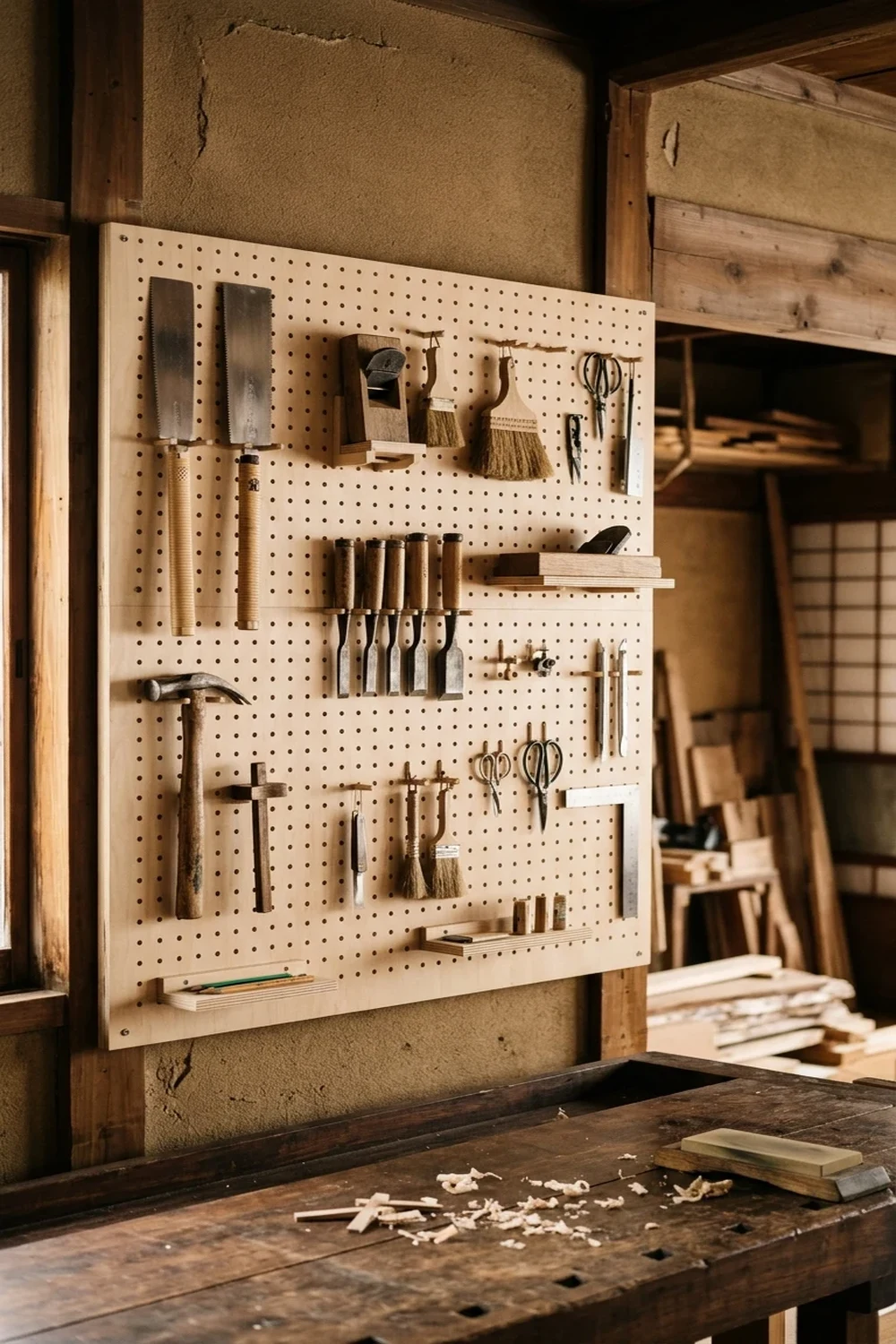
How to Arrange a Functional Wall Tool Layout Using Pegboard Systems
A vertical wall tool layout maximizes usable workspace by securing hand tools and crafting accessories onto a modular pegboard grid in plain sight. In Japanese craft studios and compact home workshops, clearing desktop surfaces by mounting instruments flush against vertical planes accelerates workflow and prevents accidental tool misplacement. Storing everyday implements at eye level ensures fast retrieval and immediate return cycles during complex manual projects.
- Permanent Tool Silhouette Mapping: Assign every pair of scissors, ruler, and brush a fixed hook location to reveal missing equipment instantly at a glance.
- Modular Slotted Birch Pegboards: Fasten untreated birch or matte steel perforated backsplashes behind workbenches to allow customizable hook and shelf rearrangements.
- Uniform Clear Accessory Cups: Suspend small fasteners, paperclips, and carving blades in transparent hanging cups along the lowest horizontal rail for swift access.
- Proportional Spatial Buffering: Maintain a minimum buffer of two inches between hanging tools to keep the board visually balanced and prevent knuckle collisions.
- Focused Low-Glare Overhead Illumination: Angle a slim brass articulated task lamp directly over the central tool board to keep fine measurement calibrations visible.

How to Organize Documents with Japanese Flat Supply Stacks
Flat supply stacking preserves delicate paper goods, drawing stationery, and administrative paperwork by resting sheets horizontally inside shallow, dedicated desktop tiers. Unlike vertical binders that crush loose parchment edges or deep letter trays where single forms get buried, shallow horizontal organizers limit each level to a single project or material grade. This controlled horizontal layering protects essential documents while sustaining a serene, clutter-free desktop landscape.
- Shallow Stackable Paulownia Trays: Layer ultra-thin interlocking timber or recycled paper trays that rise no higher than two inches per tier to prevent paper burying.
- Single-Project Tray Assignments: Restrict each individual flat tier to one active client dossier, tax filing category, or specific watercolor paper weight.
- Horizontal Document Protection: Lay fine art prints, calligraphy stationery, and heavy cardstock entirely flat to safeguard corners against creasing and spine sagging.
- Minimalist Edge Index Tabs: Affix discrete linen or paper index tabs along the outer side edge of stacked folios for instant reference without shuffling piles.
- Side-Angle Natural Desktop Alignment: Orient stack trays perpendicular to adjacent window frames to keep paper surfaces free from high-contrast daylight glare.

How to Organize Drawers with Japanese Drawer Micro Zones
Drawer micro zones are compartmentalized shallow subdivisions that assign exact, single-depth boundaries to small accessories and stationery to prevent chaotic mixing. By outfitting shallow drawers with modular wooden or acrylic inserts, you eliminate sliding layers and immediately locate every essential tool without rummaging.
- Compartment Boundaries: Modular shallow trays establish fixed boundaries for every utensil, stationery piece, or cosmetic tool.
- Function-Based Sorting: Grouping objects by practical utility rather than brand ensures items return to their designated partition automatically.
- Zero-Stacking Principle: Laying items in a single, non-overlapping horizontal layer preserves visual clarity across the entire interior.
- Frictionless Reset Routine: Clear boundary definitions reduce end-of-day resetting time down to under thirty seconds.

Why an Open Utility Rack Delivers Effortless Everyday Access
An open utility rack is an exposed multi-tiered shelving unit engineered to keep high-frequency household items instantly accessible while maintaining visual balance. Positioning daily bathroom and laundry necessities at direct eye level prevents hidden clutter buildup and streamlines daily domestic routines.
- Eye-Level Prioritization: Placing active daily supplies on central shelves eliminates awkward bending and speeds up morning preparation.
- Uniform Textile Stacking: Rolling or folding matching organic cotton towels in uniform columns creates a calming spa aesthetic.
- Concealed Lower Overflow: Housing backup bulk bottles inside natural woven cedar baskets on lower shelves suppresses visual noise.
- Passive Airflow Advantage: Slatted open shelving promotes continuous air circulation, keeping damp bathroom linens and towels completely fresh.
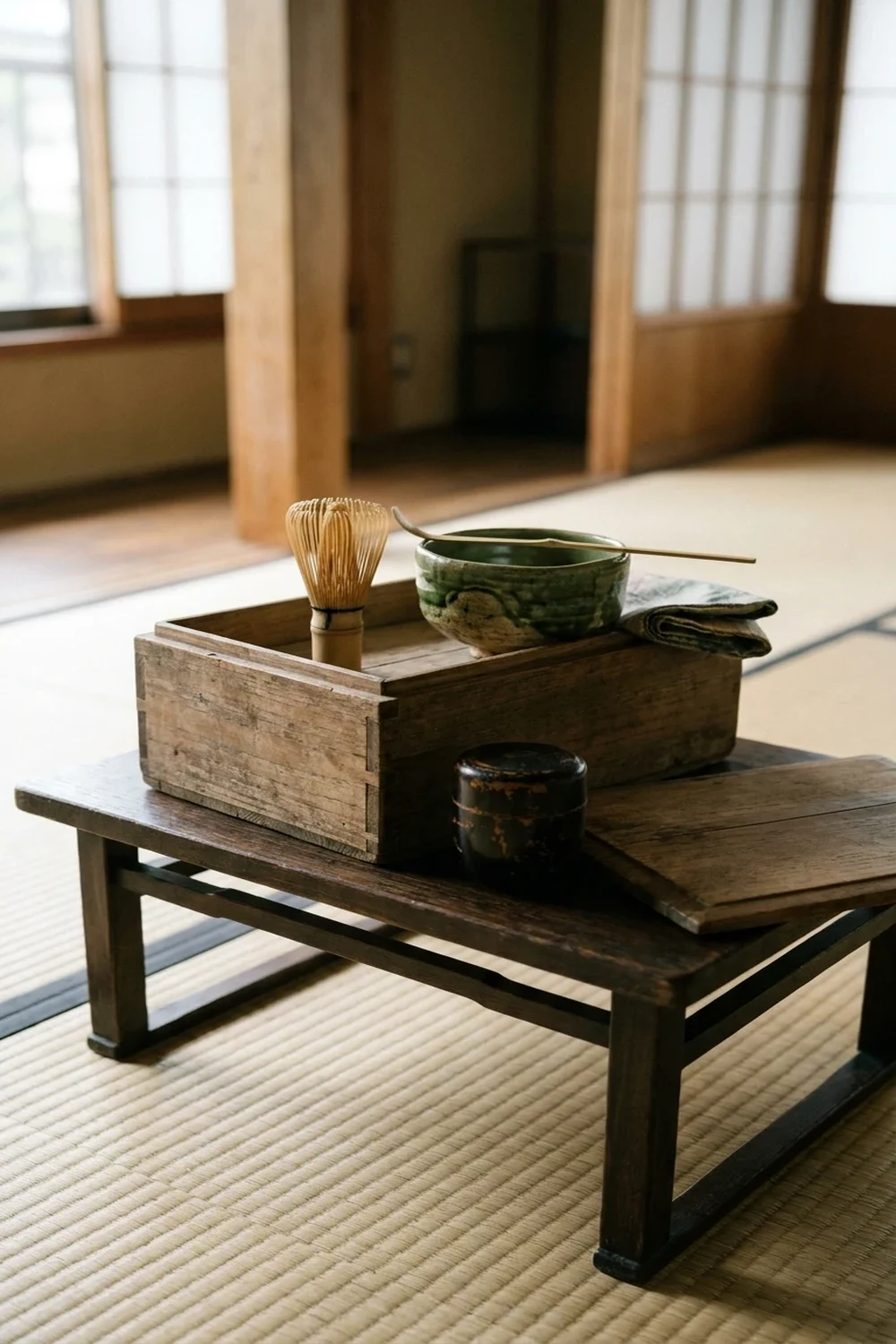
How to Build a Mindful Daily Routine with a Ritual Tea Box
A ritual tea box is a lidded paulownia or cedar container designed to safeguard tea ceremony tools and daily brewing essentials within a single intentional footprint. Storing delicate whisks, canisters, and cups together inside a dedicated chest protects fragile ceramics and transforms a mundane habit into a restorative pause.
- Unified Habit Container: Housing a matcha whisk, ceramic bowl, and measuring scoop together keeps the preparation process seamless.
- Moisture and Dust Defense: Natural wood construction safeguards artisanal ceramics and organic tea powders from humidity spikes and dust.
- Intentional Negative Space: Leaving ample breathing room inside the box prevents overcrowding and respects the beauty of each tool.
- Dedicated Ritual Anchor: Bringing the closed box to the counter creates a deliberate boundary between busy work hours and personal restoration.

Streamline Your Mornings Using a Japanese Daily Outfit Rack
A daily outfit rack is an ultra-slim freestanding garment stand used to curate exactly one complete ensemble, outer layer, and pair of shoes for the upcoming day. Pre-selecting tomorrow’s wardrobe on a standalone rail removes morning decision fatigue and prevents bedroom closets from overflowing with discarded options.
- One-Outfit Rule: Limiting display capacity to one top, trousers, bag, and shoes enforces intentional decision-making before bedtime.
- Decision Fatigue Prevention: Assembling a verified ensemble the evening before eliminates morning outfit hesitation and reduces wardrobe stress.
- Closet Aeration Space: Hanging worn transitional garments on an open rail allows fabrics to air out before returning to closed wardrobes.
- Ultra-Slim Floor Footprint: Compact wooden or powder-coated steel construction fits effortlessly into small entryways or narrow bedroom corners.
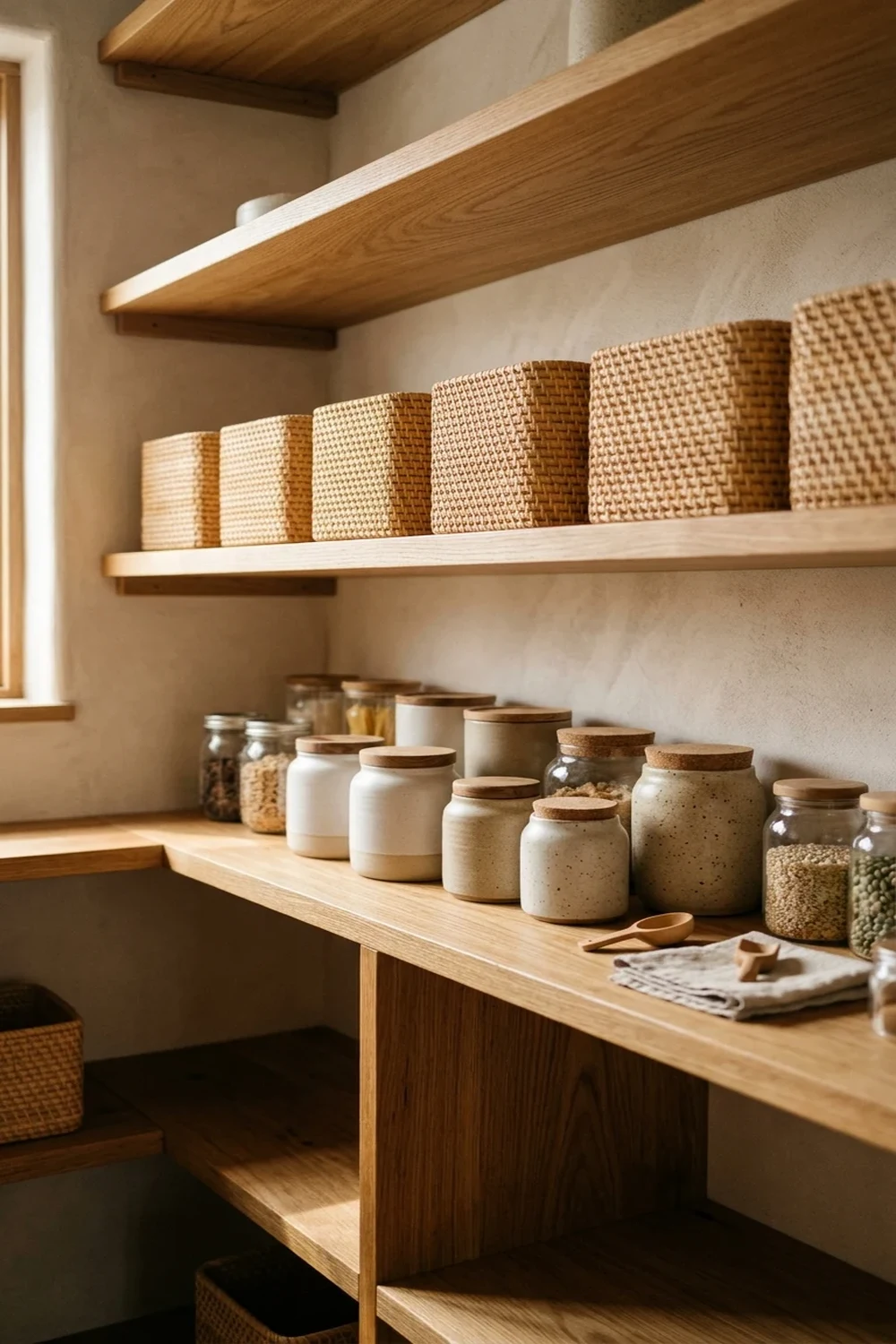
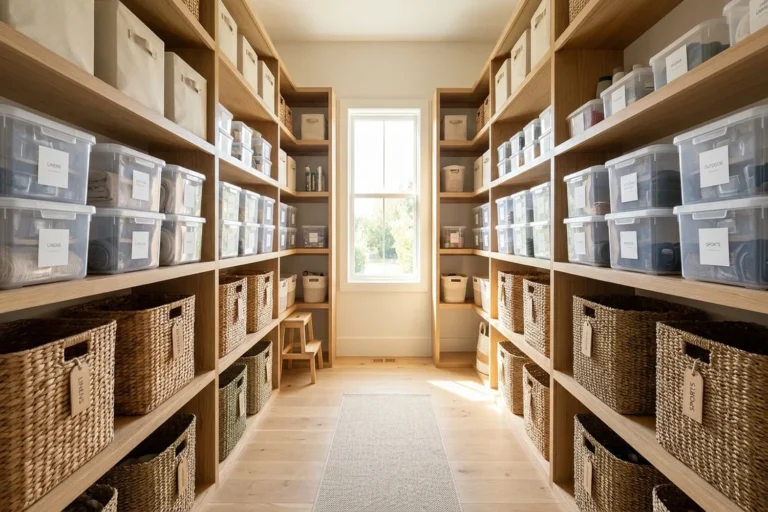
Basket Group Storage: How to Organize Loose Pantry and Kitchen Items
Basket group storage is a Japanese organizing technique that unifies mismatched items into modular woven bins to eliminate visual chaos on open shelves. By grouping odd-shaped packages into uniform, liftable containers, this method reduces shelf clutter while keeping cooking essentials instantly accessible.
- Standardized Container Footprints: Grouping dry goods into identical woven or rattan bins creates uniform visual lines that mask irregular packaging shapes.
- Category-Based Allocation: Assigning dedicated baskets to distinct tasks, such as breakfast staples, baking supplies, or condiment backups, prevents cross-contamination of zones.
- Weight-Balanced Shelf Positioning: Placing heavy bulk items in bottom-shelf baskets and lightweight snack pouches at eye level protects shelving integrity and streamlines retrieval.
- Two-Touch Accessibility: Limiting storage depth so items require no more than two physical touches to remove preserves long-term pantry maintenance.
- Natural Texture Integration: Incorporating woven materials introduces warm tactile elements that soften sterile kitchen cabinetry without adding visual noise.

Layered Vanity Drawers: Tiered Cosmetics Organization for Small Spaces
Layered vanity drawer organization separates beauty products across shallow, tiered trays to prevent vertical clutter and messy piles. This Japanese system assigns specific depths to makeup categories, cutting daily morning search times by more than 50% through rapid visual scanning.
- Zoned Product Tiers: Allocating the top shallow tier for daily complexion essentials, middle trays for eye palettes, and lower compartments for lipsticks guarantees intuitive access.
- Customizable Acrylic Dividers: Utilizing modular clear inserts stops cylindrical cosmetics and compacts from rolling when drawers slide open.
- Frequency-Based Hierarchy: Positioning frequently applied skincare bottles in the immediate front zone leaves backup supplies neatly stored in rear sections.
- Vertical Compact Stacking: Storing pressed powders and eyeshadow palettes on edge like miniature books allows immediate label recognition without shifting items.
- Daily Reset Discipline: Maintaining a strict one-in-one-out boundary per sub-tray stops vanity collections from exceeding drawer volume.

Hidden Toy Storage: Minimalist Cube Shelving Ideas for Clutter-Free Playrooms
Hidden toy storage keeps children’s living spaces visually calm by concealing high-stimulus toys inside low-profile cube bins when playtime ends. This method establishes an effortless cleanup routine for young children while preserving minimalist Japanese interior aesthetics throughout shared home environments.
- Low-Profile Cube Architecture: Positioning sturdy cube shelving under window lines maintains open sightlines and keeps storage bins safely within a toddler’s reach.
- Single-Category Bin Rule: Restricting each opaque woven basket to one toy type, like wooden blocks or miniature train tracks, stops overwhelming multi-toy chaos.
- Visual Label Systems: Affixing discreet graphic icon tags on bin exteriors empowers early learners to return items independently without adult guidance.
- Toy Rotation Scheduling: Storing secondary toy collections out of sight in closets and rotating bins monthly sustains genuine child engagement.
- Calming Visual Harmony: Choosing neutral fabric or woven seagrass bins blends active play areas seamlessly into calm living room decor.
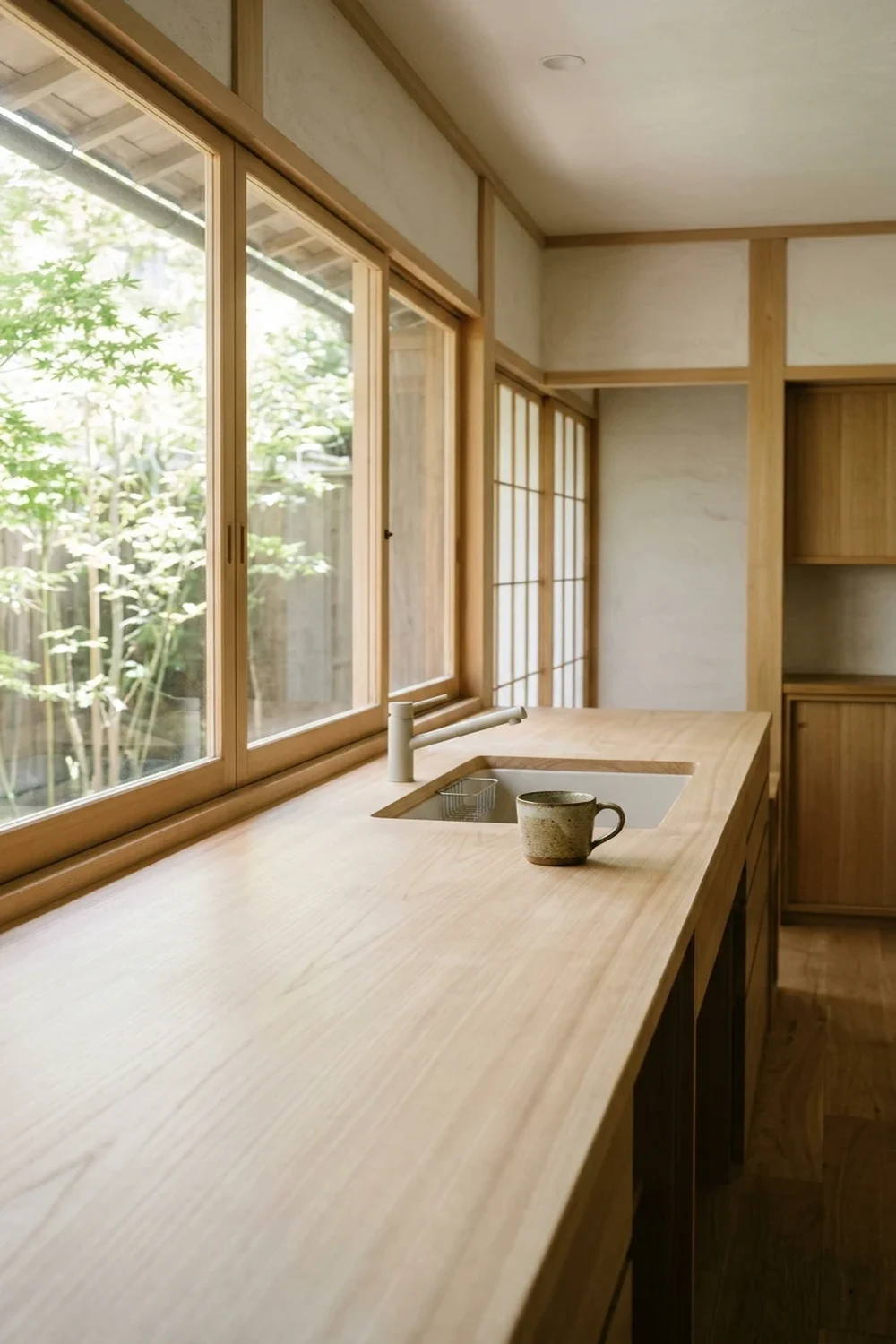
Clear Counter Rule: How Japanese Kitchen Minimalism Transforms Daily Cooking
The clear counter rule is a core Japanese organizing practice requiring kitchen surfaces to remain completely clear of appliances and utensils outside active meal preparation. By treating countertop space solely as a dynamic workstation rather than static storage, kitchens maintain visual tranquility and effortless sanitation.
- Zero-Base Counter Surface: Storing blenders, toasters, and condiment caddies inside dedicated lower cabinets keeps food prep surfaces entirely unobstructed.
- Strict Two-Item Allowance: Permitting only essential daily objects, like a functional electric kettle or a single ceramic teapot, prevents kitchen clutter creep.
- Instant Wipe-Down Workflow: Keeping countertops bare removes physical barriers, reducing post-cooking cleanup routines to under two minutes.
- Dedicated Cabinet Appliance Bays: Housing small electrical appliances on slide-out cabinet shelves provides fast appliance access without sacrificing visual calm.
- Reflective Ambient Light: Clearing polished counter planes maximizes natural light distribution, creating an airy sense of spaciousness in compact kitchens.
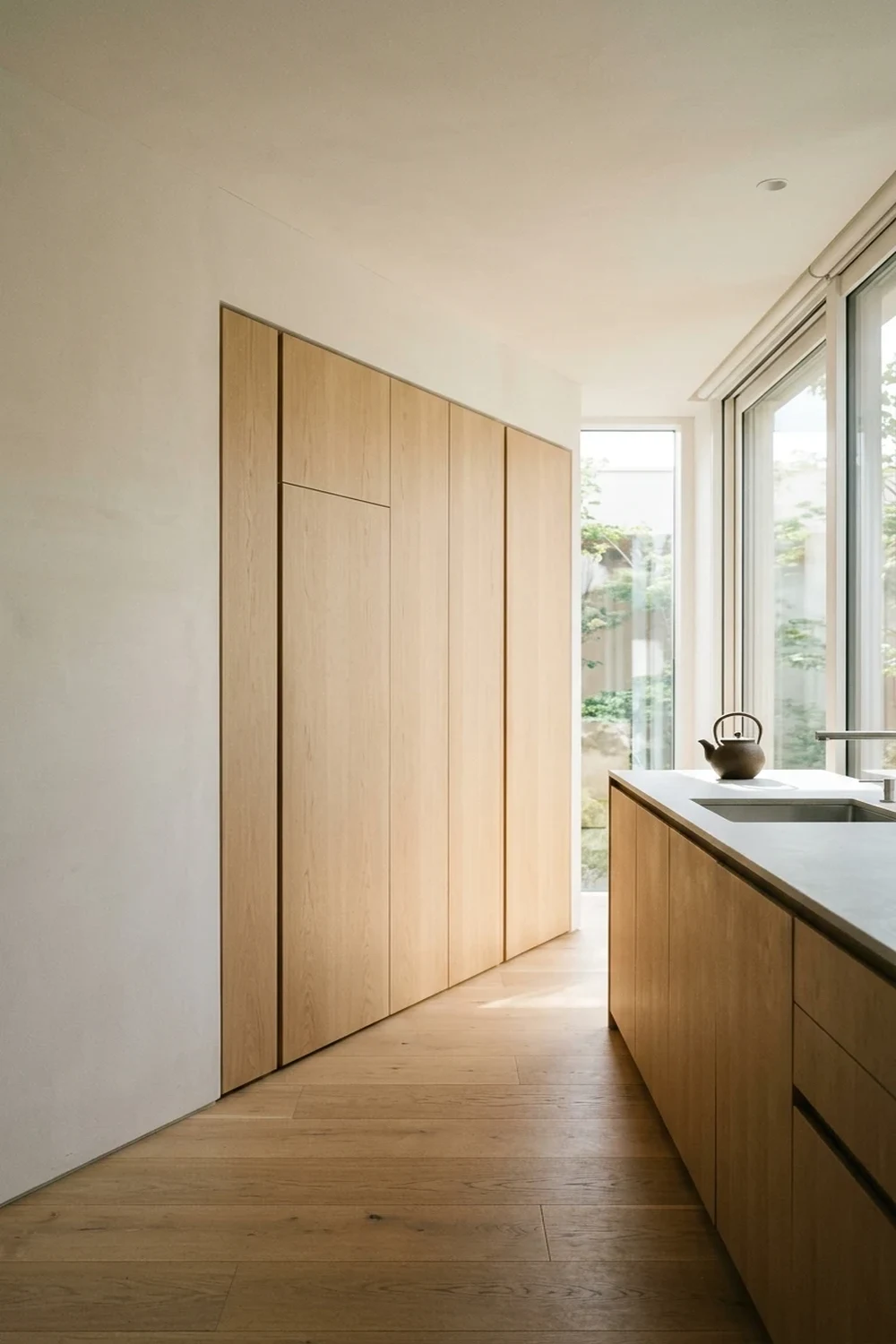
Seamless Cabinet Storage: How Handleless Japanese Millwork Eliminates Visual Noise
Seamless cabinet storage is an architectural organizing strategy that integrates floor-to-ceiling, flat-panel cabinetry directly into walls to make storage hardware completely invisible. By removing surface projections like pulls and ornate trim, this method eliminates visual interruptions and expands perceived room volume by up to 30 percent in compact floor plans.
- Architectural Camouflage: Flat cabinet doors painted to match wall finishes conceal small appliances, pantry items, and utility gear behind flush surfaces.
- Push-to-Open Latches: Mechanical touch latches remove the need for exterior hardware, preventing clothing snags and keeping cabinet planes uninterrupted.
- Full-Height Verticality: Extending millwork from floor to ceiling eliminates open gaps above cabinets that traditionally accumulate dust and random clutter.
- Zoned Task Interiors: Internal shelves organize contents by frequency of use, positioning daily dinnerware between chest and eye level for rapid retrieval.
- Integrated Hidden Lighting: Recessed LED channel strips illuminate internal compartments automatically upon opening without creating external shadows.
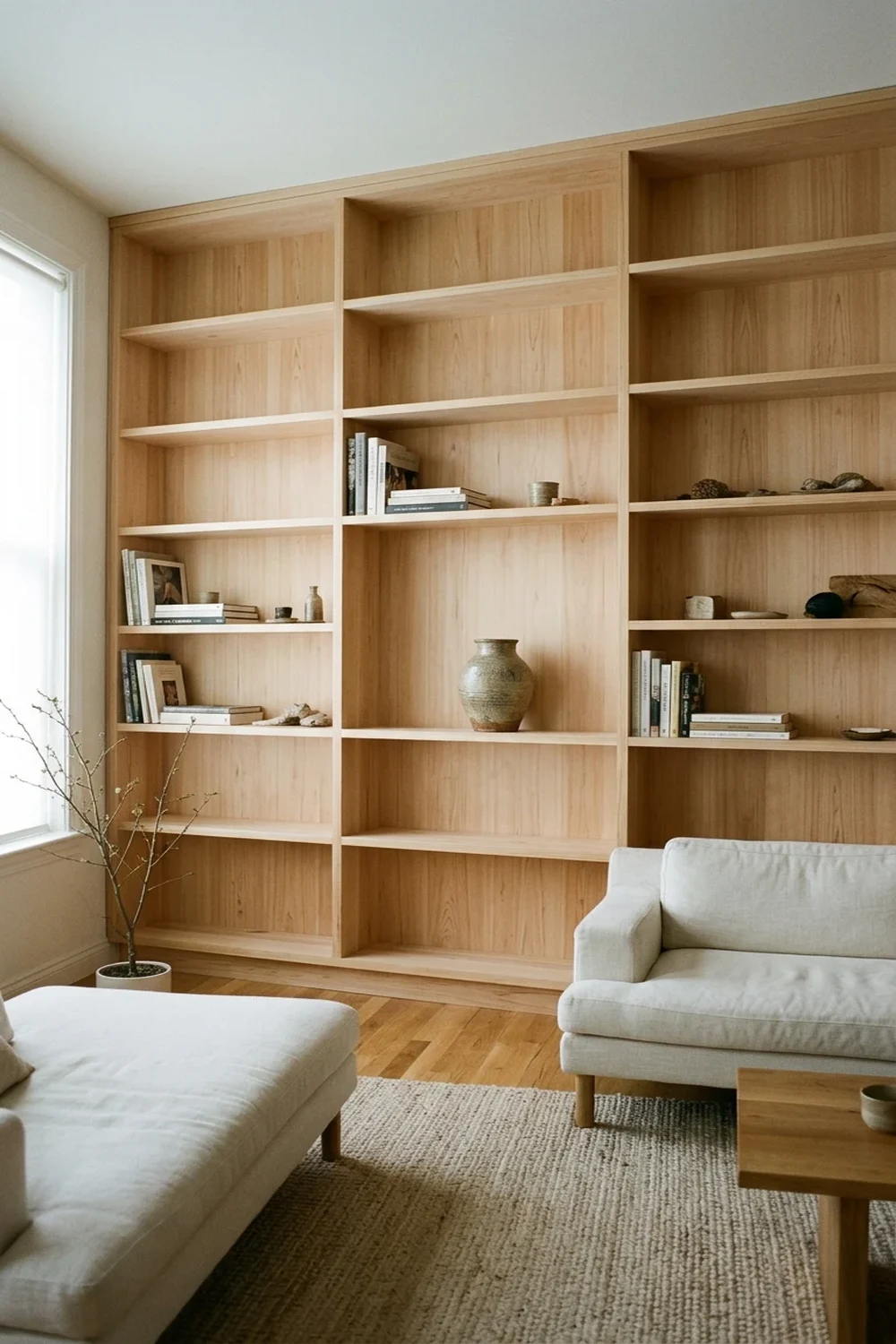
Intentional Empty Shelves: Applying the Japanese Concept of Ma to Home Organization
Intentional empty shelving is the disciplined practice of leaving 30 to 50 percent of open storage surfaces deliberately bare to provide visual breathing room. Grounded in the Japanese aesthetic concept of ma (negative space), this method treats emptiness not as wasted capacity, but as an essential design element that reduces cognitive overload.
- The 40 Percent Buffer Rule: Reserve nearly half of each open shelf surface as unassigned negative space to prevent visual crowding.
- Ma Aesthetic Balance: Emptiness highlights the beauty of adjacent books or stoneware, elevating humble everyday items into calm focal points.
- Frictionless Resets: Leaving open space on central ledges provides an immediate landing zone for daily items without triggering immediate clutter piles.
- Dust and Air Circulation: Uncrowded shelves improve natural room airflow and reduce surface dust accumulation by up to 40 percent.
- Curated Possession Limits: Establishing rigid spatial boundaries stops the impulse to buy redundant decorative trinkets just to fill open ledges.
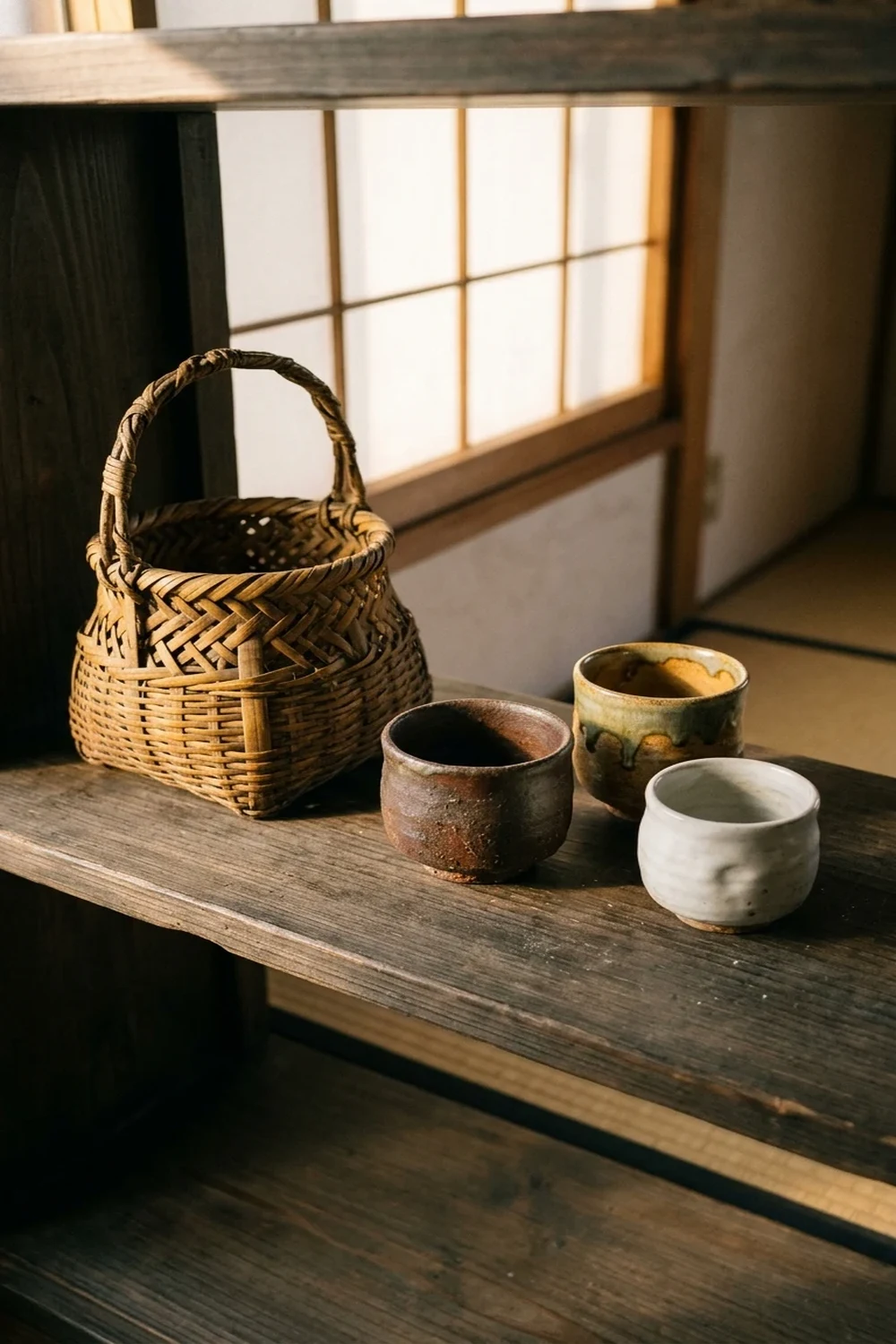
Balanced Shelf Styling: Using Asymmetrical Groupings for Functional Harmony
Balanced shelf styling is a Japanese display methodology that arranges functional necessities and decorative items in asymmetrical, odd-numbered groupings to create organic visual equilibrium. Rather than enforcing rigid Western symmetry, this technique pairs closed woven baskets for concealed utility with open displays of handcrafted ceramics.
- Rule of Uneven Groupings: Arrange displayed items in clusters of three or five to produce natural, dynamic sightlines across the shelving unit.
- Triangular Spatial Geometry: Position tallest items in the center or offset corner, cascading outward with lower elements to guide eye movement smoothly.
- Hybrid Open-Closed Ratios: Keep bottom tiers enclosed with rattan baskets for utilitarian cords, while maintaining open top shelves for curated ceramics.
- Natural Texture Contrasts: Combine matte earthenware, woven bamboo bins, and raw timber boards to add tactile warmth without visual clutter.
- Task-Based Height Staging: Place heavy reference volumes and storage totes on low ledges, keeping lightweight sculptural pieces at eye level.
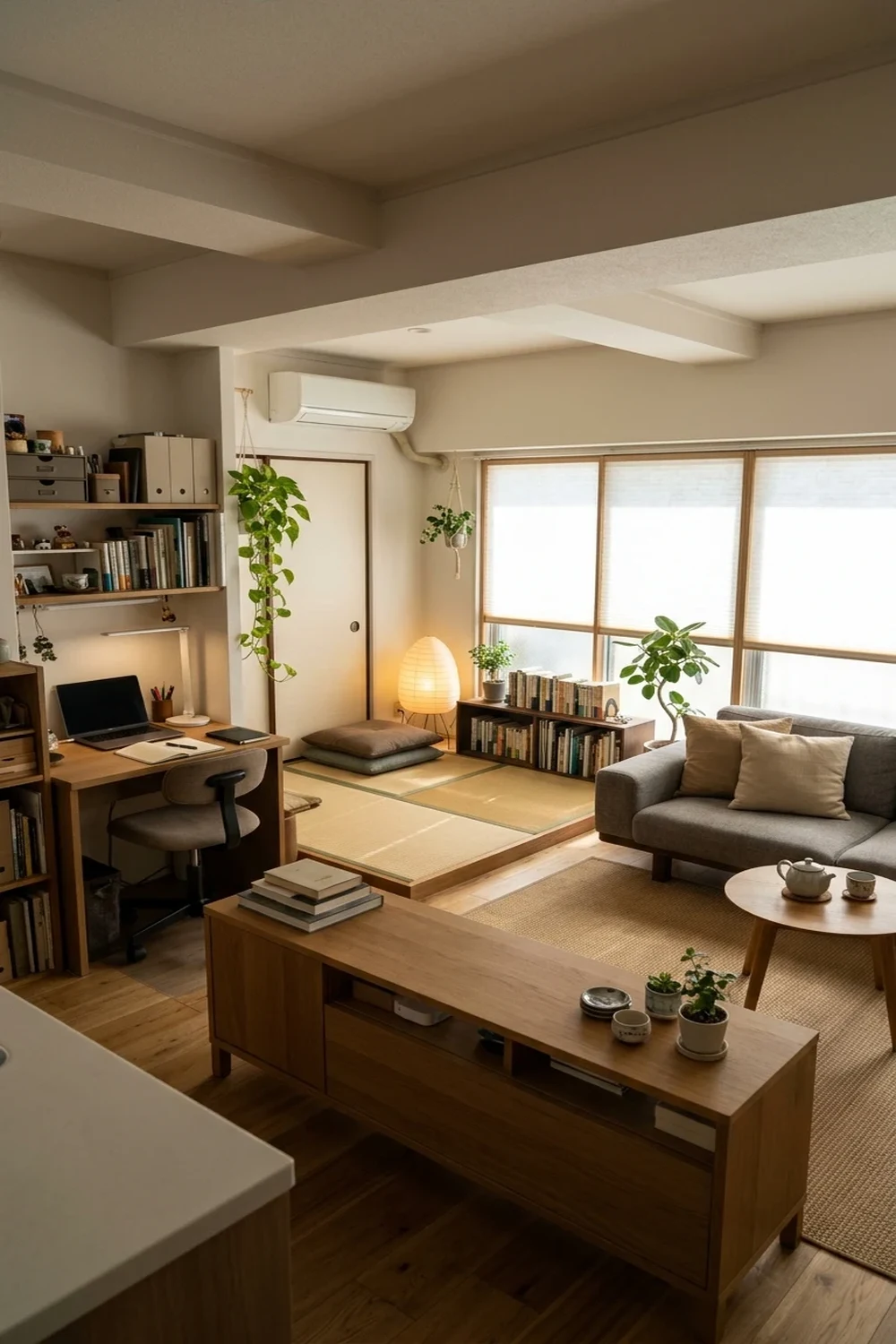
Zonal Living Corners: Creating Defined Activity Micro-Hubs in Small Spaces
Zonal living corners partition multifunctional open-concept rooms into dedicated micro-stations for working, resting, and dining using furniture boundaries rather than permanent walls. Popularized in compact Tokyo studio apartments, this spatial discipline ensures every daily activity possesses dedicated storage tools, preventing habits from colliding across the home.
- Low-Profile Boundary Markers: Low credenzas and open-backed cedar shelving separate living areas from desks without blocking window light.
- Single-Purpose Spatial Anchors: Dedicate specific corners exclusively to solitary rituals, such as morning reading, laptop work, or tea preparation.
- Localized Utility Bins: Store task-specific equipment directly inside its corresponding zone, ensuring workout bands remain at the mat and papers stay at the desk.
- Layered Zone Lighting: Install dedicated, low-wattage paper floor lamps and clip-on reading sconces to illuminate individual activity areas independently.
- Zero-Migration Policy: Return accessories immediately to their designated quadrant post-use, stopping multi-room clutter drift across shared living spaces.

25. Soft Drawer Order: Fabric Bins for Small Garment Control
Soft drawer order replaces chaotic clothing piles with breathable fabric inserts that partition dressers into dedicated sub-compartments. Unlike rigid plastic dividers that scratch wood and waste corner space, collapsible linen and cotton inserts expand slightly to stabilize delicate garments while maintaining strict visual boundaries.
- Modular Segmentation: Insert pliable canvas bins into dresser drawers to segment underwear, socks, and scarves into individual micro-territories without shifting during opening.
- Compression Protection: Cushion fine knitwear and silk garments against abrasive wooden drawer slides to eliminate snagging and friction wear.
- Flexible Footprint: Collapse modular fabric organizers completely flat when laundry volumes fluctuate, eliminating dead storage space.
- Upright Maintenance: Pair fabric boxes with the KonMari vertical file fold to prevent rolled garments from toppling over.
- Breathable Airflow: Use unbleached linen and cotton boxes to encourage natural air circulation, preventing seasonal mustiness and stale moisture buildup.
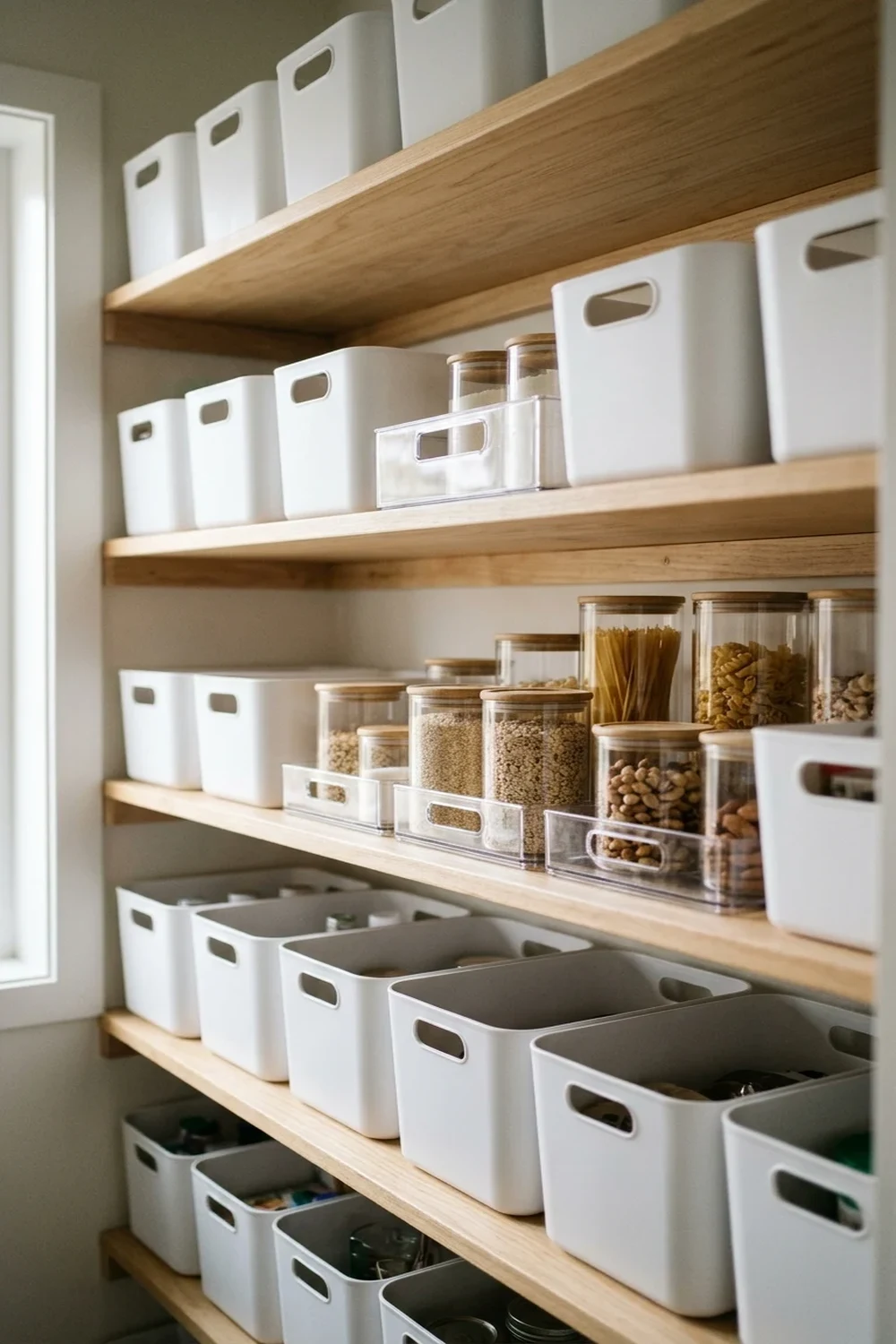
26. Budget Storage Base: 100-Yen Shop Systems That Last
A budget storage base builds systematic home organization using uniform, low-cost plastic bins and acrylic trays from 100-yen retailers like Daiso and Seria. Japanese organizing relies on geometry and alignment rather than luxury furniture, proving that visual cohesion depends entirely on consistent dimensions rather than expensive branded materials.
- Standardized Modules: Purchase multi-packs of identical white or translucent storage caddies to create a clean, uniform grid across utility shelves.
- Shallow Drawer Inserts: Fit standardized one-dollar stationery trays into desk and kitchen drawers to partition cutlery, hairpins, and loose stationery.
- Pantry Decanting Baselines: Utilize stackable BPA-free dry bins to decant grains and bulk spices, securing consistent shelf depths on a minimal budget.
- Easy System Replication: Expand storage capacity effortlessly by picking up matching SKUs as household inventories grow over time.
- Accessible Utility Relocation: Use lightweight handled baskets in high-reach upper cabinets, allowing safe two-finger pull-down access without strain.
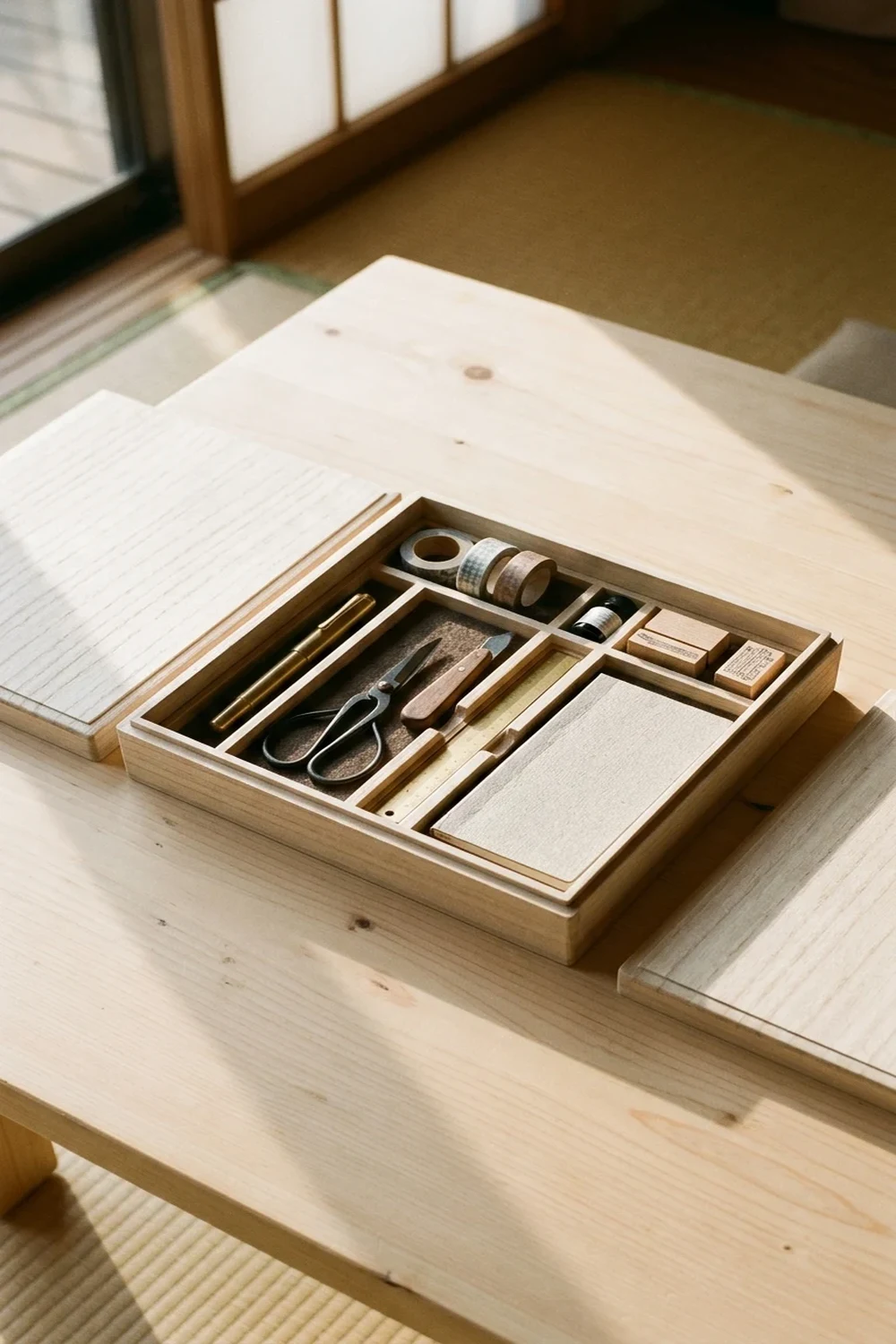
27. Purpose Storage Boxes: Specialized Containers for Every Task
Purpose storage boxes eliminate decision fatigue by grouping every tool, consumable, and accessory needed for a single repetitive activity into one dedicated, portable container. Instead of scattering task supplies across multiple rooms, this Japanese method centralizes workflows into self-contained kit boxes that return to closets instantly when work finishes.
- Single-Activity Bundling: Store entire recurring task setups—such as shoe polish supplies, gift-wrapping rolls, or seasonal medicine kits—in dedicated labeled boxes.
- Mobile Kit Utility: Equip task boxes with integrated handles, allowing quick transit from storage closets straight to dining tables or kitchen islands.
- Visual Reset Signals: Identify misplaced supplies immediately because a missing item leaves a noticeable void within its custom-molded interior.
- Inventory Limit Anchoring: Restrict supplies strictly to the volume of the box, stopping impulse purchases before storage limits get breached.
- Rapid Pack-Down Rituals: Conclude household projects in under two minutes by simply shutting the lid and returning the kit to its assigned shelf.
28. FAQs: Essential Answers on Japanese Organizing Systems
Japanese organizing systems achieve long-term order by addressing household clutter as an inventory volume issue rather than a storage furniture deficiency. By embedding everyday items into rigid spatial zones and maintaining clear boundary lines, these methods keep small spaces functional with minimal daily maintenance.
- Volume First, Storage Second: Japanese methods stay organized longer because decluttering precedes container purchases, ensuring storage units never accommodate useless possessions.
- Vertical Storage for Small Apartments: Small living quarters benefit most from the vertical fold technique and full-height handleless cabinets, which maximize cubic volume without stealing floor clearance.
- The KonMari and Danshari Influence: Danshari (refusal, disposal, detachment) teaches household members to reject excess goods before items ever enter the entryway threshold.
- Zero Counter Clutter Standard: Keeping flat kitchen and bathroom counters completely bare ensures surfaces wipe clean in seconds, preserving daily mental serenity.
- Permanent Item Addresses: Homes remain permanently tidy because every single object retains an undisputed home address, preventing transient pile-ups across living zones.
How Can Japanese Organizations Stay Organized Longer Through Habitual Systems?
Japanese organizations stay organized longer by coupling physical decluttering with behavioral routines that stop clutter before it starts. Instead of relying on periodic marathon cleaning sessions, the Japanese methodology embeds daily reset micro-habits and strict capacity limits into the household routine.
- The 5S Methodology Habit: Adopting Seiri (Sort), Seiton (Set in order), Seiso (Shine), Seiketsu (Standardize), and Shitsuke (Sustain) ensures items maintain a fixed address and daily inspection rhythm.
- The One-In, One-Out Mandate: Introducing a replacement-only policy for clothing, homewares, and kitchen supplies prevents inventory creep and maintains storage equilibrium permanently.
- Evening Reset Ritual (Kata): Spending five focused minutes every evening returning surfaces to a baseline state eliminates overnight clutter accumulation.
- Intentional Negative Space (Ma): Preserving 20 to 30 percent empty capacity inside every drawer and shelf prevents overfilling and makes returning items effortless.
Which Japanese Organization Idea Works Best for Small Apartments and Compact Spaces?
Low-profile multipurpose furniture paired with vertical drawer folding stands as the single best Japanese organization idea for small apartments. This combined approach protects open eye-level sightlines while doubling usable wardrobe capacity in tight urban square footage.
- Vertical Folding (KonMari Method): Storing folded garments upright in shallow compartments allows instant top-down visibility and stops drawer disruption during daily clothing selection.
- Low-Profile Storage Furniture: Placing floor-grazing credenzas and low tea tables opens vertical wall space, making compact studio rooms appear substantially larger.
- Closed Storage Concealment: Hiding everyday appliances and cables behind uniform, handle-free cabinet doors removes visual fragmentation in one-room floor plans.
- Dedicated Drop Zones (Genkan Principle): Confining outerwear, keys, and daily footwear to a miniature entry zone prevents outside debris and belongings from spreading into living quarters.
Key Takeaways & Final Thoughts
Sustainable home order begins with questioning the necessity of each possession rather than sourcing more bins to store excess volume. Implementing Japanese organizational principles like low-profile furniture, vertical folding, and functional drop zones transforms storage from an endless chore into an intuitive, low-effort lifestyle habit.
Start small by selecting one high-impact area—such as a messy wardrobe drawer or the entryway genkan—to apply strict category zoning and intentional breathing room before expanding throughout your entire living space.