17 Smart Lunch Box Organization Ideas for 2026
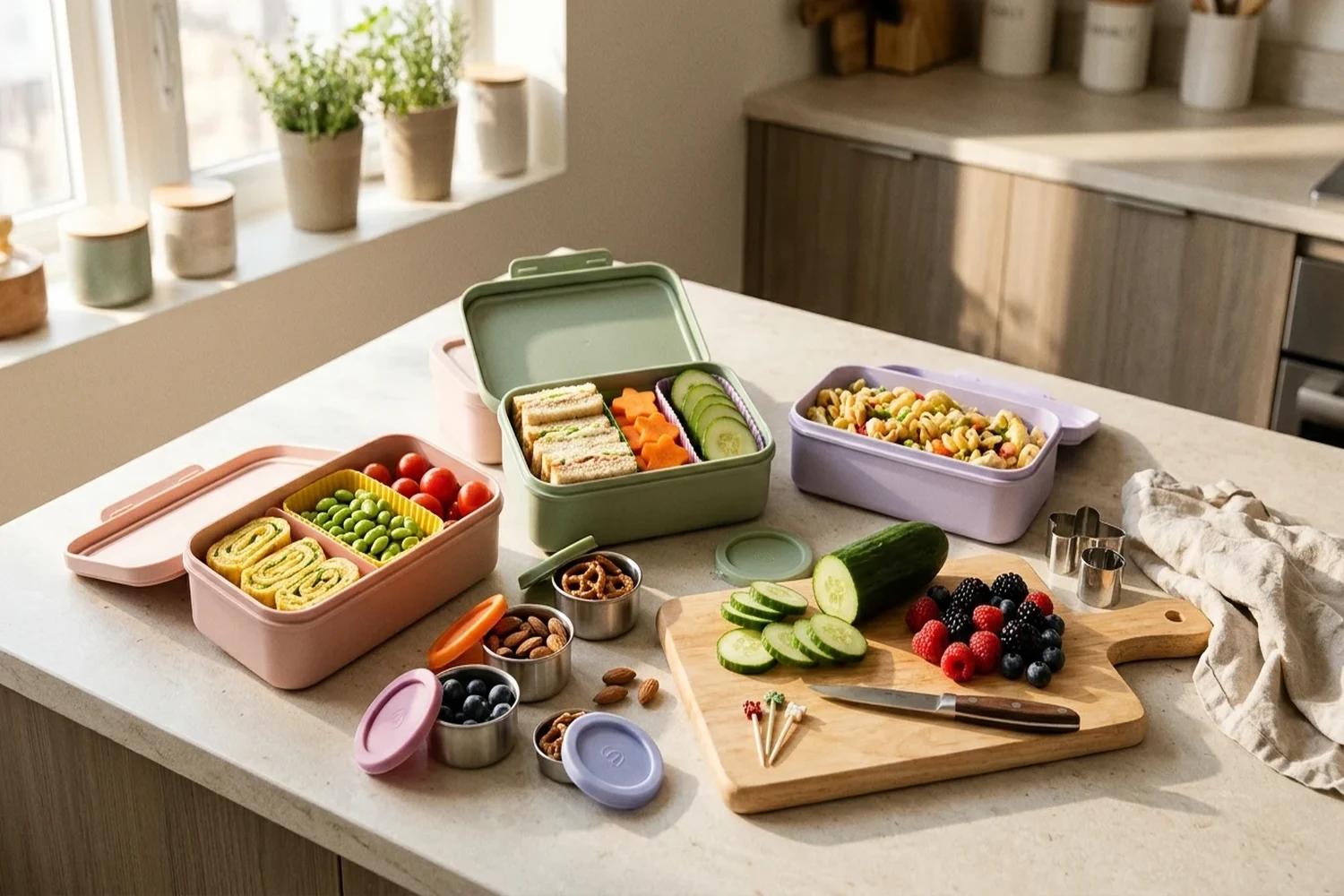
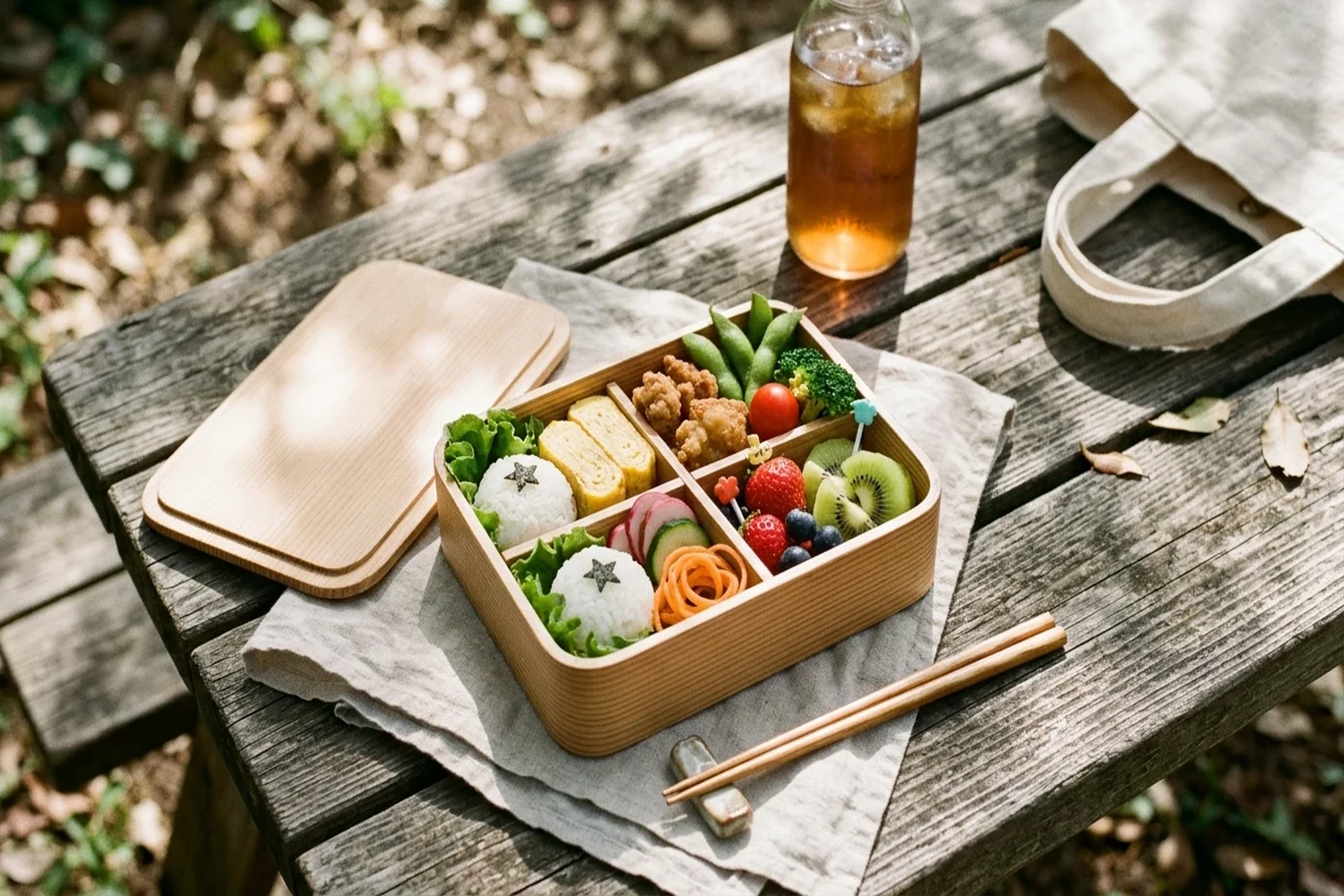
A successful lunch box organization system eliminates morning chaos, stops food leaks, and preserves fresh meal textures by pairing dedicated compartment zones with modular containers. Implementing structured bento layouts and vertical lid storage cuts daily packing time in half while preventing squished, unappetizing food. Upgrading to uniform, purpose-driven storage components turns frantic school and work prep into a seamless, repeatable routine.

What are the Best Containers for Lunch Box Organization?
The best containers for lunch box organization are leakproof, modular bento systems made from borosilicate glass or food-grade 18/8 stainless steel that match your specific meal routine. Choosing the correct storage vessels prevents soggy textures, eliminates messy sauce spills, and cuts weekday prep time by up to 40%.
- Hermetic Silicone Seals: Quality silicone gaskets keep vinaigrettes and dips locked in their designated zones to stop accidental leaks across compartments.
- Standardized Exterior Dimensions: Uniform footprints stack smoothly inside standard insulated lunch bags without tipping or crushing delicate items.
- Durable Food-Grade Materials: Non-porous stainless steel and tempered glass resist lingering food odors and withstand repeated commercial dishwasher cycles.
- Single-Lid Locking Latches: Multi-compartment bento containers with integrated latches allow swift access without juggling separate loose lids.
- Modular Sub-Inserts: Removable interior pods let you heat a warm protein portion while keeping crisp vegetables refrigerated and fresh.
Selecting standardized, high-performance containers transforms chaotic morning packing into an effortless, streamlined habit.
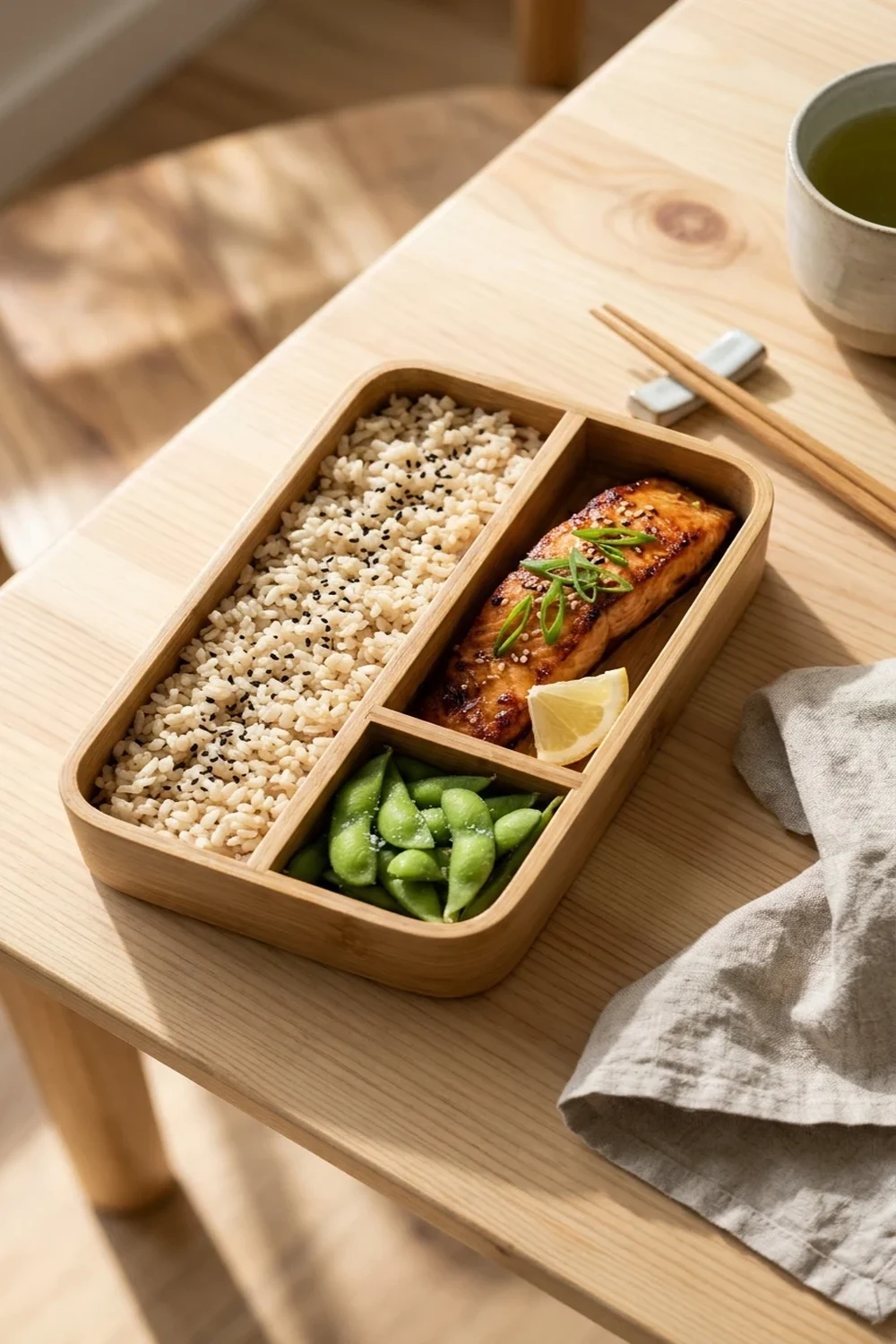
Built-In Meal Zones for Leakproof Lunch Packing
Built-in meal zones are fixed structural compartments welded or molded directly into a lunch container base to ensure zero flavor transfer between adjacent foods. This divided layout is ideal for hot rice dishes, curries, and moisture-rich sides that require strict spatial containment.
- Welded Structural Dividers: Fixed partition walls prevent saucy dishes from creeping under dividers and soaking crunchy sides.
- Integrated Portion Control: Pre-measured compartments automatically balance meals by allocating designated zones for proteins, grains, and greens.
- Thermal Integrity Preservation: Deep interior wells hold heat effectively when paired with an insulated stainless steel exterior casing.
- Streamlined Cleanup: Molded single-piece trays eliminate tiny crevices, preventing food trap zones and simplifying daily sanitation.
- Mess-Free Commuting: Secure perimeter lids with grooved silicone seals press down firmly against each wall to stop internal spillage.
Investing in permanent interior dividers guarantees that your complex, multi-item lunches stay as pristine as when you first packed them.

Size-Sorted Storage Systems for Fast Morning Prep
Size-sorted storage systems organize food containers into dedicated cabinet or drawer tiers based on uniform volume metrics, such as 250ml snack cups and 750ml main bowls. Grouping your kitchen vessels by matching footprint eliminates morning drawer clutter and speeds up packing decisions.
- Tiered Deep Drawer Bins: Clear acrylic bins group containers by exact volume so you locate the right size in under five seconds.
- Vertical Upright Lid Racks: Storing lids on their sides in slotted organizers keeps them visible and stops frustrating avalanches of mismatched plastic.
- Identical Footprint Nesting: Keeping vessel widths uniform allows bases of varying depths to nest cleanly without wedging stuck.
- Color-Coded Capacity Dots: Discreet silicone dots or rim highlights immediately signal which lid pairs with which specific container size.
- Dedicated Accessory Baskets: Shallow pull-out baskets keep mini sauce pots and dressing bottles separate from larger meal prep bowls.
Establishing consistent, size-graded zones in your kitchen cabinets keeps your storage orderly and makes assembling weekday meals completely friction-free.
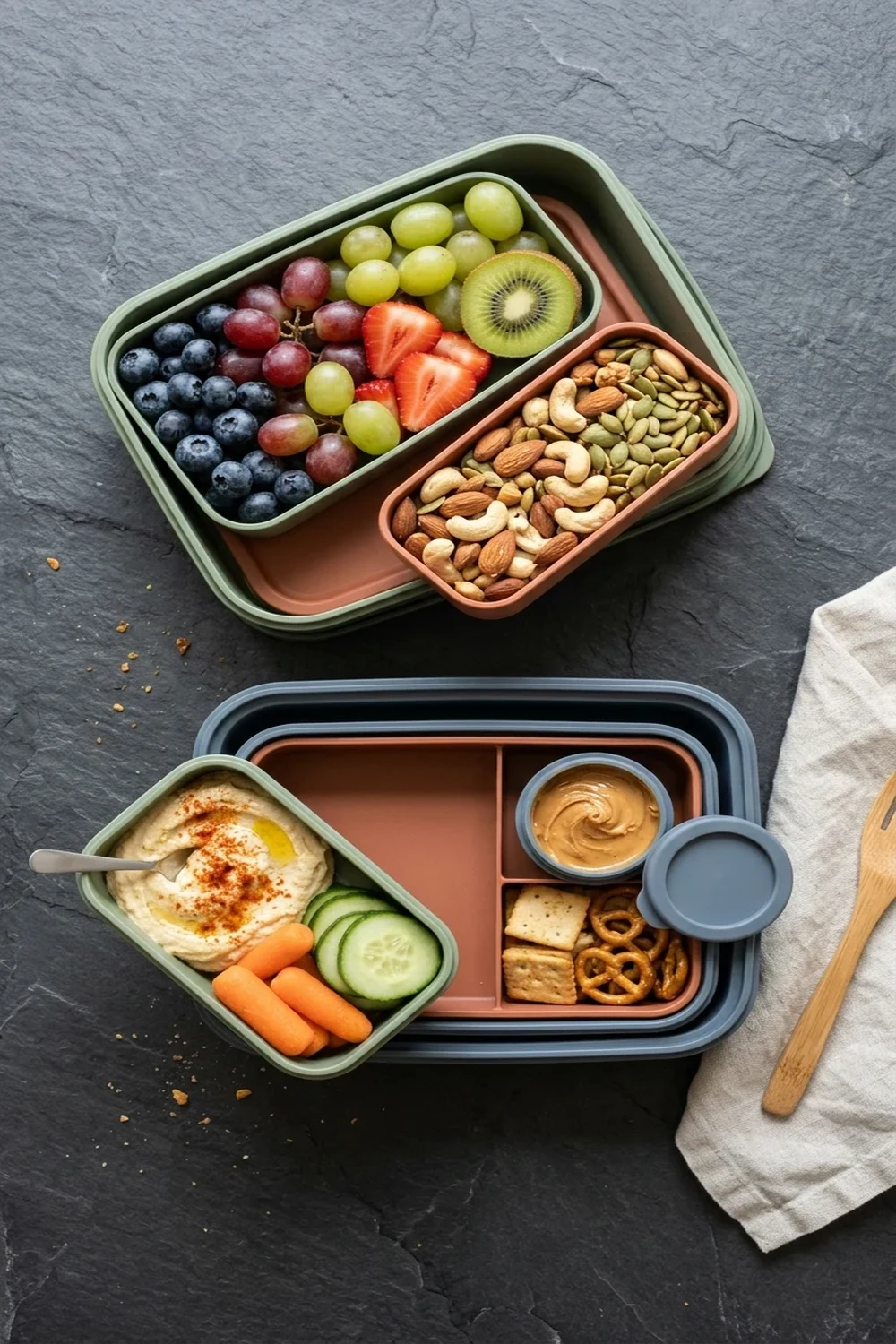
Modular Snack Layers for Flexible Daily Menus
Modular snack layers utilize shallow, stackable rectangular containers and interchangeable internal pods to separate dry snacks, fruits, and dips into customizable tiers. This flexible configuration prevents delicate crackers from absorbing fruit moisture while offering endless variety for busy schedules.
- Interchangeable Silicone Pods: Flexible silicone cups fit precisely inside shallow boxes to isolate juicy berries from dry baked snacks.
- Multi-Level Stackable Tiers: Two-tier interlocking containers allow savory midday mains to travel beneath delicate afternoon snacks.
- Pre-Portioned Grab-and-Go Units: Preparing three to four modular snack pods on Sunday night saves up to twenty minutes of daily weekday packing.
- Moisture-Lock Seal Caps: Independent mini sauce cups ensure dips like hummus and peanut butter remain completely sealed until mealtime.
- Mix-and-Match Flexibility: Swapping individual modules lets you tailor every day to changing calorie demands, school schedules, or gym workouts.
Embracing modular stacking turns your lunch container into an adaptable toolkit that flexes to fit whatever menu you crave.
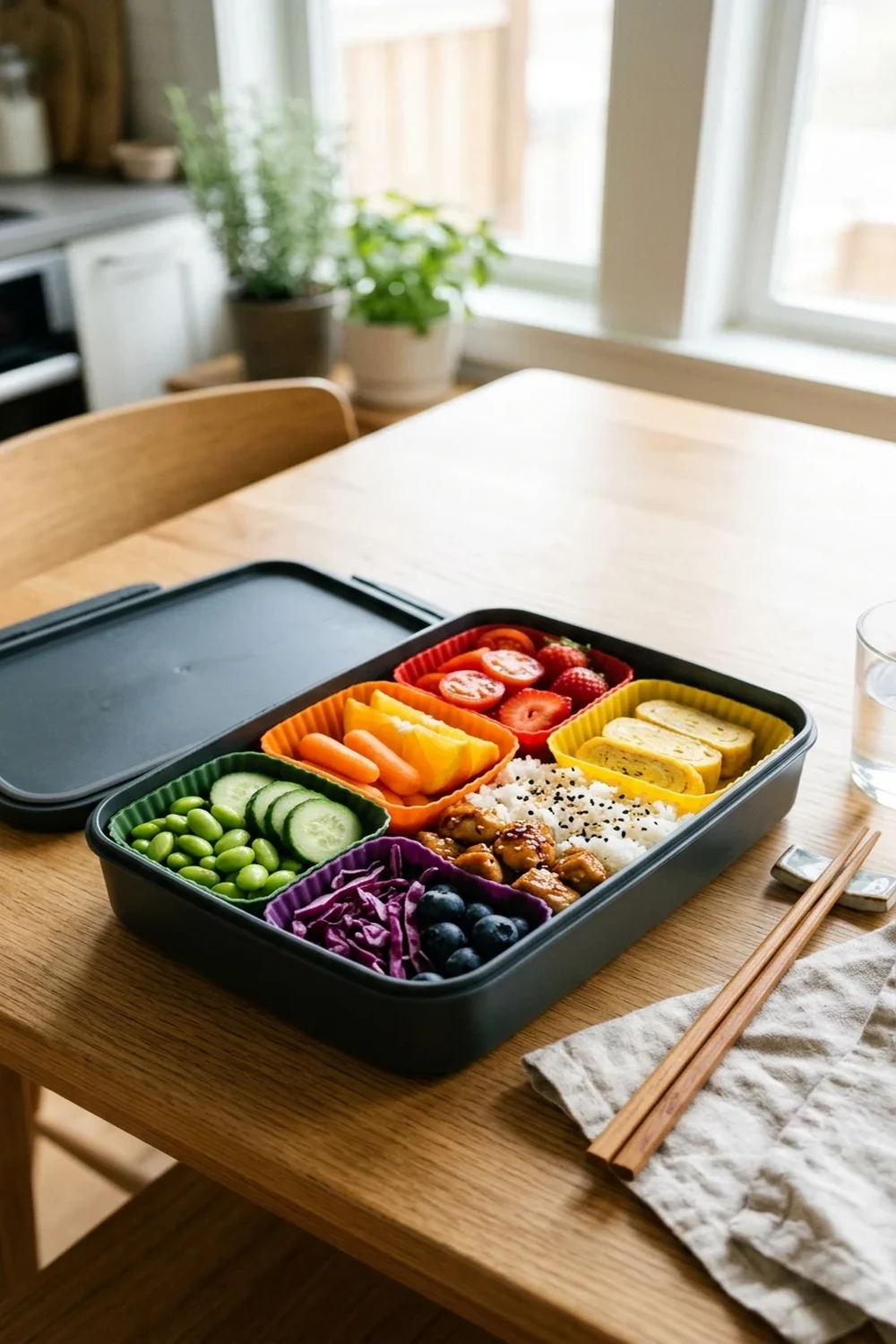
Color-Coded Sections for Visual Lunch Box Organization
Color-coded lunch box organization is a structured meal packing method that designates distinct hues or bright container zones to specific nutritional categories like proteins, produce, and whole grains. Establishing visual boundaries eliminates morning guesswork and prevents picky eaters from feeling overwhelmed by touching ingredients.
- Food Group Mapping: Assign specific container colors to core food categories, such as green for vegetables, red for fresh berries, and blue for protein sources.
- Speedy Morning Assembly: Use high-contrast colored compartments to recognize missing nutritional elements instantly before closing the lid.
- Picky Eater Friendly: Keep foods strictly isolated behind colored barriers so textures and flavors never cross-contaminate during transit.
- Nutritional Balance Auditing: Evaluate daily dietary diversity at a glance by ensuring every primary color section contains a fresh food item.
- Kid-Friendly Independence: Encourage children to pack their own balanced midday meals by following a simple color-matching routine.
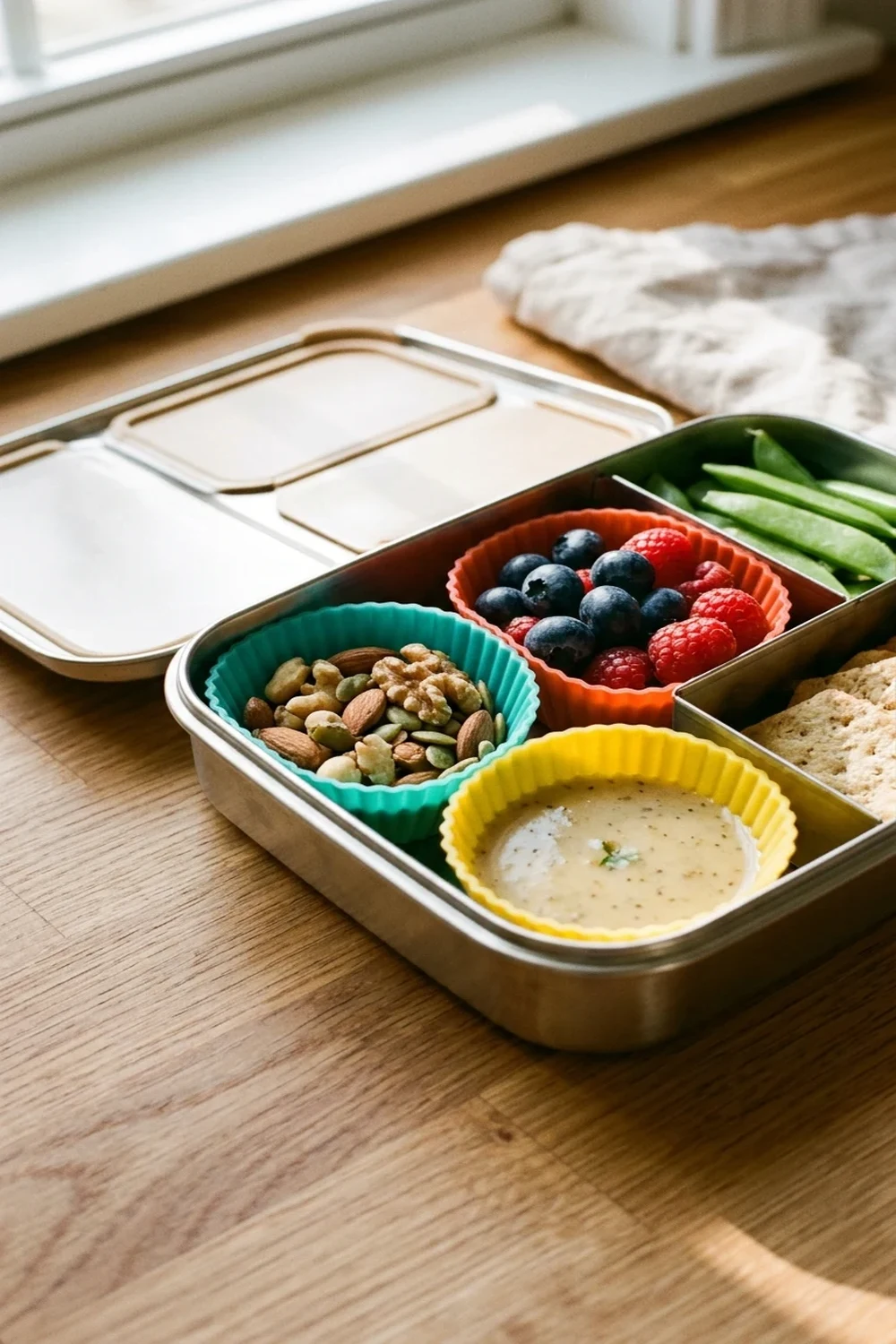
Mini Cup Control for Leakproof Snack Segregation
Mini cup control uses small silicone or BPA-free plastic pods placed inside a main container to isolate dips, juicy fruits, and tiny dry snacks. This micro-portioning technique prevents sogginess, secures wet ingredients, and maximizes usable space within standard bento compartments.
- Soggy Barrier Protection: Contain juicy berries, dressings, or salsa in dedicated mini pods to preserve the crisp texture of adjacent crackers.
- Modular Space Customization: Rearrange flexible square and round silicone cups daily to accommodate odd-shaped finger foods and trail mixes.
- Calibrated Portion Control: Measure 1-ounce to 2-ounce servings of dense condiments, seed mixes, or treats without packing extra bulky containers.
- Effortless Cleanup: Lift individual soiled mini cups directly into the dishwasher while keeping the larger exterior lunch box clean.
- Dynamic Snack Architecture: Prevent loose items like blueberries, pumpkin seeds, or pretzel twists from scattering across the lunch container.
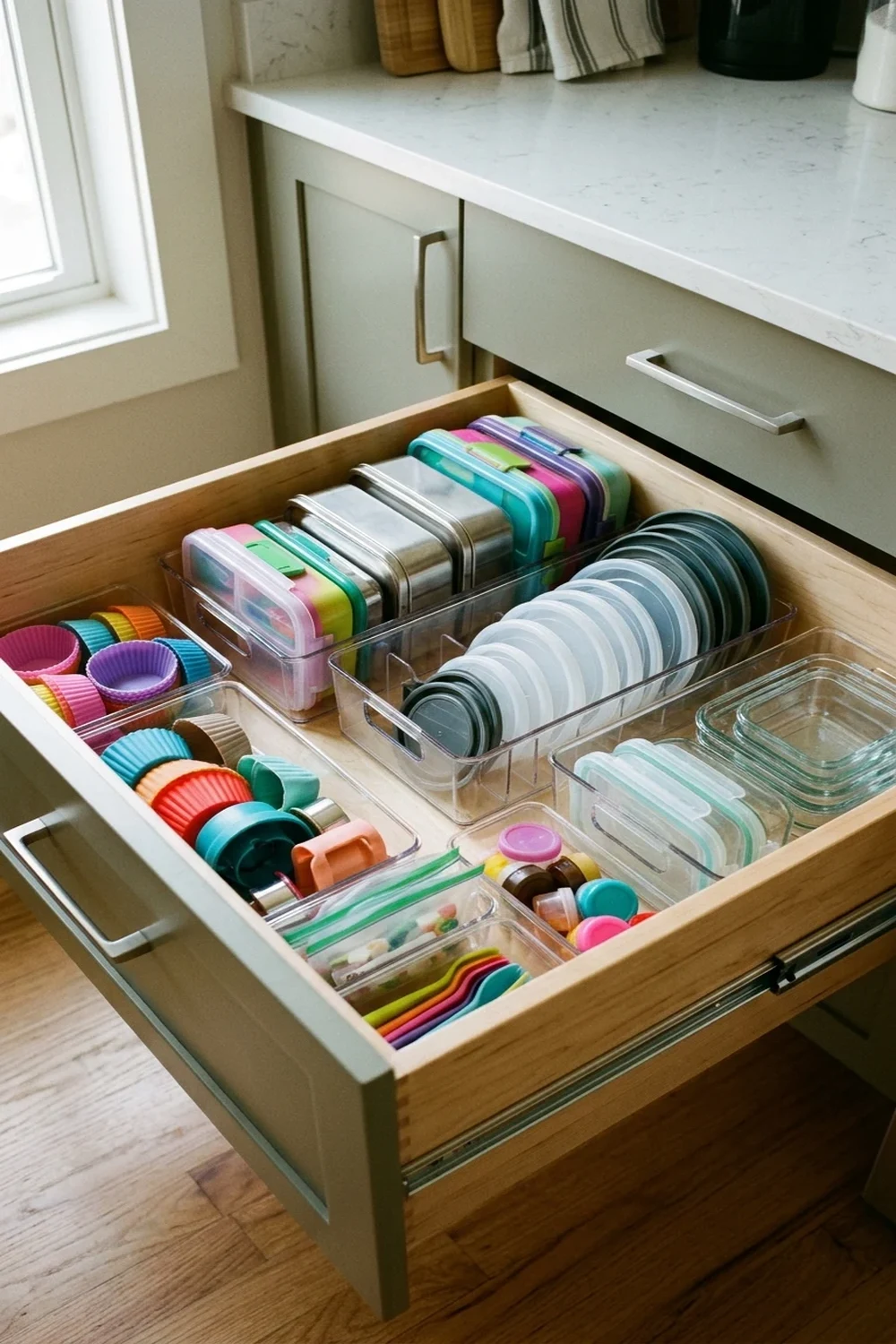
Grab-And-Go Drawer Setup for Fast Morning Packing
A grab-and-go lunch drawer is a dedicated kitchen station fitted with modular dividers that groups containers, matching lids, snack cups, and utensils in one accessible location. Centralizing meal-prep gear cuts morning prep time in half and eliminates the frustration of searching through cluttered cabinets.
- Functional Zone Division: Group lunch boxes, snack pods, and insulated thermoses into dedicated acrylic drawer bins for instant accessibility.
- Vertical Lid Filing: Store container lids upright in narrow wire racks to prevent messy avalanches and instantly locate matching seals.
- Accessory Sorting Trays: Keep compact items like reusable forks, silicone cups, and dressing containers neatly corralled in shallow organizers.
- Pre-Portioned Dry Snacks: Reserve the front drawer zone for non-perishable snack packs and seed bars to streamline last-minute additions.
- Family Packing Autonomy: Lower packing hurdles so family members can independently grab their containers and assemble wholesome midday meals.
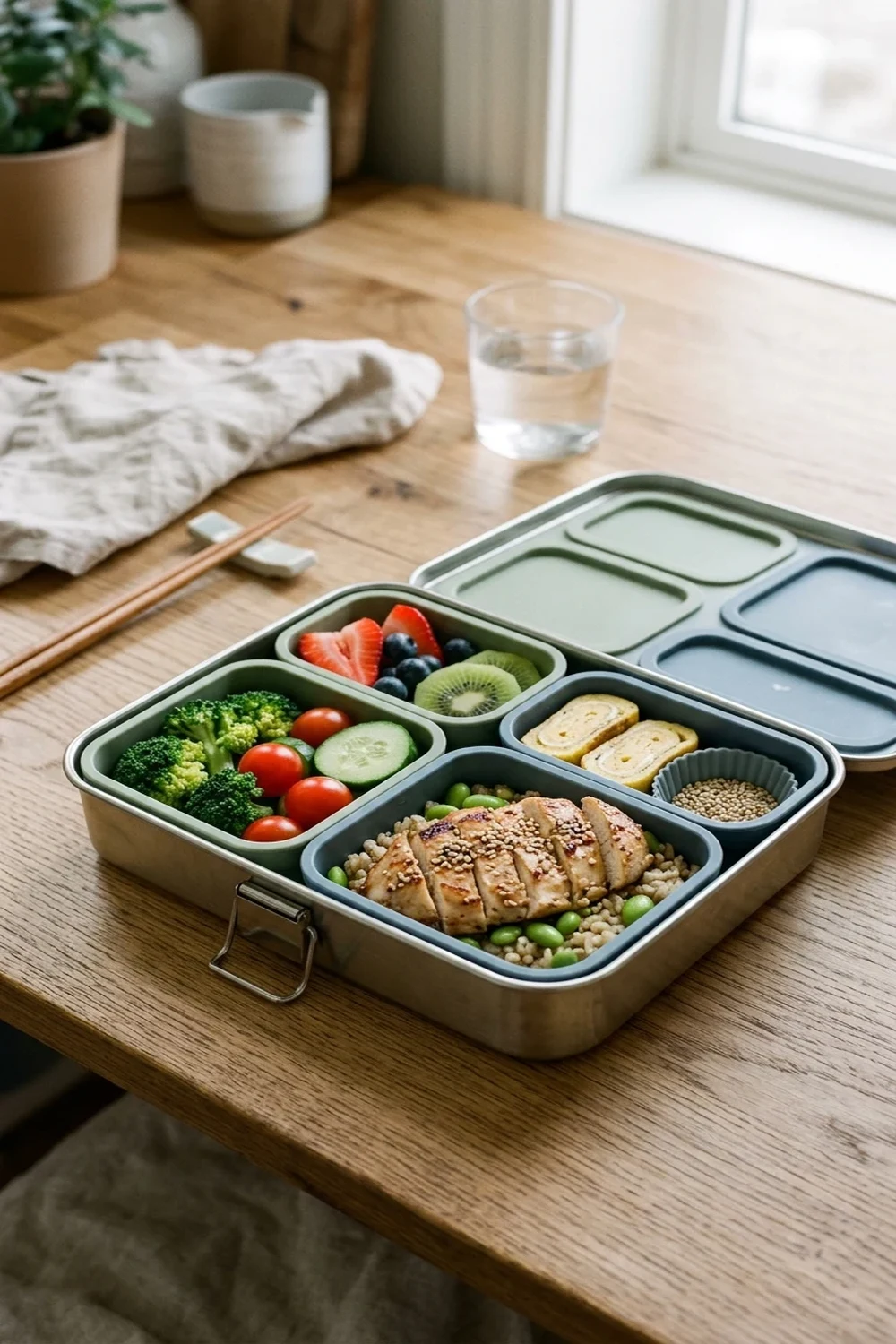
One-Box Balance for All-in-One Midday Nutrition
One-box balance is an all-inclusive packing strategy that relies on a single multi-compartment bento box to hold an entire balanced meal without secondary bags or loose containers. Packing proteins, fruits, carbohydrates, and treats into one secure unit minimizes washing duties and protects food from shifting.
- Single-Container Convenience: Pack an entire multi-course lunch into one unified bento footprint to streamline backpack storage and post-meal dishwashing.
- Built-In Ratio Guidance: Leverage pre-molded large and small sections to serve balanced portions of main dishes, produce, and wholesome snacks automatically.
- Impact and Shift Protection: Secure different dishes beneath a single airtight silicone gasket lid to stop internal ingredient movement during transit.
- Reduced Environmental Clutter: Eliminate the ongoing need for single-use plastic wrap, sandwich bags, and disposable zippered pouches.
- Predictable Daily Packing: Standardize your meal assembly routine by filling the same dedicated compartment layout every morning.
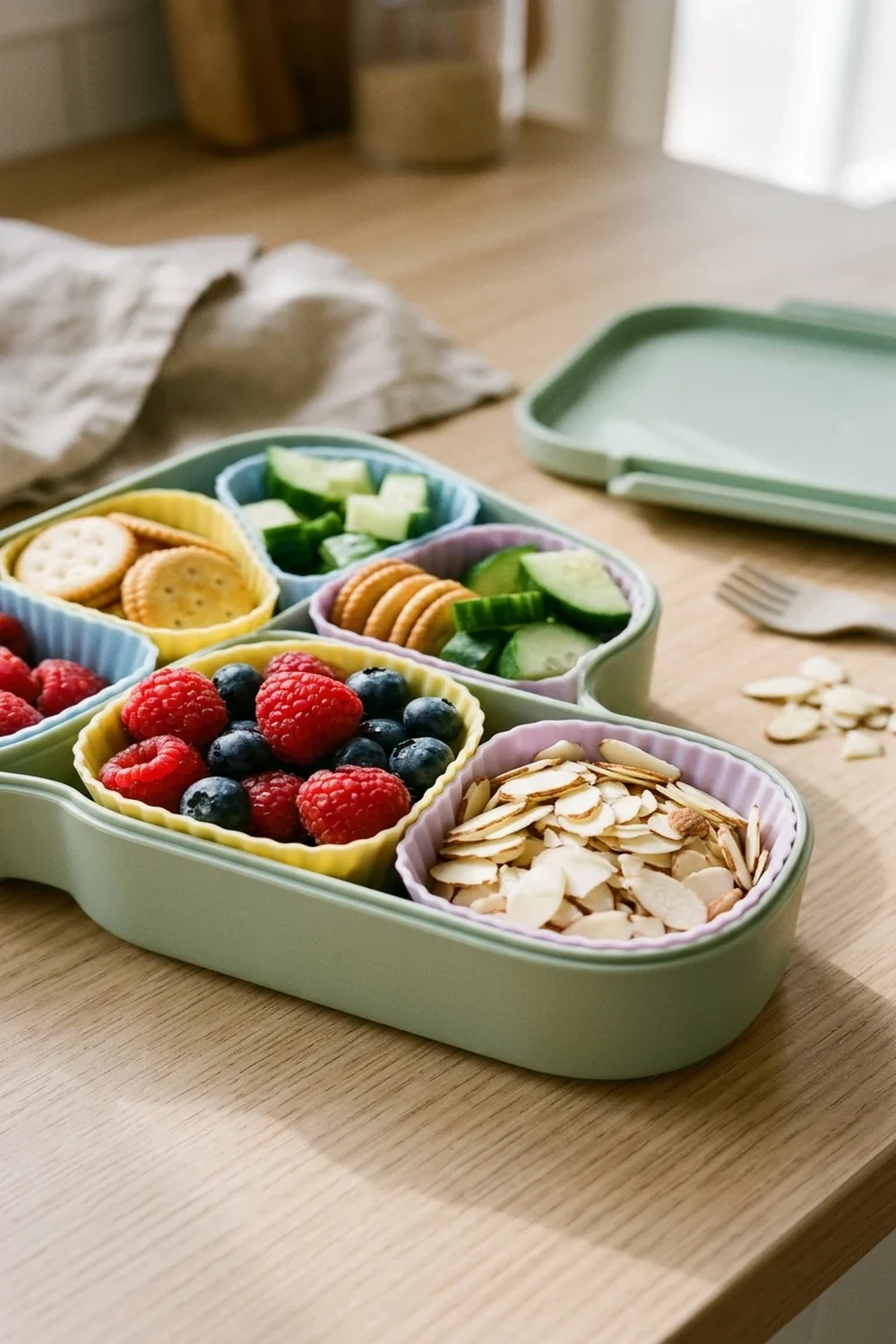
9. Mix-And-Match System: How to Build Modular Lunch Box Organization Sets
A mix-and-match lunch container system uses interchangeable silicone pods and modular inserts within a standardized outer bento box to accommodate changing daily menus without container clutter.
- Modular Silicone Inserts: Flexible food-grade silicone cups slot into standard bento compartments to instantly isolate wet berries from crisp crackers.
- Standardized Outer Bases: Using outer lunch boxes with matching interior dimensions lets you swap square pods and round dip cups freely across different packs.
- Menu-Specific Reconfiguration: A three-compartment base converts into a six-zone snack tray simply by adding smaller modular dividers on grazing days.
- Zero-Waste Gap Filling: Square-profile silicone dividers maximize corner space inside rectangular boxes, preventing side items from sliding during morning commutes.
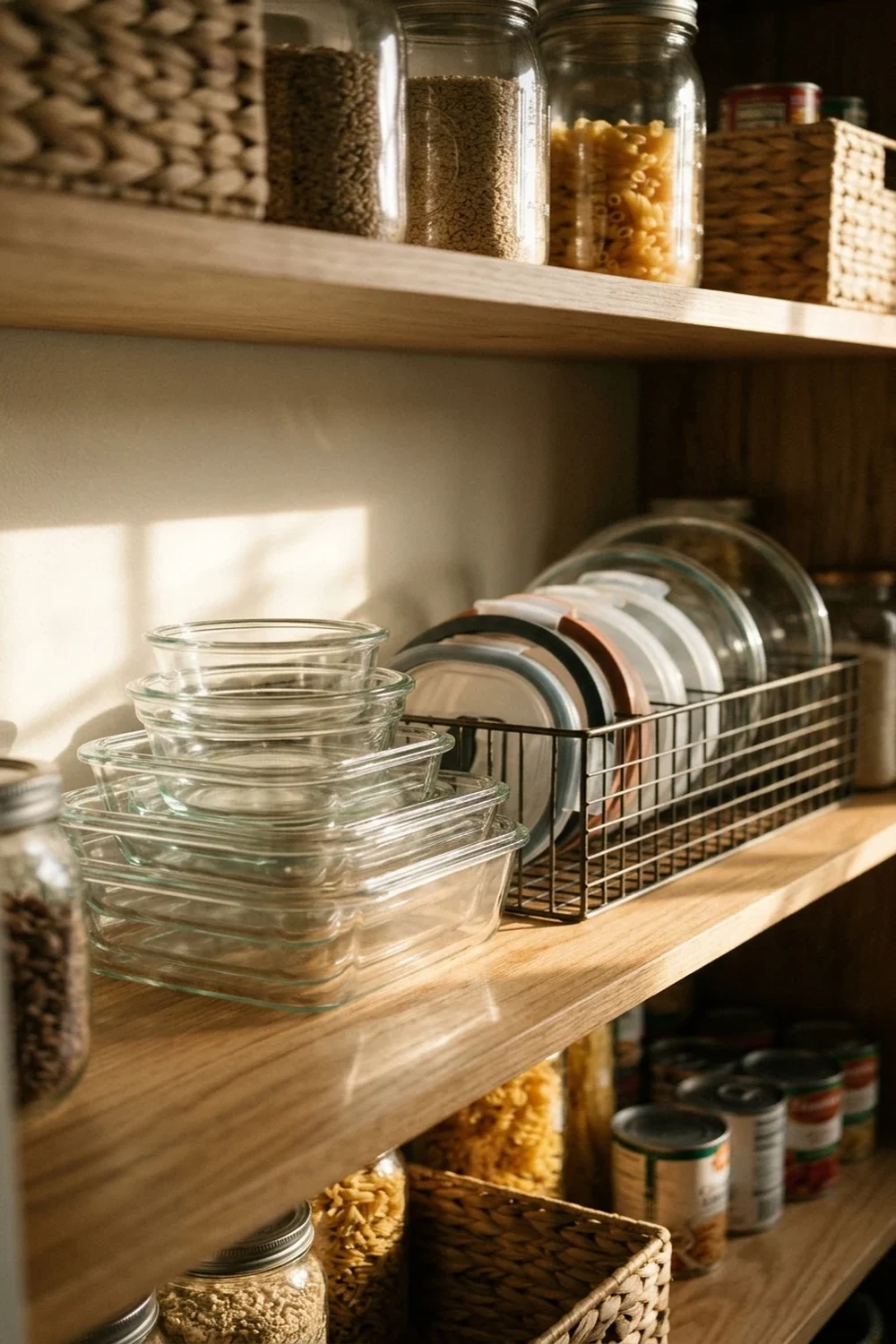
10. Shelf-Based Grouping: How to Organize Meal Prep Containers by Cabinet Level
Shelf-based container grouping dedicates specific cabinet shelves to distinct lunch prep categories, eliminating search time by storing matching bases nested together and lids stacked directly beside them.
- Dedicated Tier Allocation: Assigning top shelves to lightweight bento boxes and lower eye-level shelves to heavier glass meal prep containers streamlines morning retrieval.
- Identical Shape Nesting: Stacking same-capacity rectangular containers inside each other preserves up to 60 percent of vertical cabinet shelf volume.
- Co-Located Flat Lids: Storing corresponding lids in a shallow wire basket on the identical shelf prevents frantic lid searches during morning assembly.
- Batch Prep Rotation: Grouping fully prepped grab-ready lunch containers on the front refrigerator shelf enables instantaneous morning packing in under thirty seconds.
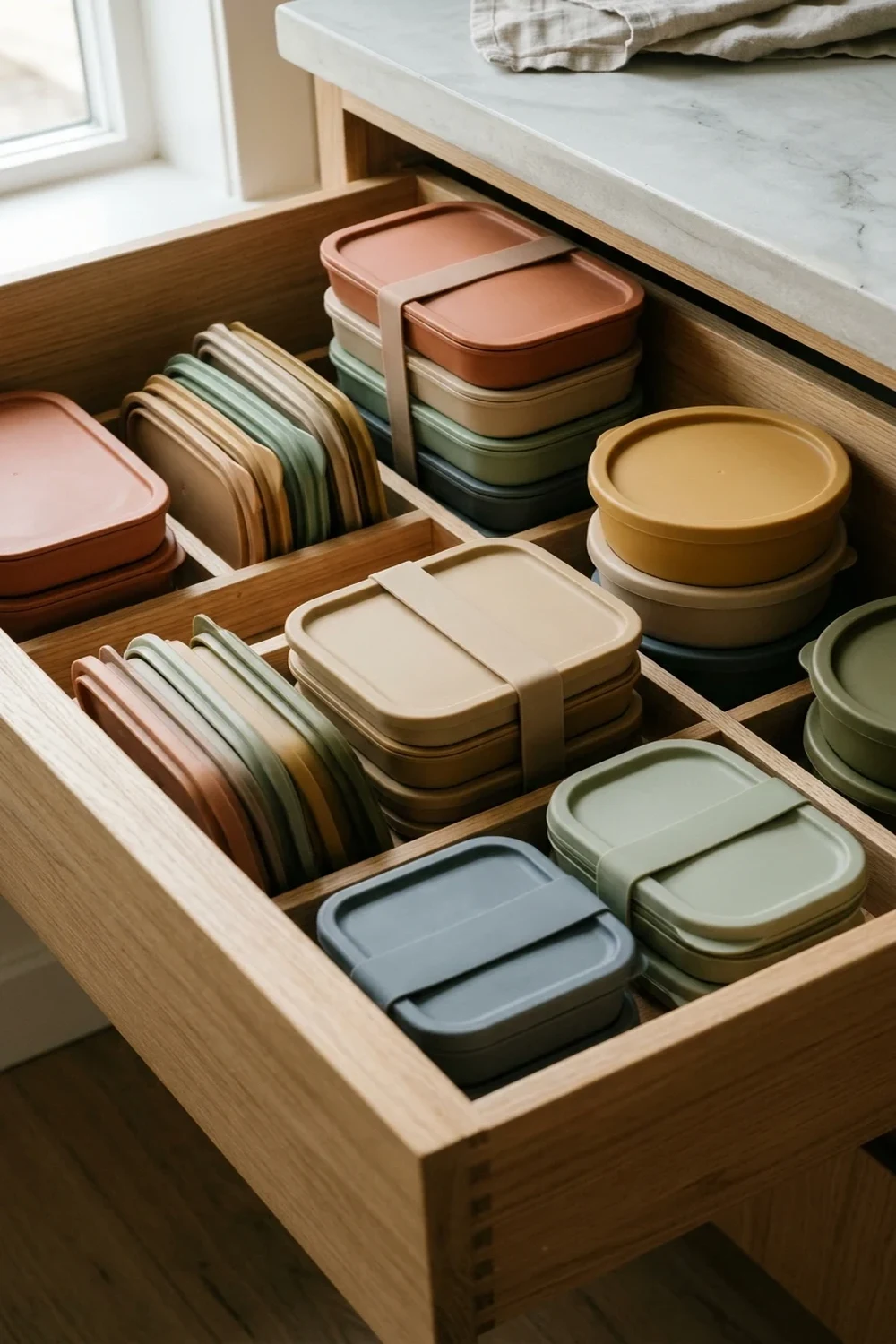
11. Stacked By Purpose: Smart Ways to Categorize School, Work, and Travel Boxes
Purpose-driven container stacking categorizes food storage vessels by user routine, grouping heavy insulated hot jars for office commutes separate from lightweight compartmentalized boxes designed for school bags.
- Daily Work Tier: Thermal insulated food jars and leakproof glass containers remain grouped together for hot office lunches requiring microwave reheating.
- School Lunch Zone: Durable BPA-free divided bento boxes occupy a low, kid-accessible drawer to support independent morning routine packing.
- Weekend Excursion Stack: High-capacity multi-compartment containers stay grouped with reusable freezer ice packs for sporting events and road trips.
- Color-Coded Routine Tags: Subtle color matching across lids signals specific dietary plans or household members instantly to prevent mid-morning lunch mix-ups.

12. Vertical Lid Control: How to Stop Container Chaos with Upright Organizers
Vertical lid control utilizes slotted plate racks or adjustable tension dividers to store lunch container lids upright, keeping every size instantly visible and accessible without dislodging container stacks.
- Upright Tension Dividers: Storing flat lunch box lids vertically like file folders prevents avalanches and frees up drawer footprint for container bases.
- Size-Graduated Spacing: Arranging lids sequentially from compact condiment toppers up to full bento lids cuts morning container matching time in half.
- Tethered Gasket Management: Slotted upright organizers prevent flexible silicone seal gaskets from getting pinched, deformed, or separated from matching lid rims.
- Repurposed Wire Office Racks: Sturdy metal file sorters mounted inside deep cabinets create instant vertical slots for oversized leakproof snap lids.
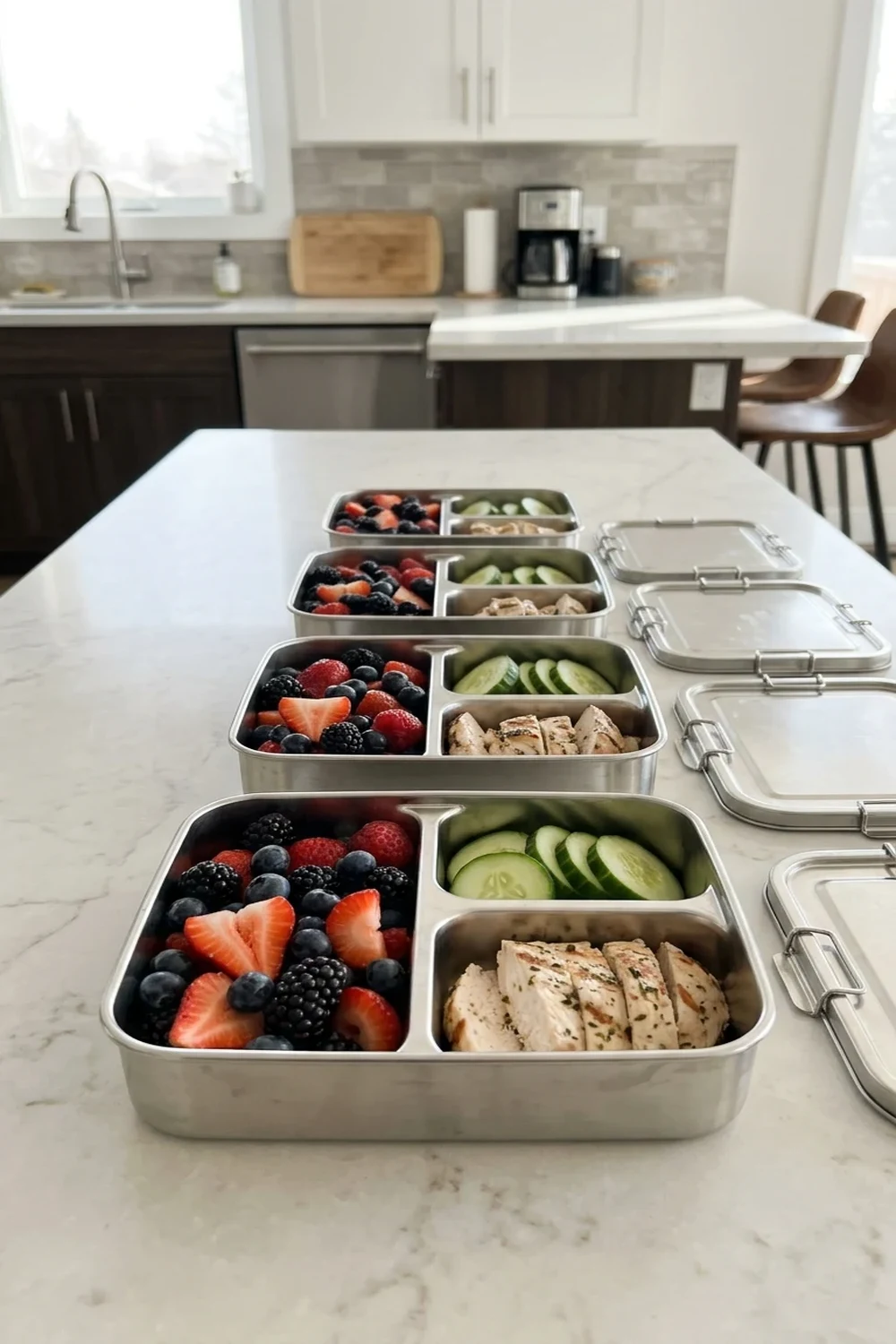
Repeatable Lunch Formula: Build a Consistent Meal Prep System
A repeatable lunch formula is an assembly method that pairs identical compartment layouts with fixed nutritional roles to cut weekday prep time by up to 50 percent. When you standardize the container layout rather than redesigning meals every morning, packing multiple school or office lunches transforms from chaotic daily decision-making into effortless muscle memory.
- Standardized Bento Architecture: Using identical multi-compartment containers ensures every household member receives balanced portions while completely eliminating the morning scramble for matching lids.
- Fixed Zone Assignments: Designating specific zones for protein, complex carbohydrates, fresh fruit, and crunchy vegetables guarantees balanced nutrition without counting calories or overthinking ingredients.
- Batch Food Rotation: Preparing two base proteins and three colorful produce options on Sunday allows you to populate the same fixed compartments with varied flavors across all five workdays.
- Automated Assembly Flow: Line up identical open lunch boxes along your kitchen counter assembly-style to pack three or four lunches in under ten minutes flat.

Accessory Sorting: Tame Bento Tools and Mini Condiment Cups
Dedicated accessory sorting keeps silicone dividers, dip pods, animal picks, and sandwich cutters categorized in shallow partitioned drawers so miniature tools never get lost in kitchen clutter. Organizing these small accessories by specific functional category prevents frustrating drawer searches and speeds up aesthetic lunch styling during busy morning routines.
- Shallow Divider Trays: Clear acrylic drawer inserts with 2-inch walls provide designated cubbies for silicone muffin cups, mini dressing bottles, and stainless steel vegetable cutters.
- Color-Coded Pick Storage: Storing reusable food picks in clear compartmentalized craft boxes keeps whimsical decorative skewers sanitary, visible, and instantly accessible.
- Condiment Lid Pairing: Group leakproof mini dip cups alongside their corresponding silicone twist lids inside one compact bin to prevent midday dressing spills.
- Quick-Access Counter Station: Positioning your most frequently used silicone dividers directly above the primary lunch packing station cuts daily assembly time significantly.
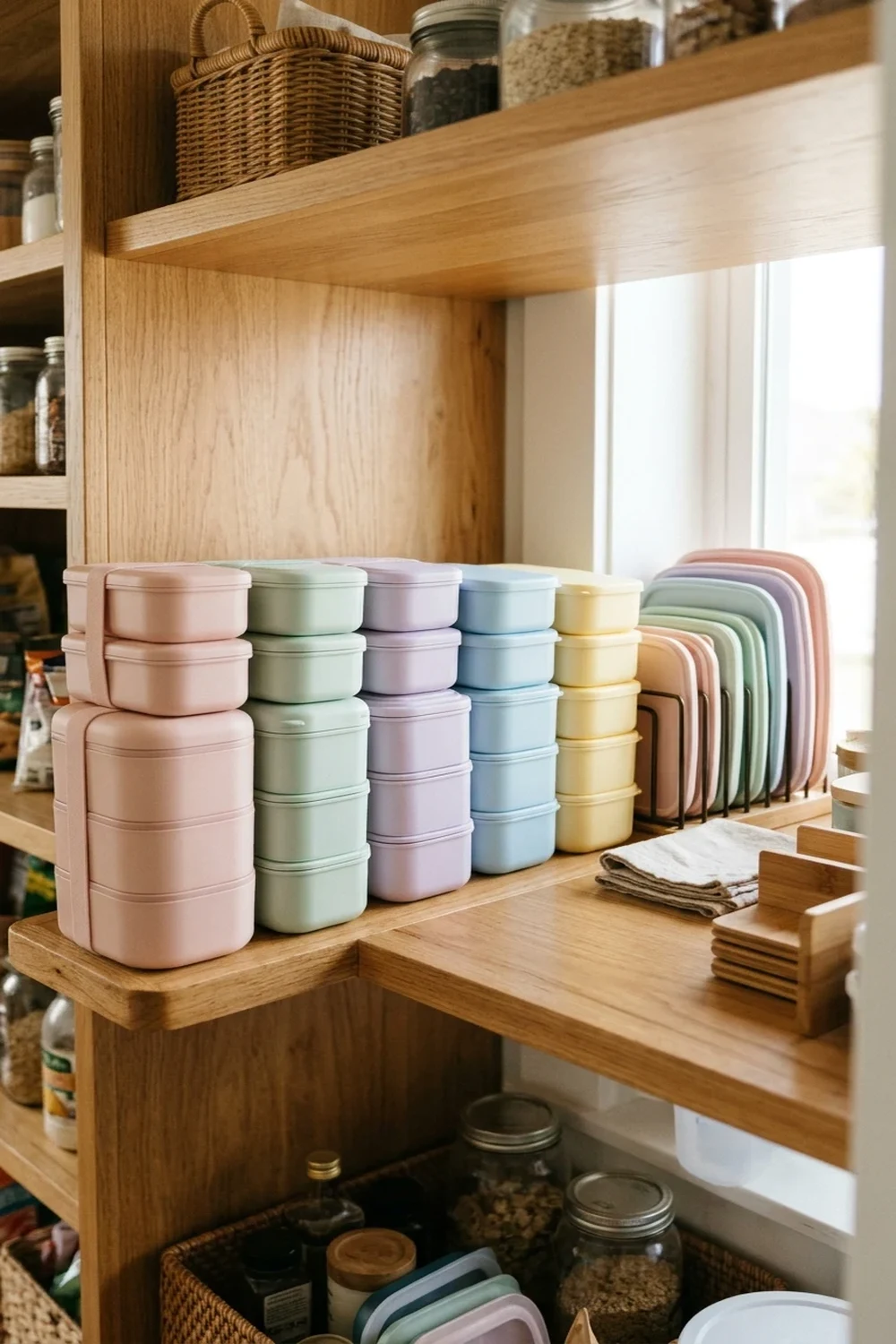
Brand-Based Stacks: Streamline Storage by Container Ecosystem
Brand-based container stacking designates dedicated vertical cabinet zones for each distinct lunch box product line so modular lids, bases, and internal trays nest without friction. Segregating storage by manufacturer ecosystem eliminates drawer jams and completely avoids the mismatched dimensions that cause cabinet clutter.
- Ecosystem-Specific Shelf Zones: Dedicating individual cabinet shelves to specific lunch box brands prevents incompatible modular inserts from getting jammed together.
- Vertical Base Nesting: Nesting identical rectangular bases inside each other preserves valuable cabinet depth while keeping container sets grouped logically.
- Upright Lid Racks: Storing matching brand lids vertically in wire desktop file sorters ensures immediate visibility without toppling towering plastic stacks.
- Insert Tray Consolidation: Keeping brand-specific removable trays nested inside their primary exterior shells protects delicate silicone seal gaskets from warping over time.

Portion-Smart Layout: Prevent Food Waste with Calibrated Sections
A portion-smart layout utilizes fixed-volume compartment dividers to automatically balance protein, produce, and grain ratios while preventing food waste and afternoon hunger. Selecting lunch boxes with calibrated compartment volumes ensures appropriate caloric density for school children or adults without requiring food scales or disposable plastic bags.
- Primary Entree Wells: A dedicated 2-cup main compartment comfortably accommodates whole sandwiches, hearty grain salads, or warm pasta entrees without crushing delicate sides.
- Produce Ratio Zones: Two secondary 0.5-cup compartments keep sliced berries and crunchy bell peppers crisp by separating moisture-rich produce from dry snack items.
- Satiety Booster Compartment: A compact 2-tablespoon center well holds energy-dense nuts, seeds, or yogurt dips to maintain steady afternoon energy levels.
- Visual Portion Anchoring: Filling each designated compartment to flush level provides instant visual feedback that prevents overpacking and reduces discarded leftovers.
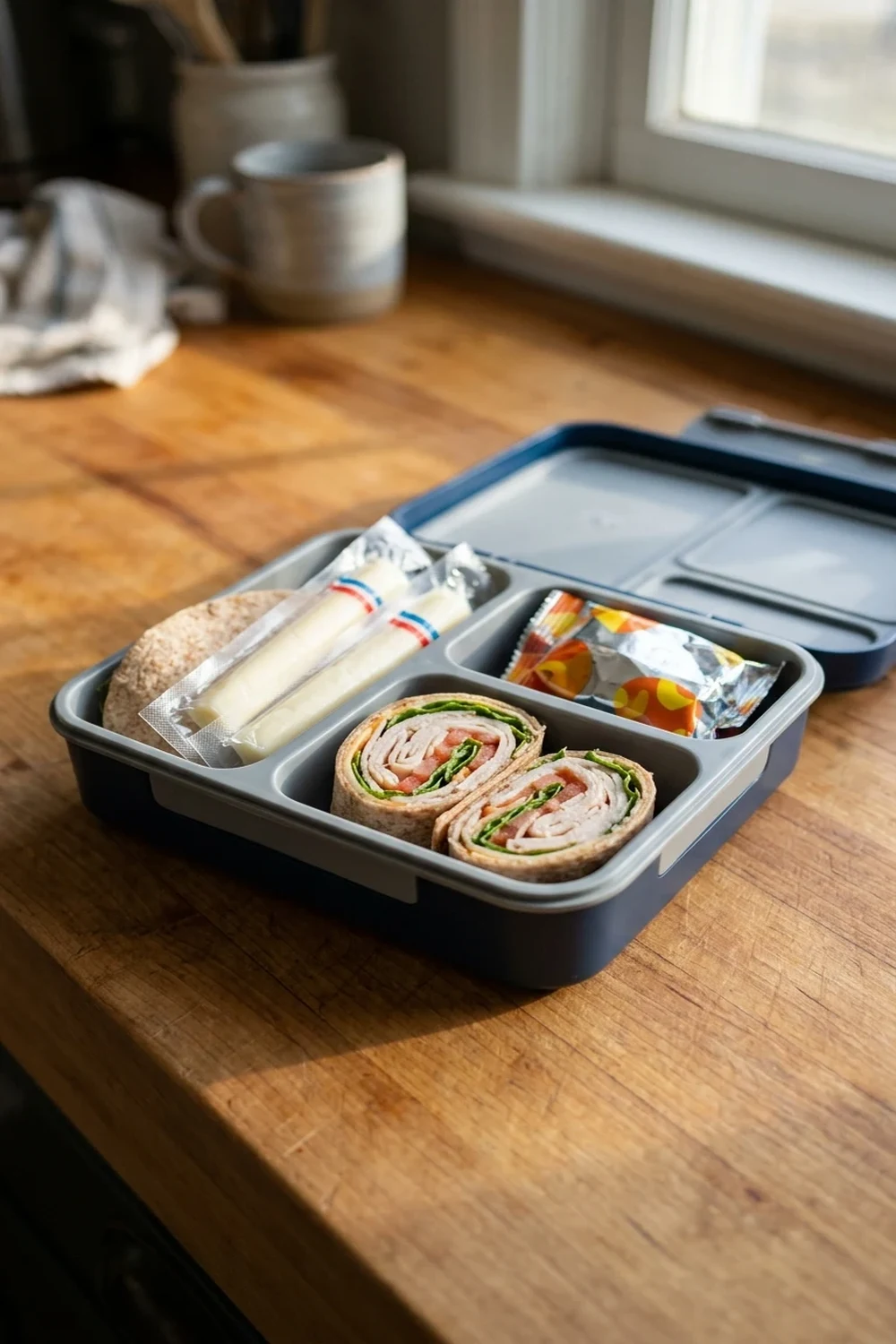
Pre-Packaged Pairing for Quick Morning Lunch Prep
Pre-packaged pairing is a time-saving meal packing strategy where you combine one fresh homemade staple with factory-sealed, portion-controlled snacks in a single lunch carrier. This hybrid method cuts active weekday prep time down to under five minutes while eliminating mid-morning food spills and keeping moisture away from dry snacks.
- Core Sandwich Zone: Reserve the primary 3-cup compartment for a fresh turkey wrap, toasted bagel, or sourdough sandwich wrapped tightly in reusable parchment paper.
- Sealed Snack Integration: Drop individually sealed items like string cheese, organic applesauce pouches, or hummus tubs directly into open bays to preserve shelf life.
- Moisture Containment: Keep vacuum-sealed pretzels and whole-grain crackers crisp by insulating them against cold, condensation-prone fresh produce with silicone dividers.
- Caloric Balance Control: Use commercial nutrition labels to accurately track 450 to 600 total calories per midday meal without manual weighing or portion cups.
- Zero-Wash Recovery: Reduce daily dishwashing demands by up to 50% since non-greasy sealed snack packages leave interior compartments completely clean after eating.

Balanced Bento Routine: A Repeatable Daily Meal Formula
A balanced bento routine is an intuitive dietary planning system that allocates fixed box compartments to distinct nutritional categories—proteins, complex carbohydrates, fibrous vegetables, and antioxidant-rich fruits. Standardizing this visual layout transforms erratic morning packing into consistent muscle memory while ensuring balanced daily nutrient intake.
- Fifty-Percent Produce Standard: Dedicate half of your total container capacity to crisp raw vegetables and fresh berries to secure daily fiber targets effortlessly.
- Protein Quarter Rule: Fill the secondary quadrant with 20 to 30 grams of dense protein such as hard-boiled eggs, cubed tofu, or roasted edamame.
- Complex Carb Placement: Position whole grains, quinoa salads, or high-fiber crackers in the remaining corner to prevent afternoon cognitive energy crashes.
- Leakproof Dip Integration: Center a two-ounce gasket-sealed silicone dressing pot in the middle for creamy dressings, seed butters, or savory dips.
- Visual Contrast Stacking: Alternate bright green cucumbers, deep orange carrot batons, and crimson strawberries to stimulate appetite and prevent lunch routine boredom.
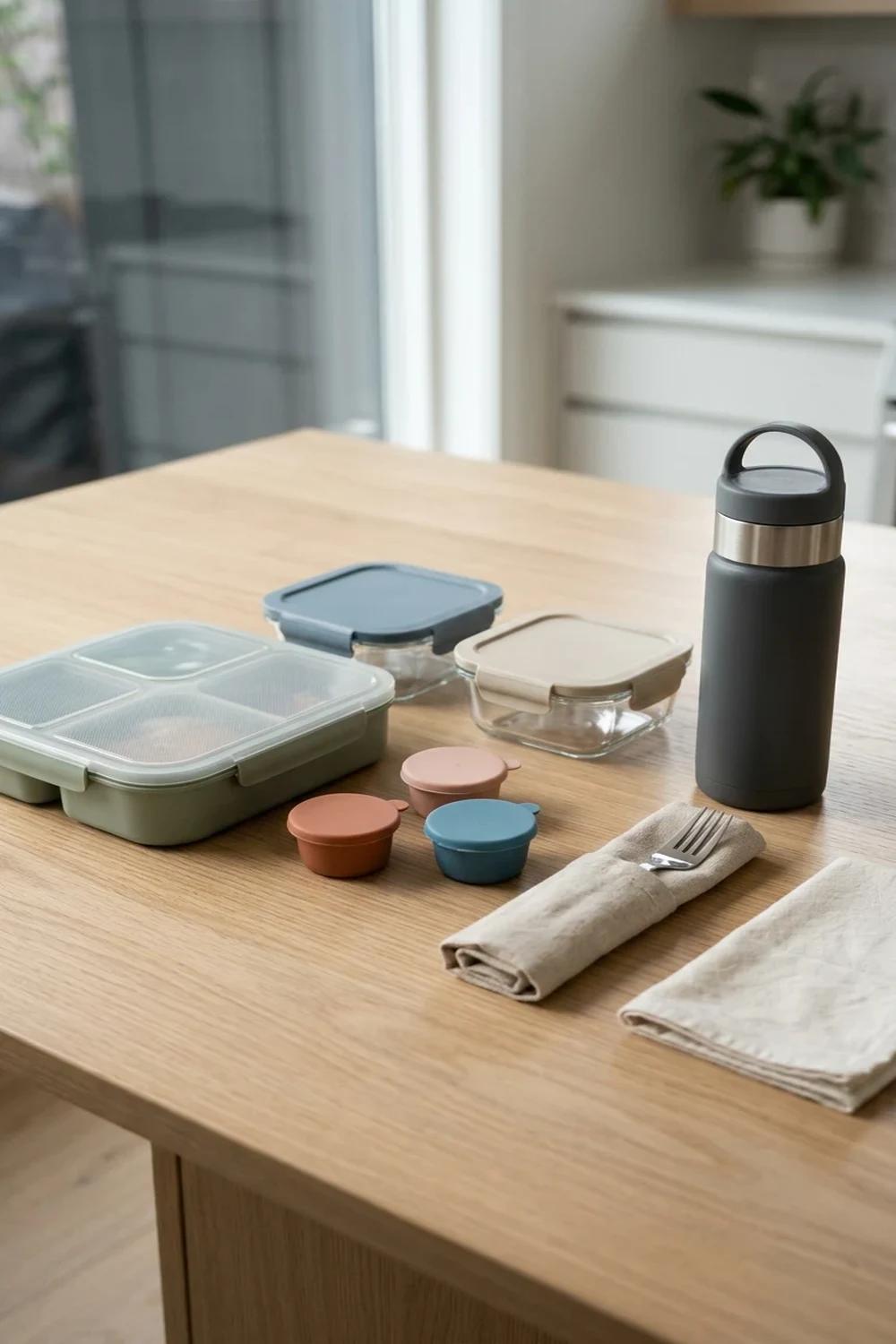
Lunch Box Organization FAQs: Expert Answers for 2026
Lunch box organization systems rely on airtight seals, modular compartment geometry, and vertical pantry stacking to streamline morning routines and prevent food spoilage. Optimizing your daily lunch gear eliminates morning stress, safeguards backpack electronics from catastrophic soup leaks, and keeps food texture crisp until lunchtime.
- Material Durability Standards: Food-grade 18/8 stainless steel and BPA-free borosilicate glass offer unmatched stain resistance, whereas lightweight platinum silicone excels for flexible snacks.
- Leak Prevention Protocols: Inspect silicone perimeter gaskets monthly and hand-wash container lids to avoid heat-warping rubber seals in high-temperature dishwasher cycles.
- Temperature Preservation Rules: Double-wall vacuum-insulated stainless thermoses keep warm pasta above 140 degrees Fahrenheit, while paired gel ice packs maintain chilled greens below 40 degrees.
- Odor Elimination Methods: Soak stubborn plastic storage containers in a diluted baking soda and white vinegar wash for thirty minutes to neutralize lingering spices.
- Compact Backpack Integration: Choose slim-profile vertical bento boxes measuring under three inches thick to slide cleanly beside laptops, binders, and water bottles.
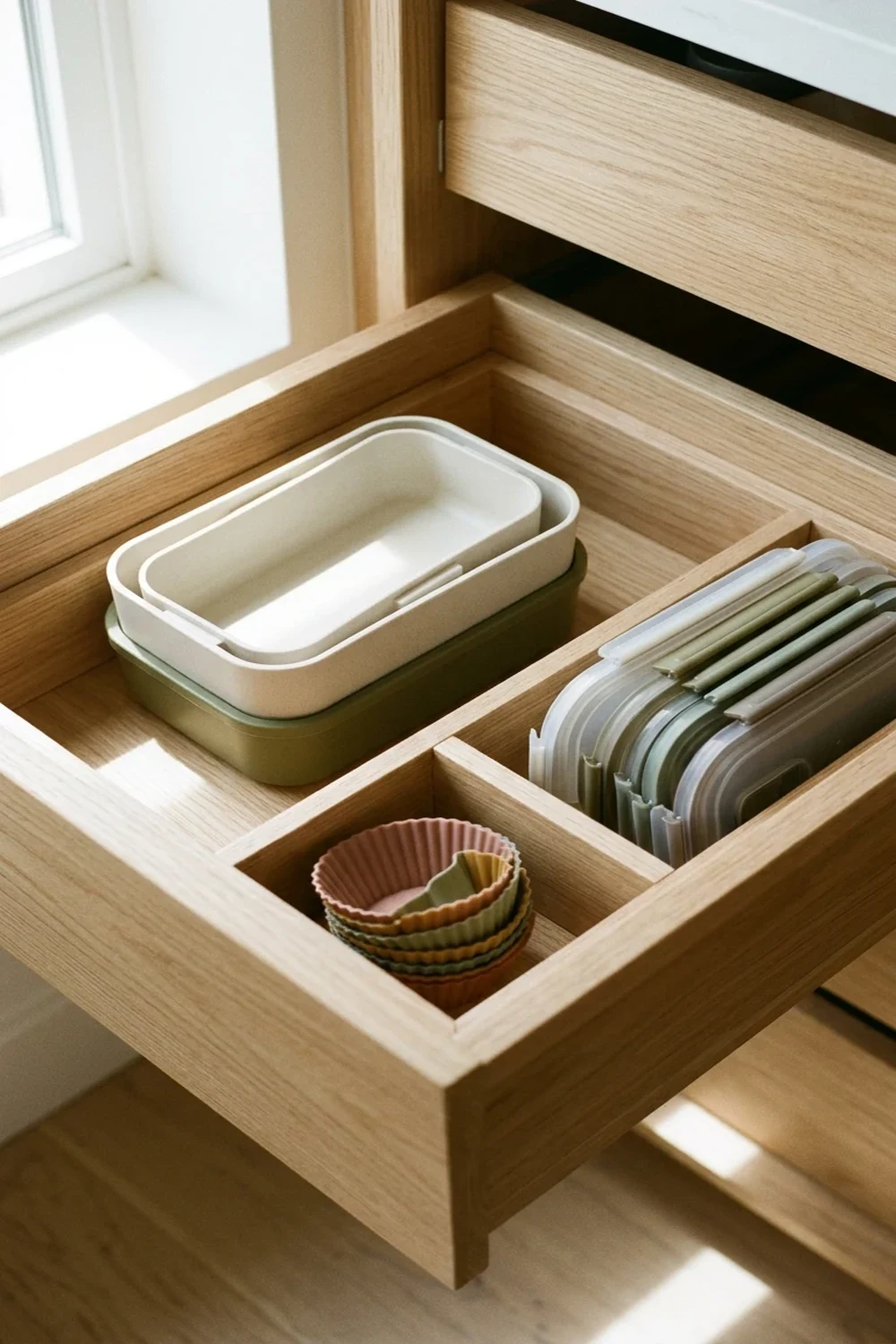
How Many Containers Do You Actually Need for Work and School?
A minimalist household requires exactly two multi-compartment bento boxes per person alongside four small modular accessory cups to maintain a seamless weekday lunch cycle. Operating this lean container rotation prevents cluttered kitchen cabinets, matches typical laundry and dishwashing rhythms, and completely eliminates missing lid confusion.
- The Two-Box Rotation Rule: Maintain two identical primary containers per person—one active in the backpack or office fridge while the second is washing or drying.
- Four-Piece Modular Pod Set: Keep four 1.5-to-2-ounce silicone dip cups on hand for dressings, nuts, seeds, and spreads that require airtight isolation.
- Unified Single-Brand Geometry: Standardize on one manufacturer line so every lid snaps onto every base interchangeably without frustrating morning searches.
- Dedicated Insulated Jar: Keep a single 12-ounce wide-mouth vacuum thermos per person for hot soups, chilis, and leftover stews during winter months.
- Quarterly Clutter Purge: Discard warped lids, scratched single-use take-out boxes, and mismatched containers immediately to preserve pantry drawer efficiency.
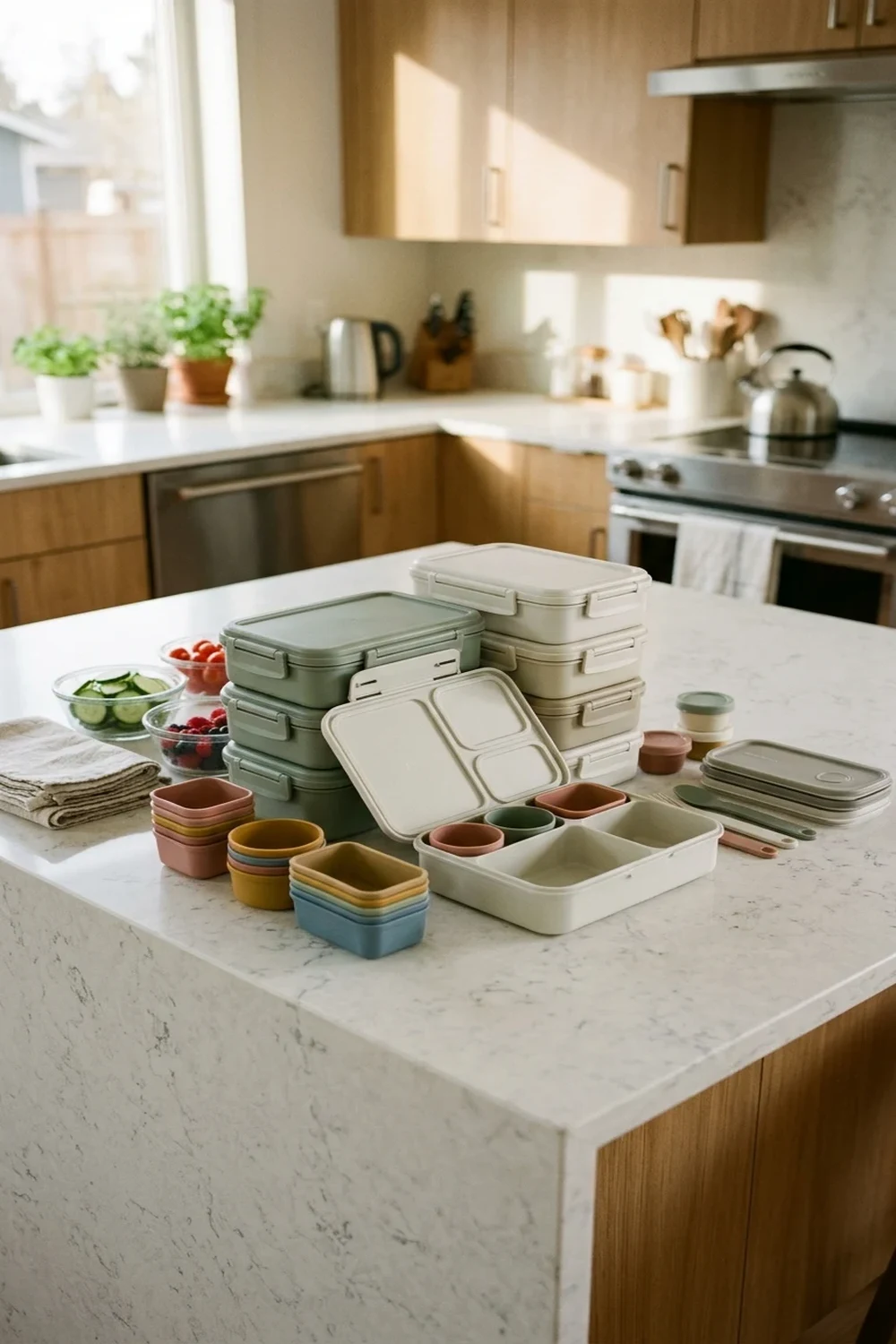
Should You Mix Container Brands or Stick to One System for Lunch Box Organization?
Sticking to a single container brand ecosystem is the most efficient choice for lunch box organization because standardized footprints and universal lids eliminate storage clutter and speed up morning meal assembly. When every base shares interchangeable tops, you cut packing time in half and prevent cabinet avalanche issues. However, combining complementary brands can succeed if you adhere to strict dimensional rules.
- The Single-System Advantage: Committing to one primary line ensures every lid fits multiple vessels, saving an estimated 5 to 10 minutes during frantic weekday mornings.
- The Modular Mixing Strategy: If you combine brands, pair a standardized main bento exterior with universal mini silicone cups or sauce pods that nest snugly inside without shifting.
- Footprint Uniformity: Avoid purchasing irregular novelty shapes, prioritizing rectangular or square silhouettes that stack flush inside insulated lunch bags without creating dead space.
- Cabinet Storage Efficiency: Uniform systems nest within their own product lines smoothly, reducing required pantry or drawer volume by up to 40 percent.
- Dishwasher Maintenance Simplicity: Identical materials and silicone gasket styles wash and dry predictably on top racks without warping from mismatched thermal tolerances.
Final Thoughts: Building an Effortless Lunch Prep System
Mastering lunch box organization comes down to standardizing your tools rather than buying endless mismatched containers. Selecting one or two modular bento systems and securing lids in vertical racks immediately eliminates morning decision fatigue and stops food from spilling.
Begin by auditing your current cabinet and assigning dedicated zones for bento bases, silicone cups, and leakproof lids. Once your packing station runs on autopilot, preparing nutritious, balanced meals for work or school becomes a simple five-minute daily habit.