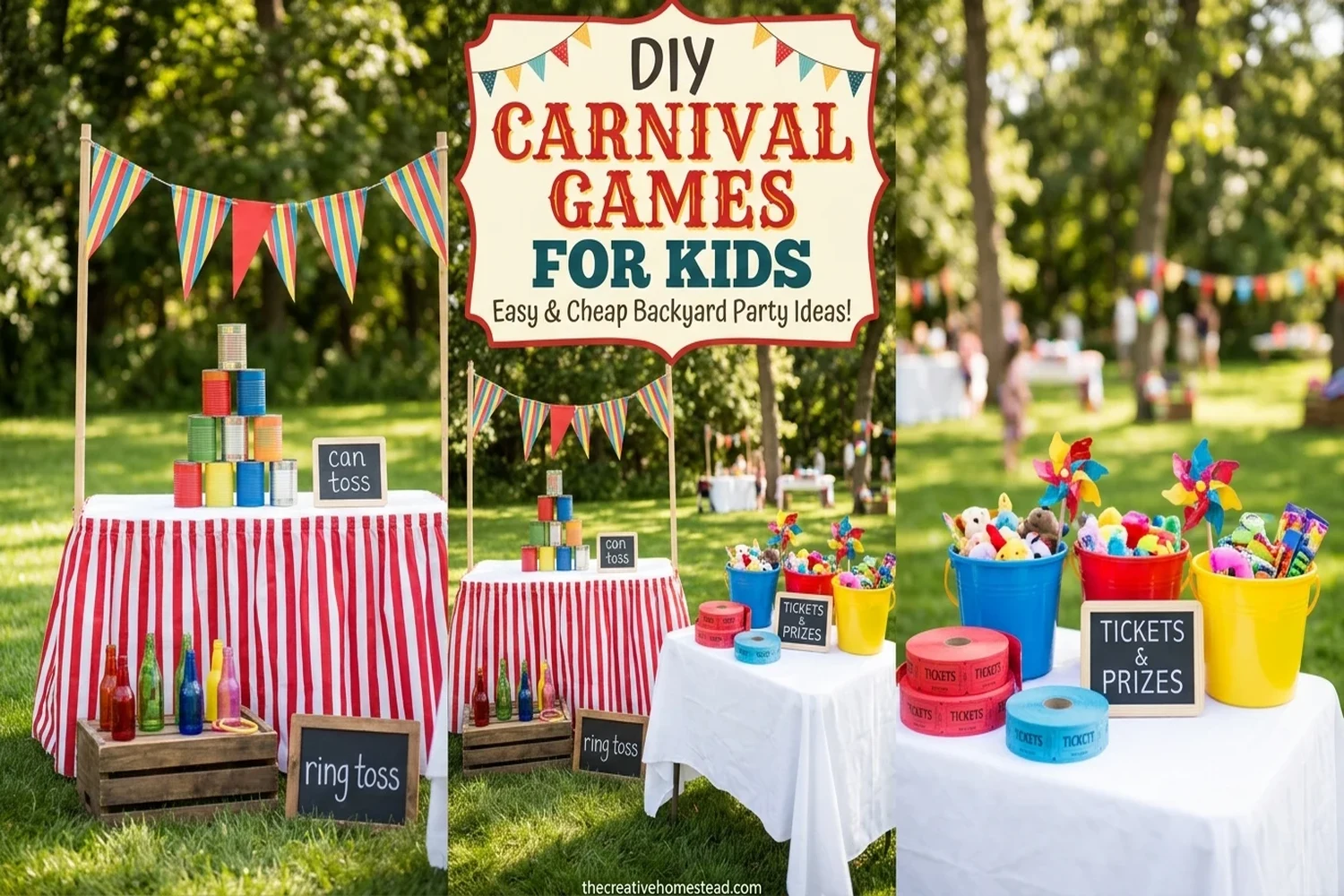
10 Best Homemade Carnival Games for Kids in 2026
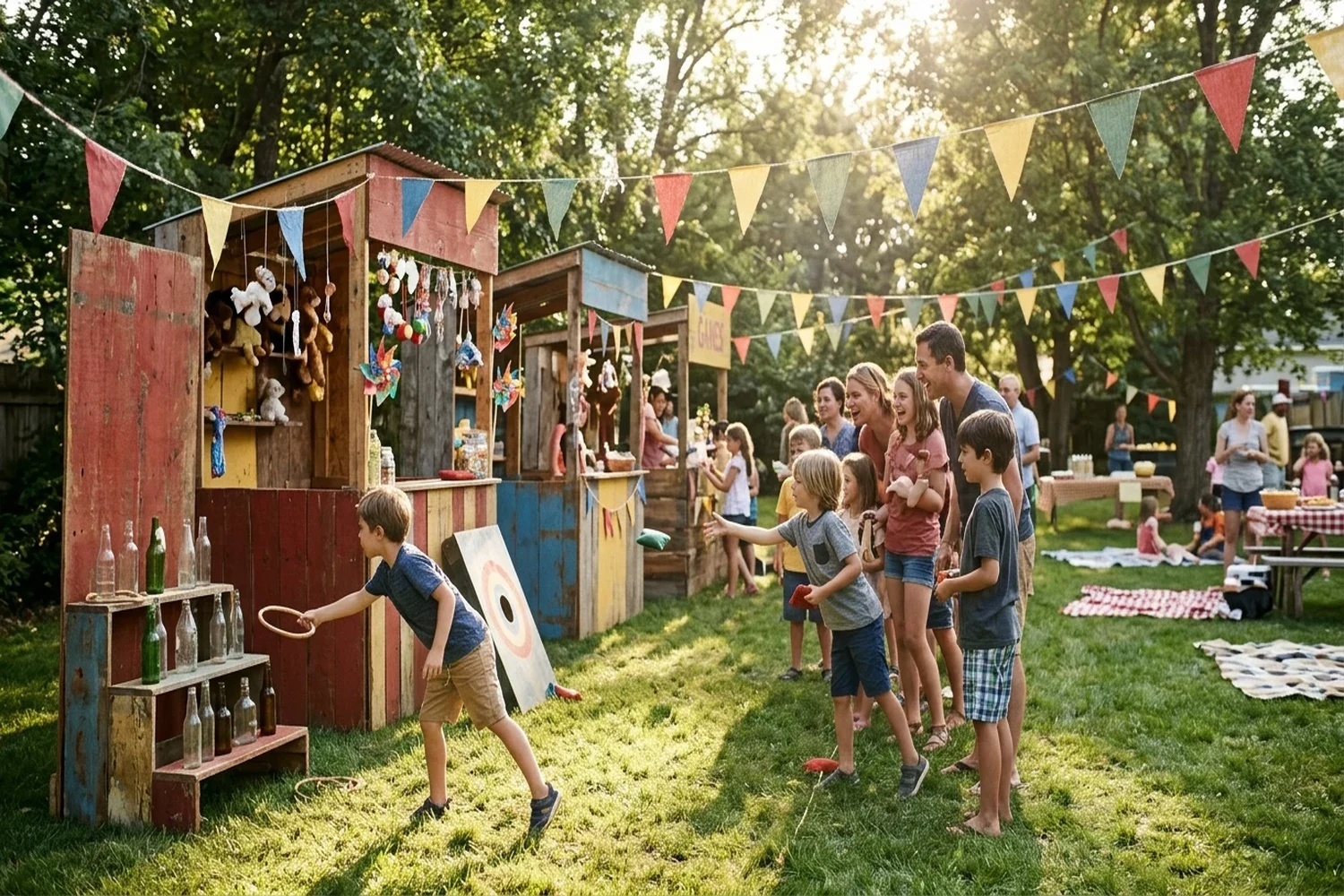
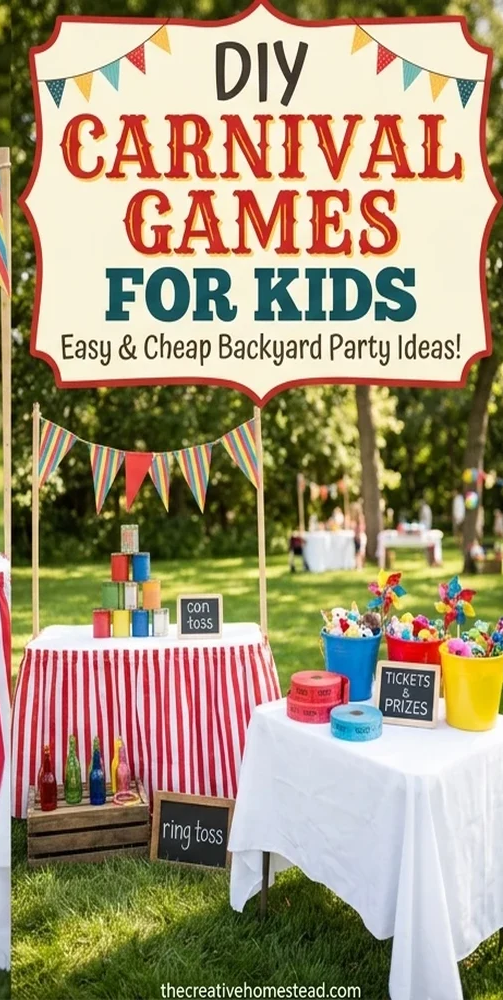
Hosting a memorable celebration does not require expensive commercial rentals or complicated equipment. You can build 10 engaging, budget-friendly homemade carnival games using simple household items like buckets, cardboard boxes, and cups. These DIY activities maximize backyard fun while keeping setups safe, affordable, and adaptable for children of all ages.
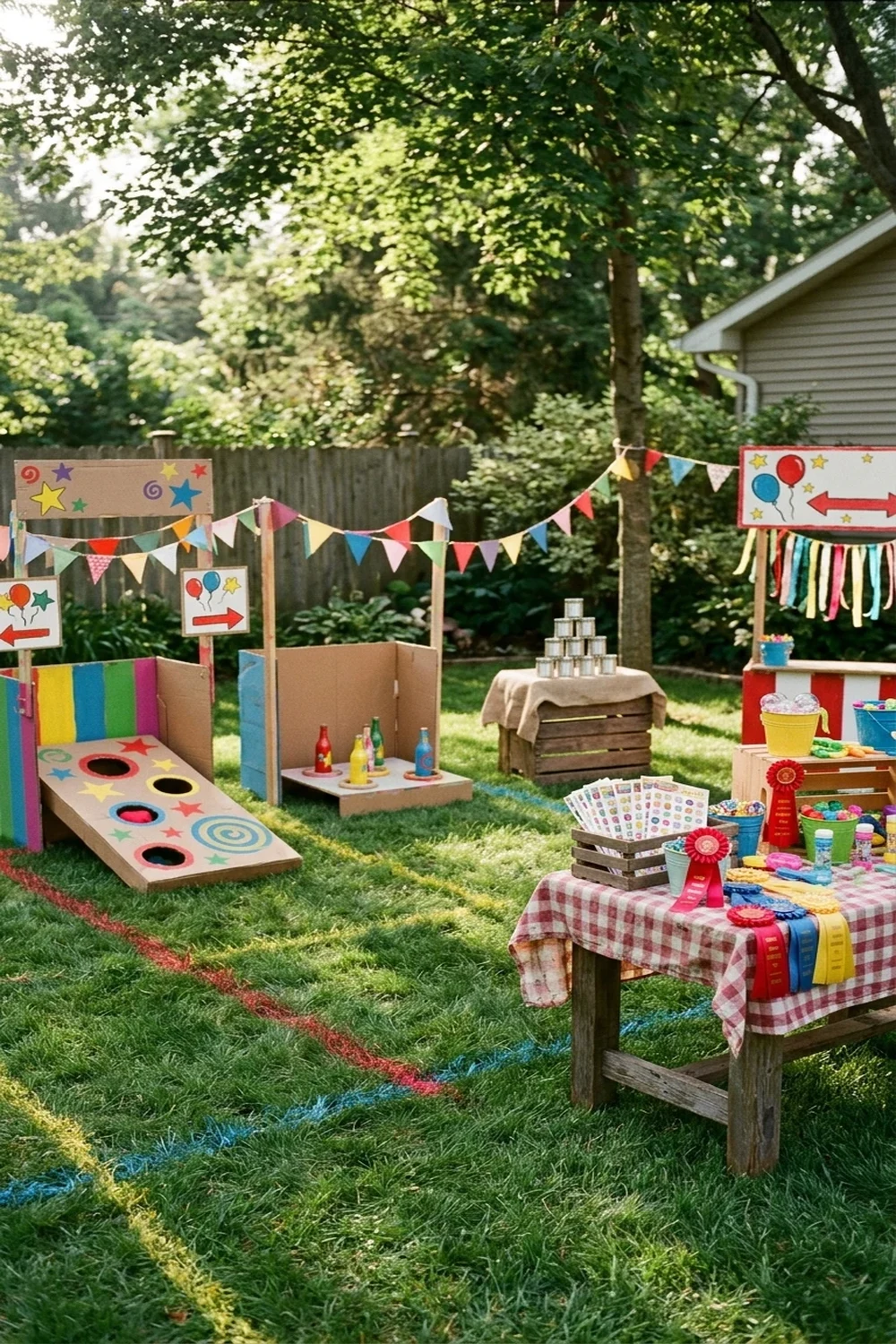
A Few Things to Prepare First for Homemade Carnival Games
Preparing your homemade carnival layout properly ensures that backyard party games run smoothly, remain safe for children of all ages, and stay within a practical family budget. Setting up designated play zones and queue boundaries before guests arrive prevents chaotic crowding around popular activity stations.
- Spatial Zone Planning: Allocate at least six to eight feet of open clearance between active stations to prevent running children from colliding with tossing areas.
- Chalk Queue Lines: Mark visible waiting boundaries on grass or pavement using colorful sidewalk chalk, traffic cones, or painter tape to keep spectator lines organized.
- Universal Participation Rewards: Distribute participation tickets after every attempt so children can trade collected tokens for low-cost prizes like stickers, pencils, and temporary tattoos at a single redemption table.
- Weather-Resistant Safety Surfaces: Position water-based activities strictly over slip-resistant natural grass, and place lightweight cup and balloon stands near wind-sheltered walls or fences.
- Dedicated Adult Supervision: Station one adult coordinator at each mechanical or fast-paced game to manage turn rotations, enforce distance rules, and assist toddler participants.
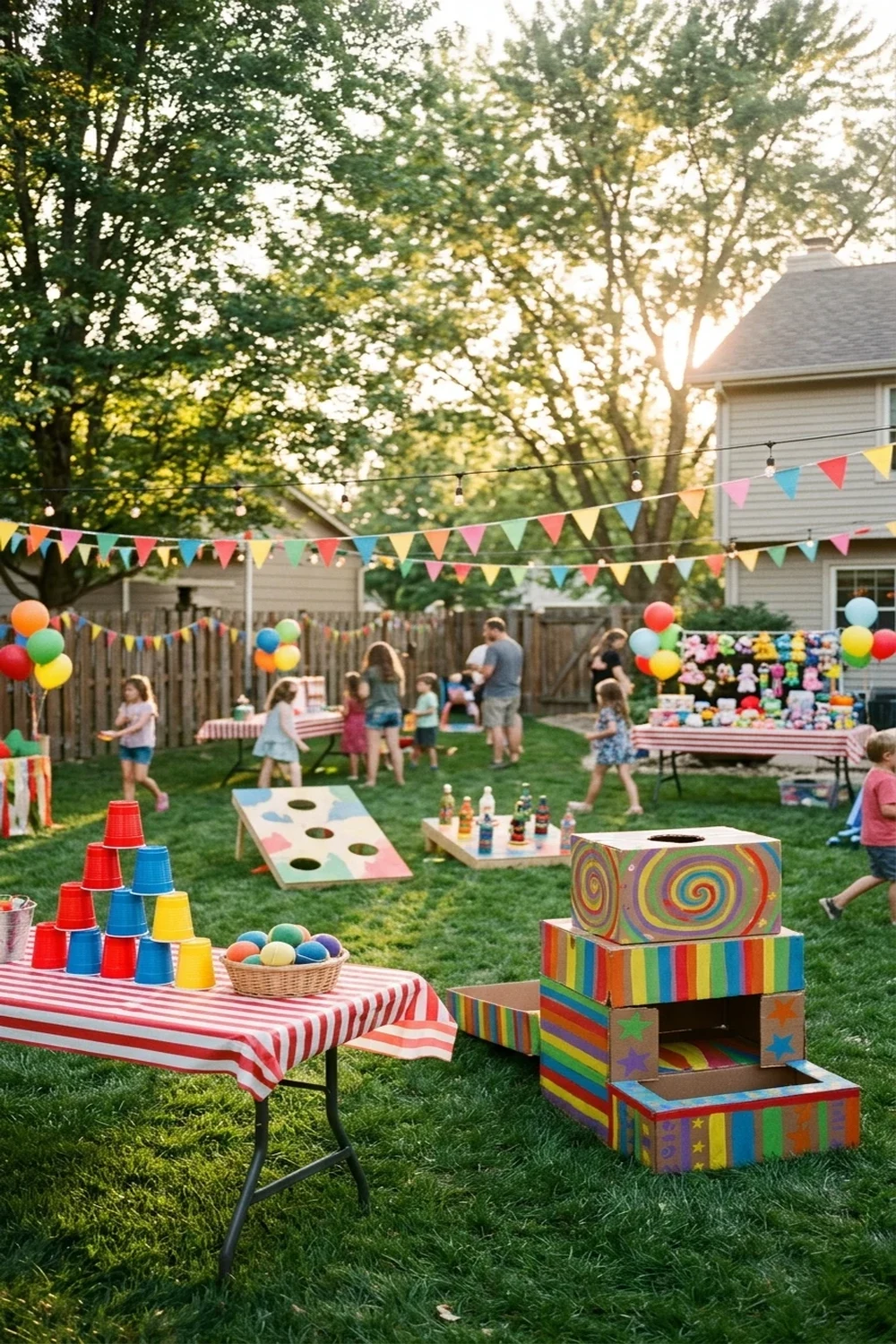
10 Homemade Carnival Game Ideas for Kids in 2026
These 10 DIY carnival game ideas utilize simple household items like buckets, cardboard boxes, balloons, and plastic cups to deliver authentic mid-way entertainment on a modest budget. Transforming recyclable household supplies into interactive challenges allows parents to build engaging party stations without purchasing expensive rental equipment.
- Budget-Friendly Household Upcycling: Construct every game booth using repurposed cardboard shipping boxes, plastic party cups, fabric sacks, and leftover party supplies to eliminate rental costs.
- Scalable Difficulty Tiers: Adjust throwing lines and target sizes between three and ten feet to accommodate toddlers, grade-schoolers, and older siblings within the same game framework.
- Multi-Station Rotation Flow: Organize ten separate micro-stations to eliminate long waiting queues and allow small groups of children to rotate every five minutes.
- Low-Impact Active Challenges: Balance stationary hand-eye coordination games like cup tossing and coin dropping with energetic relay races like sack dashes and balloon balancing walks.
- Rapid Indoor Rain Contingency: Select adaptable table games such as lollipop pulls and beanbag drops that easily move into a garage or living room during sudden rain showers.
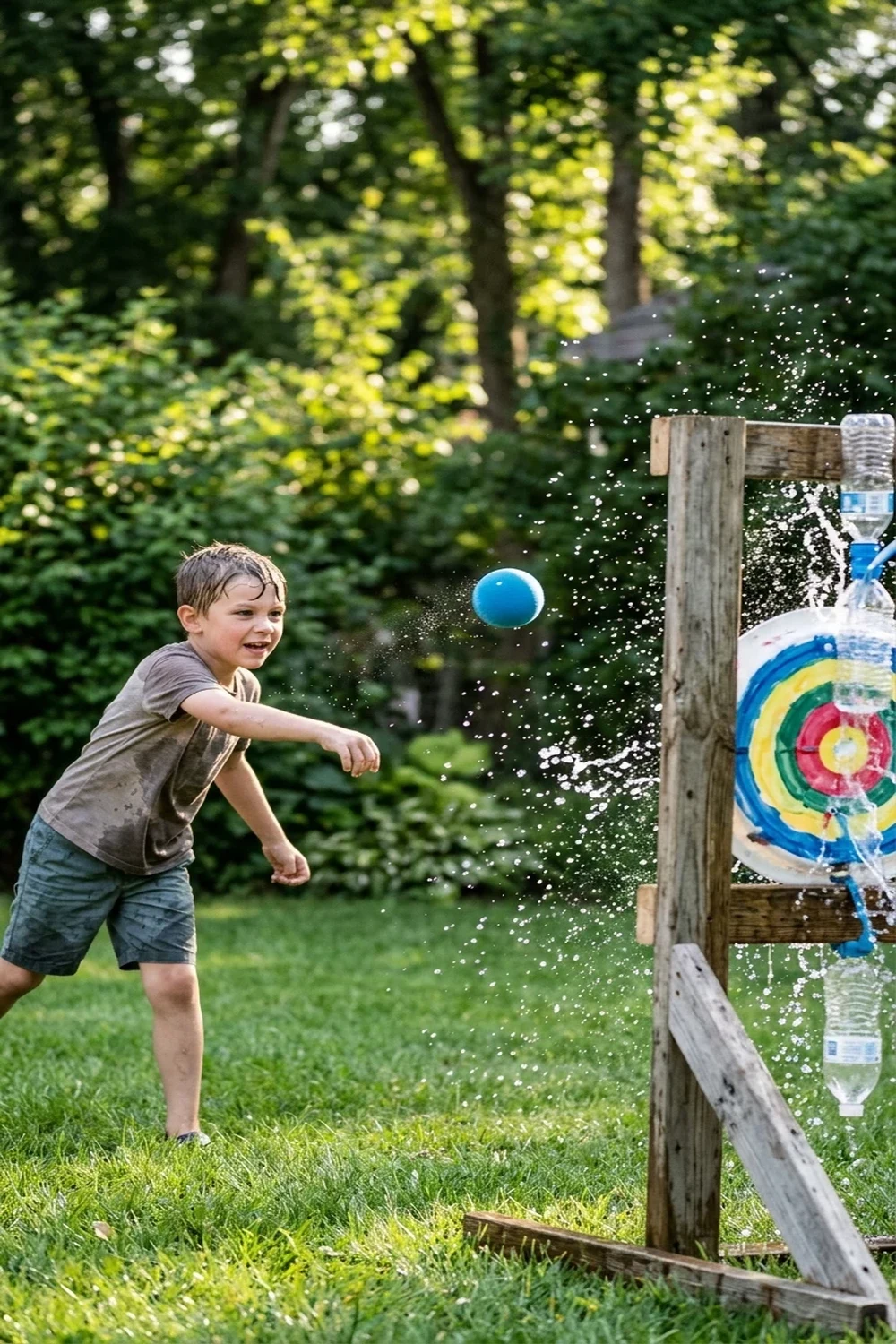
1. Target Splash: Refreshing DIY Water Carnival Game
Target Splash is a homemade outdoor water carnival game where players throw soft objects at a target mechanism to trigger a mini splash of cool water on warm summer afternoons. This refreshing attraction provides the classic excitement of a commercial dunk tank using safe, simple backyard supplies.
- Target Mechanism Assembly: Construct a lightweight pivoting lever or target arm using smooth plastic pipe and a suspended plastic cup or mini sponge that tips upon impact.
- Three-Throw Challenge Rule: Grant each player three consecutive ball throws from behind a designated line, awarding bonus tickets whenever the target mechanism triggers a water release.
- Age-Adjusted Throwing Distances: Set the toddler throwing line at four feet and extend the boundary to eight or ten feet for older kids to ensure fair difficulty across all skill levels.
- Slip-Free Turf Placement: Locate the splash target strictly over even, absorbent lawn turf rather than concrete or wooden decking to eliminate slipping hazards.
- Dedicated Towel and Reset Station: Place a dry towel basket nearby and assign an adult monitor to quickly reset the bucket mechanism and inspect ground wetness between rounds.
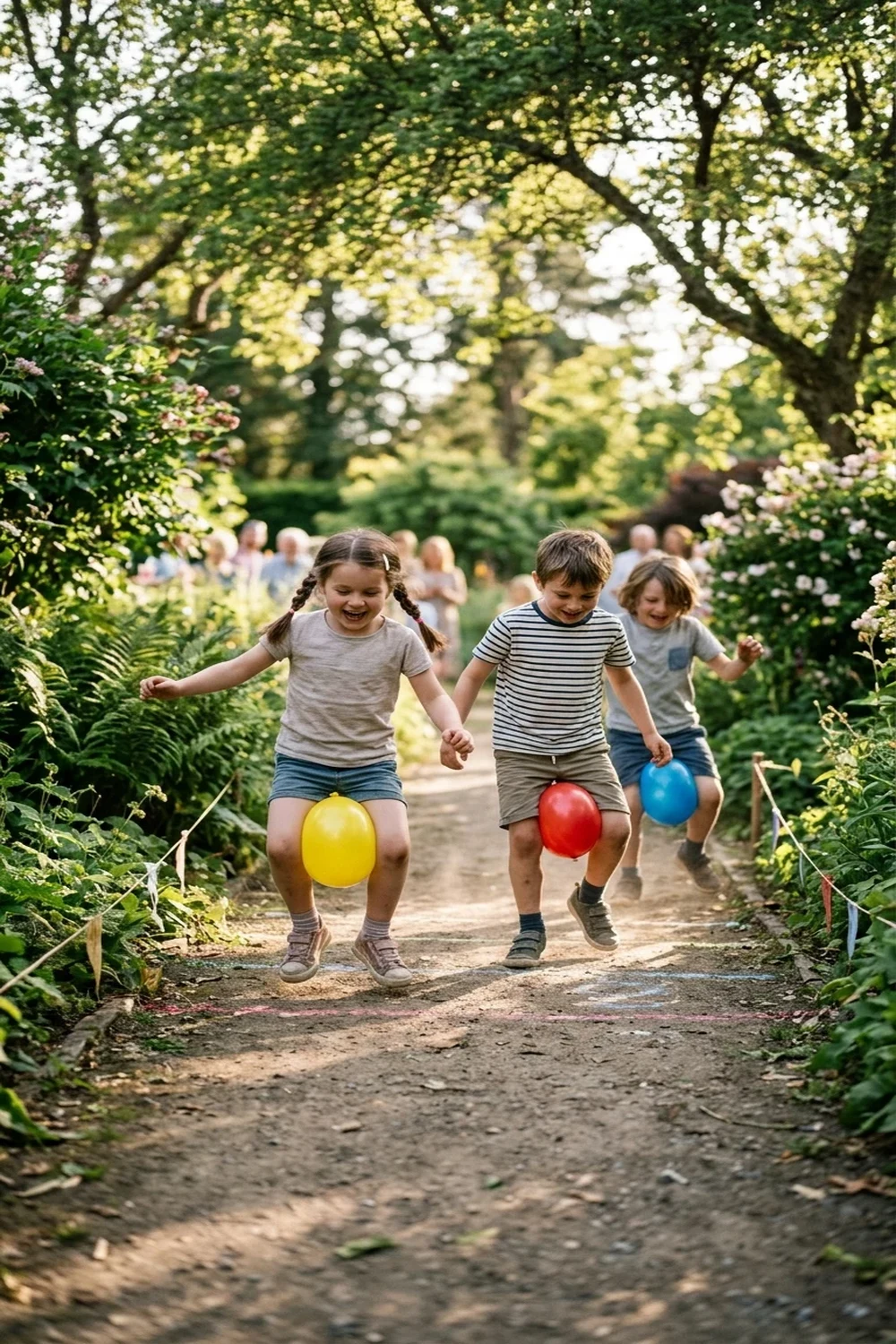
2. Balloon Walk: Fun DIY Balance and Relay Carnival Challenge
Balloon Walk is an active balance and coordination game where children navigate a marked obstacle track while holding or balancing an inflated balloon without using their hands. This low-cost party game builds motor skills, encourages teamwork, and produces continuous laughter during birthday parties and school field days.
- Hands-Free Balancing Mechanics: Challenge players to transport an inflated balloon across the lawn by squeezing it firmly between their knees or balancing it atop a sturdy paper plate.
- Cone Obstacle Navigation: Lay out a ten-foot straight lane lined with soft traffic cones that players must navigate around before returning across the starting boundary.
- Cooperative Partner Variations: Pair children together to carry a single balloon trapped between their backs or shoulders, fostering communication and cooperative play.
- CPSC Child Safety Compliance: Adhere to U.S. Consumer Product Safety Commission guidelines by designating an adult to manage balloon inflation and promptly collect any popped fragments to prevent choking hazards.
- Indoor-Friendly Party Pivot: Transfer the entire course onto carpeted living room or hallway floors without altering the rules whenever outdoor winds or rain interfere.
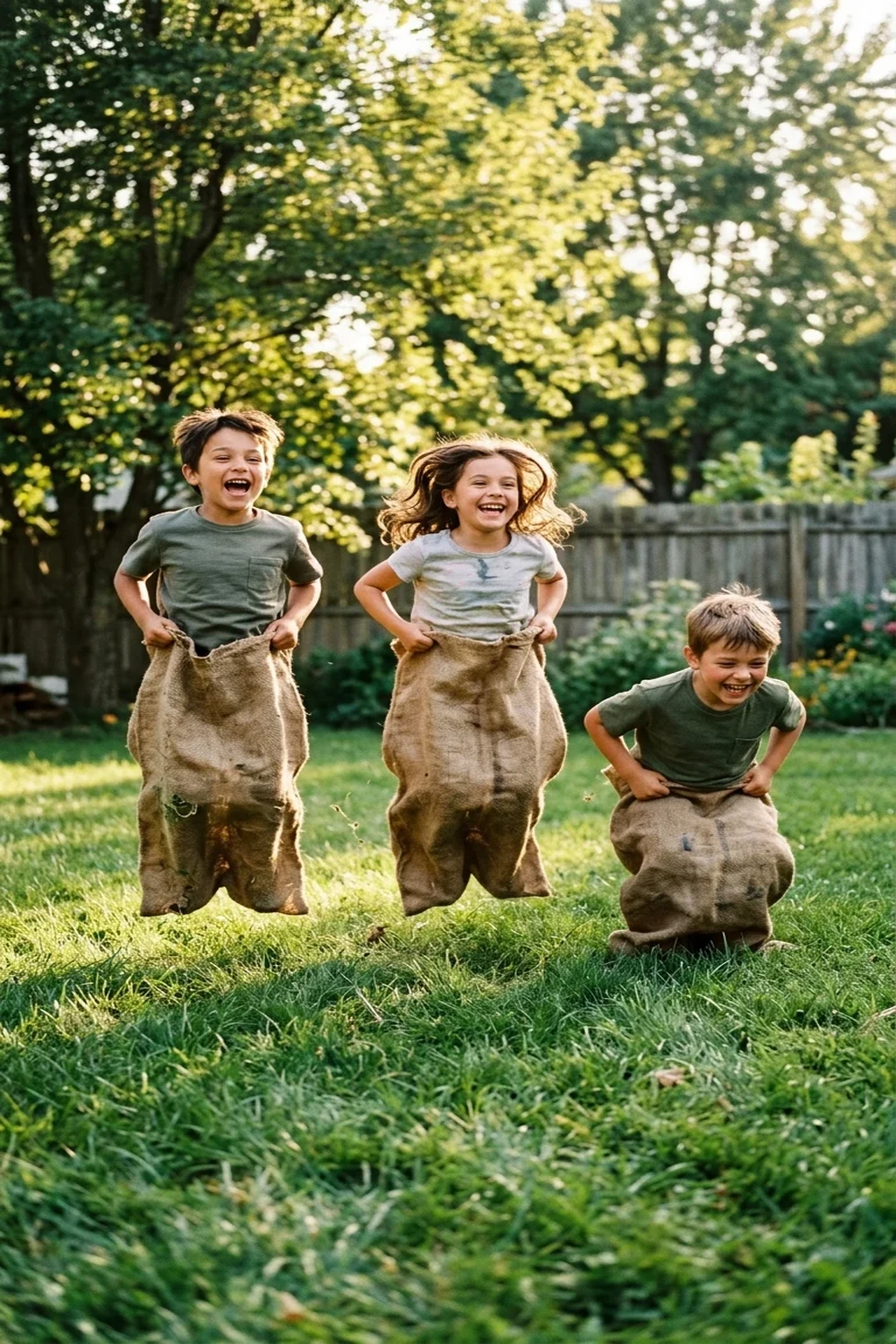
3. Sack Dash: How to Run a Safe DIY Burlap Sack Race
A homemade sack dash is a classic carnival racing game where participants stand inside fabric bags and hop toward a marked finish line. This high-energy outdoor activity develops physical coordination, cardiovascular endurance, and balance across age groups while requiring minimal backyard equipment to construct.
- Equipment Selection: Choose heavy-duty burlap sacks or reinforced cotton pillowcases reaching waist height; never substitute thin plastic garbage bags due to tearing and suffocation risks.
- Course Dimensions: Set a straight 20-foot to 30-foot racing lane over level grass, leaving at least 4 feet of clearance between parallel participant lanes to avoid collisions.
- Age-Stratified Brackets: Group racers into narrow age bands (such as 4-6 and 7-10 years) or stagger the starting line forward by 10 feet for younger participants.
- Grip and Safety Standards: Require players to hold sack rims with both hands at hip level, wearing closed-toe athletic sneakers to maintain steady traction.
- Prize Allocation: Award carnival tokens or vibrant stickers to every participant at the finish line to emphasize movement and participation over cutthroat winning.
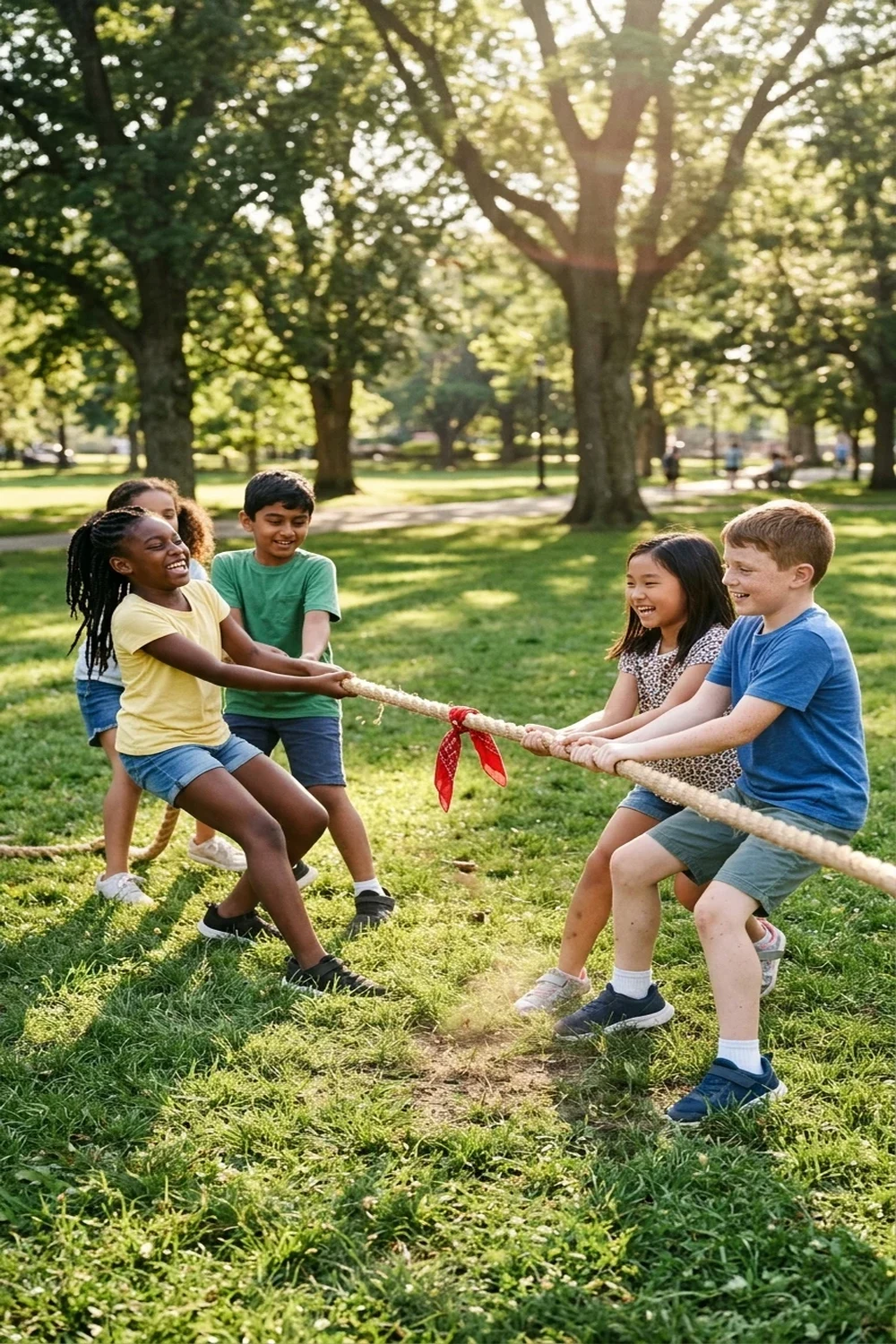
4. Tug Battle: Setting Up an Outdoor Tug-of-War for Groups
Tug Battle is a team-based strength competition where two opposing sides pull on opposite ends of a heavy rope to drag a center indicator past a designated ground boundary. When structured with weight balancing and proper hand holds, this cooperative carnival activity delivers energetic teamwork without physical risk.
- Rope Specifications: Use a soft, 1-inch to 1.5-inch diameter twisted cotton or manila rope measuring at least 25 feet to prevent skin abrasions on hands.
- Center Markers: Tie a bright red ribbon around the rope midline and align it with a visible chalk or spray-painted line marked directly on dry grass.
- Balanced Team Assembly: Equalize opposing rosters by aggregate physical strength and size rather than simply counting total heads per side.
- Anti-Wrap Safety Rule: Mandate an open, two-handed grip along the cord, strictly banning players from wrapping rope around wrists, arms, or torsos.
- Surface Safety: Confine all pulling rounds to dry turf surfaces, halting gameplay immediately if ground moisture creates slipping risks.
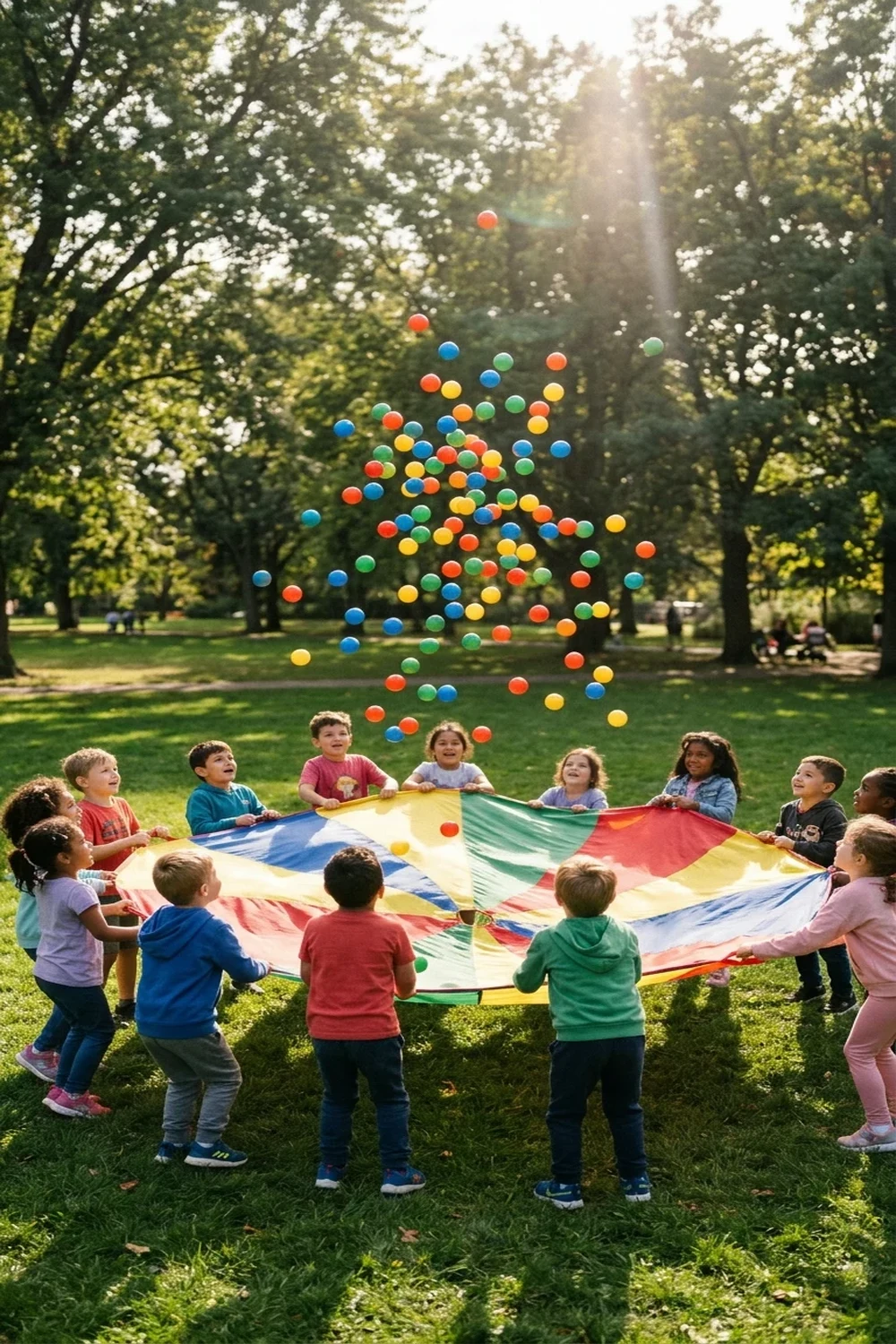
5. Parachute Pop: Cooperative Outdoor Bounce Challenge for Toddlers
Parachute Pop is an inclusive carnival game in which players grip the perimeter handles of a circular nylon canopy and ripple the fabric in unison to launch lightweight balls airborne. This cooperative activity replaces head-to-head elimination with team synchrony, making it exceptionally effective for early childhood participants.
- Canopy Specs: Select an 8-foot to 12-foot ripstop nylon parachute equipped with reinforced edge web handles spaced 18 inches apart.
- Ball Selection: Deploy 10 to 20 lightweight 2.5-inch hollow plastic ball-pit spheres, avoiding heavy or undersized balls that present choking hazards.
- Cooperative Counting Rules: Challenge the circle to keep all plastic spheres airborne across 20 consecutive rhythmic wave motions without allowing any to escape.
- Team Color Separation: Split spheres into contrasting colors (such as blue versus yellow) to see which color cohort balances longer on the rippling canopy.
- Buffer Clearance: Maintain a 6-foot perimeter around the canopy perimeter free from outdoor patio furniture, yard stakes, and sharp fences.
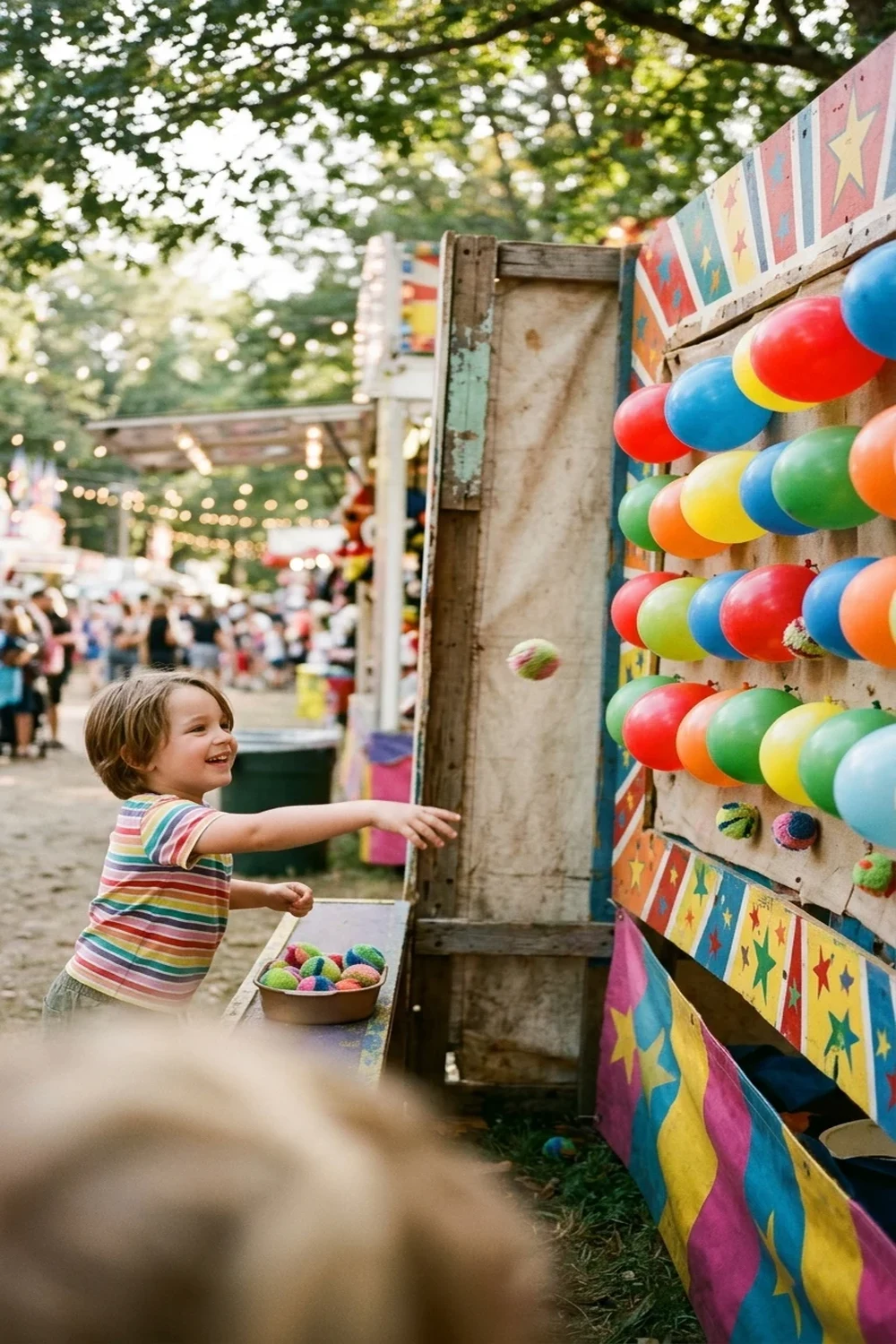
6. Balloon Darts: Safe Hook-and-Loop Alternatives for Home Carnivals
A kid-friendly balloon dart board is a target-tossing carnival station where participants aim soft projectiles at vibrant balloon targets mounted against a stable backdrop. By replacing steel-tipped darts with hook-and-loop balls or suction-cup missiles, organizers preserve the classic visual charm while removing puncture dangers.
- Target Board Assembly: Affix partially inflated 5-inch latex balloons or felt balloon cutouts against a 4×3-foot corrugated cardboard or plywood sheet.
- Safe Projectile Kits: Use hook-and-loop wrap balls, blunt beanbags, or rubber suction darts engineered specifically for youth carnival games.
- Throwing Distance Standards: Draw foul markers 5 feet away for preschool throwers and 8 to 10 feet away for older school-aged children.
- Choking Hazard Protocol: Enforce the U.S. Consumer Product Safety Commission guidelines by immediately retrieving and discarding popped latex fragments before the next throw.
- Structured Turn Flow: Restrict throwing turns to one child at a time while spectators remain seated behind safety tape.
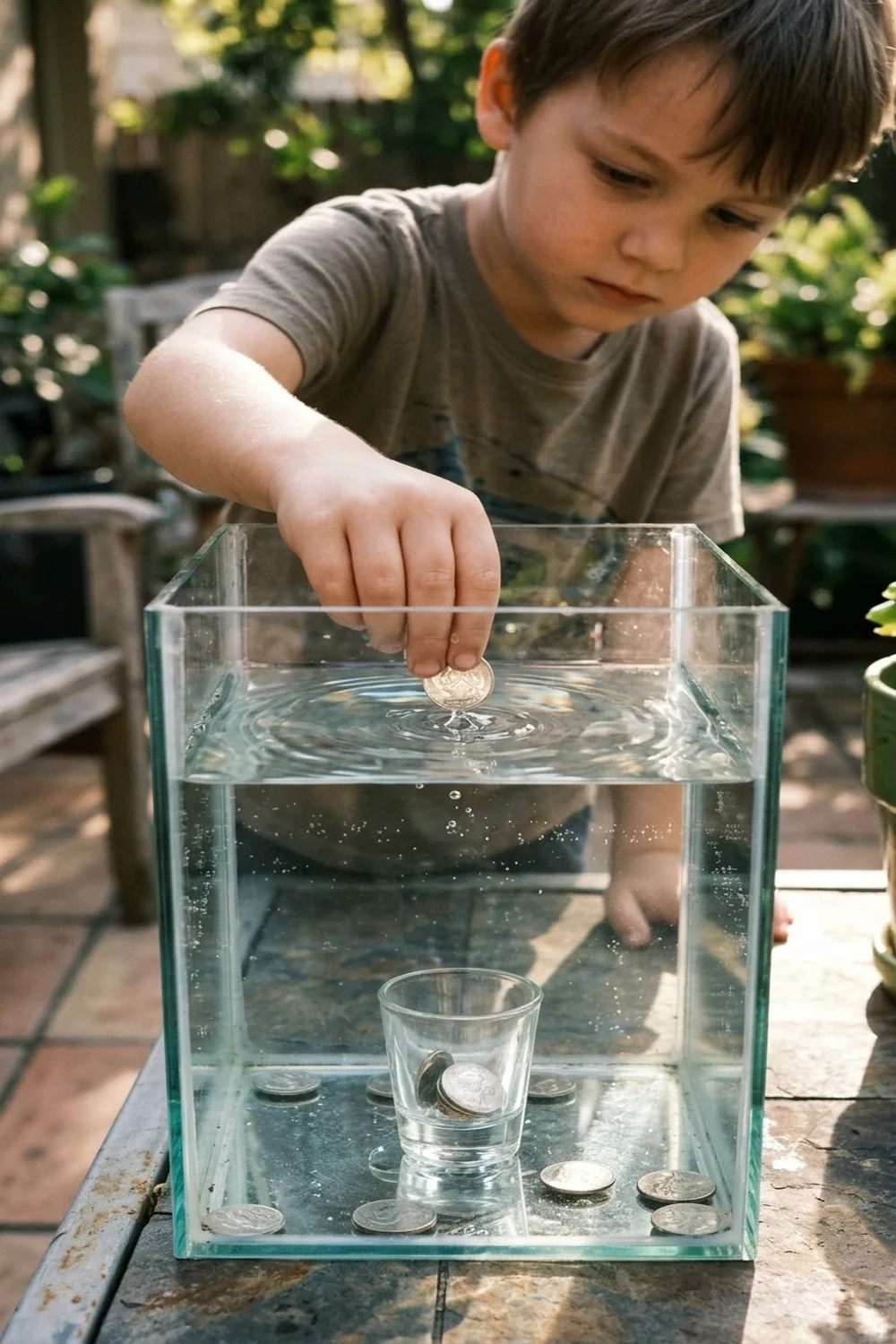
Coin Drop: How to Set Up an Underwater Accuracy Challenge
The coin drop game is an engaging physics-based carnival challenge where players drop coins through water to land them into a sunken submerged shot glass or small target cup. Because water resistance creates hydrodynamic drag and unpredictable coin flutter, this tabletop activity delivers high suspense while fitting easily onto any small patio or kitchen table.
- Equipment Setup: Place a wide, clear 5-gallon glass or acrylic tank filled with water on a level surface, then submerge a heavy glass ramekin or shot glass directly in the center of the bottom.
- Gameplay Mechanics: Provide each participant with three identical coins, such as nickels or quarters, and direct players to hold each coin at water surface level before releasing without throwing.
- Tiered Difficulty: Vary target diameter based on participant age by utilizing a 4-inch ceramic bowl for toddlers and a narrow 1.5-inch shot glass for older children.
- Safety Protocols: Supervise small coins closely to prevent choking hazards among children under age three, and tally coin inventory before and after each session.
- Prize Structure: Award participation tokens for near misses and premium tokens or stickers whenever a coin lands and remains inside the sunken target vessel.
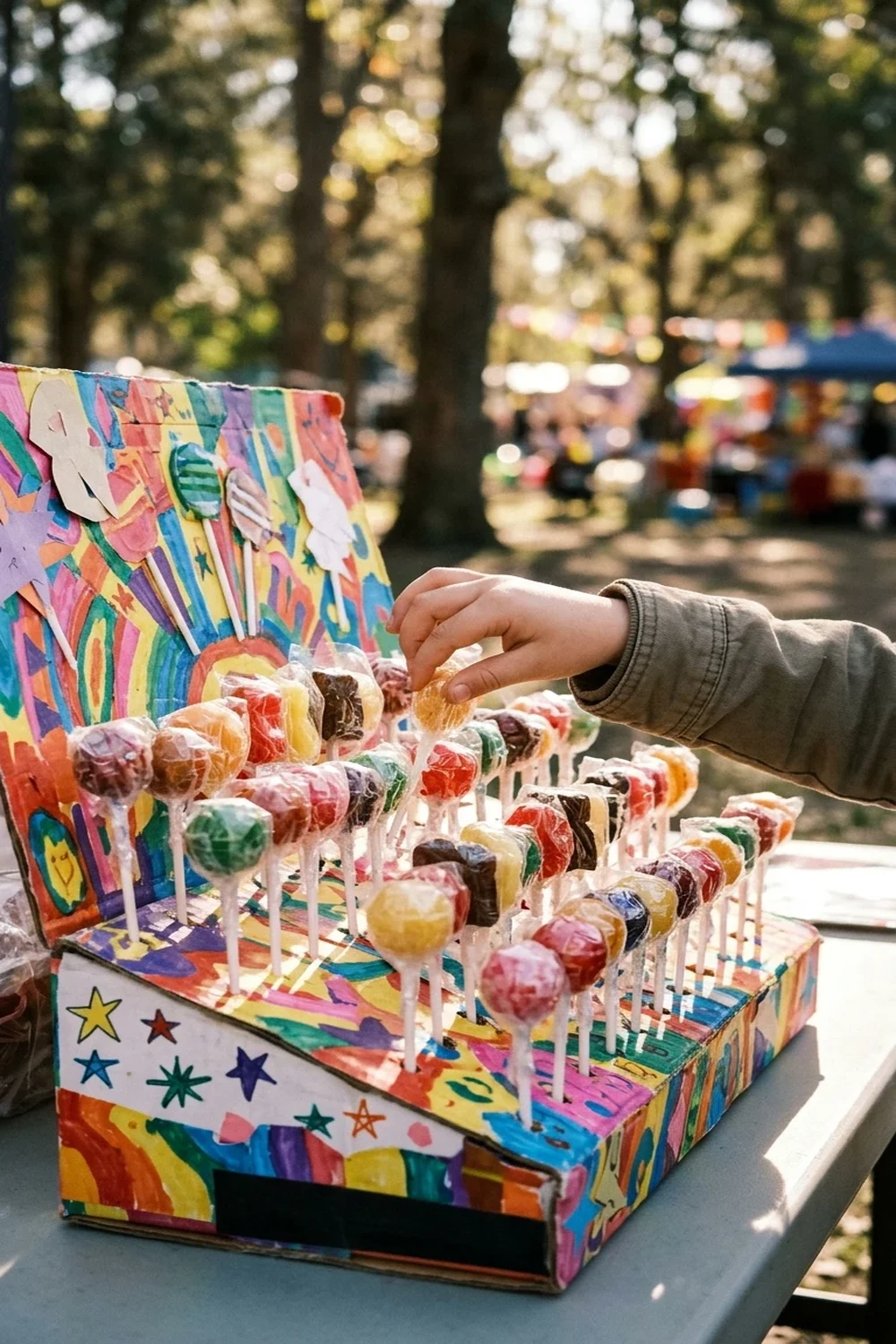
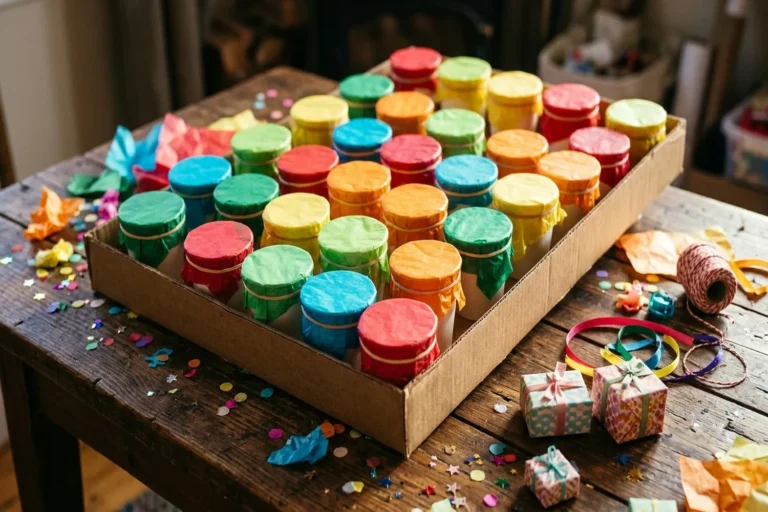
Lollipop Pull: How to Build a Win-Every-Time Carnival Classic
A homemade lollipop pull game is a classic carnival attraction where children pull wrapped suckers from a perforated board to reveal colored stick tips corresponding to mystery prize tiers. Because every child keeps their selected treat regardless of stick marking, this activity guarantees a positive, zero-tears experience for toddlers and elementary schoolers alike.
- Display Construction: Drill or punch neat rows of quarter-inch holes spaced two inches apart across a reinforced corrugated cardboard box or painted pegboard sheet.
- Color Coding: Mark the bottom tips of 15% of the lollipop sticks with bright food-safe markers to designate grand-prize winners, leaving remaining sticks plain for standard prizes.
- Allergy Management: Select allergen-friendly, gluten-free, and dye-conscious fruit suckers clearly labeled for family safety, or substitute themed wooden pegs for toddlers under age four.
- Refill Logistics: Designate a booth volunteer to replenish pulled lollipops from beneath the display board to preserve suspense and maintain randomized winning odds throughout the event.
- Prize Distribution: Pair standard unmarked sticks with the lollipop treat itself, while rewarding marked-tip winners with bonus rewards like bubble wands or coloring books.
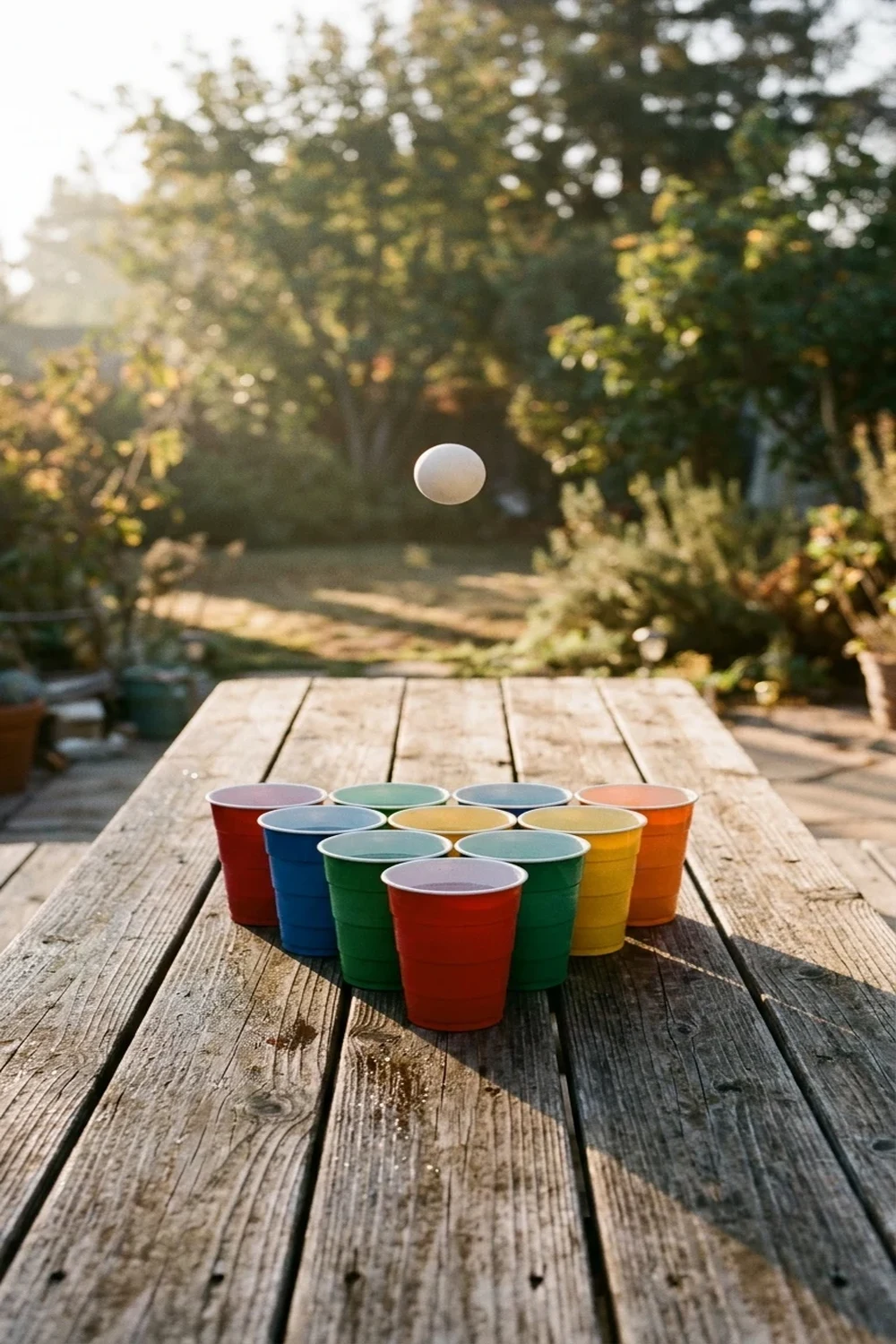
Cup Toss: How to Create a Tabletop Ping-Pong Target Game
The DIY cup toss game challenges players to bounce or throw lightweight table tennis balls into a pyramid or grid of weighted plastic party cups positioned on an elevated table. This hand-eye coordination test adapts seamlessly between indoor playrooms and outdoor lawns while repurposing everyday household items with near-zero material costs.
- Grid Configuration: Arrange 10 to 15 durable reusable 16-ounce cups into a tight triangular cluster or tiered grid securely fastened to a folding card table.
- Wind Stabilization: Pour one inch of dry play sand, aquarium gravel, or water into every cup bottom to prevent tipping when struck by incoming balls.
- Distance Guidelines: Mark throw lines using masking tape or chalk three feet away for preschool kids, six feet for grade schoolers, and nine feet for teenagers.
- Throwing Regulations: Distribute three ping-pong balls per turn, granting players their choice between a direct arc toss or a single-bounce trajectory off the tabletop surface.
- Scoring Hierarchy: Color-code cups using red, blue, and gold rings to indicate tiered point values, offering small treats for 5 points and premium prizes for 15 points.
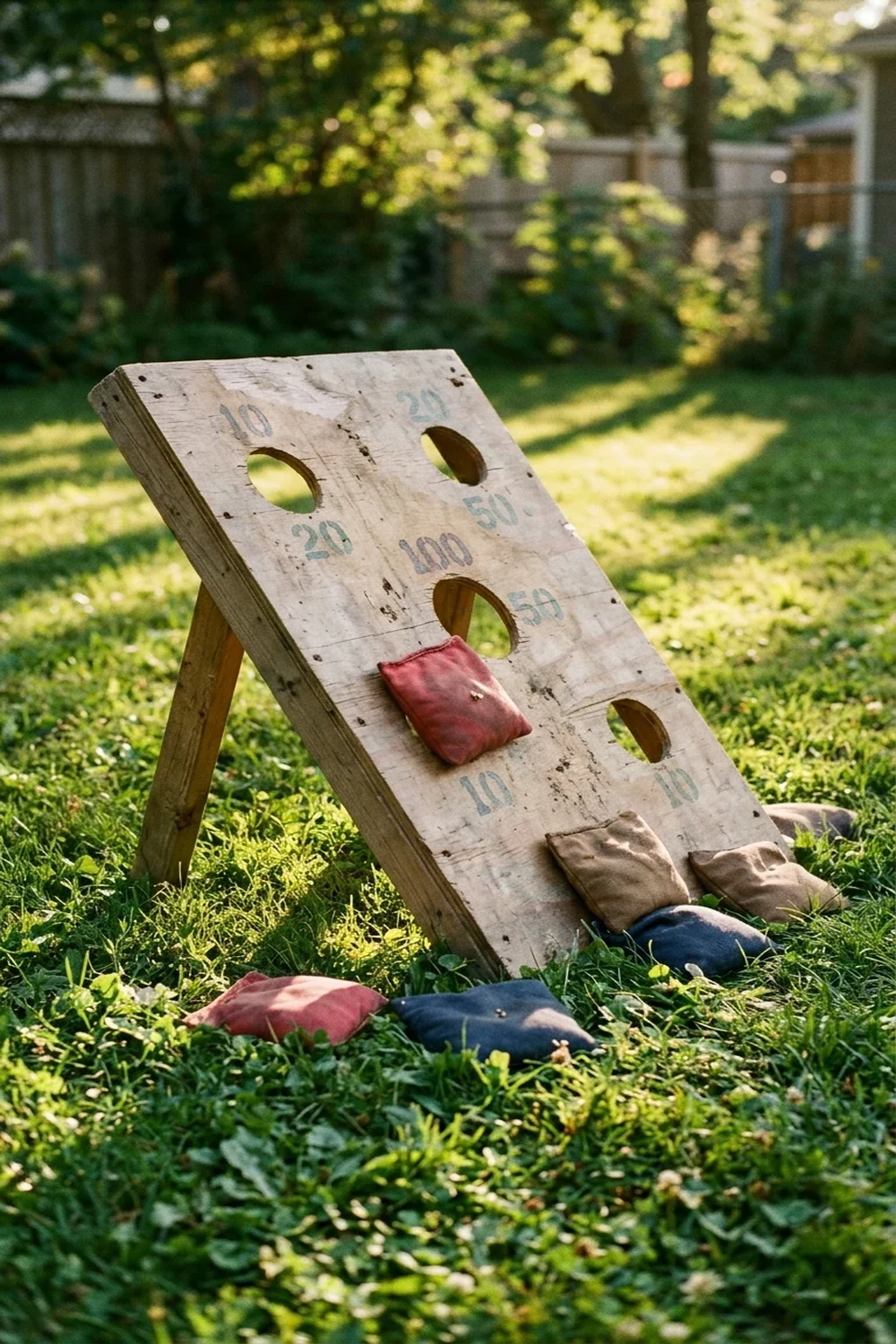
Beanbag Drop: How to Construct a Multi-Tiered Target Board
A beanbag drop game is a classic carnival throwing competition where participants toss weighted fabric sacks through score-labeled cutout apertures on an angled wooden or cardboard backboard. Soft beanbags remain stationary upon impact rather than bouncing away, providing predictable flight mechanics and dependable indoor-outdoor versatility for all age brackets.
- Board Fabrication: Cut three to four circular openings ranging from six to ten inches in diameter into a rigid plywood panel or sturdy tri-fold cardboard presentation board.
- Safety Sanding: Smooth all cutout perimeter edges with medium-grit sandpaper or wrap them with heavy-duty duct tape to eliminate splinters and cardboard abrasion risks.
- Target Scoring: Assign higher point values such as 50 points to smaller upper holes, while designating lower 10-point values to wider bottom openings.
- Tossing Mechanics: Give each player three standard double-stitched 5-inch fabric beanbags filled with dried beans or plastic pellets to throw from designated distance lines.
- Adaptive Gameplay: Allow younger children to take two steps forward past the primary baseline or throw until at least one beanbag clears a scoring target.
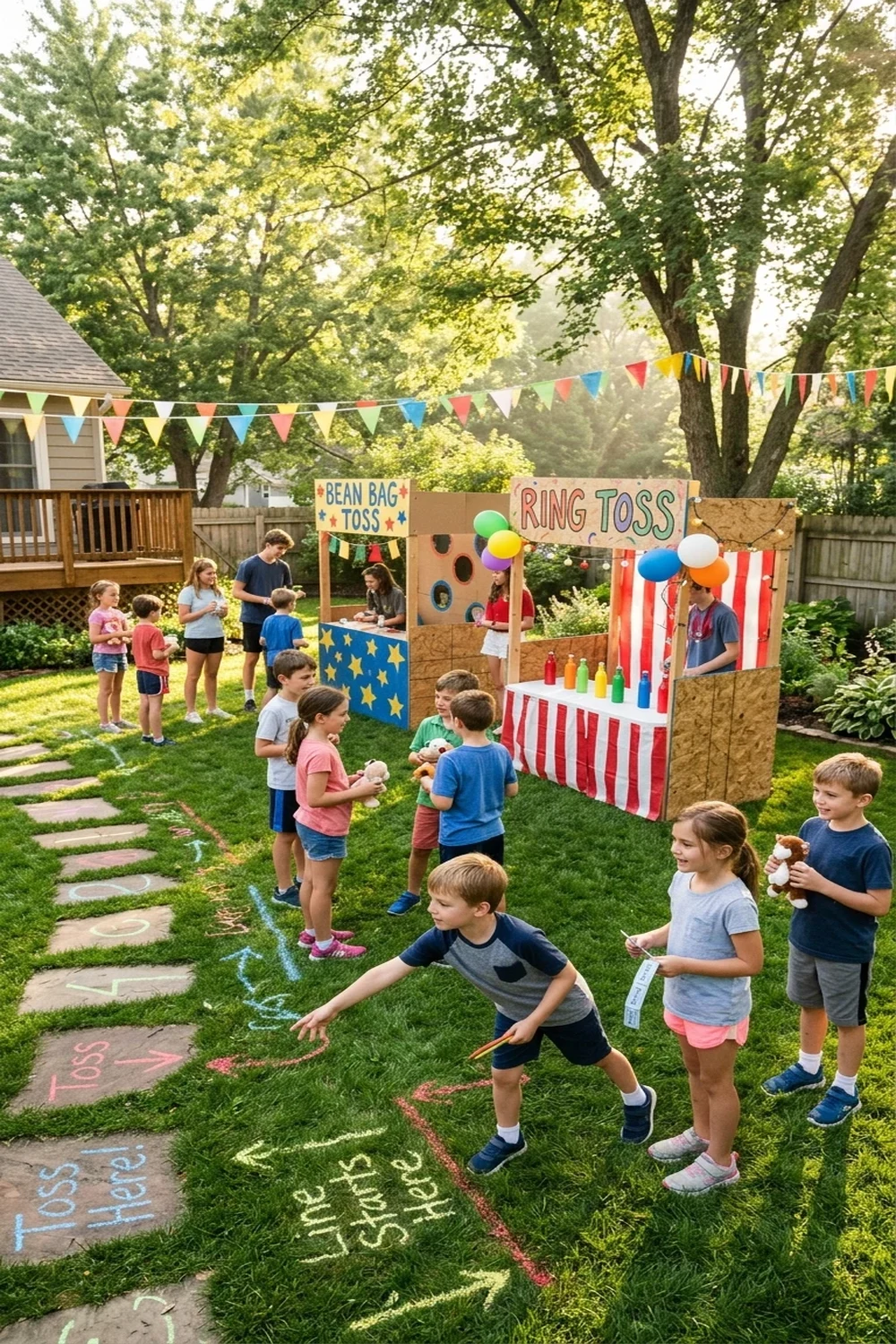
A Few Things That Help Homemade Carnival Games Run Smoothly
Running successful homemade carnival games requires clear boundaries, adult supervision, and structured rotation schedules to ensure safe, continuous play for children. Implementing small organizational protocols before guests arrive prevents bottlenecks and keeps excitement high across all activity booths.
- Chalk Queue Lines: Drawing bright sidewalk chalk waiting lines 6 feet behind throwing areas keeps excited spectators from crowding active players.
- Station Volunteer Assignments: Designating one adult or teenager per booth ensures fair scoring, rapid rule enforcement, and immediate reset of displaced game pieces.
- Universal Token Tracking: Distributing hand stamps or paper wristbands eliminates lost ticket disputes and speeds up redemption at reward tables.
- Weatherproofing Precautions: Securing lightweight cardboard targets with ground stakes or weighted water jugs protects games against sudden wind gusts.
- Safety Sweep Protocols: Scheduling adult spotters to collect popped balloon fragments immediately prevents choking risks outlined by child safety standards.
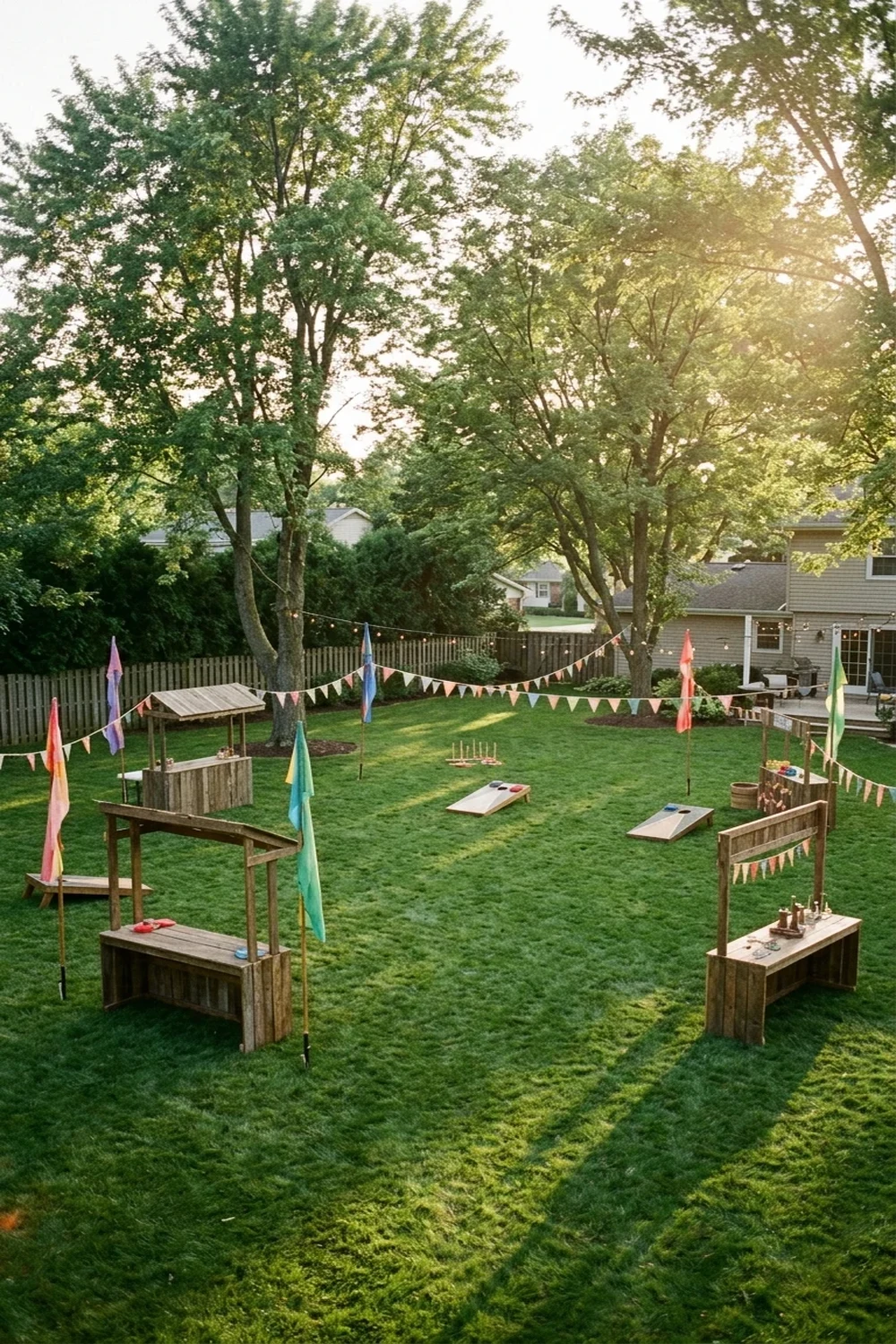
How Much Space Do You Need for Backyard Carnival Games?
Setting up a safe backyard carnival requires at least 400 to 600 square feet of open, level ground for compact booths and roughly 1,200 square feet for running relays. Proper spacing isolates high-velocity projectile games like beanbag tosses from high-traffic footpaths.
- Station Separation Distance: Maintaining 8 to 10 feet of buffer space between adjacent booths prevents stray balls and beanbags from hitting bystanders.
- Throwing Lane Boundaries: Allocating a straight 12-foot throwing alley provides adequate distance for varying age levels while containing missed targets.
- Active Relay Zones: Reserving a clear 20-by-40-foot grass corridor accommodates running challenges such as sack races and tug battle events safely.
- Tabletop Game Footprint: Positioning calm drop games and lollipop pulls on standard 6-foot folding tables requires only a 6-by-8-foot compact perimeter.
- Perimeter Safety Buffers: Keeping all game stations at least 5 feet away from fences, thorny shrubs, and patio furniture avoids collision injuries.
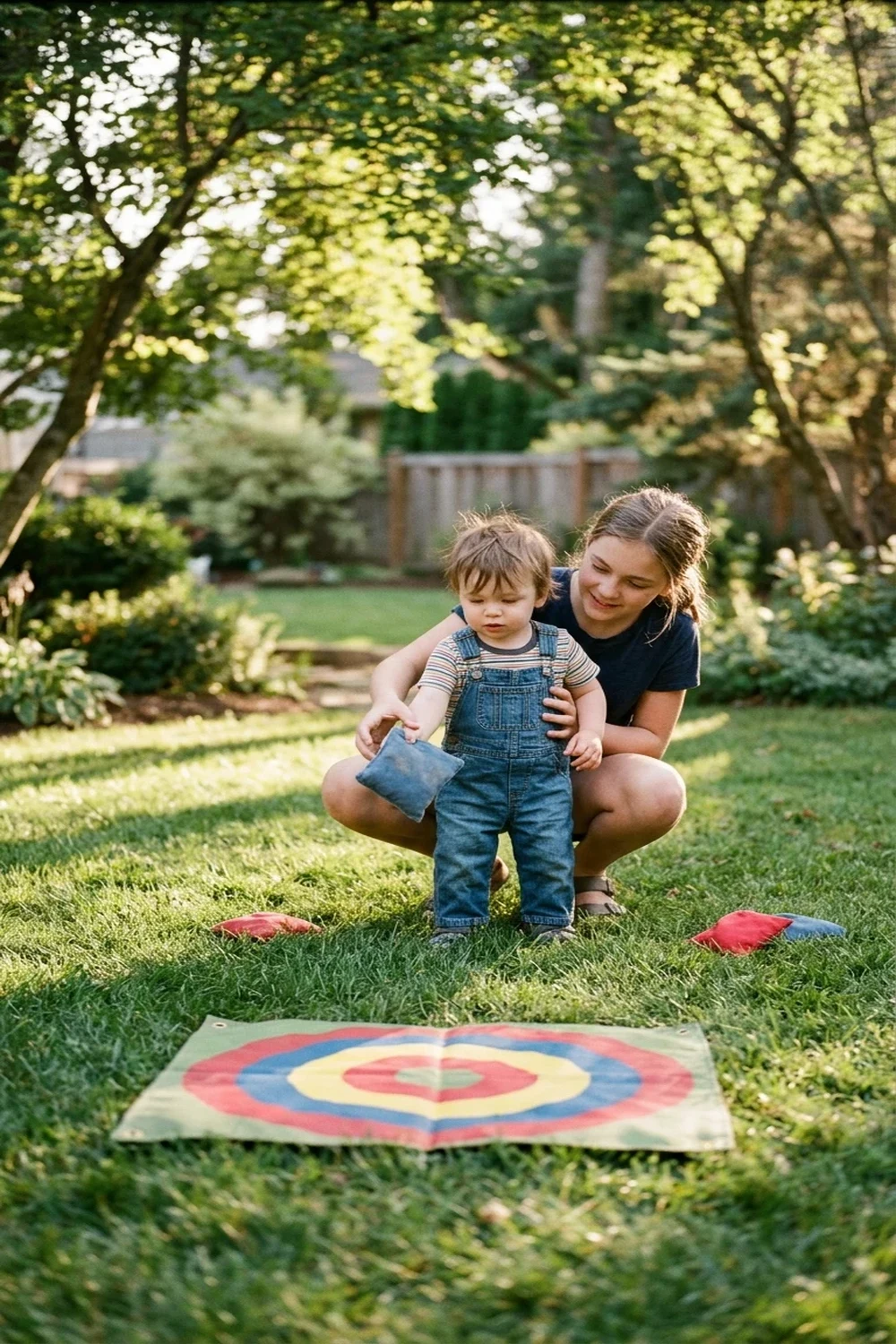
Can Children of Different Ages Play Homemade Carnival Games Together?
Children of diverse ages can seamlessly play homemade carnival games together when organizers implement tiered throwing lines and cooperative scoring mechanics. Staggered difficulty levels level the playing field between toddlers, elementary schoolers, and older siblings without diminishing the competitive fun.
- Tiered Distance Markers: Placing three color-coded tape lines at 3-foot, 6-foot, and 9-foot intervals gives younger kids an equitable chance to score points.
- Target Size Adaptations: Swapping wide plastic buckets for younger participants and narrower mason jars for older children maintains balanced challenge levels.
- Cooperative Buddy Teams: Pairing younger kids with older siblings for two-player challenges like the parachute pop builds camaraderie and prevents frustration.
- Modified Equipment Weights: Providing oversized lightweight foam beanbags for preschoolers alongside regulation beanbags for older kids optimizes grip control.
- Participation-Based Rewards: Awarding uniform participation tokens regardless of final scores ensures younger siblings feel valued alongside top-scoring older players.
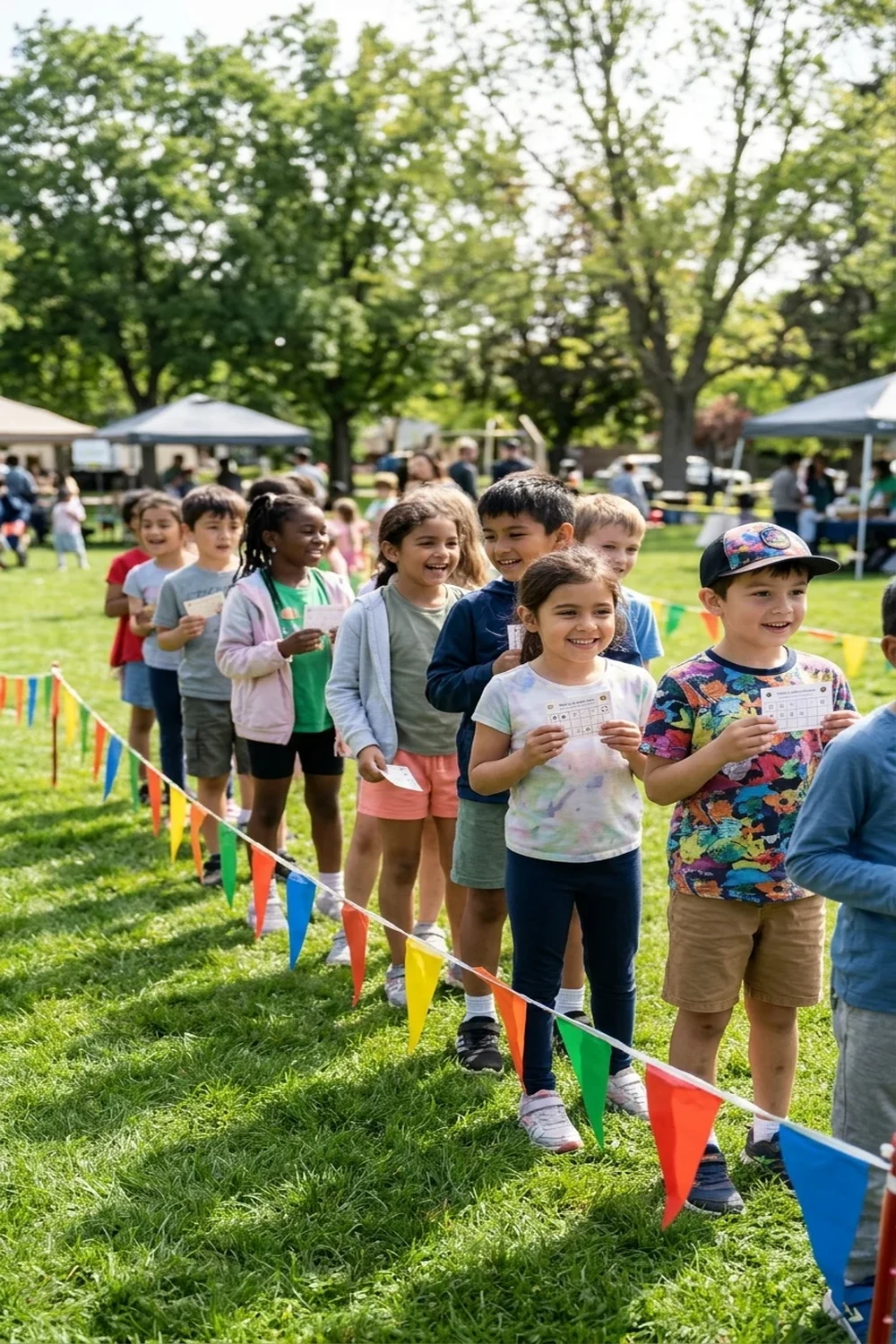
How Can You Stop Carnival Game Lines From Becoming Too Long?
Preventing long lines at homemade carnival games requires operating multi-player stations, enforcing strict three-throw limits, and staggering entry with punch-card passports. Keeping turn durations under 45 seconds maintains steady game flow and eliminates restlessness among waiting kids.
- Three-Attempt Limits: Enforcing a strict three-throw rule per turn guarantees that individual player cycles remain under 40 seconds.
- Carnival Punch-Card Passports: Handing each child a punch card directing them to specific initial stations disperses crowds evenly across the yard.
- Duplicate Station Builds: Building two identical lanes for popular attractions like beanbag drops cuts wait times by half during peak hours.
- Self-Paced Holding Stations: Setting up a freeform bubble-blowing corner or coloring table provides immediate entertainment whenever primary game lines back up.
- Rapid Reset Mechanisms: Attaching collection nets behind target boards catches loose balls instantly, cutting downtime between consecutive turns.

What Can You Use for Homemade Carnival Game Prizes?
The most cost-effective homemade carnival game prizes are non-candy trinkets, experiential reward tickets, and consumable school supplies that cost between $0.10 and $0.50 per unit. Establishing a central prize redemption booth with a tiered ticket exchange prevents excessive competition and lets every child select an age-appropriate reward.
- Bulk Non-Candy Trinkets: Stamped wristbands, novelty erasers, vinyl stickers, and temporary tattoos provide instant satisfaction without creating sugar spikes or triggering common food allergies.
- Tiered Ticket Redemption: Awarding one to three paper tickets per game attempt allows children to accumulate points and choose larger items like coloring books or mini puzzles at the prize table.
- Experiential Pass Tokens: Printable coupons offering privileges such as ‘Choose Movie Night’ or ‘Extra 20 Minutes of Playtime’ eliminate material clutter while carrying high excitement value for kids.
- Upcycled Craft Favors: Small mason jars filled with homemade playdough or DIY bead bracelets serve as charming, eco-friendly carnival giveaways that utilize leftover household craft supplies.
- Consumable Art Packs: Bundles containing three sidewalk chalk sticks, gel pens, or mini sketchpads offer lasting utility long after the party finishes.

Which Homemade Carnival Games Can Move Indoors If It Rains?
Compact target games and tabletop stations such as Cup Toss, Beanbag Drop, Lollipop Pull, and dry Coin Drop transition seamlessly indoors during sudden rainstorms. Relocating outdoor activities inside requires substituting hard plastic balls with felt pom-poms or yarn beanbags to protect walls, windows, and hardwood floors from accidental damage.
- Living Room Cup Toss: Place lightweight plastic cups across a non-slip rug and swap plastic table-tennis balls for two-inch felt wool pom-poms to eliminate bouncing against furniture.
- Cardboard Beanbag Drop: Prop an angled cardboard target board against an interior wall away from glass frames, using soft fabric beanbags filled with dried lentils or rice.
- Tabletop Lollipop Pull: Position a drilled pegboard or perforated shoebox directly onto a kitchen counter or dining table for an orderly, zero-mess stationary challenge.
- Dry Carpet Coin Drop: Swap the water-filled tub for a plastic bowl lined with a microfiber cloth, allowing players to drop coins or metal washers onto marked target felt squares without splashing.
- Hallway Balloon Balance: Convert the outdoor sack dash into a quiet indoor hallway shuffle where participants navigate between masking-tape lines balancing balloons on paper plates.
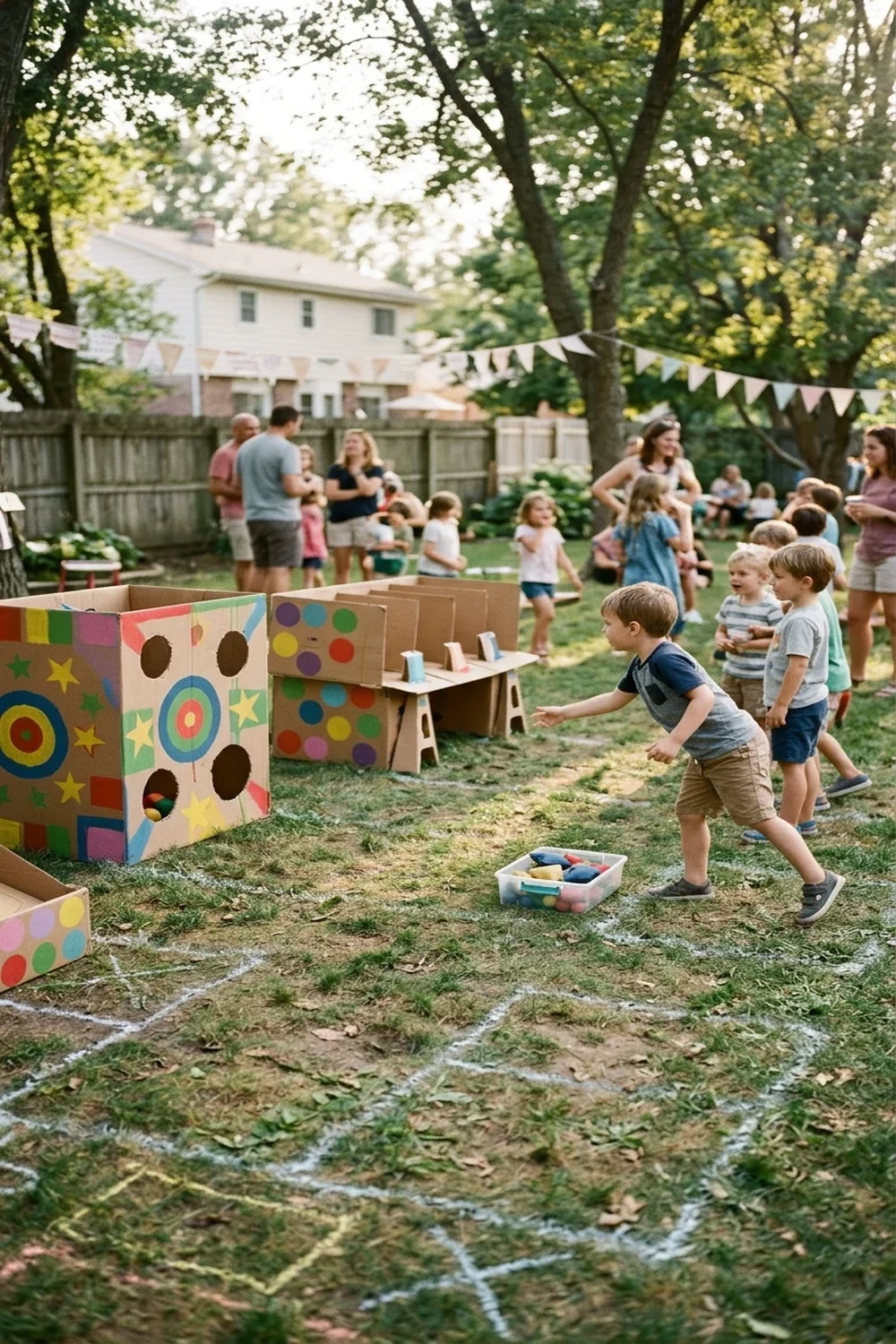
Keep It Fun, Not Complicated: DIY Carnival Success Tips
A successful DIY carnival relies on accessible rules, flexible participation lines, and low-pressure game mechanics rather than elaborate carnival booths. Prioritizing simple homemade materials like buckets, cardboard boxes, and chalk markings ensures setup takes under an hour while keeping children engaged and active throughout the event.
- Visual Waiting Boundaries: Mark participant waiting spots on the grass or floor using bright masking tape or sidewalk chalk spaced three feet apart to eliminate crowding and disputes.
- Flexible Distance Markers: Establish two separate throwing lines at every skill station so younger toddlers stand three feet closer than older siblings without altering basic game rules.
- Dedicated Station Supervisors: Assign one parent or teen volunteer to monitor every active game to reset fallen cups, distribute score tickets, and maintain steady turn-taking rhythm.
- All-Player Participation Rewards: Guarantee that every player earns at least one redemption ticket or sticker on every turn to foster an encouraging, cooperative atmosphere.
- Ready Supply Reserves: Keep a lidded plastic bin containing extra inflated balloons, backup beanbags, duct tape, and a marker pen nearby to resolve equipment tears in seconds.

More Homemade Carnival and Outdoor Party Ideas You Might Like
Expanding your family celebration beyond classic carnival stations is easy with cooperative lawn races, water-balloon obstacle tracks, and DIY field day challenges. Integrating themed station rotations keeps children moving freely between stationary aiming games and active whole-body physical sports.
- DIY Backyard Obstacle Courses: Arrange pool noodles, hula hoops, and garden cones into a timed running track that tests agility, balance, and quick footwork.
- Sponge Relay Splash Races: Challenge two teams to transfer water between distant five-gallon buckets using giant car-wash sponges for warm-weather outdoor entertainment.
- Classic Field Day Games: Incorporate three-legged partner races, egg-and-spoon balancing walks, and oversized ring-toss games using recycled rope quoits and soda bottles.
- Printable Carnival Scavenger Hunts: Provide each child with an illustrated checklist card requiring them to complete four distinct game booths to earn a grand finale mystery prize.
- Giant Outdoor Yard Games: Build lawn-sized tic-tac-toe grids using painted garden stones and crisscrossed rope sections laid directly across open grass plots.
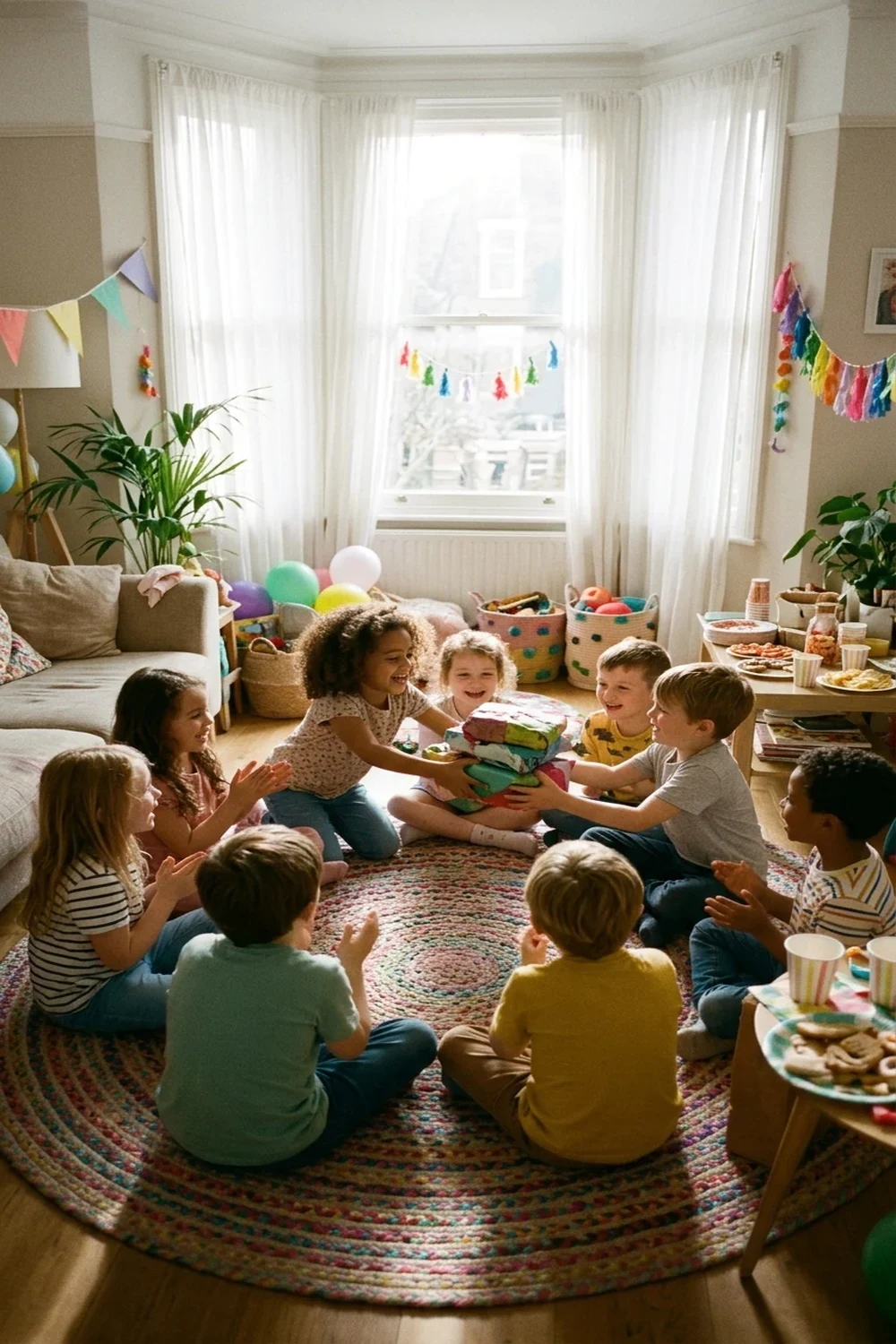
21 Birthday Party Games Ideas for Kids and Toddlers
Birthday party games provide structured physical activity and high-energy entertainment for children while keeping party costs minimal through simple household supplies. Hosting a successful party requires balancing calm station games with active relay races to maintain engagement across age groups from 4 to 12 years old.
- Musical Statues Freeze: Play lively music while children dance, stopping the track abruptly so players must freeze instantly without losing balance or giggling.
- Pass the Parcel Countdown: Wrap a small novelty gift in multiple recycled paper layers, letting each child unwrap one layer per musical pause.
- Balloon Keep-Up Relay: Divide players into pairs to keep latex-free party balloons in the air using only elbows and heads across a designated carpet zone.
- Pin the Nose Animal Board: Challenge blindfolded guests to paste reusable felt stickers onto a large cardboard mascot poster following two gentle spins.
- Treasure Hunt Clue Trail: Hide numbered index cards around the living room leading toward a final basket filled with colorful party favors.

21 School Carnival Games Ideas for 2026 Fundraisers
School carnival games are high-throughput booth activities designed to process large student crowds quickly while generating ticket revenue for campus fundraisers. Ideal carnival booths cost under 25 dollars in materials, require single-volunteer operation, and take less than 45 seconds per turn to prevent bottlenecks.
- Ring Toss Bottle Stand: Arrange 12 weighted two-liter soda bottles in a wooden crate for players to loop using durable plastic diving rings.
- Duck Pond Matching Pick: Float numbered miniature rubber ducks in an inflatable kiddie pool to award instant sticker prizes matching base numbers.
- Giant Plinko Board Drop: Guide wooden discs down an inclined peg wall made from pegboard and wooden dowels into labeled score slots.
- Spin the Prize Wheel: Mount a rotating painted plywood dial divided into point values to guarantee every participating student walks away with a token.
- Mini Football Toss Target: Cut precision throwing apertures into painted plywood tarps to challenge older students aiming foam sports balls.
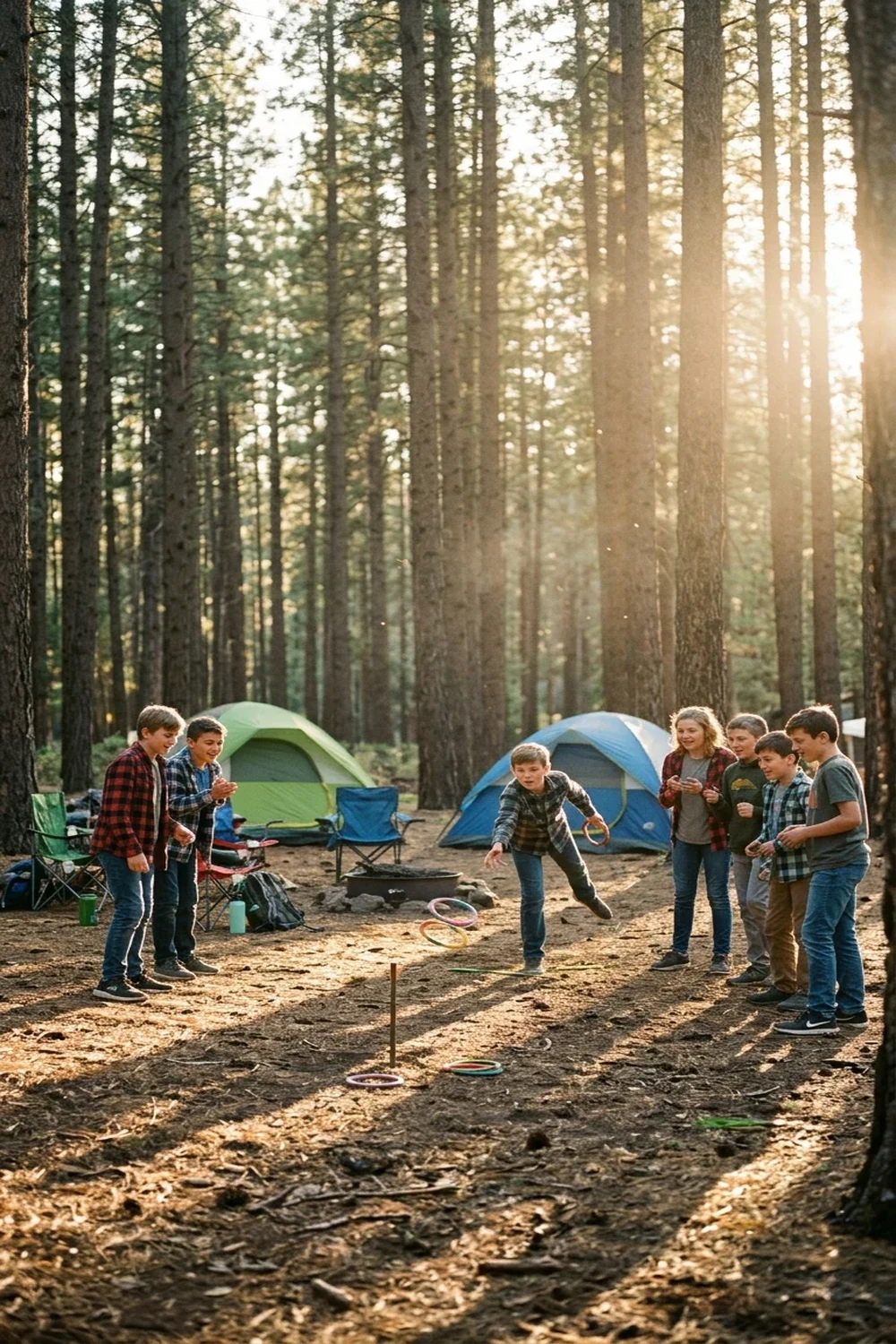
19 Fun Camping Games Ideas for 2026 Outdoor Trips
Camping games offer screen-free woodland recreation that utilizes natural forest topography, campfire clearings, and portable campsite essentials. These wilderness games keep scouts and families engaged during daylight downtime and twilight hours without requiring bulky sports equipment or electrical power.
- Nature Scavenger Grid: Distribute printed cards prompting kids to spot pinecones, smooth river stones, animal tracks, and distinct wild leaves around the campsite.
- Flashlight Tag Twilight Hunt: Designate one seeker equipped with a low-lumen LED flashlight to spot running players across clear campsite perimeter boundaries after dusk.
- Glow Stick Ring Pitch: Drive sturdy wooden tent stakes into level dirt and challenge campers to toss illuminated glow necklaces during evening campfires.
- Campfire Story Whispers: Pass an imaginative opening plot sentence clockwise around the circle, prompting each camper to append two sentences before the climax.
- Pinecone Bowling Alley: Clear a flat forest dirt lane and stand six reusable aluminum water cans as pins for rolling large dried pinecones.
Key Takeaways & Final Thoughts on DIY Carnival Games
- Affordable Setup: You can build thrilling carnival games using everyday items like cardboard boxes, plastic buckets, and balloons without commercial rental costs.
- Safety-First Engineering: Active games require wide outdoor grass spaces and clear safety boundaries, particularly around water hazards and balloon materials.
- Inclusive Prize Structure: Participation tickets and tiered token exchanges keep every child excited and engaged regardless of individual athletic ability.
- Weather Flexibility: Select compact tabletop games like Coin Drop and Lollipop Pull that easily transition indoors during unexpected rain.
Creating memorable experiences is about engaging play rather than flawless presentation. Start gathering your household recycled materials today and test one or two games in advance to ensure your next family celebration runs seamlessly.