
31 Best Outdoor Kids Activities to Burn Energy in 2026
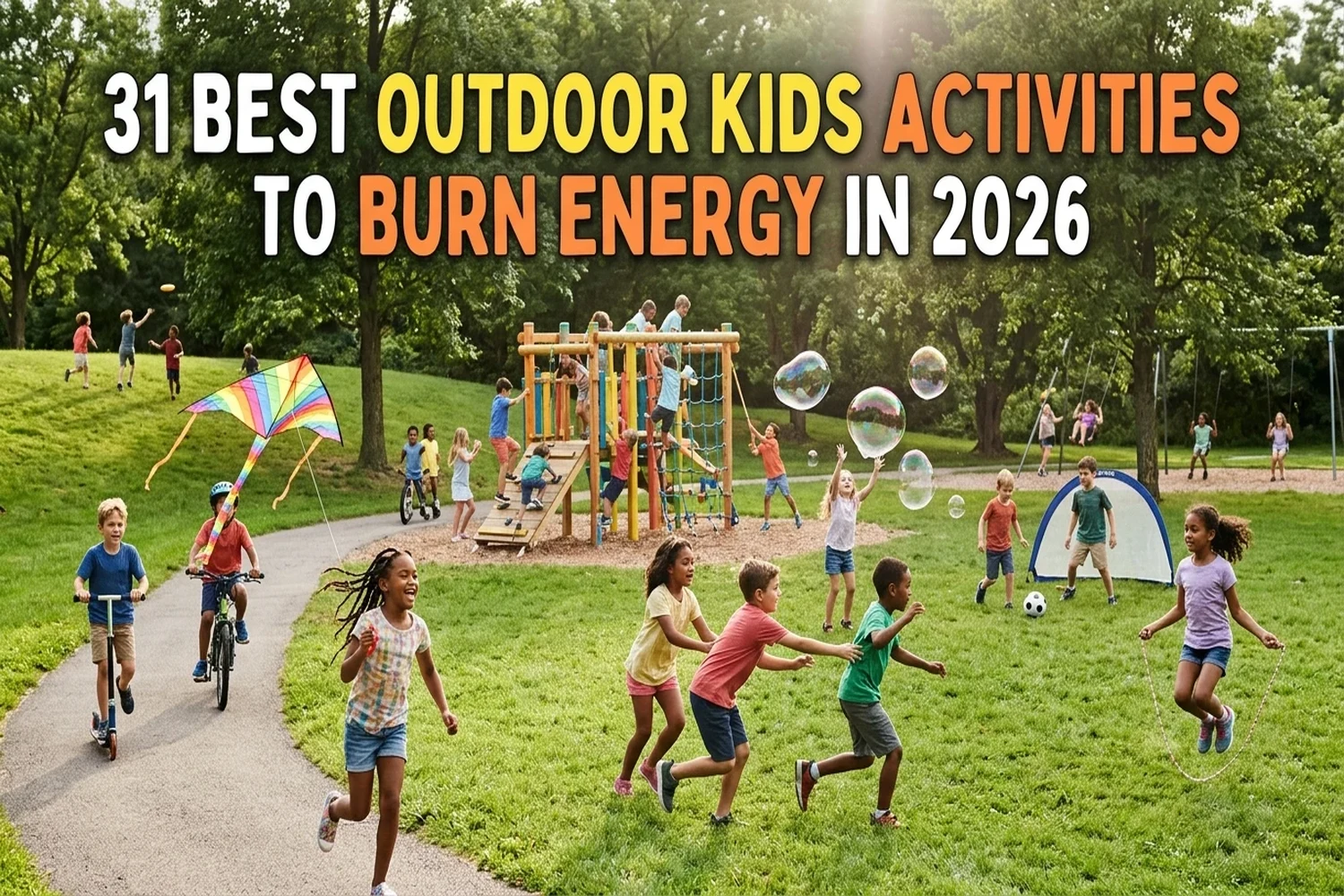
Outdoor play for kids is unstructured physical activity outside that builds motor skills, emotional resilience, and sensory integration while burning excess energy naturally. Replacing screen confinement with interactive backyard games curbs restlessness and sharpens cognitive problem-solving. This curated guide outlines 31 budget-friendly outdoor activities designed to keep children engaged, healthy, and moving.
What is Outdoor Play for Kids and Why Does It Burn Energy Fast?
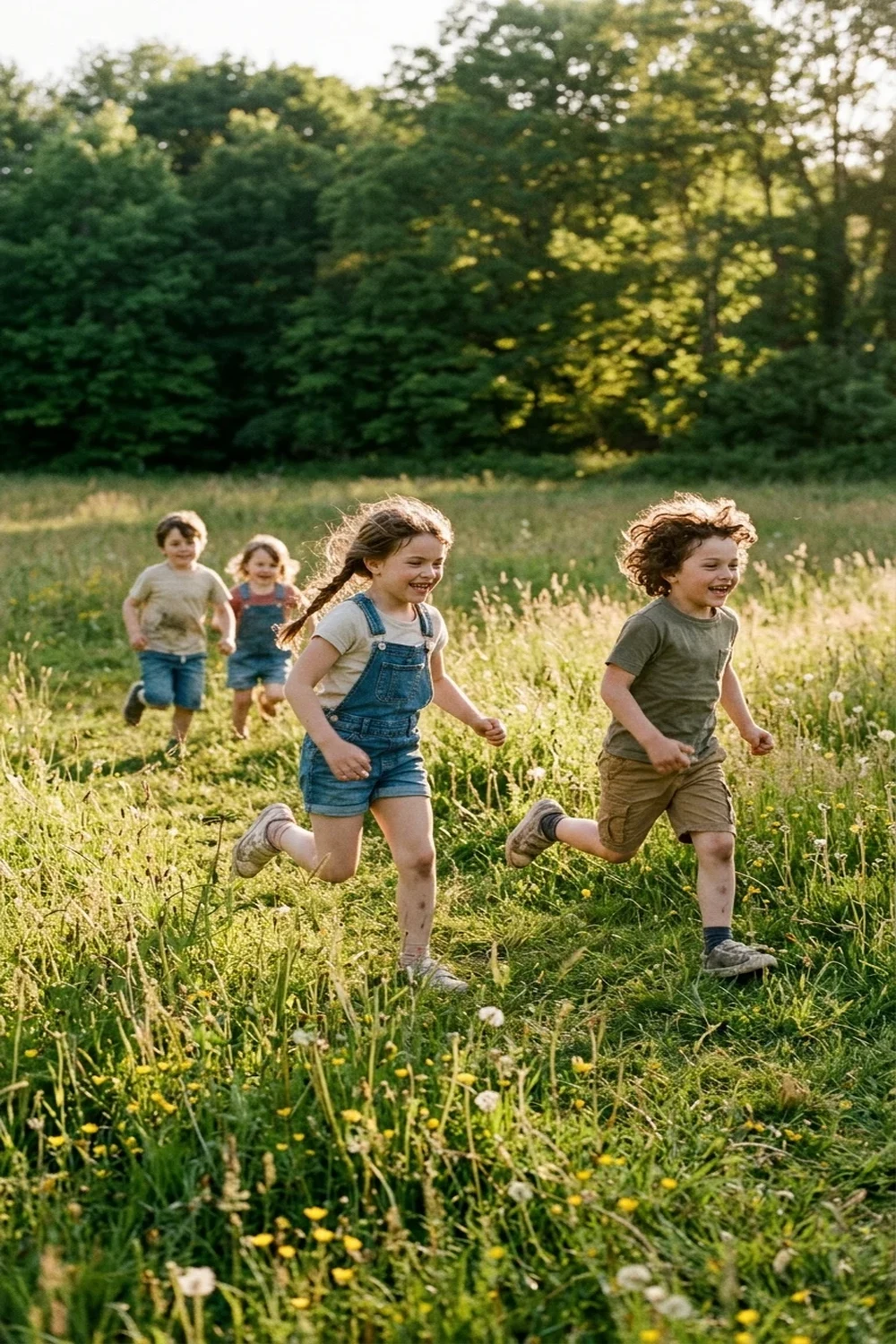
Outdoor play is self-directed physical activity in an open-air environment that allows children to move freely, engage large muscle groups, and burn built-up physical energy. Unlike indoor environments with physical boundaries, outdoor environments trigger spontaneous gross motor play, accelerating cardiovascular conditioning and cognitive decompression within thirty minutes.
- Gross Motor Development: Whole-body movements like sprinting, jumping, and dodging build core stability, skeletal bone density, and spatial awareness far faster than sedentary indoor play.
- Natural Mood Elevation: Direct exposure to natural sunlight stimulates vitamin D synthesis and dopamine regulation, significantly reducing restlessness and emotional tantrums.
- Self-Directed Problem Solving: Children navigating varied outdoor terrain learn dynamic risk assessment, peer negotiation, and spatial problem-solving without direct adult intervention.
- Restorative Sleep Cycles: Vigorous daylight outdoor activity directly regulates pediatric circadian rhythms, leading to quicker evening sleep onset and deeper nighttime rest.
Tree Climbing Adventure: Safe Backyard Climbing for Physical Strength
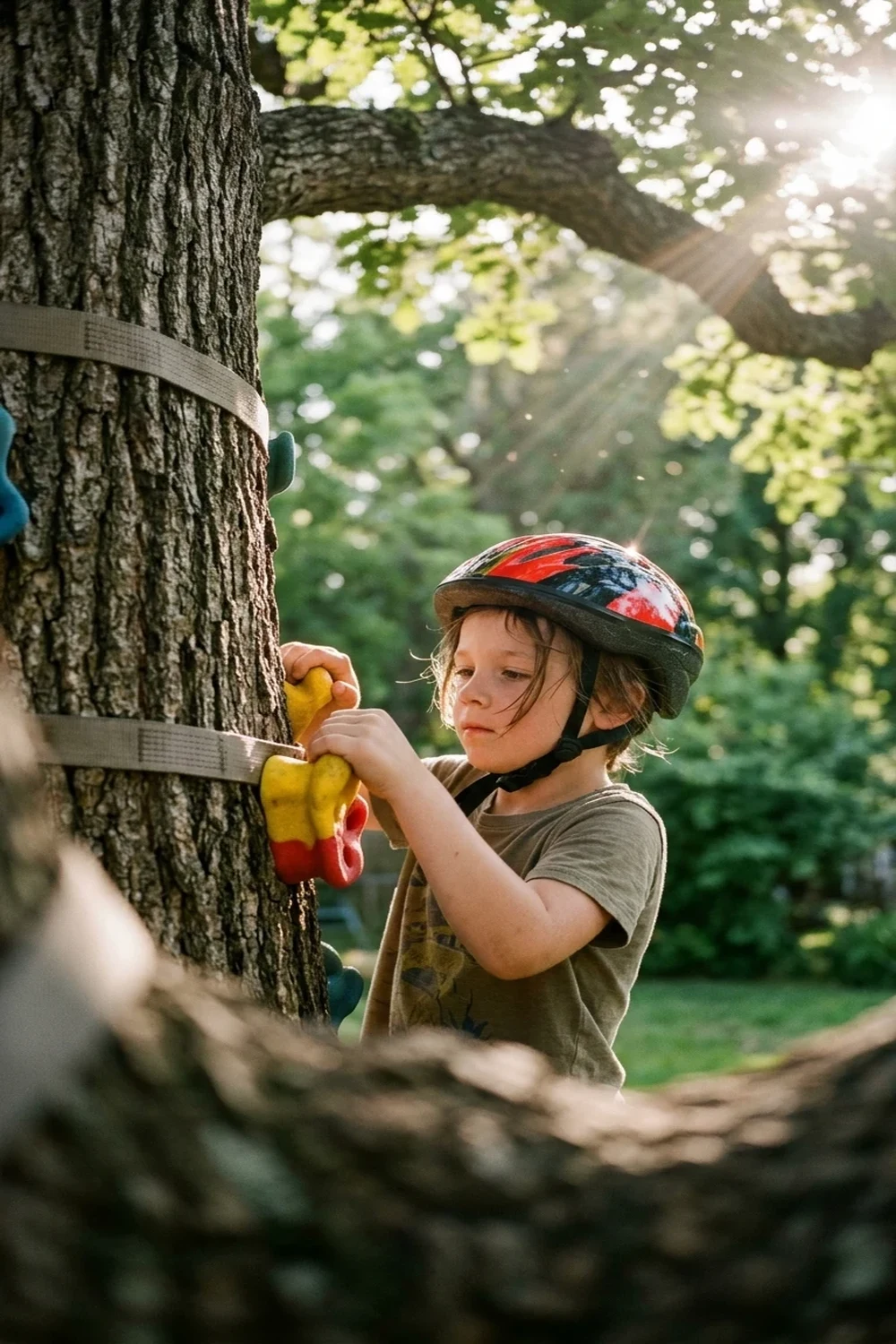
A tree climbing adventure is an outdoor climbing activity that converts mature backyard trees into vertical obstacle courses using specialized ratchet-strap climbing holds. This activity engages every major muscle group, challenging balance and confidence while keeping children securely positioned over soft ground impact zones.
- Upper Body and Grip Strength: Grasping textured climbing holds and tree bark develops finger tendons, forearm muscles, and shoulder stabilizers essential for pediatric physical development.
- Zero Tree Damage Hardware: Weather-resistant polyester ratchet straps hold textured resin grips firmly against trunks without driving screws, nails, or permanent hardware into the tree.
- Customizable Difficulty Levels: Parents can position foot pegs and hand holds six to twelve inches apart, tailoring the climbing ascent specifically to a child’s height and motor skill.
- Impact Zone Safety: Layering six inches of natural wood chips or an outdoor landing bouldering pad beneath the climbing area protects joints during descents.
- Confidence and Focus: Reaching higher branches rewards calculated physical effort, delivering measurable self-esteem boosts and burning sustained energetic focus.
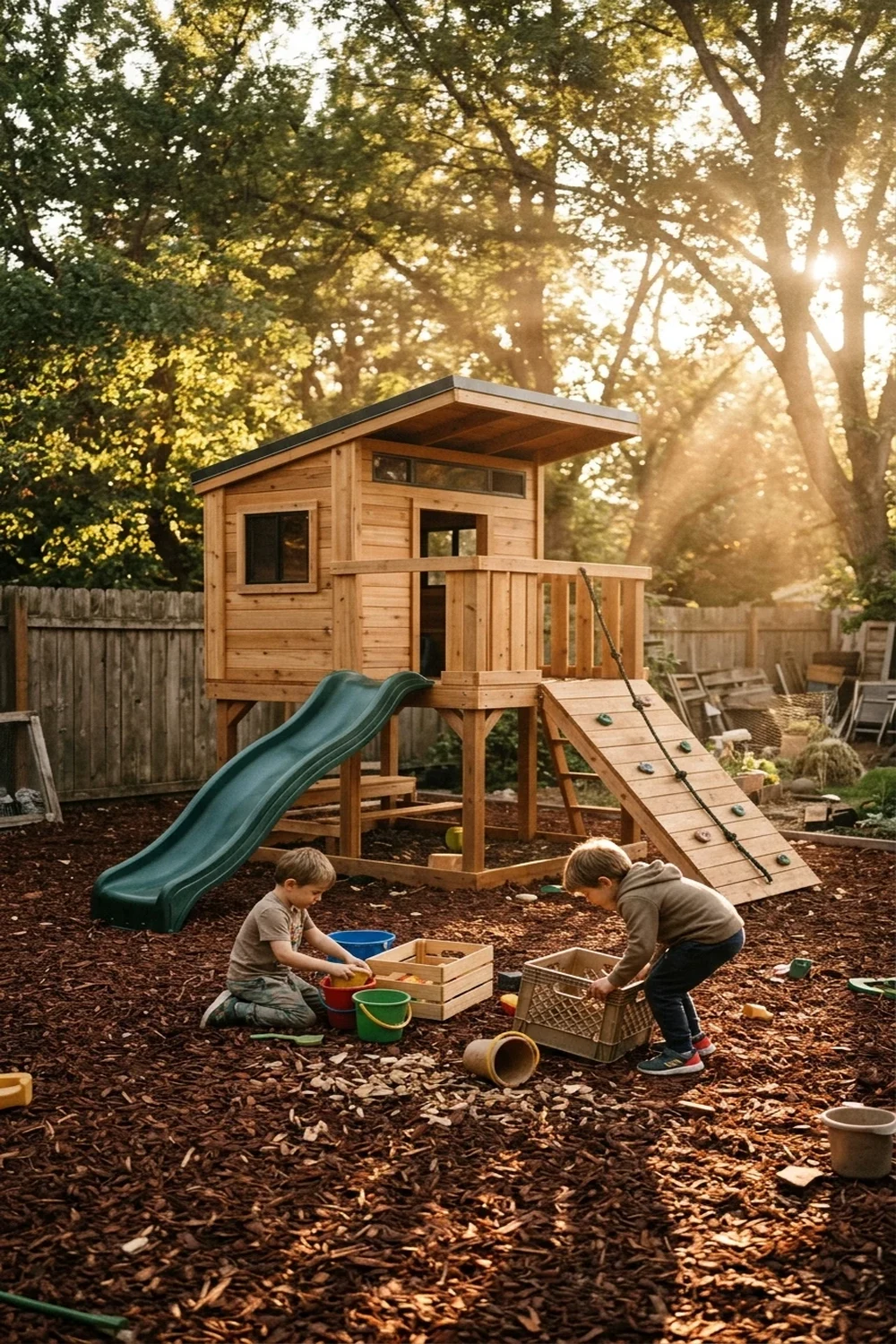
Backyard Playhouse Zone: Creative Open-Ended Energy Burning Station
A backyard playhouse zone is a designated multi-functional play area that combines elevated platforms, climbing slides, and open-ended loose parts to stimulate dynamic active movement. This dedicated station channels intense physical energy into structured imaginative roleplay, keeping toddlers and school-age kids engaged for consecutive hours.
- Active Physical Transitions: Integrating wooden step ladders, climbing ramps, and durable slides ensures children maintain continuous gross motor movement while entering and exiting the playhouse.
- Loose Parts Integration: Stocking the play zone with stackable milk crates, wooden planks, and plastic buckets encourages heavy lifting, cooperative building, and functional strength.
- Weather-Resistant Ground Cover: Laying cedar wood mulch or rubber shredded turf around the structure keeps mud at bay while absorbing foot impact during high-speed tag games.
- Open-Ended Roleplay: Transforming the structure into a campsite, clubhouse, or mini adventure outpost promotes verbal communication and peer cooperation without adult direction.
- Compact Yard Adaptability: A modular four-by-six-foot wooden playhouse layout easily fits suburban yards while providing enough vertical height to satisfy climbing urges.
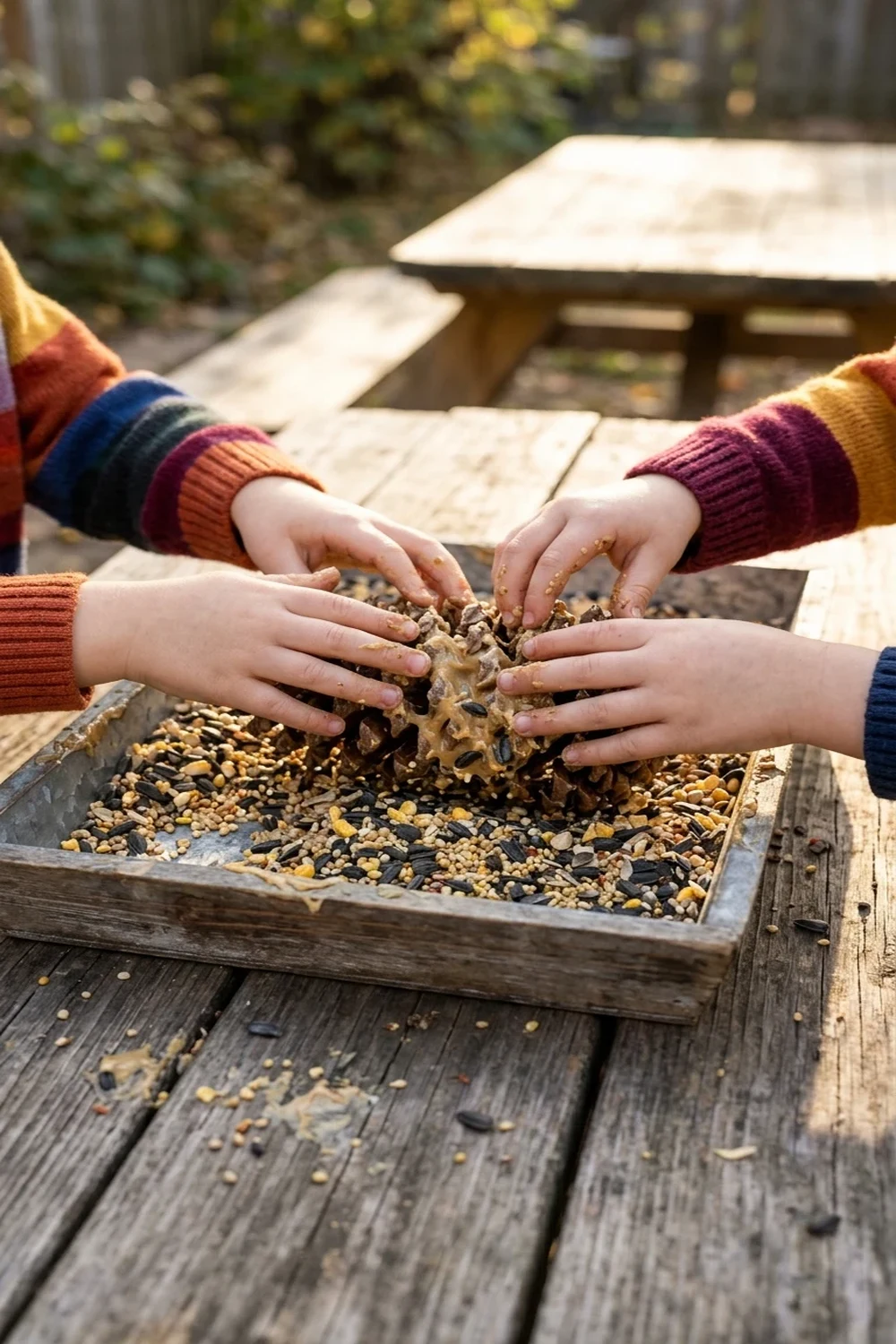
DIY Bird Feeder Craft: Hands-On Nature Activity for Fine Motor Skills
A DIY bird feeder craft is an outdoor wildlife activity where children coat pinecones, bagels, or craft sticks with bird-safe seed mixtures to hang in local trees. This project bridges hands-on fine motor crafting with active wildlife observation, grounding high-energy children through purposeful sensory engagement.
- Sensory and Fine Motor Practice: Spreading seed butter and pressing mixed seeds onto textured surfaces refines manual dexterity, pincer grasp control, and bilateral coordination.
- Natural Upcycled Materials: Gathering fallen pinecones, dried branches, and hemp twine directly from the yard eliminates craft store plastic waste while connecting kids to backyard biodiversity.
- Local Bird Identification: Hanging feeders near patio windows allows children to actively track chickadees, finches, and cardinals using simple backyard identification logs.
- Eco-Friendly Formulation: Using sun butter or vegetable suet paired with black oil sunflower seeds ensures a safe nutritional feast for regional songbirds year-round.
- Patience and Quiet Observation: Monitoring bird visits transitions high-intensity physical energy into calm outdoor focus, teaching mindfulness and observational science.
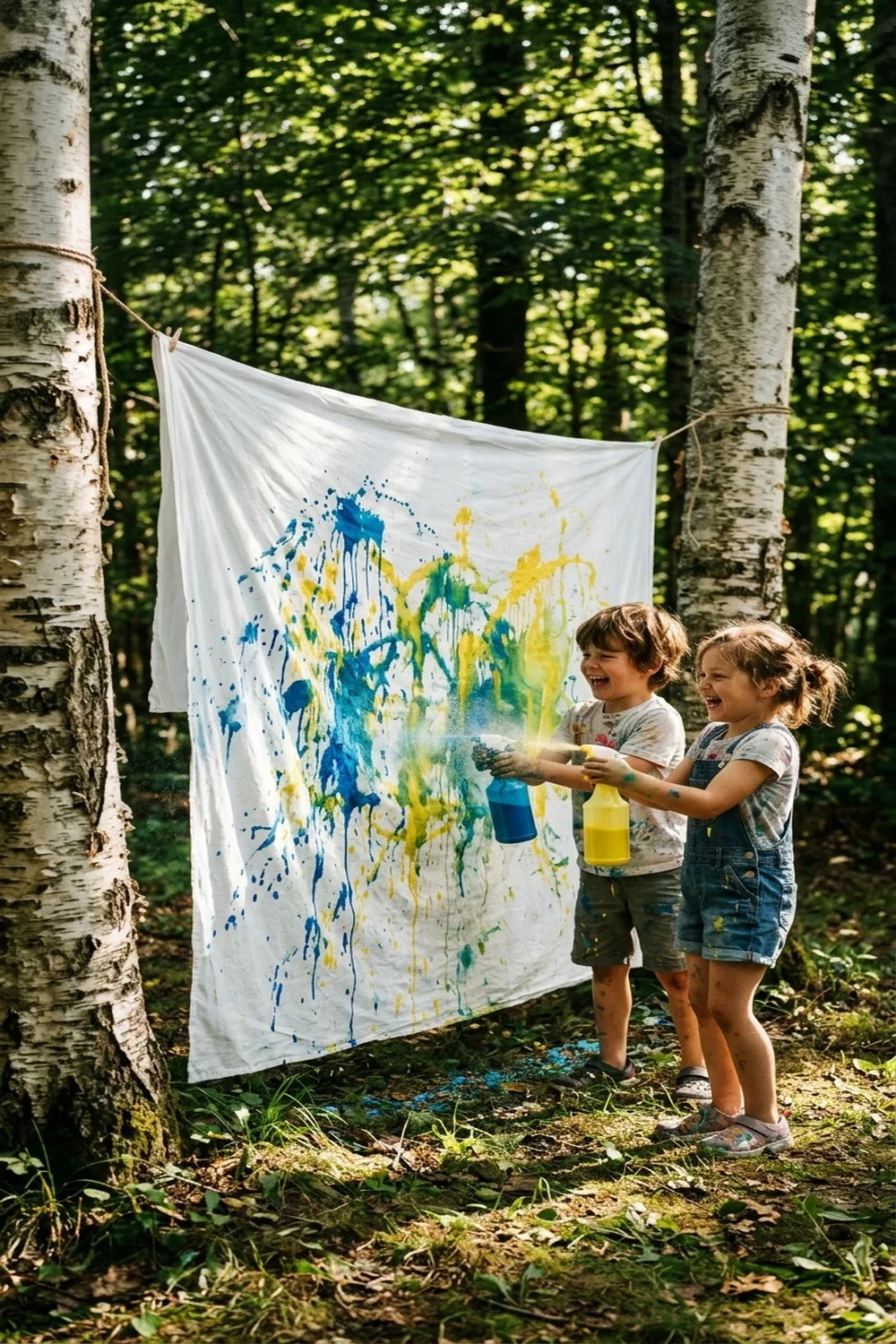
Spray Art in the Woods: Creative Outdoor Canvas Play
Spray art in the woods is an open-air sensory craft that transforms an ordinary wooded clearing into a vibrant forest gallery using washable paint and tree-suspended sheets. Suspending a white bedsheet between two sturdy trees with 15 feet of utility cord gives kids an expansive vertical surface where gross-motor spraying meets imaginative expression.
- Target Age and Setup Time: Best suited for children ages 3 to 10, requiring 10 minutes to rig a clothesline and dilute washable liquid tempera paint with water at a 1:1 ratio in plastic spray bottles.
- Physical Energy Burn: Continuous hand-trigger pumping strengthens forearm extensors and grip dexterity, while running back and forth across uneven forest terrain builds lower-body agility.
- Sensory and Cognitive Development: Combining organic woodland light with high-contrast color mixing teaches visual problem-solving and cause-and-effect without the sensory overload of indoor crafting.
- Leave-No-Trace Safety: Using certified non-toxic, biodegradable paint formulas guarantees that forest soil and local vegetation stay completely free from synthetic chemical residues.
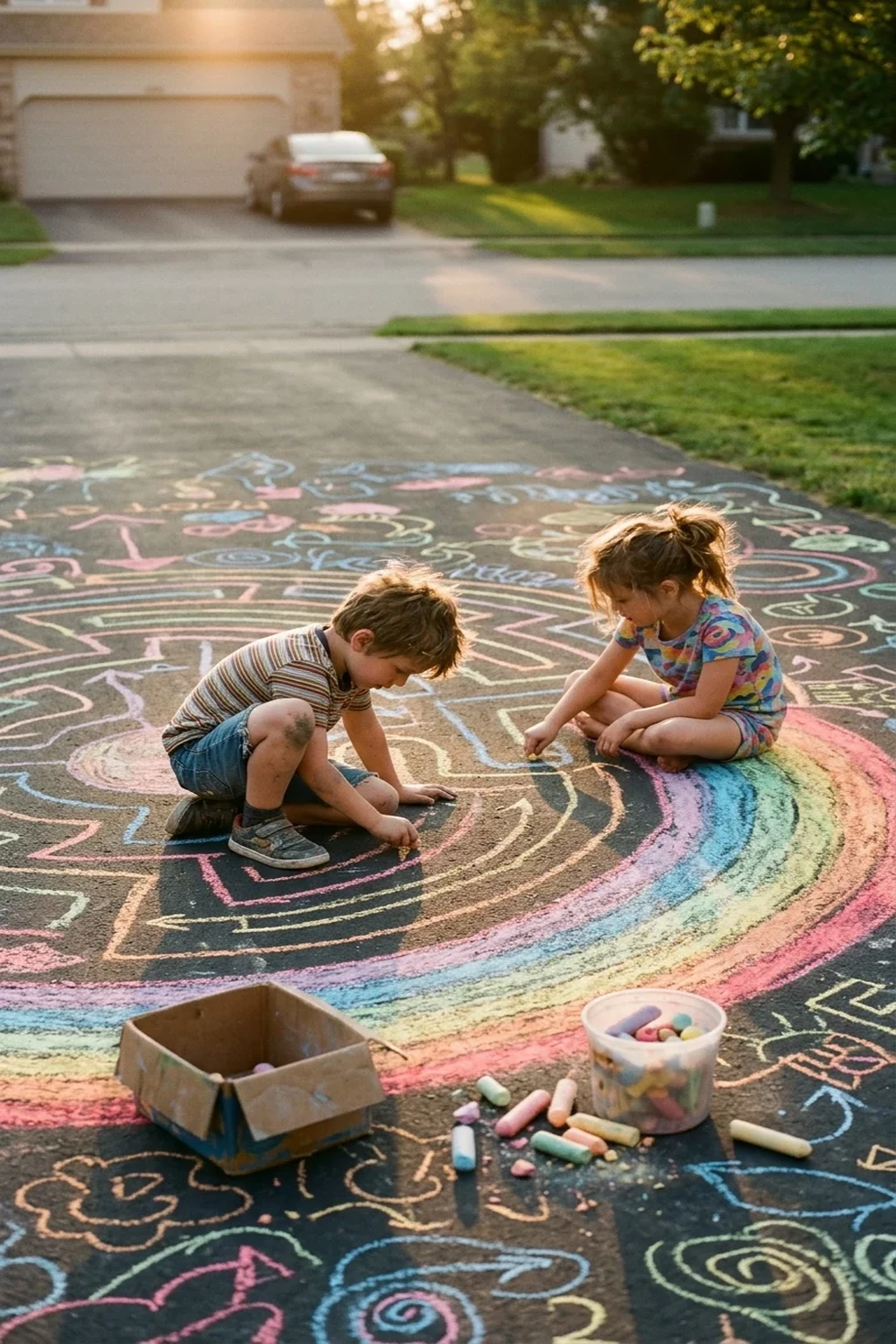
Sidewalk Chalk Mural: Collaborative Pavement Art Games
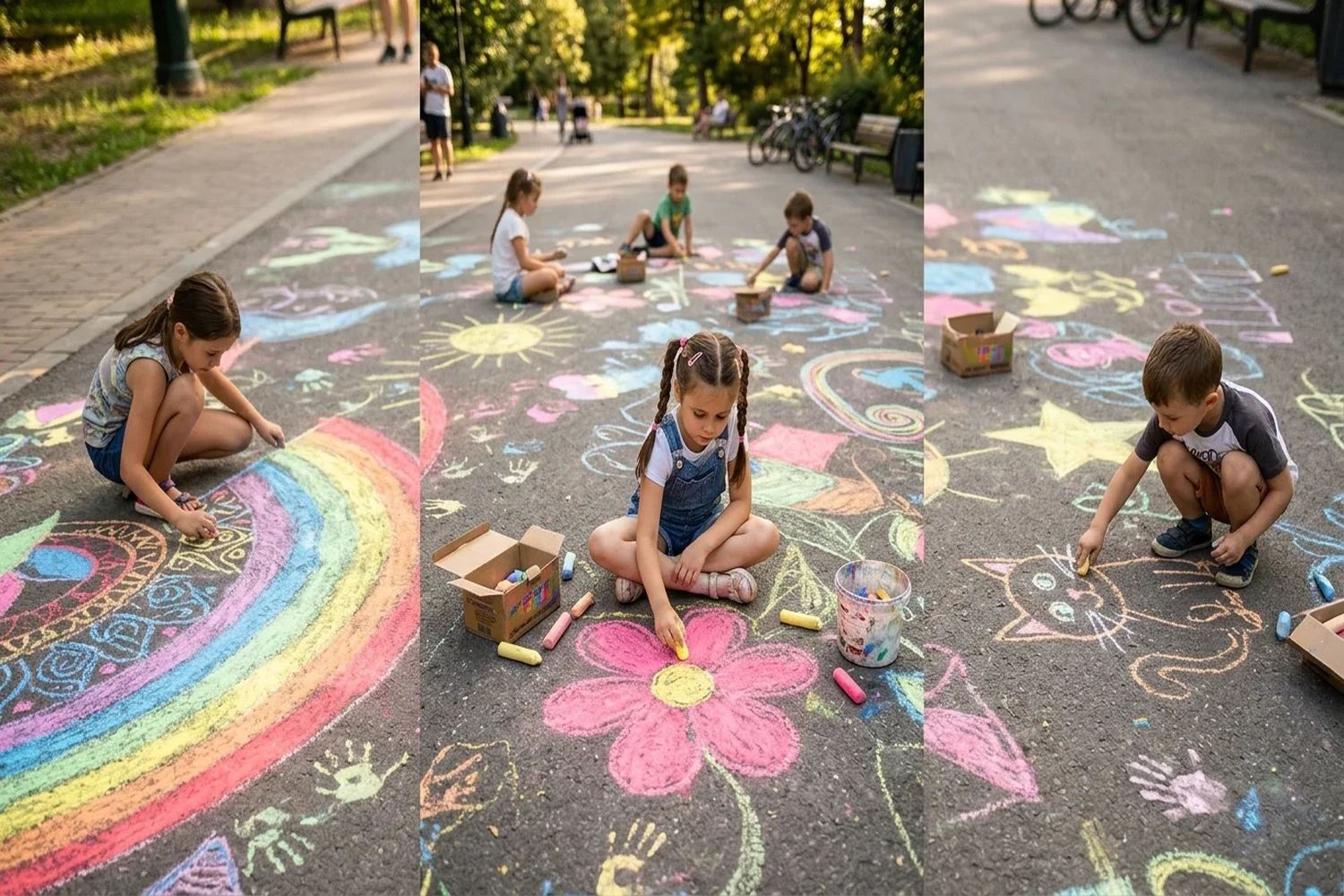
A sidewalk chalk mural is an expansive pavement art activity that channels excess childhood energy into collaborative ground-level designs, hopscotch tracks, and vibrant driveway obstacle courses. Setting up a dedicated square footage of clean asphalt or concrete encourages whole-body movement through squatting, stretching, and wide-arm sweeping strokes.
- Target Age and Setup Time: Perfect for children ages 2 to 12, taking under 2 minutes of prep by setting out a bucket of non-toxic, jumbo-sized sidewalk chalk sticks.
- Gross and Fine Motor Skills: Kneeling, crawling, and maneuvering across flat pavement builds shoulder stability and core endurance, while fine line work refines bilateral hand coordination.
- Structured Energy Burn: Adding numbered agility rings, labyrinth spirals, or giant board game pathways encourages continuous jumping, balancing, and sprint intervals.
- Effortless Cleanup Routine: Rinsing the entire driveway surface with a garden hose or waiting for the next natural rain shower completely erases the artwork within 3 minutes.
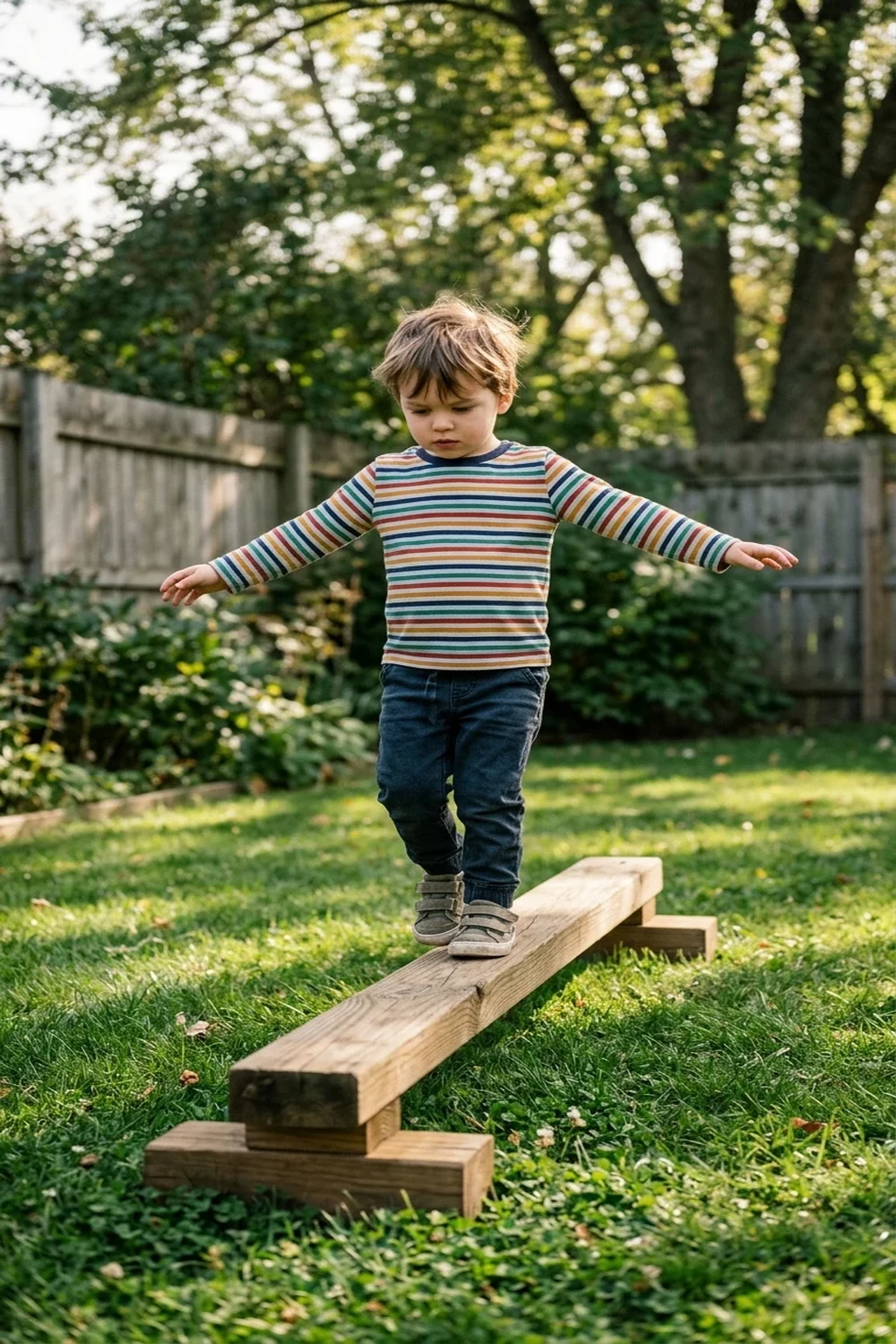
Balance Beam Walk: Low-Height Backyard Equilibrium Course
A balance beam walk is a foundational stability challenge that develops vestibular equilibrium and spatial awareness by tasking children with navigating a narrow, low-clearance pathway. Arranging interlocking wooden timber beams or high-density foam balance blocks 4 inches above soft turf delivers thrilling physical problem-solving with minimal fall hazard.
- Target Age and Setup Time: Recommended for toddlers and elementary kids ages 2 to 8, with an initial setup taking approximately 5 minutes on level ground.
- Vestibular and Core Conditioning: Sustained heel-to-toe stepping activates the deep abdominal stabilizer muscles and trains inner-ear balance receptors responsible for athletic agility.
- Course Variations and Progression: Elevating sections with low wooden risers, incorporating zig-zag turns, or having children balance soft beanbags on their heads introduces scalable difficulty levels.
- Backyard Safety Standards: Positioning the balance course over shock-absorbing turf, wood mulch, or rubber playground mats ensures zero-risk landings during balance corrections.
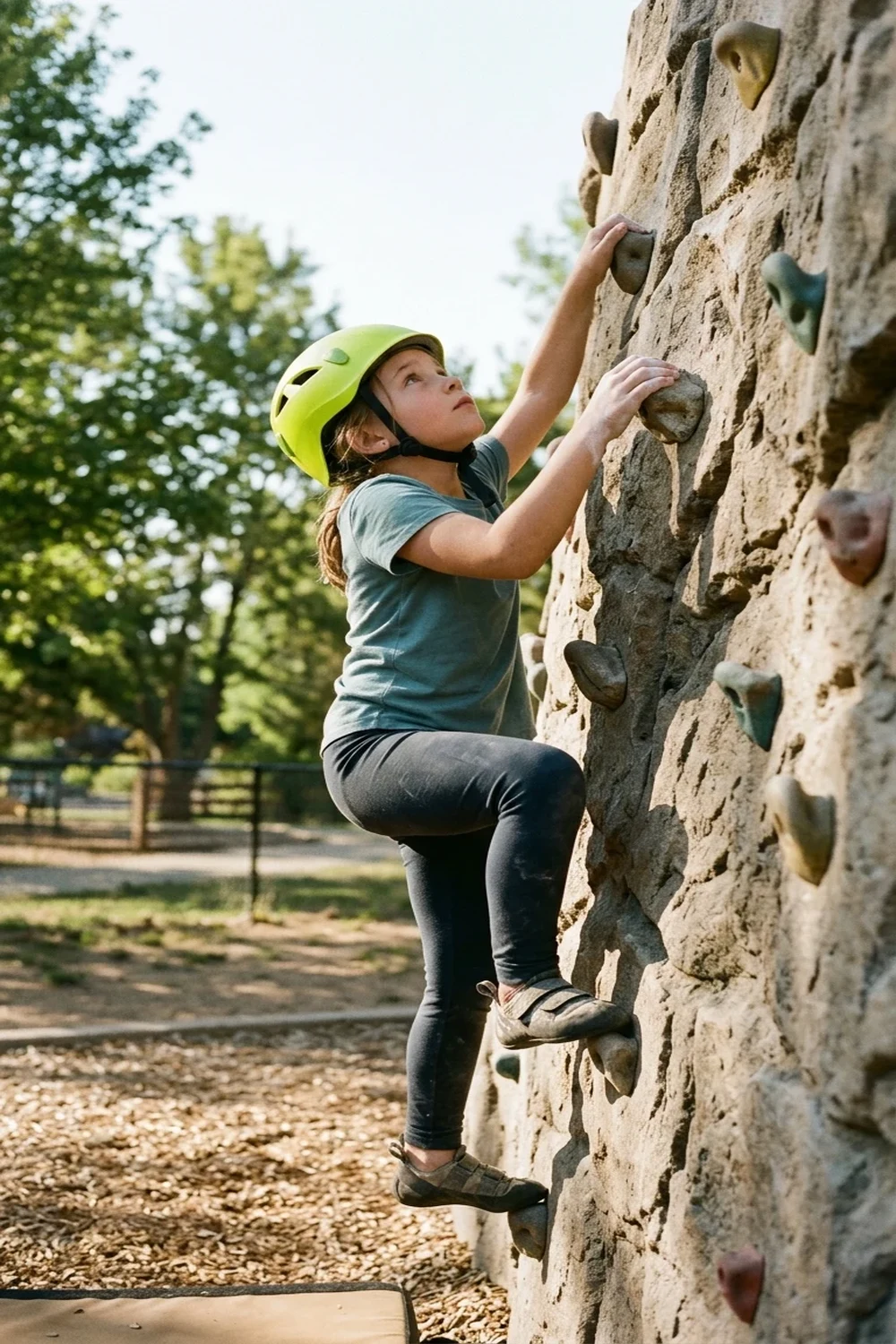
Outdoor Rock Climbing: Safe Bouldering and Grip Strength Challenge
Outdoor rock climbing is a high-intensity full-body workout that builds functional grip power, core stability, and tactical problem-solving through natural stone bouldering or backyard climbing wall walls. Navigating multi-angled climbing holds spaced across vertical surfaces recruits upper-body pulling strength that standard playground equipment rarely activates.
- Target Age and Setup Time: Ideal for adventurous children ages 4 to 14, requiring 5 to 15 minutes of site inspection, crash-pad deployment, and helmet fitting.
- Maximum Caloric Expenditure: Ascending low bouldering traverses engages quadriceps, back lats, and finger flexors simultaneously, rapidly burning through restless afternoon hyperactivity.
- Executive Function and Confidence: Route-finding requires real-time tactical decision-making, teaching young climbers calculated risk assessment and independent persistence through physical barriers.
- Certified Fall-Protection Setup: Placing professional high-density bouldering crash pads across the designated fall zone keeps ground impacts completely cushion-soft and secure.
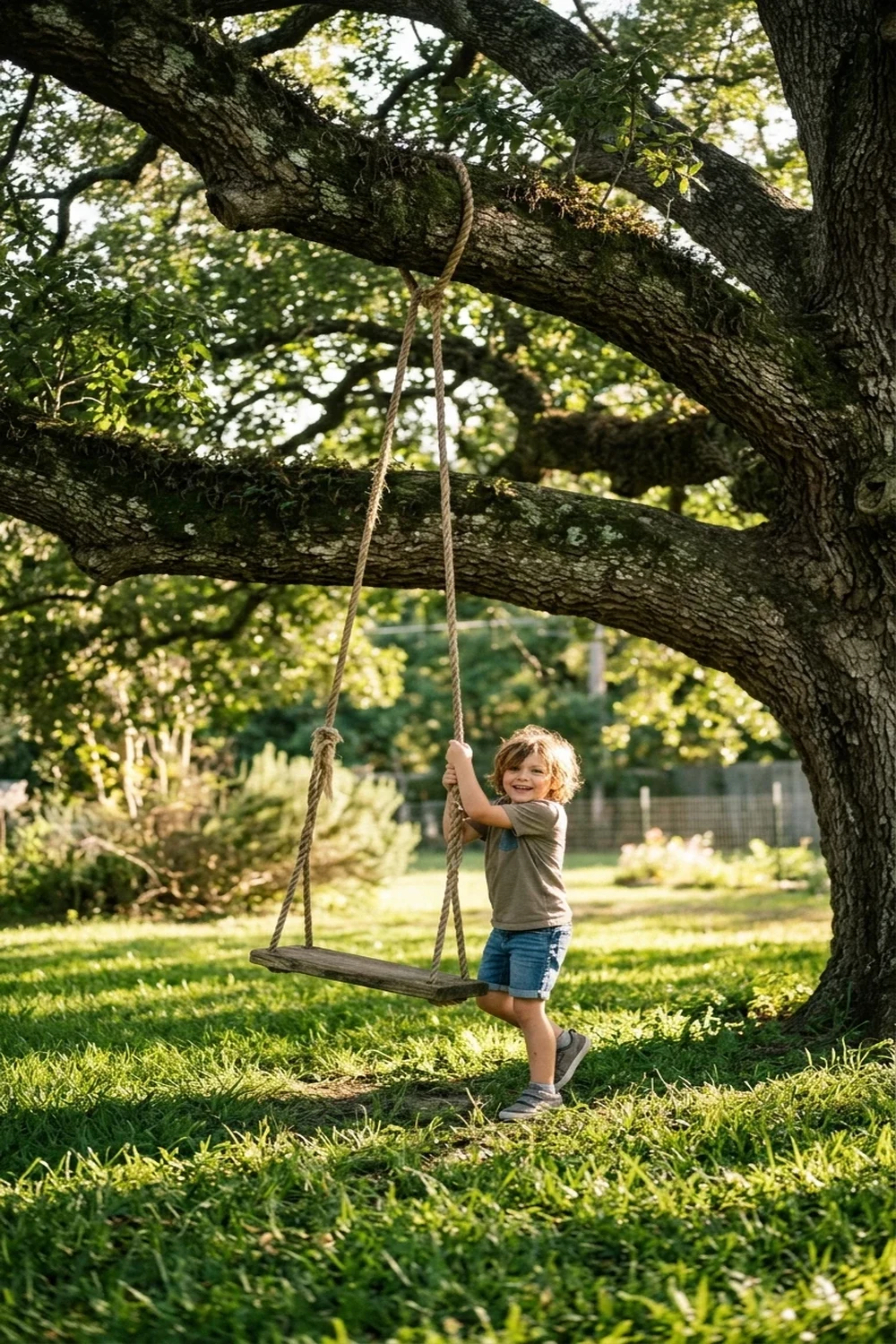
How to Build a Backyard Rope Swing for Kids Energy Burn
A backyard rope swing provides high-intensity vestibular stimulation and burns upper-body energy by engaging core stability, grip strength, and leg coordination in children of all ages. Installing a disc seat or heavy-duty climbing rope onto a healthy hardwood limb transforms an ordinary yard into an active sensory zone that burns restless energy safely and effectively.
- Branch Selection: Choose a sturdy hardwood tree branch such as oak or maple with a minimum diameter of 8 inches to ensure full structural support.
- Rope Specifications: Use a 5/8-inch braided polyester or UV-resistant nylon rope rated for at least 1,500 pounds to prevent fraying and sun degradation.
- Tree Branch Protection: Wrap a heavy-duty tree protector strap around the limb before hanging hardware to avoid stripping tree bark during vigorous swinging.
- Clearance Safety Buffer: Maintain a minimum 6-foot radial clearing in all directions over soft turf, wood mulch, or rubber playground chips.
- Grip and Core Workout: Encourage children to pump their legs and pull with their arms, delivering an aerobic workout that rapidly drains pent-up energy.
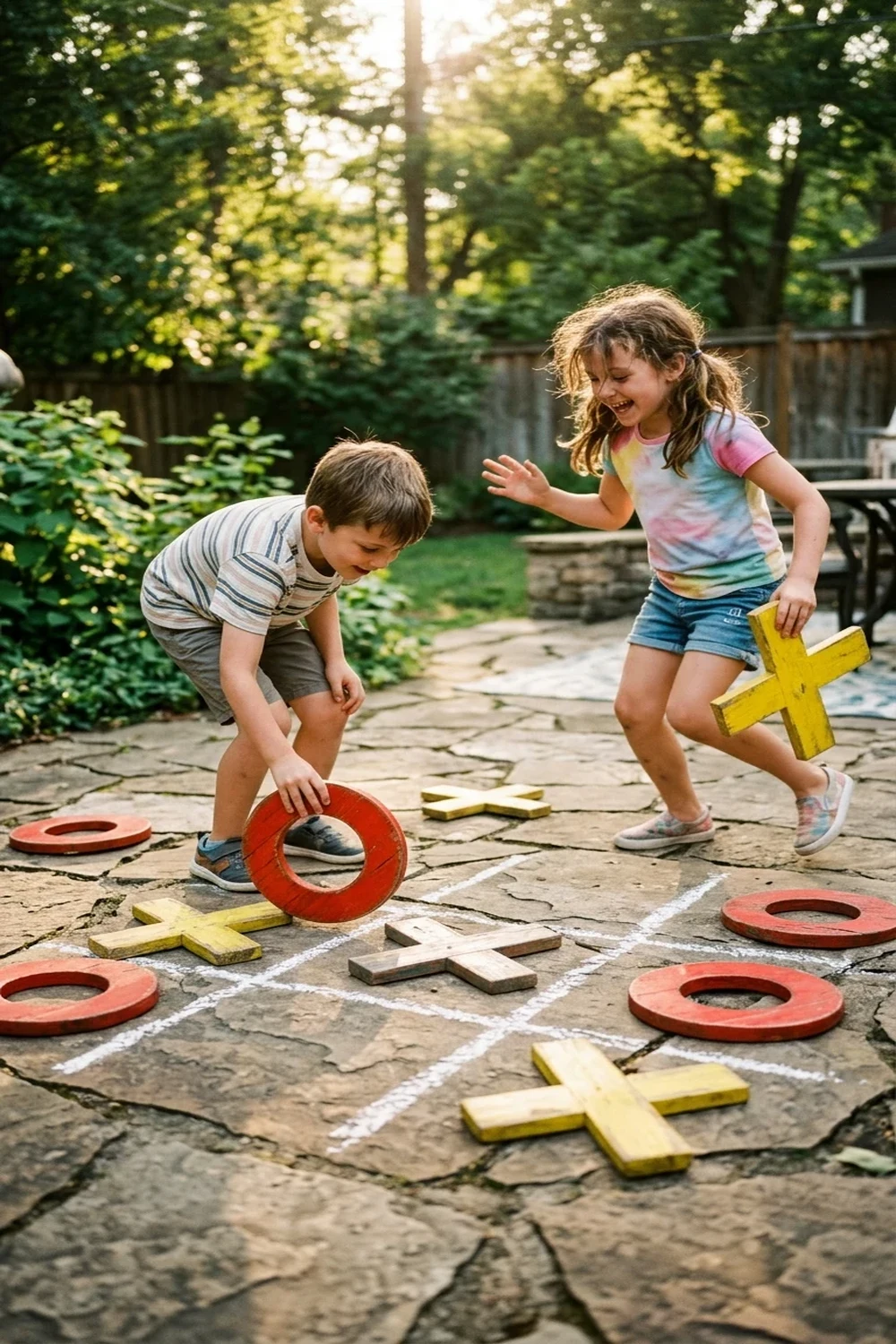
Why Giant Tic Tac Toe Floor Game Boosts Active Outdoor Thinking
A giant outdoor tic tac toe floor game combines fast-paced cognitive problem solving with gross motor sprinting by requiring kids to run back and forth to place markers on an oversized ground grid. Unlike sitting at a table, an active yard grid turns an ancient logic puzzle into an energetic relay race that challenges both mental focus and physical agility.
- Quick Grid Setup: Create a durable three-by-three grid on flat concrete or lawn using colorful painters tape, sidewalk chalk, or braided jump ropes.
- Oversized Marker Pieces: Provide durable items such as painted wooden discs, colored beanbags, or recycled frisbees for the X and O game markers.
- Relay Race Rules: Position teams 20 feet behind the grid baseline so players must sprint back and forth to deposit each game piece.
- Cognitive Development: Challenge young minds to analyze patterns, block opponents, and predict moves under the physical pressure of a sprint.
- Group Cooperative Play: Run multi-child team tournaments that encourage verbal communication, fair turn-taking, and continuous aerobic movement.
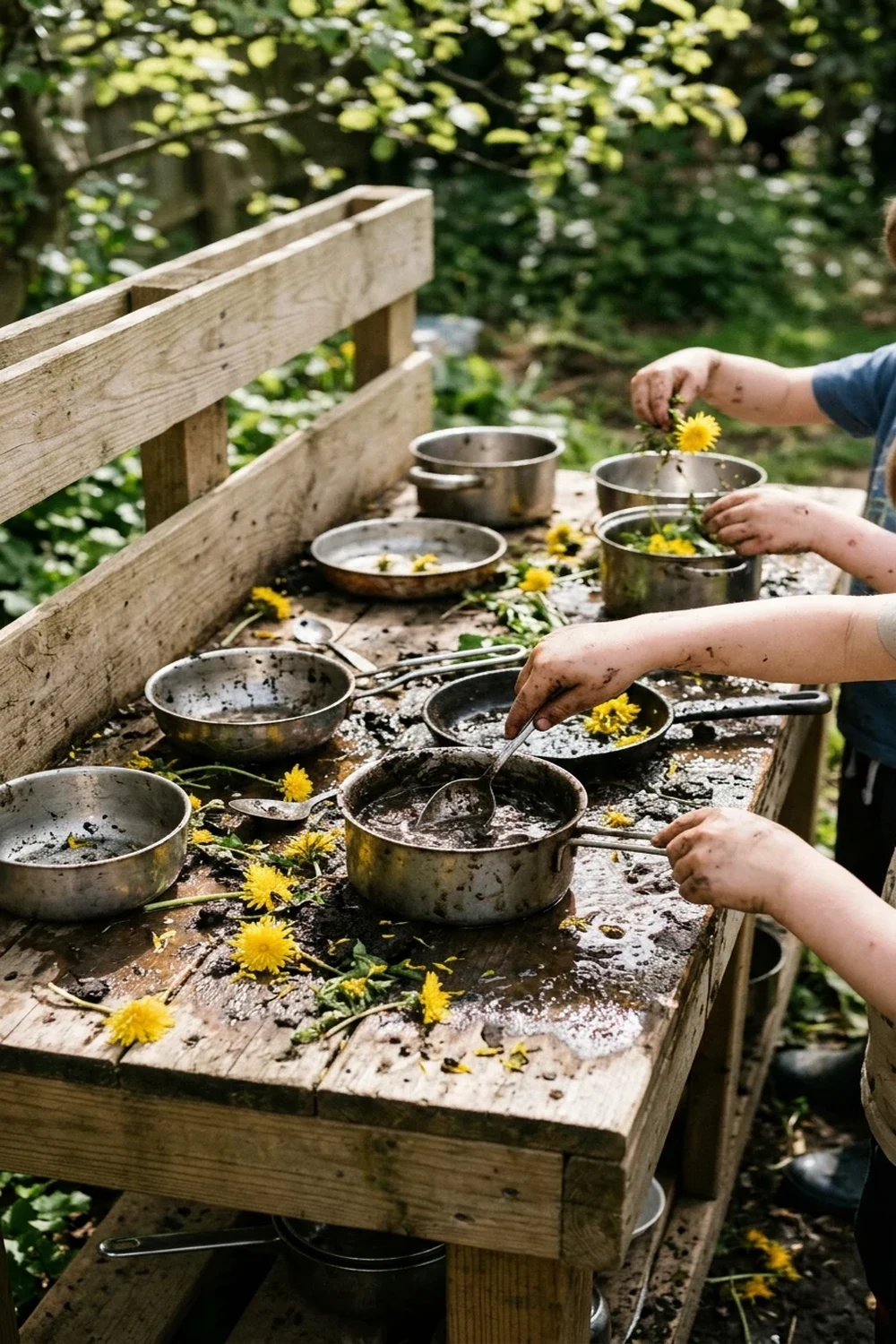
How an Outdoor Mud Kitchen Stimulates Sensory Play and Creativity
An outdoor mud kitchen is a tactile play station equipped with water, soil, and recycled kitchen utensils that channels restless energy into deep sensory exploration and fine motor development. Handling natural textures and scooping rich mud outdoors reduces cortisol levels while encouraging hours of imaginative collaborative pretend play without creating indoor mess.
- Recycled Workstation Base: Build a durable outdoor counter using untreated cedar planks, reclaimed pallets, or an old water-resistant wooden potting bench.
- Sensory Ingredients: Supply separate bins of topsoil, clean sandbox sand, water pitchers, pebbles, flower petals, and pine needles for tactile recipe making.
- Fine Motor Tools: Offer stainless steel whisks, metal measuring cups, silicone spatulas, and muffin tins to strengthen hand muscles and dexterity.
- Immune System Benefits: Allow natural soil contact, which exposes growing immune systems to beneficial outdoor microbes while reducing stress.
- Independent Engagement: Foster open-ended problem solving as young chefs mix textured mud pies, pour liquid brews, and simulate restaurant service.

Creative Nature Tic Tac Toe Using Backyard Foraged Materials
Nature tic tac toe is a zero-waste outdoor board game created by foraging pinecones, stones, and fallen twigs to build a natural grid and matching markers directly on the ground. This activity pairs the calming focus of a woodland scavenger hunt with an engaging outdoor tactical game that requires zero plastic toys or upfront spending.
- Foraging Scavenger Hunt: Challenge children to search the garden or park for four straight 12-inch twigs and ten matching natural counters.
- Natural Marker Pairs: Collect five smooth river stones versus five spruce pinecones, or paint miniature cross and circle designs onto flat pebbles.
- Rustic Wood Slice Boards: Place the twig grid on top of an outdoor tree stump round or smooth flagstone patio for a defined rustic playing arena.
- Pattern Recognition: Teach young players spatial awareness and defensive strategy using tactile organic items that stimulate sensory touch.
- Leave No Trace Cleanup: Return all natural game pieces back to the garden soil after playtime, instilling an intuitive respect for surrounding nature.
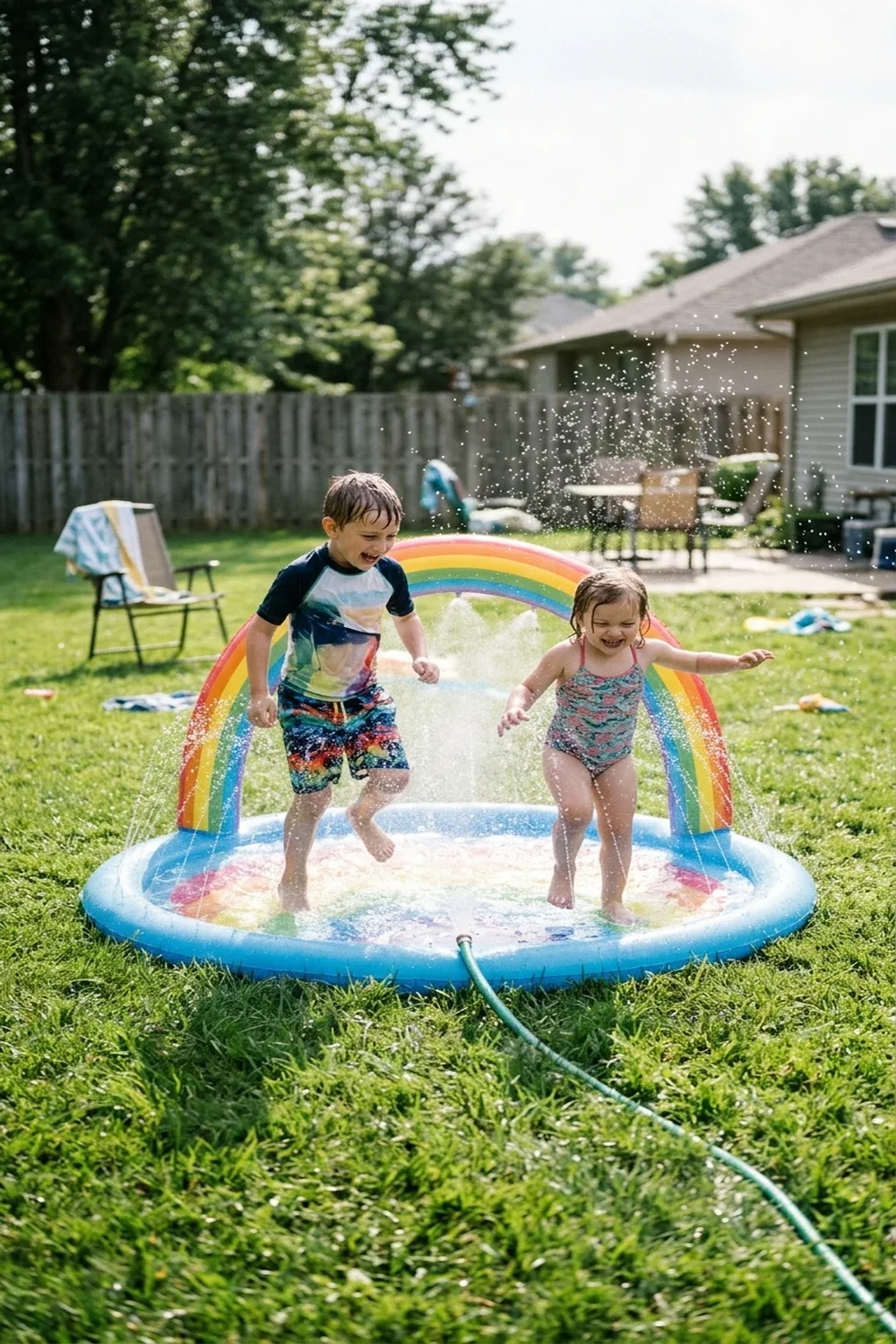
Rainbow Water Pad Play: Refreshing Splash Pad Sensory Fun
Rainbow water pad play is an interactive backyard cooling activity where children bounce, sprint, and slide across an inflatable shallow splash mat to burn physical energy during high-temperature afternoons. Setting up a durable water-filled vinyl pad provides an immediate, low-impact exercise circuit that strengthens leg muscles and accelerates cardiovascular endurance without the deep-water hazards of a standard swimming pool.
- Rapid Thermal Cooling: A pressurized continuous sprinkler rim keeps toddlers and older children chilled during midday summer heat waves.
- Sensory Foot Stimulation: Textured PVC splash surfaces stimulate plantar proprioception and balance as kids sprint across wet color gradients.
- Low-Impact Aerobic Jumping: Jumping on soft, water-cushioned bladders absorbs joint shock while exhausting high indoor restlessness in under 30 minutes.
- Low-Prep Backyard Installation: Homeowners simply connect a standard 5/8-inch garden hose to inflate the perimeter rings within 3 minutes.
- Collaborative Group Games: Siblings organize freeze-dance and balance competitions across alternating rainbow color zones without fighting over limited equipment.
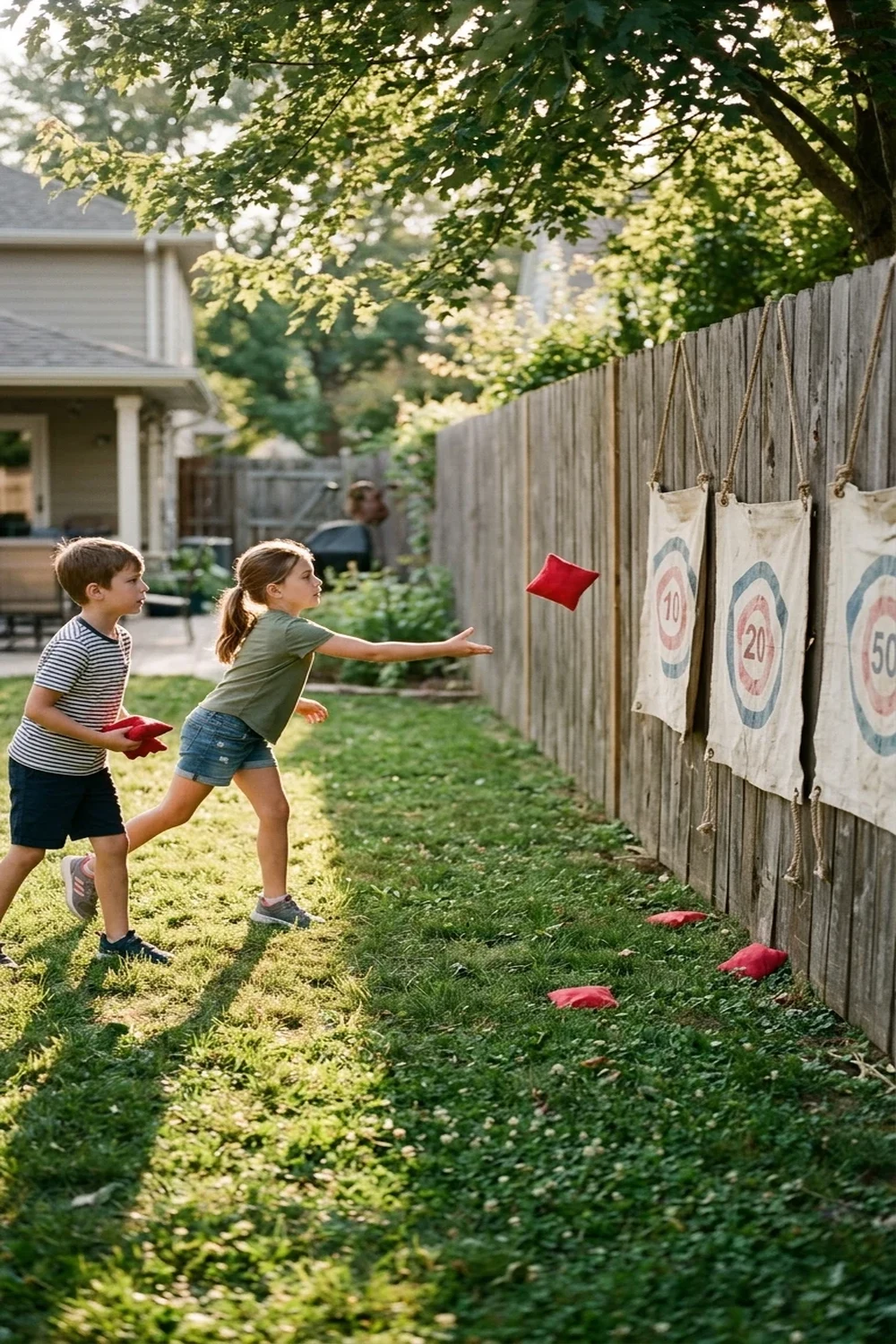
Target Toss Challenge: Backyard Hand-Eye Coordination Drills
The target toss challenge is a structured throwing game where kids launch beanbags, soft foam balls, or rubber rings into tiered hanging buckets to build gross motor accuracy. Fastening numbered catch baskets onto an exterior timber fence or brick wall establishes an instant backyard carnival contest that channels erratic throwing impulses into calibrated precision play.
- Targeted Hand-Eye Calibration: Repeatedly aiming soft projectiles at variable distances refines manual dexterity and upper-body neuromuscular control.
- Tiered Point Progression: Numbering collection hoops with descending point values introduces mental math and strategic risk assessment during play.
- Adaptable Distance Markers: Marking 5-foot, 8-foot, and 12-foot throwing lines with chalk ensures toddlers and pre-teens compete fairly.
- Weatherproof Vertical Setup: Bungee cords and heavy-duty zip ties secure plastic laundry bins firmly to existing wooden fence rails without lawn damage.
- Active Sprint Retrieval: Establishing a timed 60-second toss-and-retrieve relay elevates heart rates while reinforcing collaborative clean-up habits.
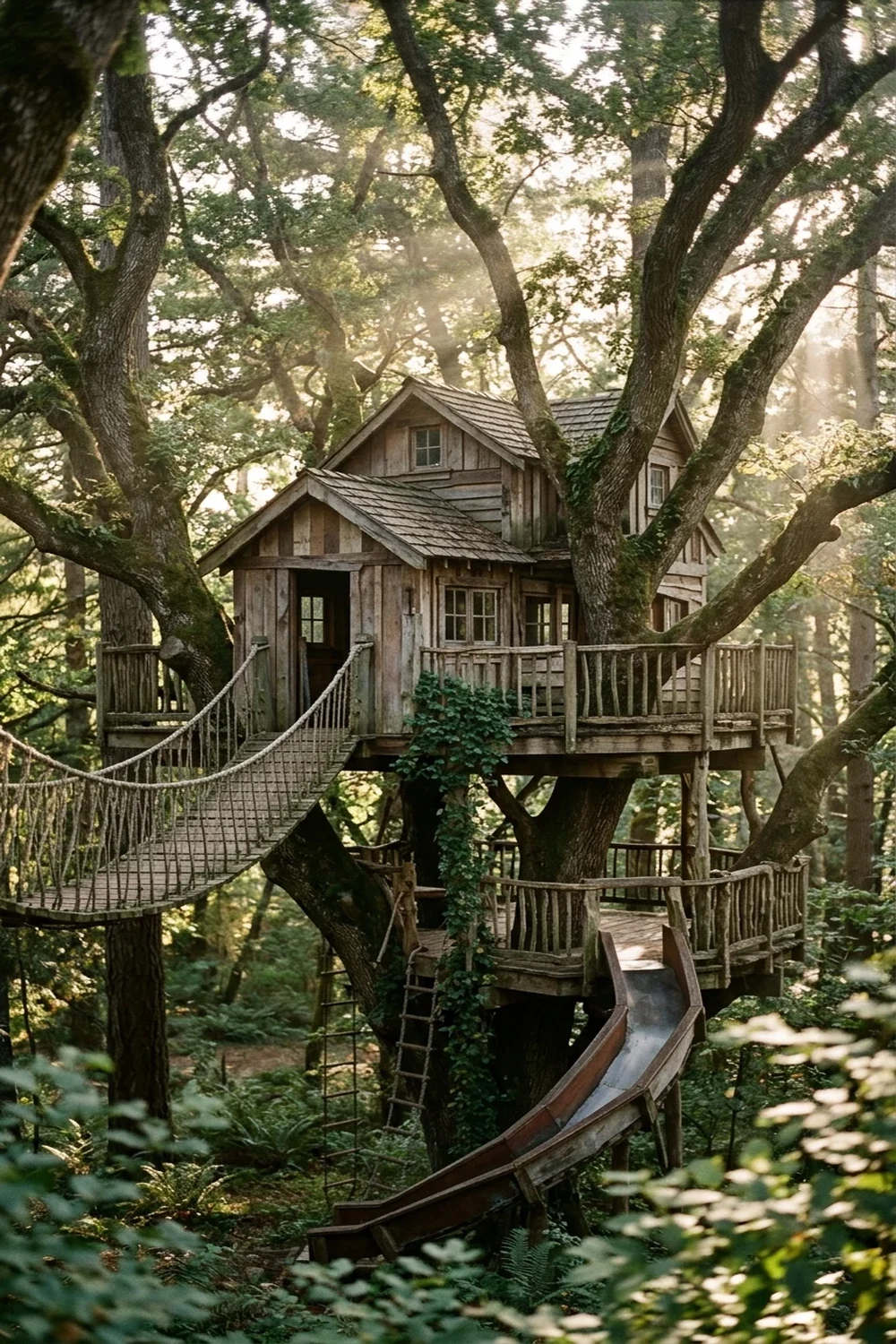
Forest Treehouse Adventure: Elevated Woodland Exploration Play
A forest treehouse adventure is an immersive elevated play experience that combines canopy climbing platforms, timber bridges, and lookout stations to encourage independent open-ended exploration. Installing wooden climbing towers or rustic platform treehouses amid mature backyard trees stimulates spatial navigation skills and whole-body muscle engagement as young explorers conquer heights safely.
- Whole-Body Climbing Engagement: Navigating timber ladders, cargo nets, and spiral climbs recruits core, grip, and shoulder strength simultaneously.
- Imaginative Storytelling Base: High-altitude platforms spark rich thematic roleplay ranging from wildlife observation outposts to storybook fortresses.
- Natural Canopy Sun Shield: Surrounding deciduous tree branches block harmful midday UV radiation while maintaining cooling cross-breezes.
- Vestibular Altitude Balance: Traversing suspended suspension bridges and raised plank walks sharpens inner-ear vestibular balance responses.
- Long-Duration Outdoor Retention: Providing shaded multi-tiered observation decks keeps energetic siblings engaged outdoors for multiple consecutive hours.
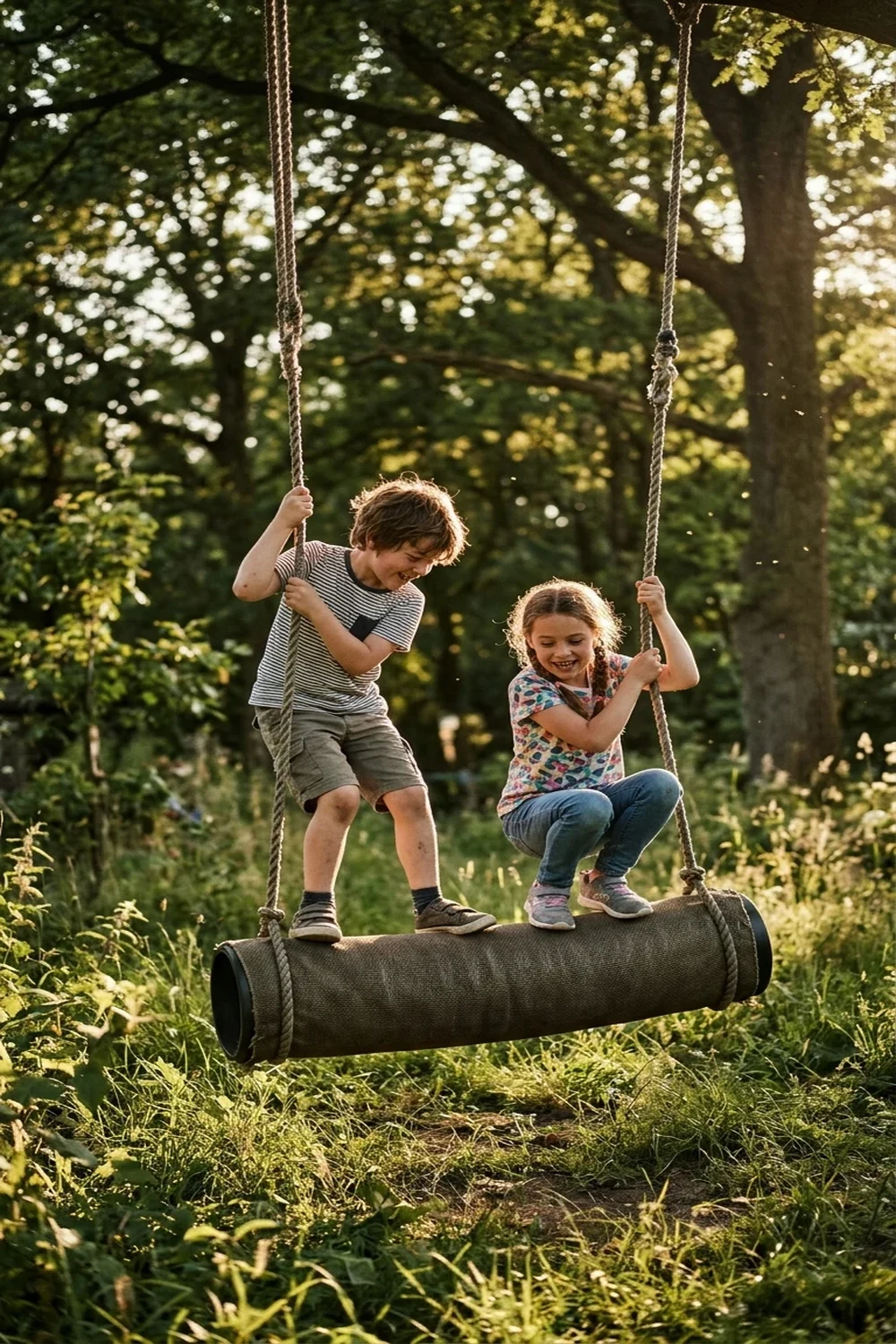
Balance Swing Ride: Cooperative Vestibular Motion Exercises
The balance swing ride is an outdoor motion apparatus featuring a suspended horizontal cylinder, tandem tire, or wide web disc where two or more children sit together to maintain equilibrium during flight. Operating a tandem balance swing demands synchronized physical rhythm and constant core adjustment, turning a traditional solitary swinging session into an active cooperative workout.
- Synchronized Core Activation: Counterbalancing another rider requires continuous isometric contractions of abdominal and spinal stabilizing muscles.
- Cooperative Rhythm Building: Pumping the swing effectively forces both children to communicate verbal cues and coordinate physical cadence.
- Calming Vestibular Regulation: Sustained linear swinging motion delivers vestibular sensory input that soothes emotional frustration and nervous agitation.
- Dual-Rider Social Play: Accommodating two siblings simultaneously eliminates turn-taking disputes while fostering shared social bonding.
- Heavy-Duty Branch Anchoring: Securing braided commercial climbing straps around a horizontal oak bough ensures superior load capacity and tree health.
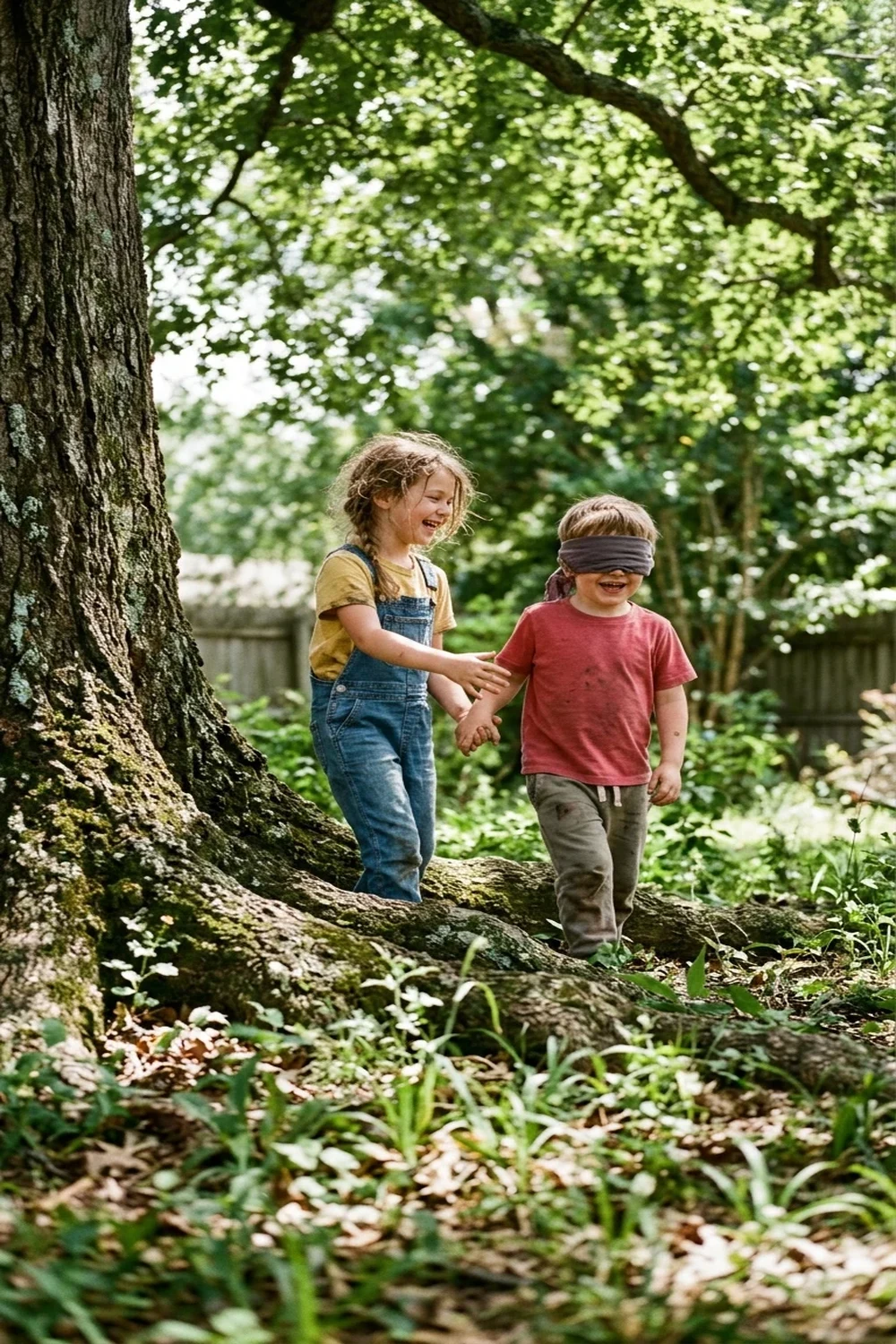
Tree Hug Game: Sensory Nature Exploration and Active Listening
The Tree Hug Game is a classic blindfolded sensory activity where children navigate to, feel, and later identify a specific tree using touch and spatial memory. This low-cost outdoor game sharpens non-visual senses, builds proprioceptive confidence, and burns mental and physical energy across natural woodland terrain.
- Blindfold Exploration: One child wears a soft blindfold while a partner gently guides them along a winding path to a sturdy backyard tree.
- Tactile Investigation: The blindfolded player hugs the trunk, exploring bark textures, moss patches, trunk circumference, and root formations for 60 seconds.
- Spatial Deduction: After being guided back to the starting marker and removing the blindfold, the player must locate and identify the exact tree based strictly on touch memory.
- Gross Motor Sprints: Turn the activity into a tag-style dash where players sprint to hug designated target trees whenever an adult calls out specific tree species or color markers.
- Environmental Connection: Playing among neighborhood trees fosters scientific curiosity and teaches kids to appreciate living ecosystems while moving continuously outside.
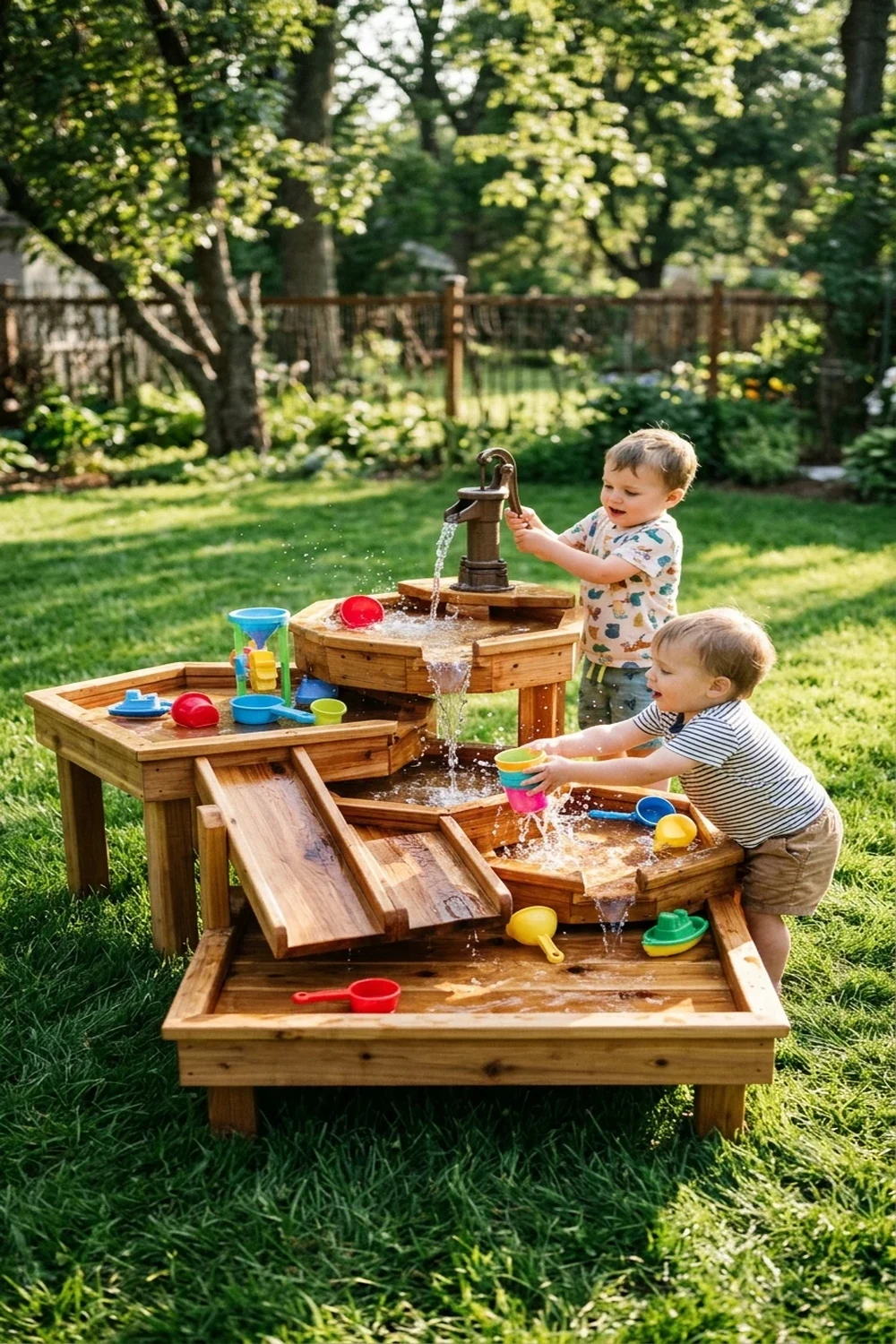
Water Table Station: STEM Sensory Splashing and Motor Play
A backyard water table station provides high-energy sensory stimulation where toddlers and preschoolers pour, pump, and splash through fluid dynamic play. Combining water wheels, measuring funnels, and floating sponges channels excess physical restlessness into focused fine-motor development and cooling gross-motor movement.
- Fine Motor Scooping: Equipping the basin with plastic cups, ladles, and eye-droppers develops wrist stability and bilateral coordination through repetitive pouring drills.
- STEM Hydraulic Cause-and-Effect: Children observe gravity and fluid mechanics firsthand as water cascades down tiered spiral waterwheels and adjustable PVC pipe chutes.
- Rapid Water Bucket Relays: Transform calm station play into a cardio-burning challenge by tasking kids with sprinting water from a garden hose to fill empty basins with small cups.
- Tactile Sinking and Floating: Incorporate river rocks, pinecones, and bath toys to create an interactive buoyancy discovery lab that keeps young minds engaged for 45 minutes.
- Easy Warm-Weather Clean Up: Position the table over thirsty lawn grass or garden beds so vigorous splashing simultaneously hydrates your yard with zero cleanup mess.
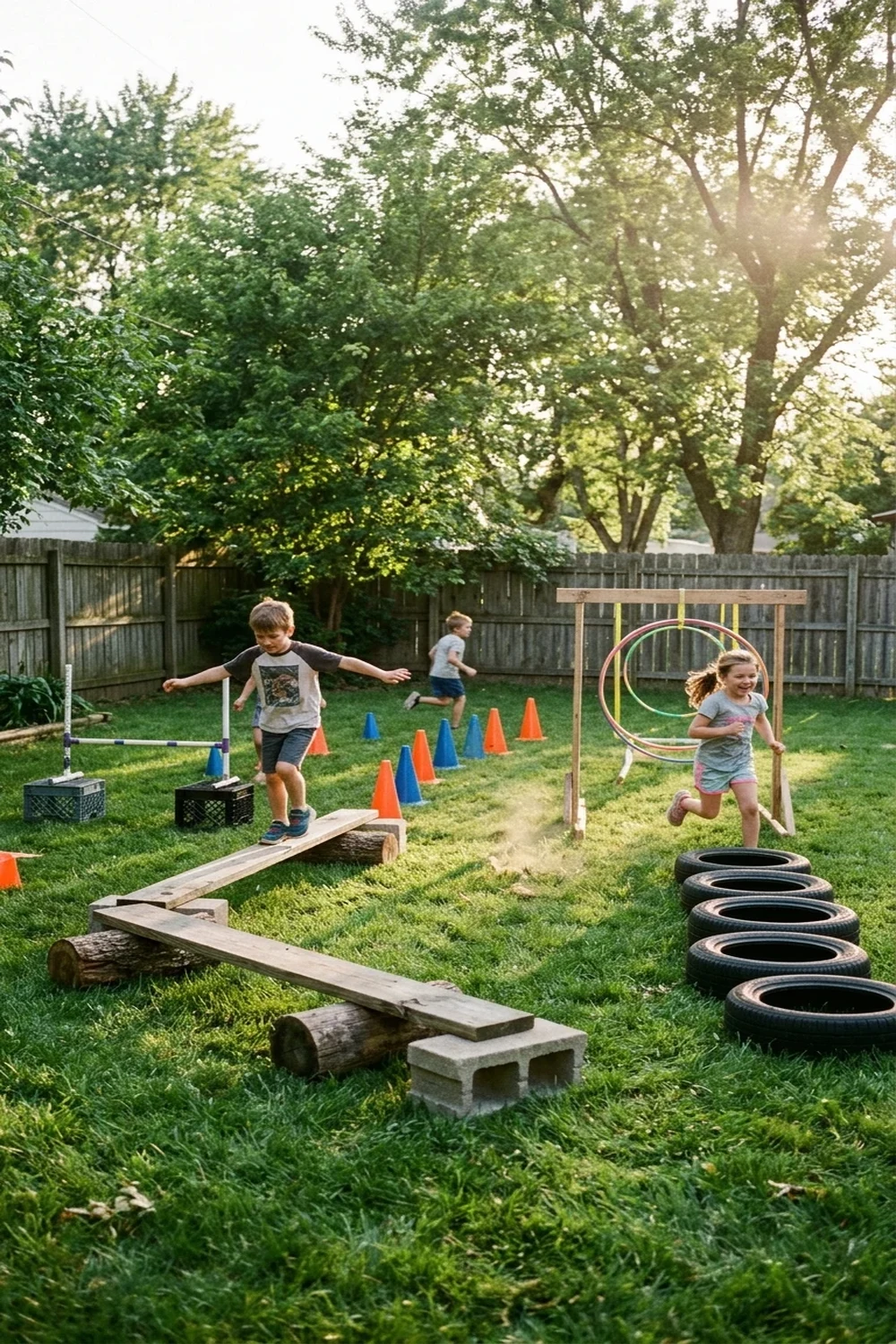
Outdoor Obstacle Playground: Backyard Agility and Endurance Circuit
An outdoor obstacle playground transforms basic household and yard items into a dynamic ninja-style obstacle course designed to exhaust high-energy kids. Navigating balance beams, agility ladder hops, and tunnel crawls exercises all major muscle groups while improving vestibular balance, cardiovascular endurance, and coordination.
- Agility Stepping Zones: Place flat wood slices, rubber floor spots, or hula hoops across the grass for high-knee sprint sequences and foot-eye precision drills.
- Low-Crawl Tunnel Challenges: Drape light tarps or bedsheets over patio chairs to create shaded crawl corridors that compel children to army crawl and strengthen core muscles.
- Precision Target Toss: Position laundry baskets or bucket targets at the circuit midpoint where kids must sink two beanbags before sprinting to the next station.
- Balance Log Traverse: Lay sturdy 2×4 lumber boards or fallen garden logs directly on the lawn to challenge stability, posture, and focused equilibrium.
- Timed Relay Format: Introduce a handheld stopwatch to let children race against their personal best times, encouraging multiple intense physical repetitions.

Toddler Chalk Play: Gross Motor Movement and Creative Pavement Games
Toddler chalk play converts driveways and concrete patios into giant interactive arenas that inspire active whole-body movement and early learning. Moving sidewalk chalk off the art easel and onto expansive pavement encourages energetic gross-motor jumping, color-matching dashes, and expressive giant scribbling.
- Color Island Sprints: Draw large circles in distinct colors across the driveway and shout color names, prompting toddlers to sprint and jump into the corresponding circle.
- Wobbly Line Balances: Sketch winding, zigzag, and spiral chalk tracks across the patio for toddlers to trace, walk heel-to-toe, or race miniature balance bikes along.
- Giant Emotion Hopscotch: Create oversized jumping squares featuring simple smiley faces, teaching balance and physical coordination through rhythmic single- and double-foot landings.
- Water Spray Erase Challenge: Hand toddlers handheld spray bottles to wash away designated chalk targets, developing forearm grip strength through vigorous repetitive squeezing.
- Mess-Free Pavement Art: Non-toxic, dust-free sidewalk chalk rinses away completely with a garden hose or natural rain, making it an effortless daily outdoor activity.
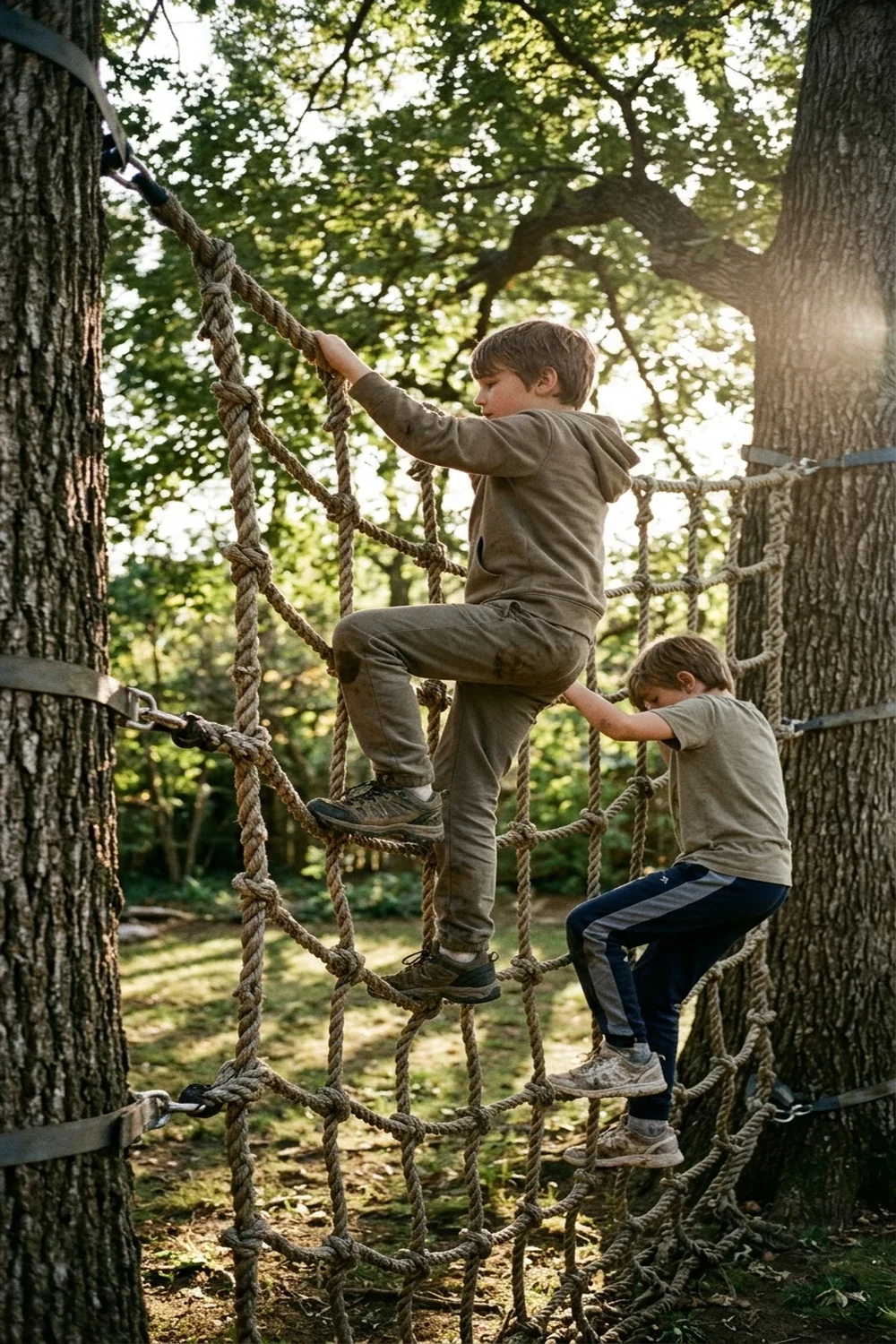
Rope Net Climb: Full-Body Cargo Net Climbing Challenge
A rope net climb is a heavy-duty cargo netting challenge suspended between sturdy posts or mature trees that develops core strength, coordination, and proprioceptive awareness in children. Unlike rigid ladders, flexible rope nets shift under dynamic body weight, demanding continuous micro-adjustments from stabilizing muscle groups while exhausting energetic kids safely outdoors.
- Physical Conditioning: Children engage upper-body pull strength, foot-eye coordination, and core balance simultaneously as the mesh grid flexes beneath their weight.
- Spatial Problem-Solving: Climbing unpredictable netting requires youngsters to map out progressive three-point contact pathways with their hands and feet before executing vertical transitions.
- Safe Setup Parameters: Secure heavy-duty polyester or braided nylon netting with a minimum break strength of 1,000 pounds between two hardwood trees using rated ratchet straps or commercial eyebolts.
- Fall Zone Protection: Position the bottom rope rail 12 to 18 inches above ground level and spread a 6-inch layer of engineered wood fiber or shock-absorbing mulch across the entire landing footprint.
- Sensory & Proprioceptive Input: The tactile resistance of shifting braided cord delivers high vestibular stimulation, resetting restless focus and burning pent-up energy rapidly.
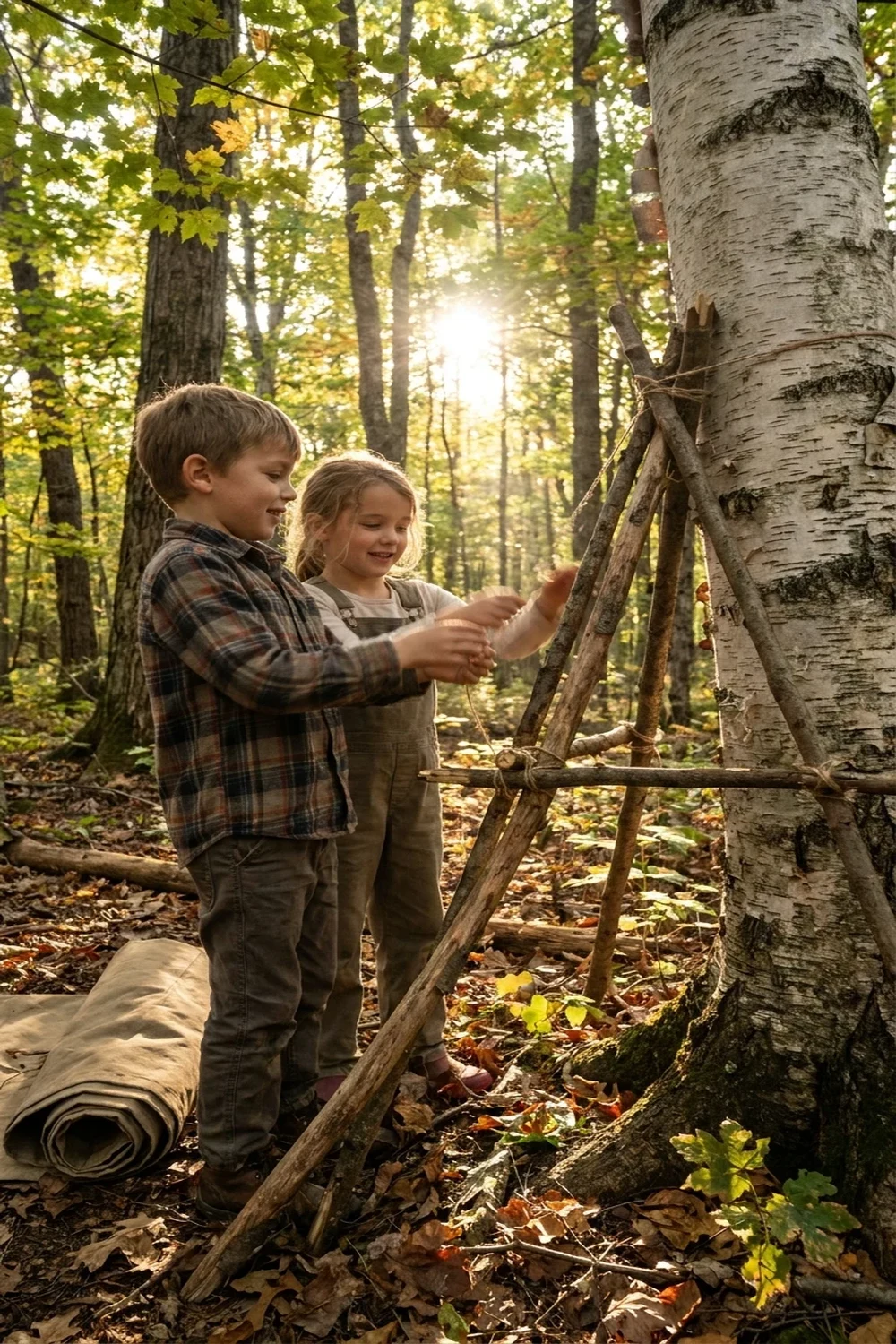
Forest Den Hideout: Natural Shelter Building and Bushcraft Play
A forest den hideout is a self-constructed outdoor shelter made from fallen branches, canvas tarps, and woodland debris that encourages hands-on spatial reasoning and collaborative bushcraft play. Constructing this rustic haven burns intense physical energy as children haul timber, lash upright support poles, and thatch weather-resistant defensive walls in the forest.
- Heavy Work Benefits: Gathering thick downed branches, lifting timber poles, and raking leaf mounds provides therapeutic heavy work that regulates the nervous system and burns physical calories.
- Engineering Fundamentals: Children experiment with structural weight distribution by leaning primary branches against a natural A-frame ridgepole or stable tree crotch.
- Camouflage Weatherproofing: Layering damp leaves, moss, pine needles, and burlap across vertical ribs blocks wind drafts while teaching basic thermal insulation principles.
- Imaginative Independence: A finished den serves as an autonomous basecamp for storytelling, scavenger inventory sorting, and collaborative woodland roleplay.
- Leave No Trace Habits: Dismantling dens at public parks reinforces practical wilderness ethics, respecting wildlife microhabitats and forest trail safety standards.
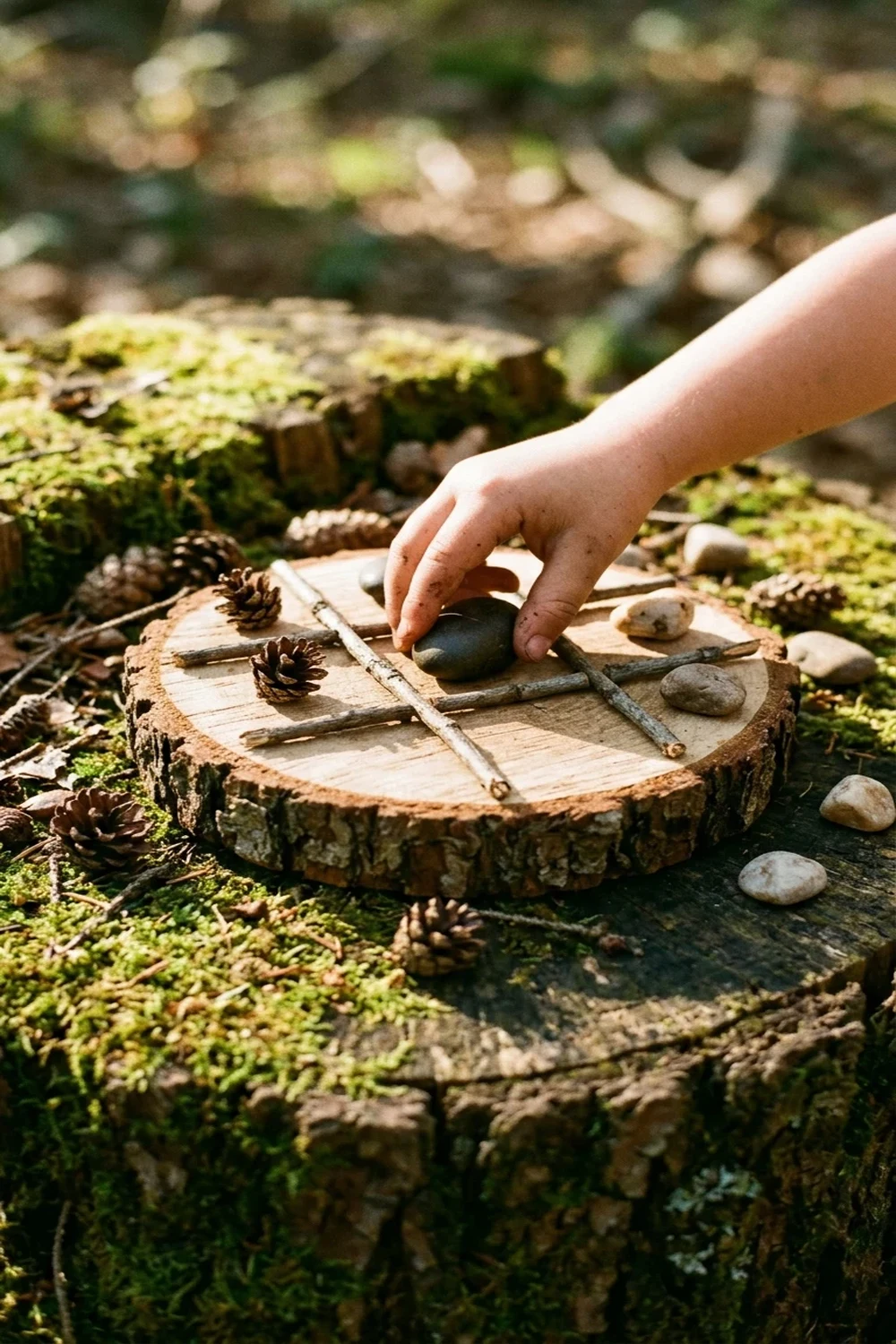
Nature Tic Tac Toe Board: DIY Wood Slice Strategy Game
A nature tic tac toe board is a low-prep, rustic strategy game crafted from flat tree stumps, twig gridlines, and tactile game pieces like smooth river stones and pinecones. This eco-friendly alternative to digital screens keeps children outdoors while building critical strategic anticipation, fine motor dexterity, and cooperative problem-solving skills in fresh air.
- Tactile Natural Pieces: Players collect five smooth grey river rocks and five spiky pinecones to serve as tactile tactile substitutes for traditional Xs and Os.
- Ground Surface Setup: Lay four straight birch twigs in a crisscross grid across a cross-cut log slice, patio flagstone, or packed dirt clearing to form nine distinct squares.
- Turn-Based Cognitive Agility: Children practice foresight, defensive spatial positioning, and executive control as they compete to align three matching organic items in a row.
- Zero-Waste Crafting: Sourcing all functional play components entirely from the backyard lawn or local nature trail ensures zero plastic waste and zero cost.
- Active Rule Variations: Add energetic sprint intervals by placing game pieces ten yards away, requiring players to run back and forth for each strategic placement.
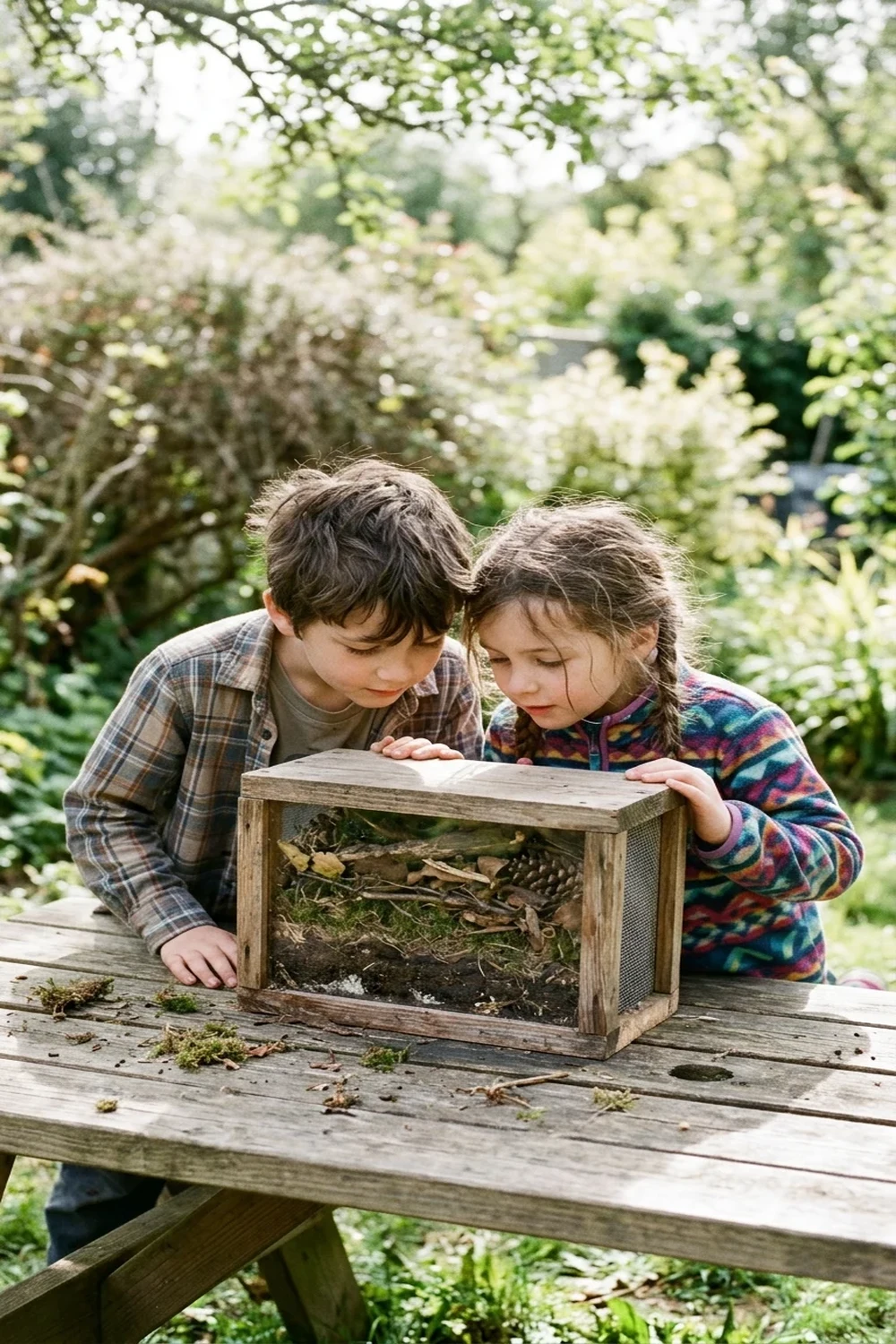
Nature Bug Habitat Craft: Backyard Mini Insect Sanctuary
A nature bug habitat craft is a ventilated containment enclosure filled with collected bark, damp soil, hollow stems, and decaying leaves to observe local garden critters up close. Constructing this living micro-ecosystem transforms an afternoon nature walk into an active biological discovery session that teaches ecosystem stewardship and insect life cycles.
- Specimen Exploration Walk: Searching under stepping stones, rotten logs, and flowerbeds gets kids crouching, lifting, and pacing across outdoor terrain for an hour.
- Layered Habitat Design: Pack the base with two inches of damp topsoil, followed by moist decaying bark chunks, hollow bamboo stalks, and dry leaf litter for moisture retention.
- Safe Insect Collection: Gently guide roly-polies, ground beetles, earthworms, or snails into the container using soft paintbrushes or dry oak leaves to prevent injury.
- Micro-Climate Maintenance: Mist the internal enclosure foliage with clean water every morning using a hand spray bottle to preserve critical humidity levels.
- Responsible Release Practice: Conclude every scientific observation session after 24 hours by releasing garden critters back into the exact moist mulch pile where children found them.
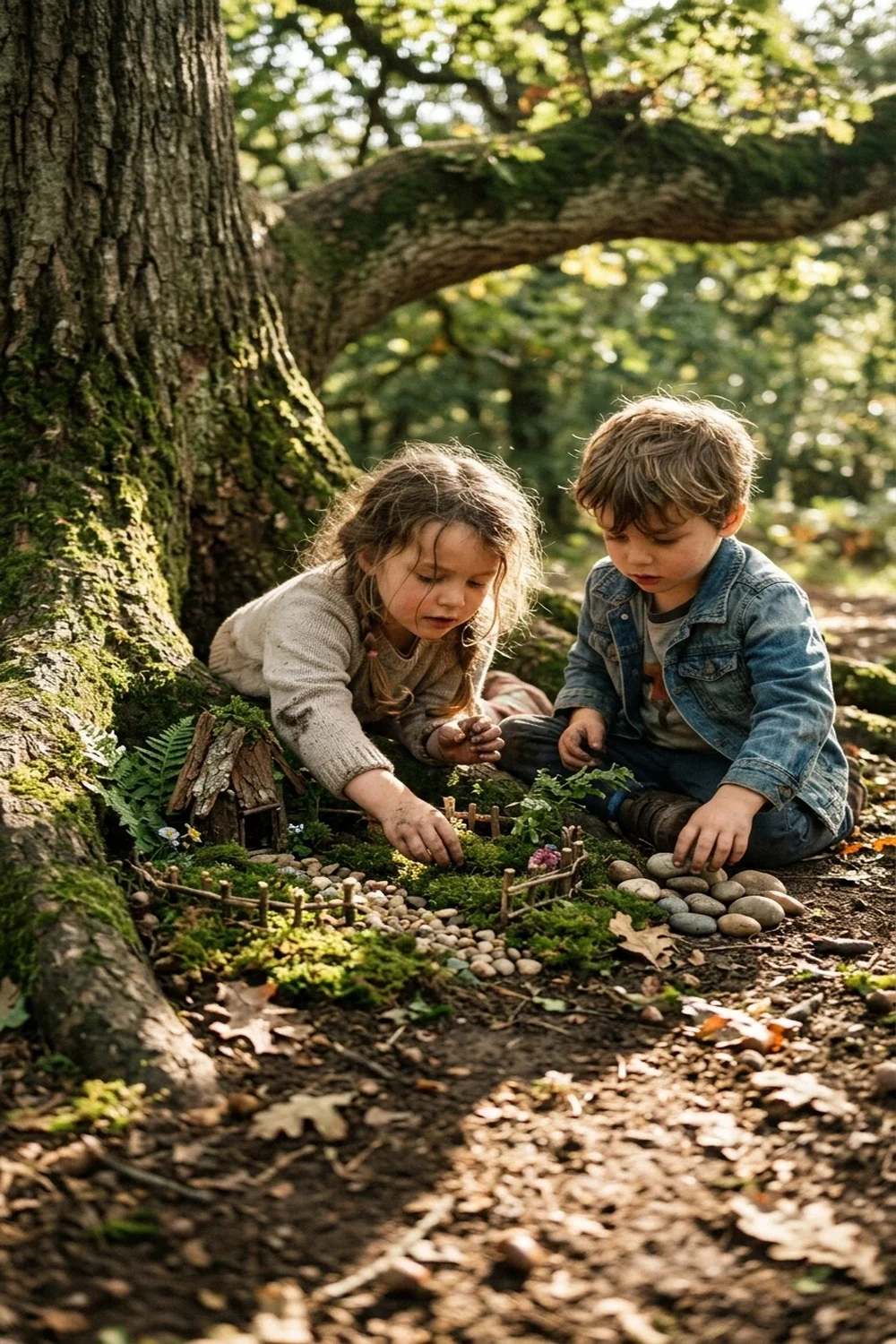
How to Build a Fairy Garden Play Spot for Outdoor Sensory Play
A fairy garden play spot is a miniature woodland landscape built at the base of a tree that sparks imaginative storytelling while refining early childhood fine motor skills. Designing this dedicated outdoor nature craft allows children between ages three and eight to gather forest materials, construct small dwellings, and immerse themselves in open-ended sensory play without requiring expensive store-bought sets.
- Material Gathering: Have children collect fallen pinecones, smooth river pebbles, acorn caps, and moss to construct natural miniature paths and garden boundaries.
- Base Construction: Position the fairy station on level soil around mature tree roots where bark crevices provide natural fairy doors and stable backdrops.
- Creative Detailing: Add painted wood slices and durable ceramic figurines to create elevated toadstool seating and decorative stepping stones.
- Sensory Engagement: Incorporate fragrant garden herbs like dwarf thyme and lavender to stimulate tactile and olfactory sensory exploration during play.
- Easy Maintenance: Refresh the natural components weekly after garden watering or wind to maintain an evolving outdoor project that sustains prolonged interest.
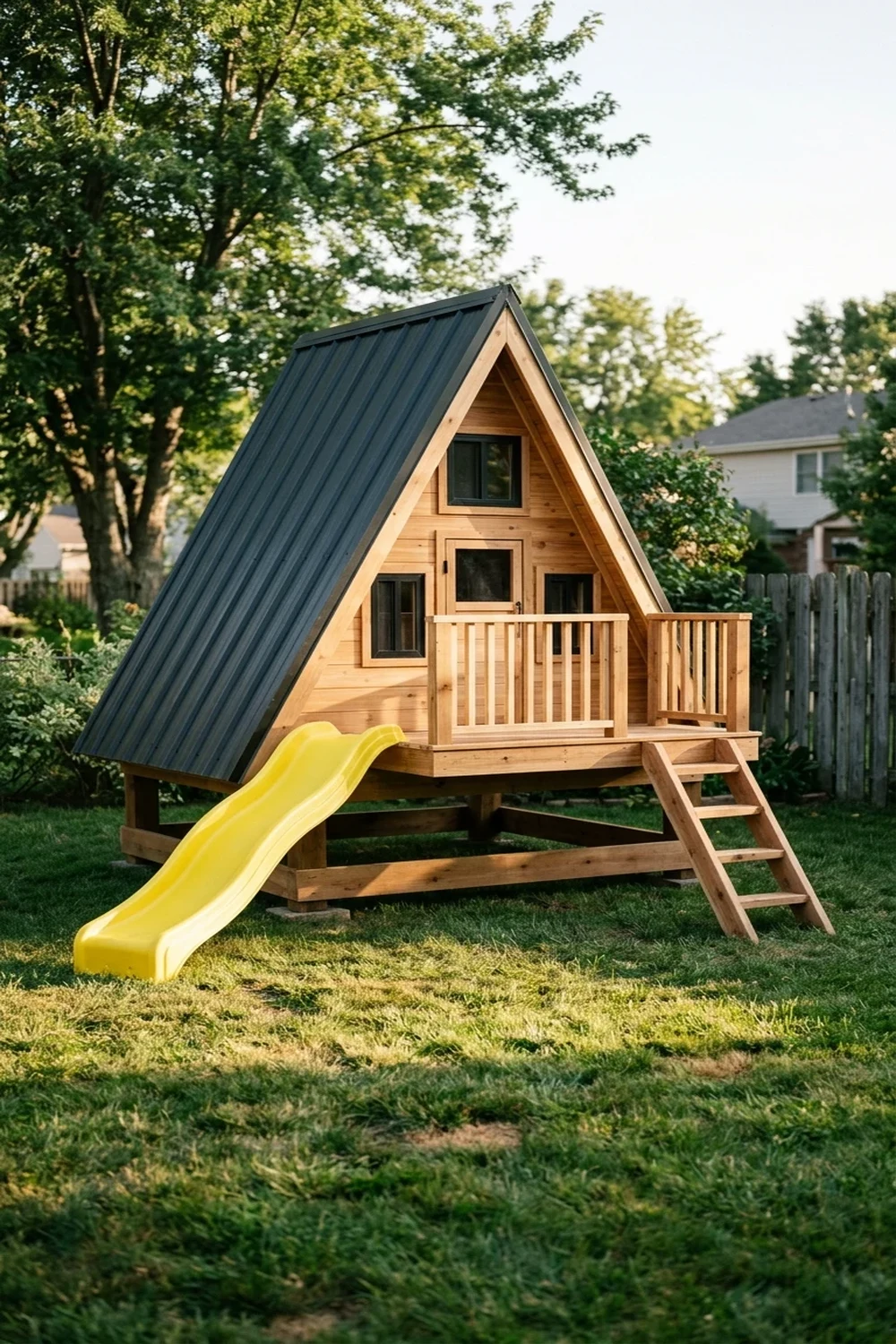
Why an A-Frame Backyard Slide House Accelerates Gross Motor Development
A backyard slide house is a compact climbing structure that accelerates gross motor development by combining elevation navigation, core balance, and repetitive cardiovascular sliding exercises. Installing an all-weather wooden play tower transforms ordinary lawn areas into high-energy physical circuits where children consistently burn off excess energy safely within home boundaries.
- Core Strength Building: Ladder rungs and climbing pegs engage forearm grips, shoulder stabilizers, and leg muscles during every ascent cycle.
- Impact Safety Zones: Establish a 6-foot clearance perimeter lined with 4 to 6 inches of playground cedar mulch or pea gravel to cushion descents.
- Weatherproof Durability: Select cedar or pressure-treated pine coated in non-toxic waterproof sealant to resist splintering, rot, and UV structural degradation.
- Multi-Level Adventure: Utilize the sheltered ground-level playhouse beneath the platform for low-stimulus reading breaks or imaginative roleplay games.
- High-Energy Repetition: Climbing up and sliding down burns roughly 150 calories per thirty minutes of continuous active movement across preschool age groups.
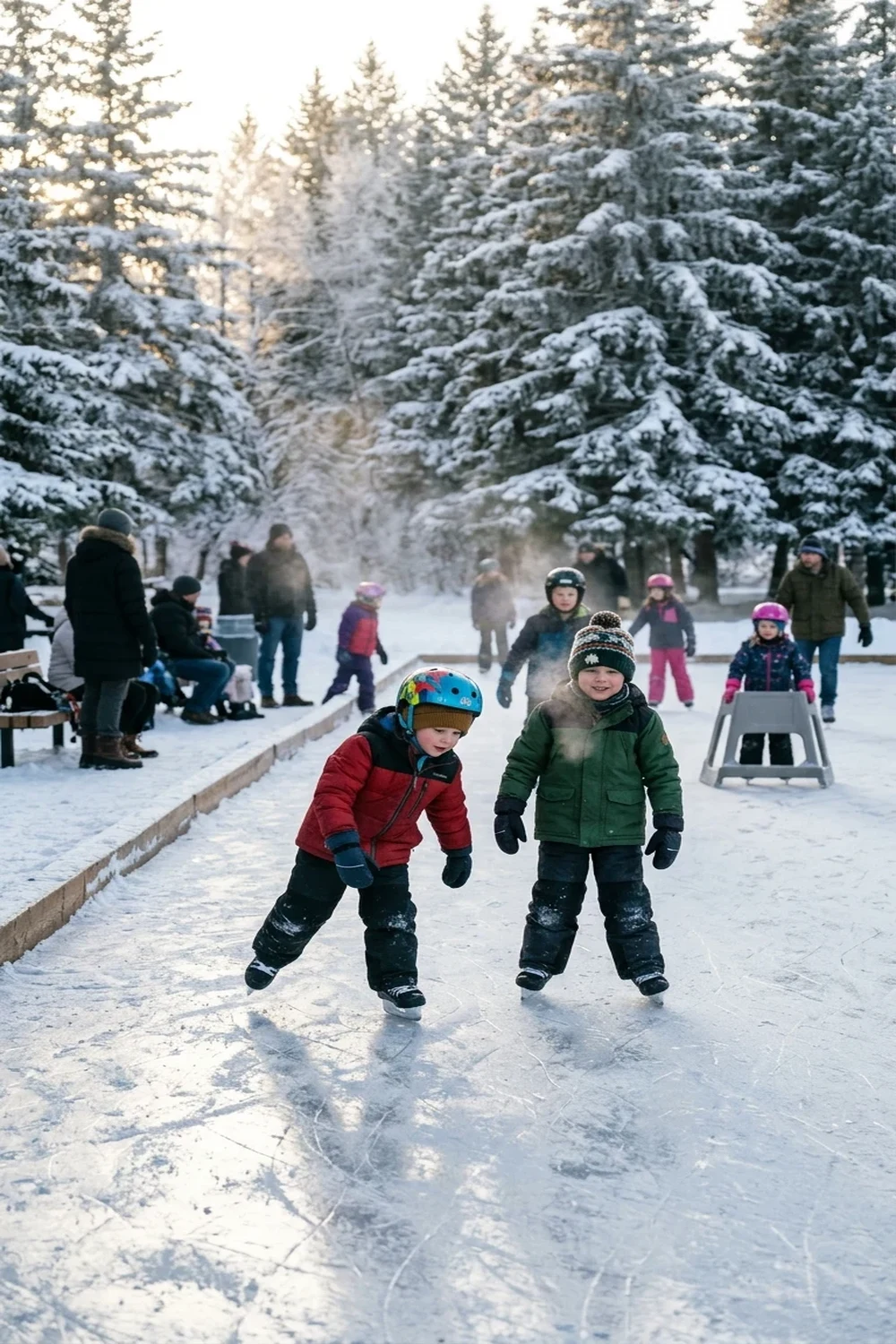
Winter Ice Skating Fun: Safe Cold-Weather Cardio for Active Kids
Winter ice skating is an aerobic cold-weather sport that rapidly burns childhood energy while cultivating ankle stability, dynamic balance, and postural control. Gliding across supervised community rinks or frozen neighborhood ponds challenges stabilizer muscles that standard warm-weather activities rarely target, keeping energetic children vigorous and active throughout freezing winter temperatures.
- Ankle Support Fitting: Choose hard-shell skates with firm ankle padding that lace securely without pinching toes to prevent joint strain and wobbling.
- Essential Safety Gear: Require certified winter sport helmets, reinforced wrist guards, and thick waterproof mittens before stepping onto hard ice surfaces.
- Ice Thickness Rules: Ensure natural outdoor ice measures at least 4 inches of clear blue ice thickness before permitting recreational child skating.
- Beginner Balance Drills: Utilize portable metal skating push-trainers or folding plastic cones to teach weight shifting across the center of gravity.
- Effective Thermal Layering: Dress children in moisture-wicking base layers and wind-resistant outer snow pants rather than bulky heavy cotton clothing.

Bubble Chase Fun: The Best Low-Cost Aerobic Game for High-Energy Kids
Bubble chase games are high-energy aerobic activities that challenge hand-eye coordination, peripheral vision, and sprint stamina as kids jump, dash, and pop floating spheres across the yard. This high-reward game provides rapid physical exertion for toddlers and elementary children with zero setup friction and budget-friendly household supplies.
- Continuous Bubble Flow: Deploy battery-operated bubble blowers or oversized wand loops to flood the yard with hundreds of floating targets per minute.
- Agility Sprint Challenges: Call out specific bubble sizes or colors for kids to pop before they touch lawn turf to prompt rapid directional cuts.
- DIY Bubble Formula: Combine six cups of warm water, one cup of concentrated liquid dish soap, and one tablespoon of vegetable glycerin for durable bubbles.
- Turf Safety Checks: Run bubble chase sessions on dry grass rather than wet patios or slick wooden decking to eliminate slip risks during rapid turns.
- Low-Barrier Inclusivity: Accommodate multi-age sibling groups easily because bubble hunting requires no complex rules or athletic prerequisites.

Sunflower Field Play: How to Turn Garden Rows into an Active Energy Burner
Sunflower field play is an immersive outdoor activity where children navigate tall botanical paths to build spatial awareness, burn excess energy, and explore plant biology. Navigating vibrant floral aisles provides natural terrain resistance that strengthens leg muscles while encouraging inquisitive physical movement under open skies.
- Maze Sprinting: Children jog along wide floral corridors to burn high energy while improving cardiovascular endurance and spatial navigation.
- Pollinator Tracking: Little observers identify bees and ladybugs on flower disks, promoting hands-on nature discovery and calm focus.
- Height Comparison: Kids measure their physical height against towering flower stalks to learn basic estimation and comparative scale.
- Seed Head Harvesting: Older children harvest dried seed centers to practice fine-motor dexterity and explore sustainable seed storage methods.
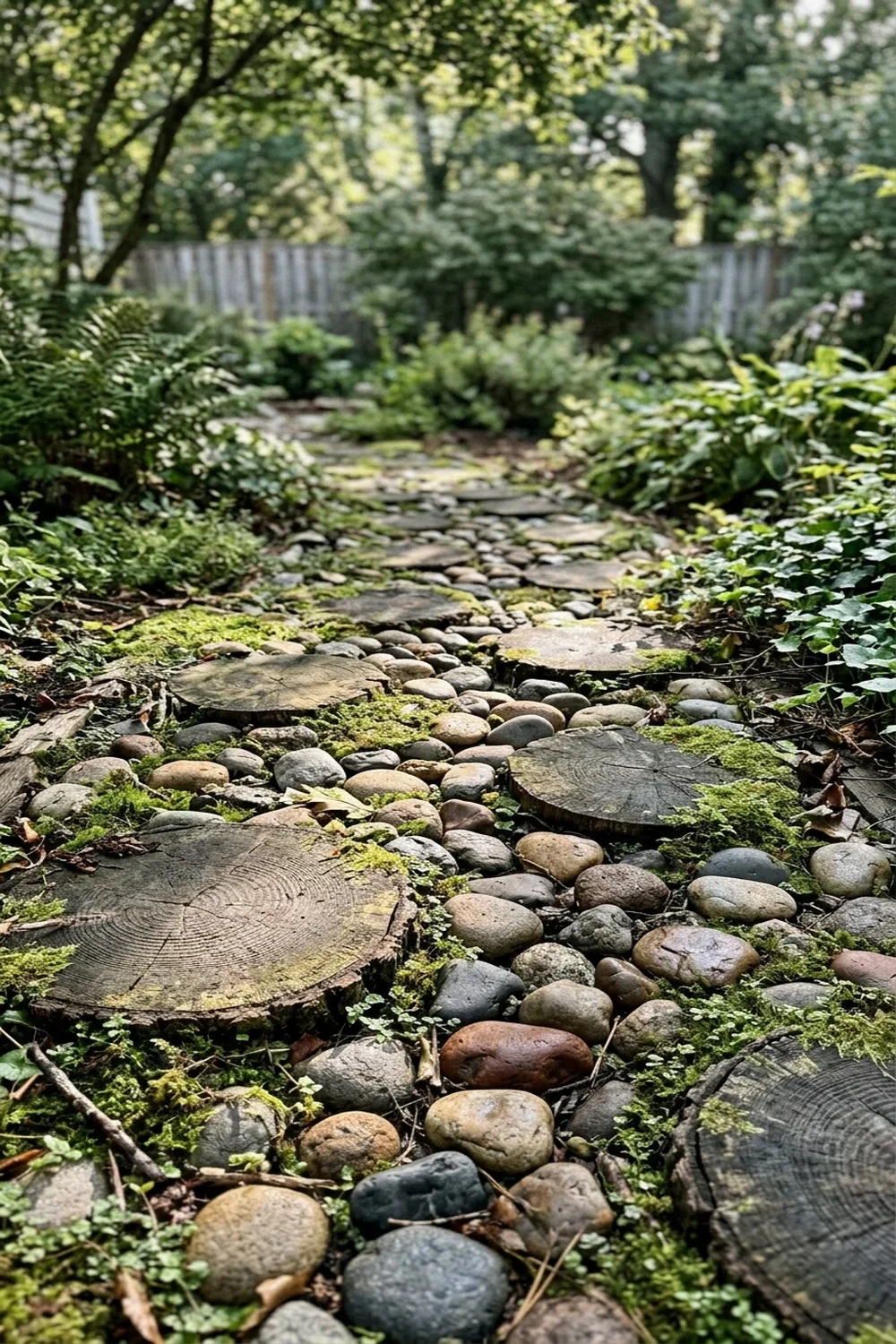
Sensory Path Walk: DIY Outdoor Obstacle Ideas for Motor Skills
A sensory path walk is a multi-textured outdoor ground course designed to stimulate pediatric tactile systems, proprioception, and dynamic physical balance. Creating a sequence of natural elements like river rocks, cedar mulch, and smooth turf encourages focused physical coordination that regulates hyperactive nervous systems.
- Textured Stepping Zones: Kids walk barefoot across smooth river pebbles and wood slices to activate foot reflexology points and improve vestibular balance.
- Directional Pattern Hops: Painted outdoor stones challenge children to jump in alternating sequences, developing agility and rapid motor planning.
- Pinecone Balance Bridges: Laying down soft pine needles and cones introduces mild tactile resistance that strengthens ankle stability and core muscles.
- Cool Turf Transition: Ending the path on cool, soft clover grass lowers heart rates and provides immediate sensory grounding.
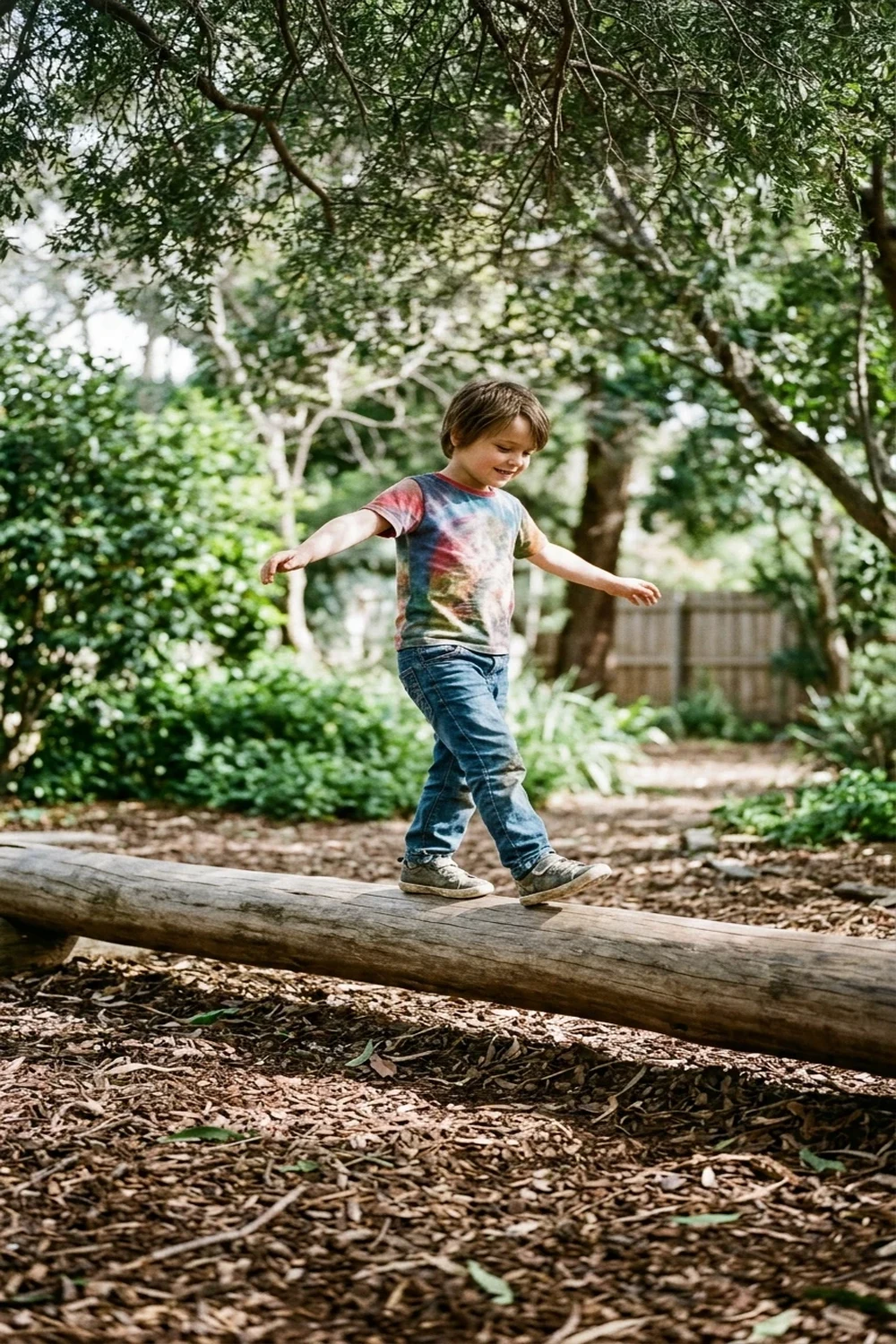
Balance Beam Log Walk: Natural Backyard Obstacle Course Training
The balance beam log walk is an essential gross-motor agility activity that utilizes fallen, debarked tree logs to challenge pediatric equilibrium and lower-body stability. Traversing narrow timber platforms trains core stabilizer muscles and instills calculated risk assessment as kids navigate elevated natural surfaces.
- Low-Elevation Balancing: Children walk heel-to-toe across fallen yard logs to build bilateral coordination and core trunk stability.
- Rotational Pivot Turns: Kids attempt ninety-degree body pivots at log midpoints, strengthening ankle proprioception and lateral leg power.
- Cross-Log Strides: Arranging multiple parallel timber pieces creates a low-impact jumping trail that sharpens depth perception and landing mechanics.
- Partner Support Challenges: Two children clasp hands across parallel logs to practice cooperative timing, active communication, and shared weight distribution.
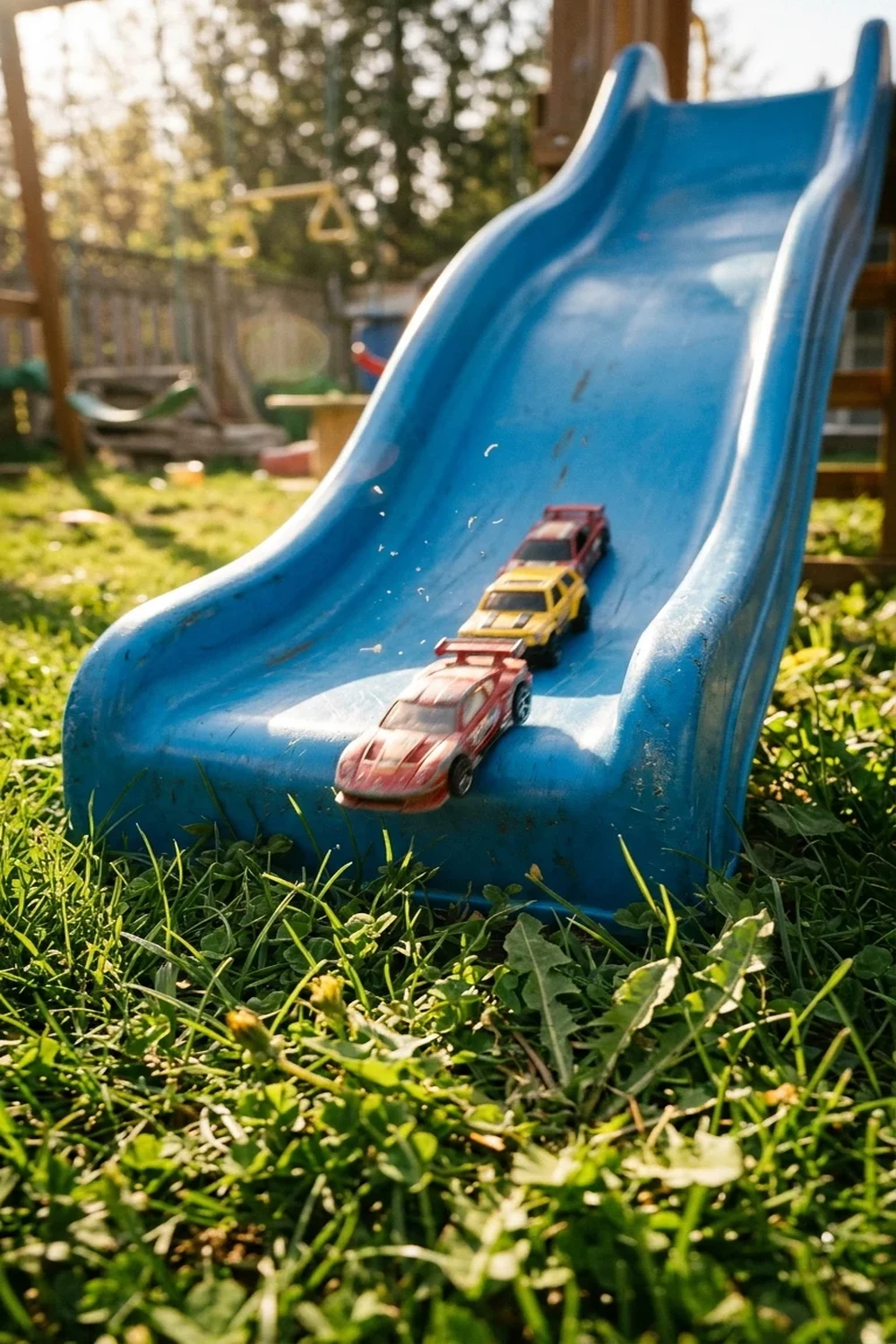
Slide Car Track: Converting Playground Slides into High-Speed Gravity Runs
A slide car track is a high-speed physics and gross-motor activity that transforms standard playground slide chutes into dynamic gravity racecourses for toy vehicles. Kids burn physical stamina by continually ascending climbing ladders and retrieving cars, blending repetitive cardio workout with intuitive mechanics experiments.
- Gravity Velocity Trials: Children release weighted die-cast vehicles down steep slide inclines to compare downhill speeds and trajectory angles.
- Ascent-Descent Conditioning: Constantly climbing slide steps to launch vehicles delivers sustained aerobic cardiovascular conditioning and leg workout.
- Lane Divider Racing: Securing painter tape along the slide center creates dual lanes for cooperative racing competitions among siblings.
- Impact Catcher Construction: Kids stack cardboard boxes at the slide base to build safe run-out catchers that absorb kinetic momentum.
Frequently Asked Questions About Outdoor Kids Activities
Parents regularly seek practical solutions to help children burn excessive energy outdoors without requiring expensive equipment or complex planning. Outdoor play naturally enhances gross motor development, elevates emotional regulation, and improves sleep quality by resetting circadian rhythms through natural sunlight exposure.
- Daily Outdoor Requirement: Health guidelines recommend children receive at least 60 minutes of moderate-to-vigorous physical activity daily to maintain cardiovascular wellness.
- Low-Cost Engagement: Backyard obstacle courses and chalk hopscotch deliver significant physical exertion using basic household items like cushions and garden hoses.
- Weather Adaptability: Cold-weather scavenger hunts and rainy-day puddle jumping preserve active routines year-round when paired with waterproof outer layers.
- Safety Supervision: Designating distinct play zones with clear boundary markers allows youngsters to explore independently while remaining within adult sightlines.
What Activities Do Kids Enjoy Most Outdoors?
Children consistently gravitate toward high-agency outdoor activities that combine physical momentum, creative autonomy, and sensory discovery. Play forms granting immediate physical feedback, such as climbing, sliding, and splash-based challenges, hold attention spans significantly longer than rigid drills.
- Kinesthetic Sensory Play: Mud kitchens and water tables encourage tactile experimentation while fostering deep focus and fine-motor coordination.
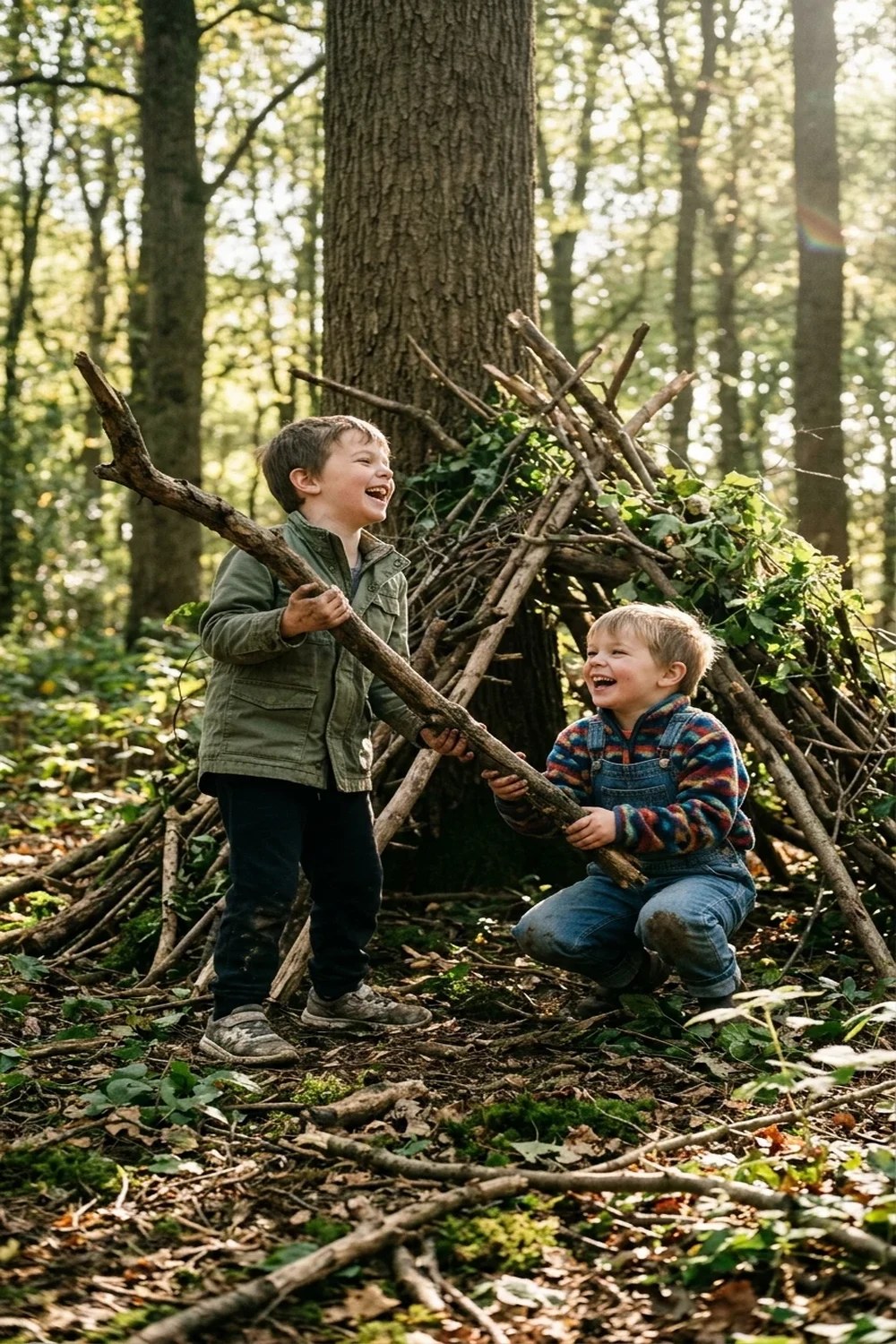
- Autonomous Construction: Building stick dens and assembling loose-parts balance paths satisfy innate curiosity and creative problem-solving desires.
- High-Velocity Chases: Classic pursuits like bubble bursting and freeze tag spark immediate laughter through intense cardiovascular movement.
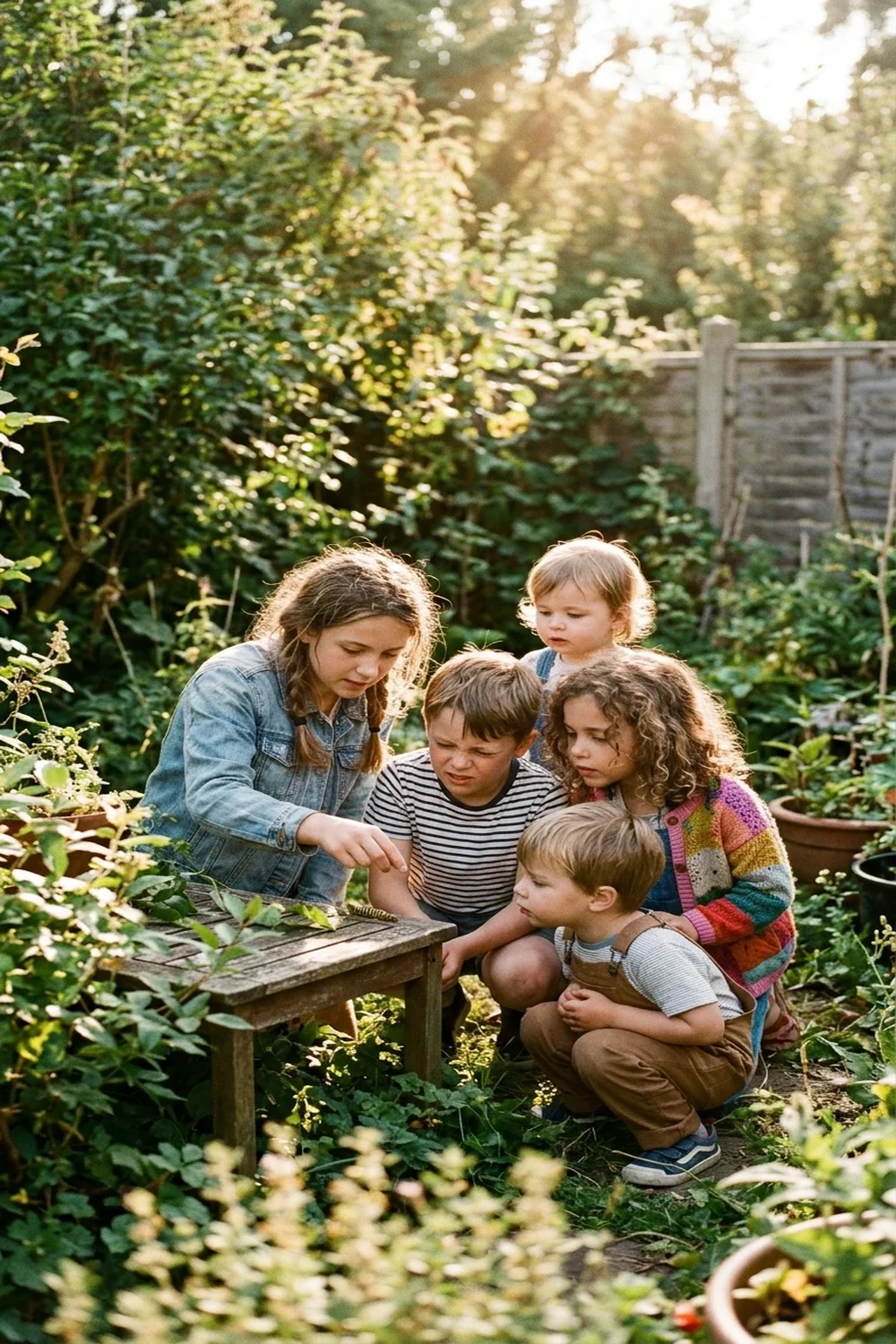
- Exploratory Micro-Adventures: Insect hunting with magnifying tools introduces hands-on scientific observation while keeping children physically active.
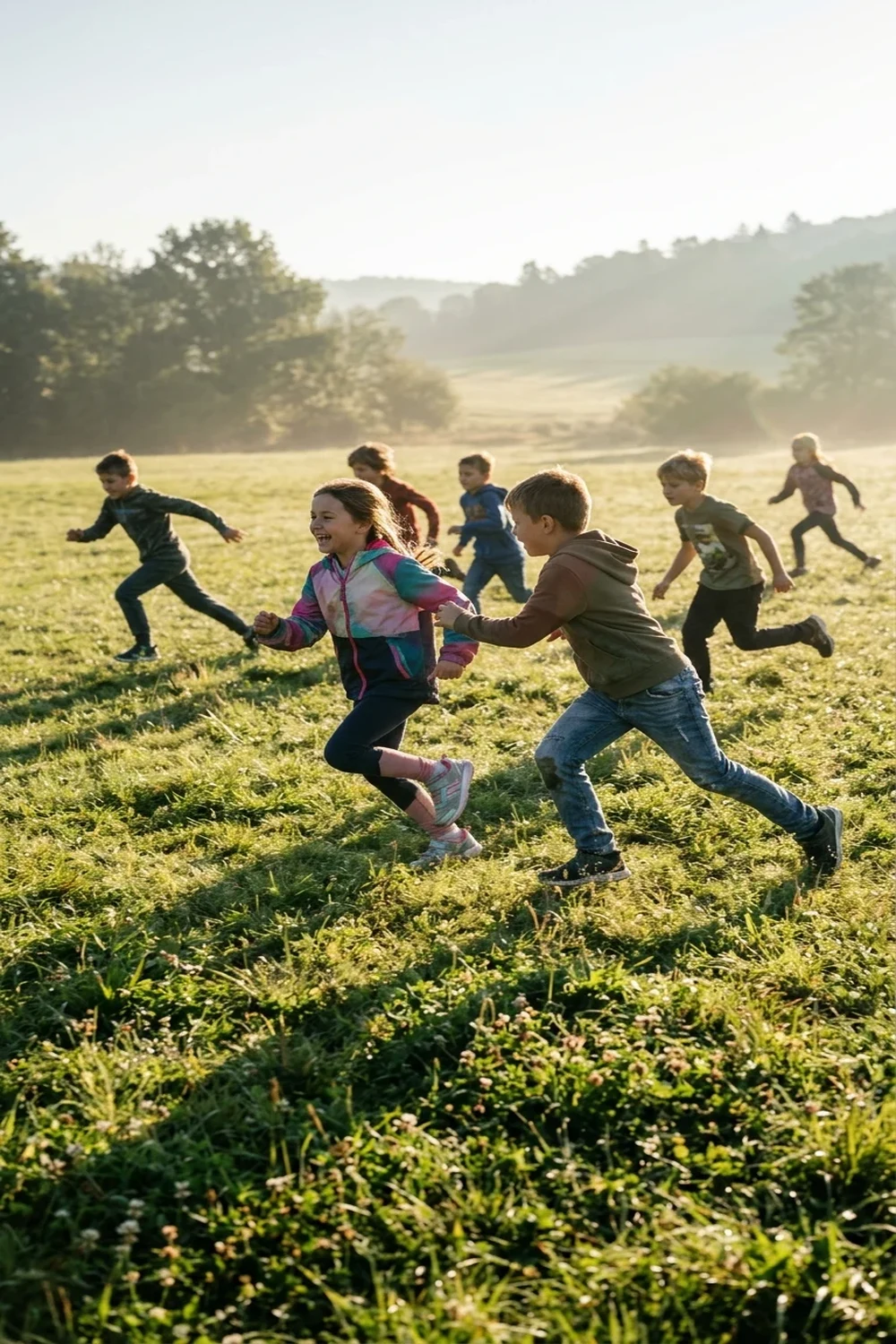
What Are the Most Popular Outdoor Games for Kids?
The most popular outdoor games for kids are traditional movement-centered pastimes requiring minimal setup, straightforward rules, and flexible group sizes. Timeless pursuits like Hide-and-Seek, Red Light Green Light, and relay challenges remain global favorites because they adapt effortlessly to backyards, parks, or schoolyards.
- Classic Tag Variations: Freeze tag, shadow tag, and infection tag maintain sustained sprinting cycles that rapidly deplete pent-up energy.
- Reflex Red Light Green Light: Speed-control games strengthen impulse restraint, auditory listening skills, and sudden physical deceleration.
- Ground Chalk Obstacles: Stepping stone circuits and driveway hopscotch guide solo or partner navigation across dynamic balance points.
- Capture the Flag: Team-based strategy contests develop cooperative communication, spatial awareness, and tactical sprint endurance.
Key Takeaways & Final Thoughts
Dynamic outdoor play provides foundational physical and cognitive developmental benefits that indoor screen time cannot replicate. By introducing varied sensory, balance, and artistic activities such as obstacle courses, mud kitchens, and nature scavenger hunts, parents foster gross motor confidence and natural curiosity without expensive commercial equipment.
Begin by selecting two or three simple setups that utilize existing yard materials, and allow children to guide the pace of their imaginative exploration. Establishing consistent daily outdoor play routines ensures resilient physical wellness, improved attention spans, and joyful family memories throughout 2026 and beyond.