27 Best Indoor Games for Kids to Play at Home
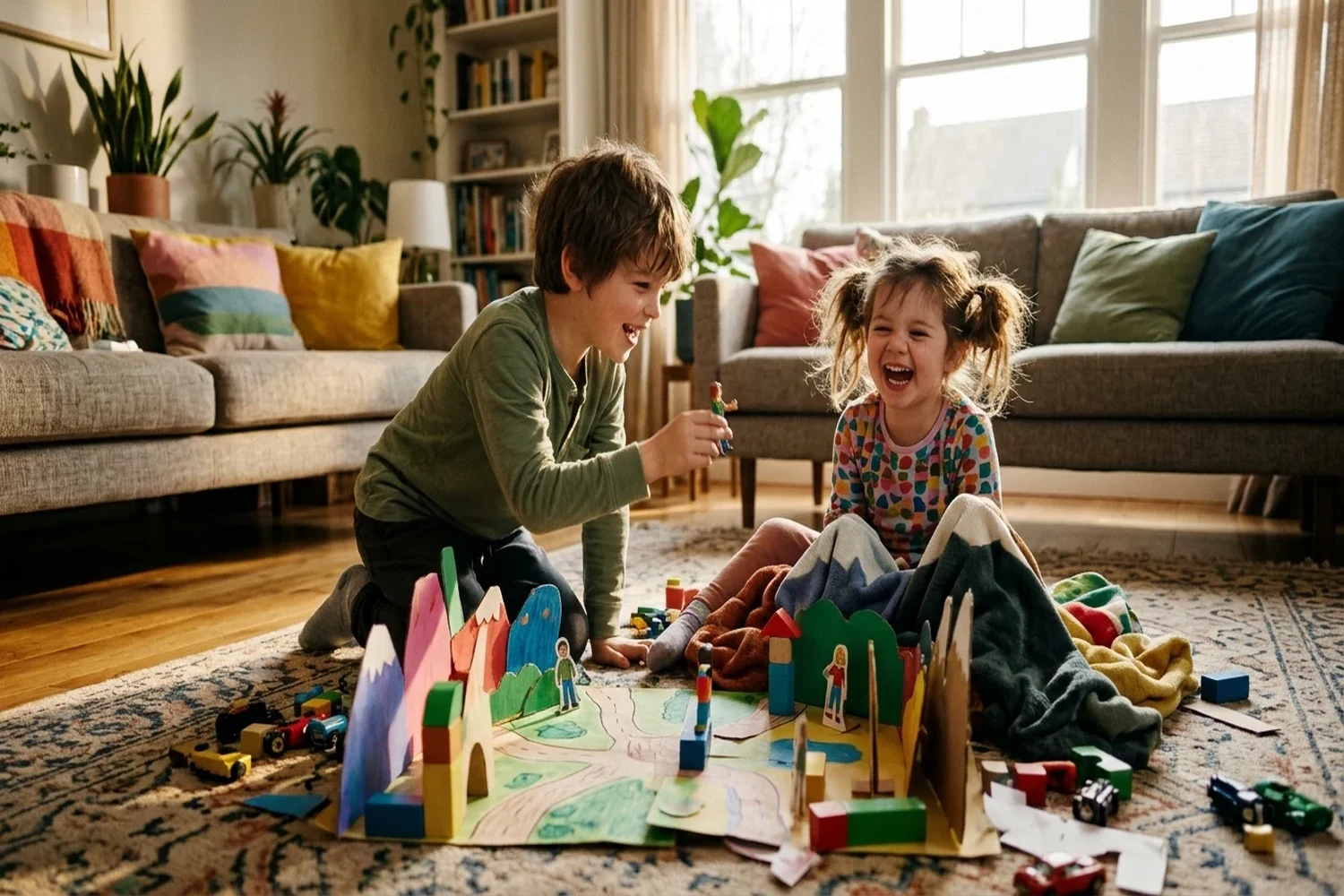

Indoor games for kids provide an essential balance of physical movement, cognitive stimulation, and screen-free entertainment during inclement weather or extended home stays. These 27 structured activities turn ordinary living spaces into dynamic learning environments using simple household supplies. Parents can immediately reduce boredom and foster motor skill development without complex preparation.
27 Indoor Games for Kids: How to Keep Children Entertained at Home
Indoor games for kids provide screen-free entertainment, sensory stimulation, and essential cognitive development during rainy days or extended time at home. Setting up structured indoor activities burns excess physical energy while fostering creative problem-solving and gross motor skills across diverse age groups.
- Physical Energy Release: Active indoor games like obstacle courses or dance contests burn calories and reduce cabin fever in small living spaces.
- Cognitive and Motor Skill Growth: Hands-on challenges enhance bilateral coordination, executive function, and rapid decision-making.
- Minimal Equipment Setup: Most home activities rely on ordinary household supplies such as tape, socks, paper, or plastic containers.
- Adaptive Rule Structures: Each game can scale down for toddlers aged 3 to 5 or scale up for competitive older siblings.
- Independent and Group Play: Games balance cooperative family teamwork with self-directed creative tasks to keep boredom at bay.
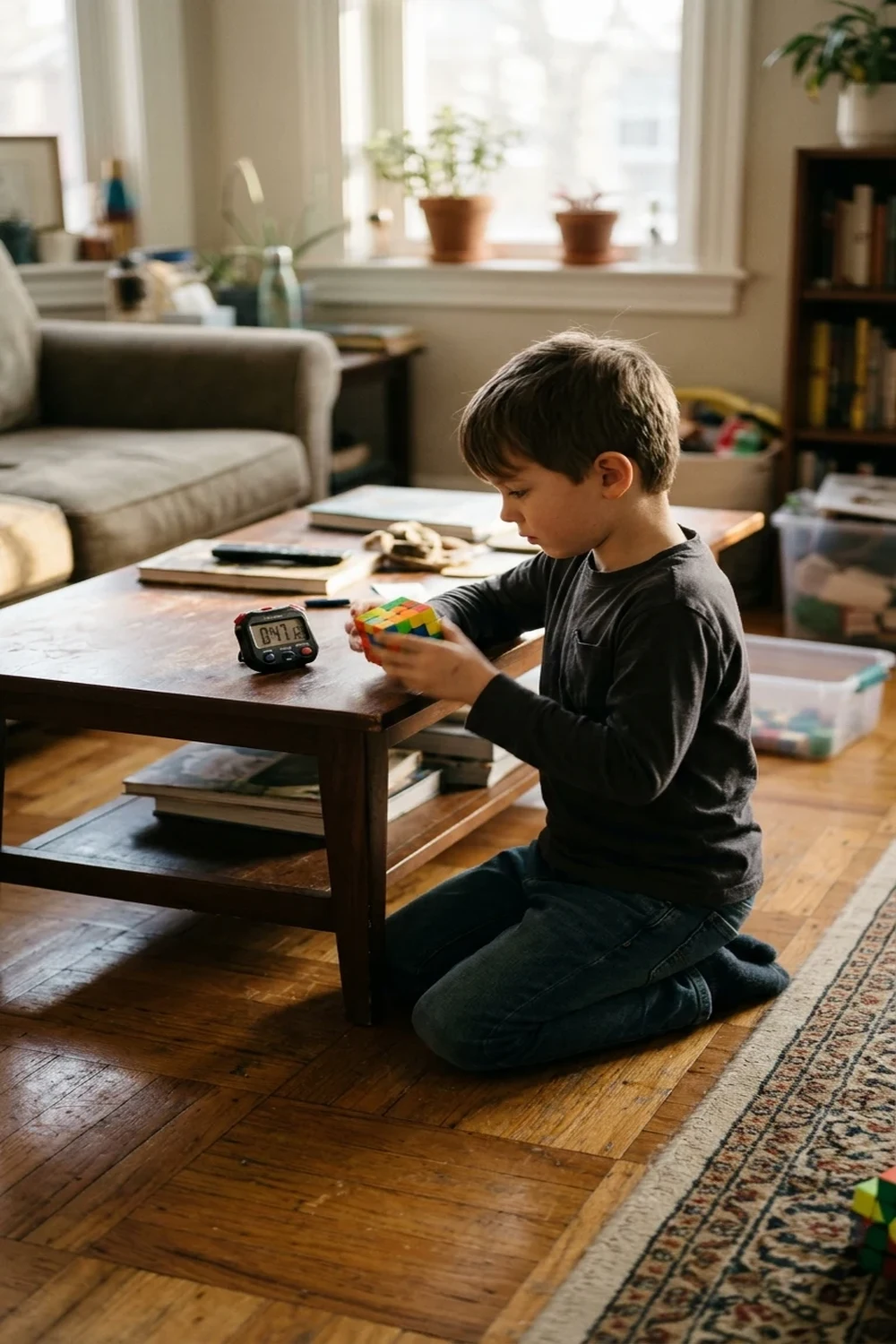
1. Hunt Against The Timer: Fast-Paced Indoor Scavenger Hunt for Kids
Hunt Against The Timer is a high-energy indoor scavenger hunt where children race against a 60-second countdown to retrieve household items matching a specific color or letter. This fast-action game develops quick visual scanning, categorization skills, and physical agility inside the home.
- Gameplay Objective: Collect the highest number of correct items matching the caller’s target color or letter before the timer buzzer rings.
- Optimal Round Duration: Set a 60-second limit using a smartphone or digital kitchen timer to maintain urgency and fast pacing.
- Elimination Mechanic: Disqualify any player who fails to cross the central base area before the timer reaches zero.
- Sensory Challenge Variations: Swap simple color queries for descriptive textures like ‘find something fuzzy’ or ‘retrieve a cold object.’
- Safety Protocol: Designate carpeted run zones and strictly ban players from climbing furniture or retrieving fragile items from high shelves.
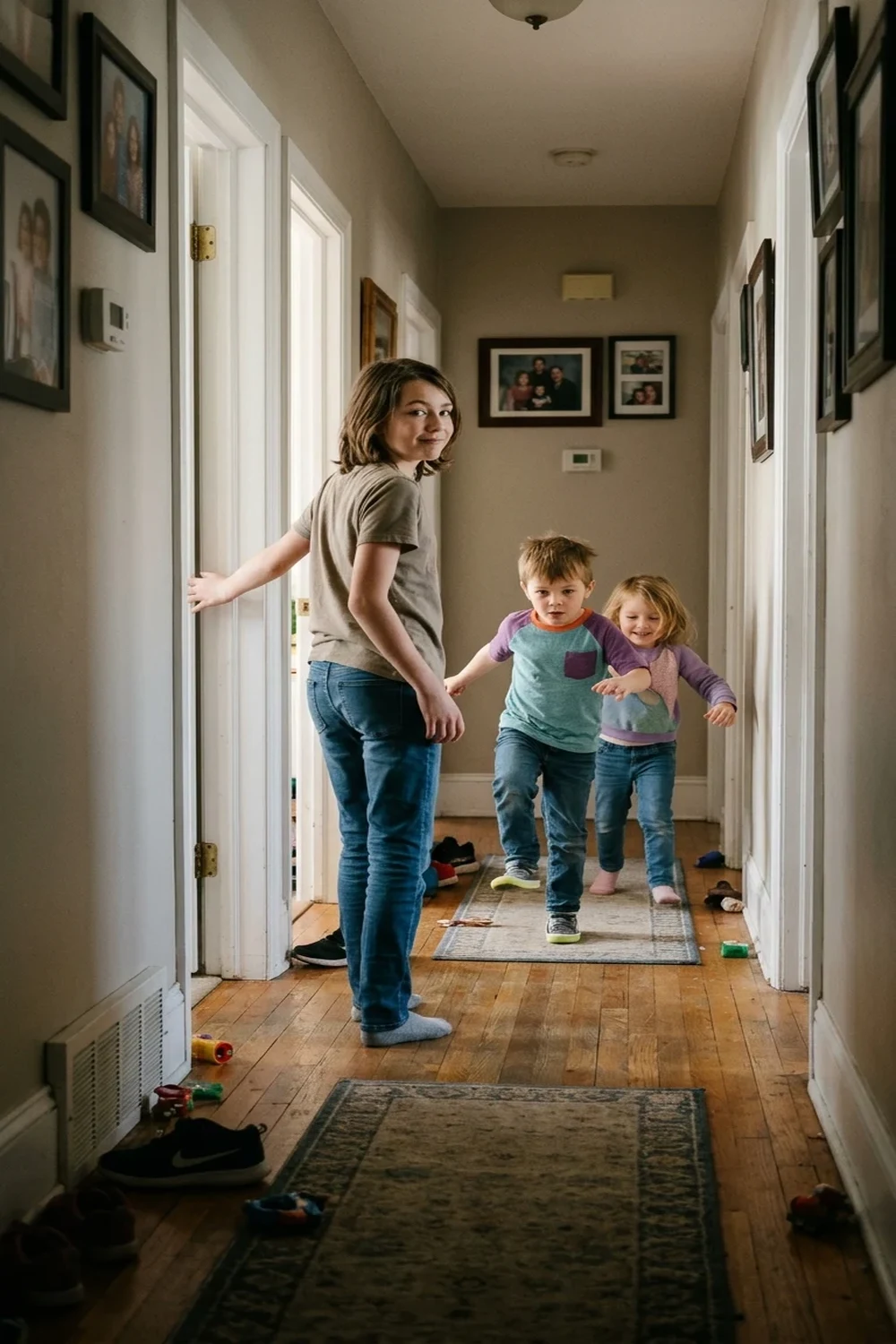
2. Grandma’s Footsteps: Classic Stealth and Freeze Game for Kids Indoors
Grandma’s Footsteps is a classic indoor stealth game where players sneak across a hallway toward a designated leader without being caught moving when the leader turns around. The activity sharpens impulse control, vestibular balance, and focused patience through sudden freeze-frame mechanics.
- Primary Goal: Creep across the designated room to gently tap the finish wall beside ‘Grandma’ without being spotted mid-stride.
- Sudden Turnaround Rule: The player acting as Grandma can spin around unannounced at any second to inspect the advancing competitors.
- Immediate Penalties: Return any player caught shifting weight, balancing precariously, or giggling back to the starting line.
- Motor Control Development: Children master sustained deceleration, controlled deceleration, and single-leg stability while holding awkward freeze poses.
- Quiet Environment Bonus: The silent sneak requirement makes this game an ideal low-noise indoor activity for apartment living.

3. Egg Jousting: Fun Kitchen Competition and Hard-Boiled Egg Game
Egg Jousting is an engaging tabletop tapping contest where players tap hard-boiled eggs end-to-end to see whose shell withstands impact without cracking. This quick-setup tradition combines gentle dexterity practice with zero food waste, transforming damaged eggs into tasty family snacks afterward.
- Equipment Requirements: Provide three chilled, thoroughly hard-boiled eggs per participant to ensure uniform shell density.
- Narrow End Battle: Players begin round one by lightly tapping the pointed tips of their eggs together until one shell fractures.
- Wide End Pivot: Once the tip breaks, players rotate their egg to clash the blunt bases in a secondary survival round.
- Tournament Elimination: The competitor possessing the last intact, fully uncracked egg claims victory across the bracket.
- Zero-Waste Snack Finish: Peel the cracked hard-boiled eggs immediately after the game to prepare nutritious egg salad sandwiches.
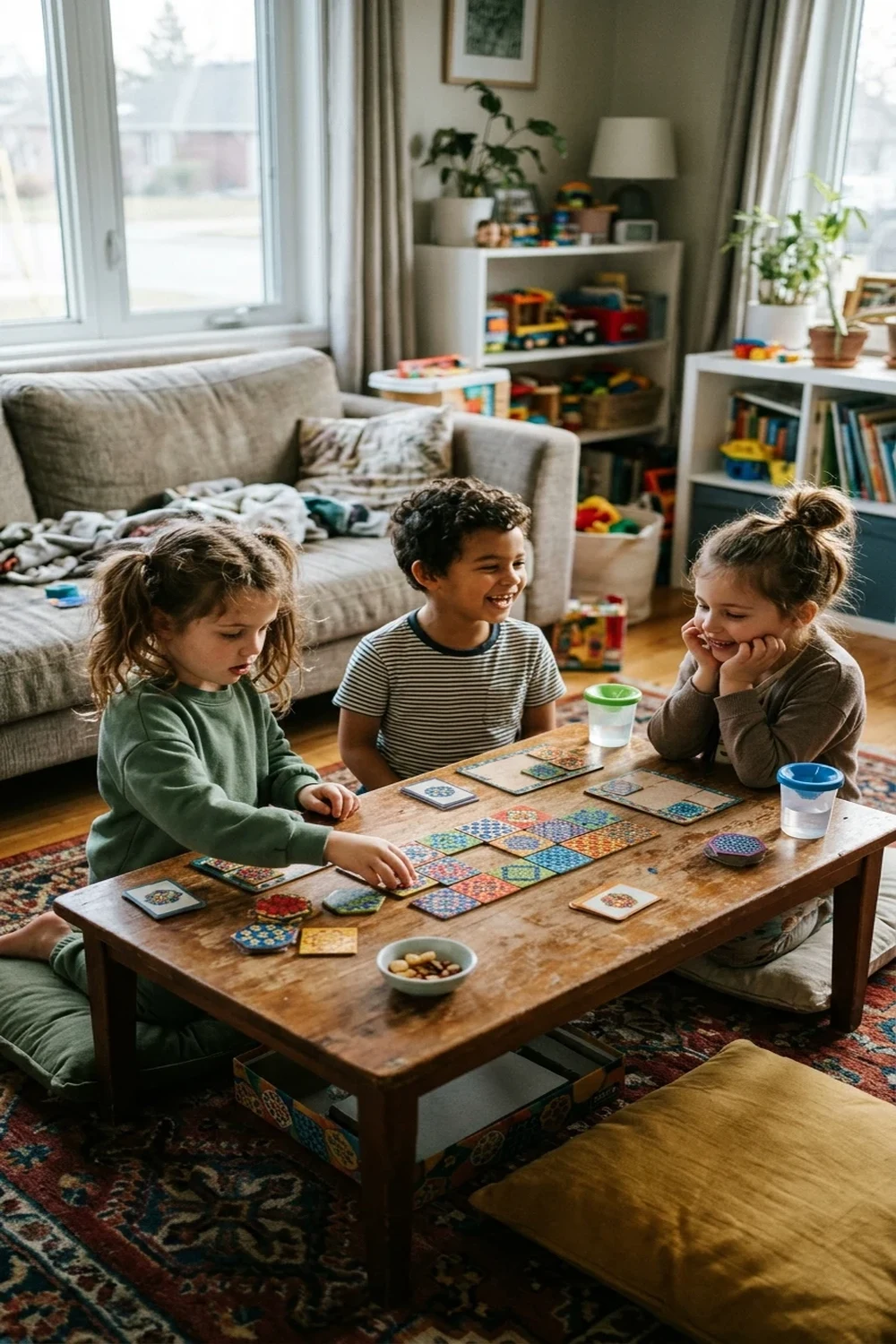
4. Zingo: Fast-Paced Matching Board Game for Early Readers
Zingo is an interactive matching board game that combines classic bingo mechanics with rapid visual recognition for 2 to 6 players. Designed specifically for pre-readers and early elementary children aged 4 and up, the activity builds essential word recognition, spatial association, and cognitive processing speed without requiring advanced reading ability.
- Core Gameplay: Players operate a mechanical dispenser called the Zingo Zinger to slide and reveal two picture-and-word tiles simultaneously.
- Rapid Recognition: Participants scan their individual double-sided challenge cards to spot matching vocabulary tiles before competing players.
- Active Calling: The first player to clearly shout the name of an exposed tile claims it to cover the matching slot on their grid.
- Dual Skill Levels: Cards feature two distinct sides, with green cards supporting casual matching and red cards providing competitive play for advanced readers.
- Winning Condition: The first child to completely fill all nine spaces on their card shouts ‘Zingo!’ to win the round.
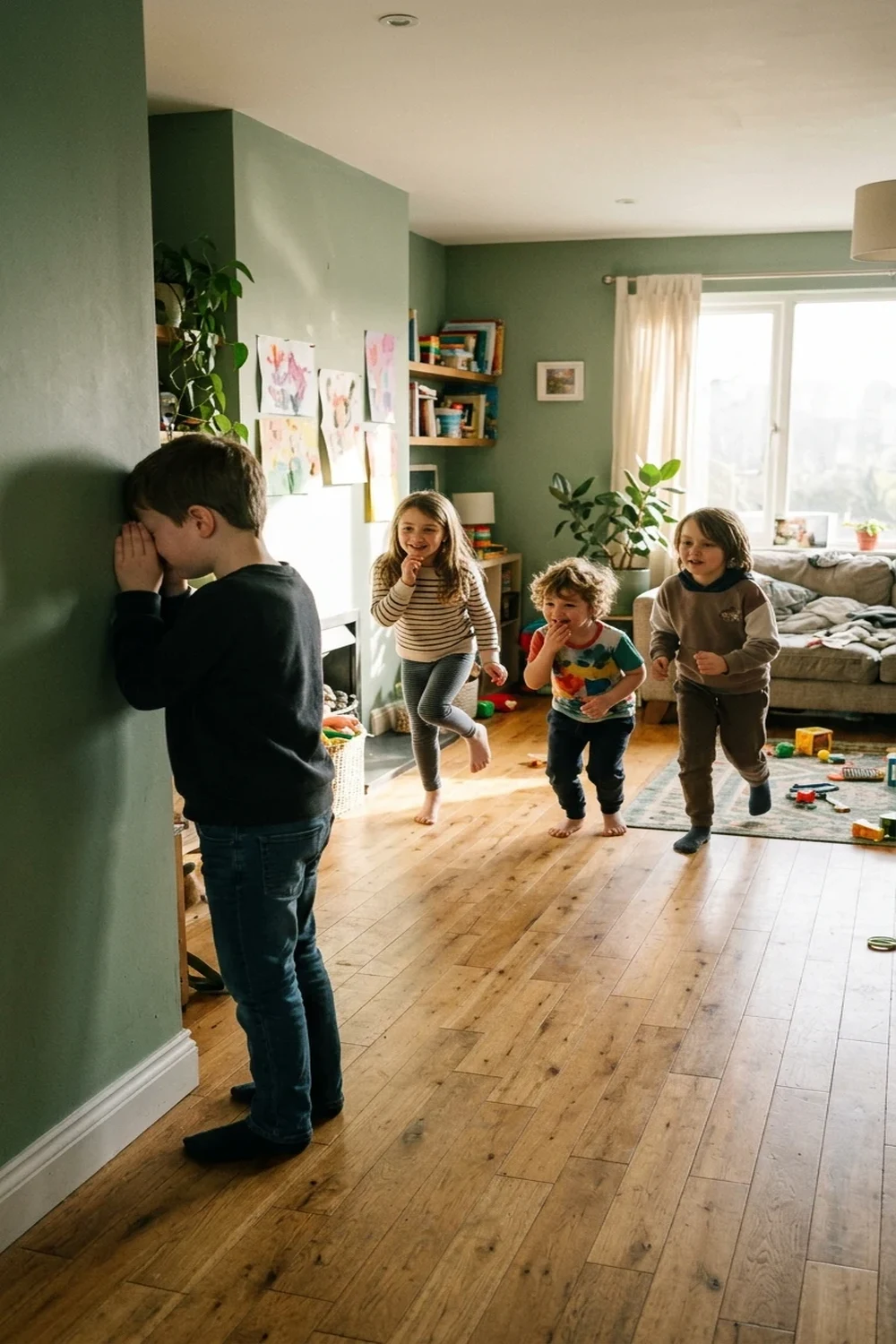
5. What’s The Time, Mr. Wolf?: Classic Listening and Counting Game
What’s The Time, Mr. Wolf? is a traditional listening and gross-motor group game that teaches analog time concepts, number sequencing, and physical self-regulation indoors. Suitable for 3 or more children, this high-excitement chase game converts hallway or living room floor space into an active tracking zone that burns surplus energy safely.
- Designated Roles: One child stands at the opposite end of the room facing the wall as ‘Mr. Wolf’, while remaining participants line up at the starting boundary.
- Verbal Call and Response: The group chants ‘What’s the time, Mr. Wolf?’ in unison to prompt a numerical hourly response.
- Synchronized Movement: The wolf calls out a specific time, such as ‘Four o’clock’, directing players to take precisely four steps forward.
- Sudden Transition: When the wolf unexpectedly shouts ‘Dinner time!’, the leader turns around to chase the runners back toward the starting boundary.
- Role Rotation: The first tagged runner becomes the new wolf for the subsequent round, promoting continuous active participation.
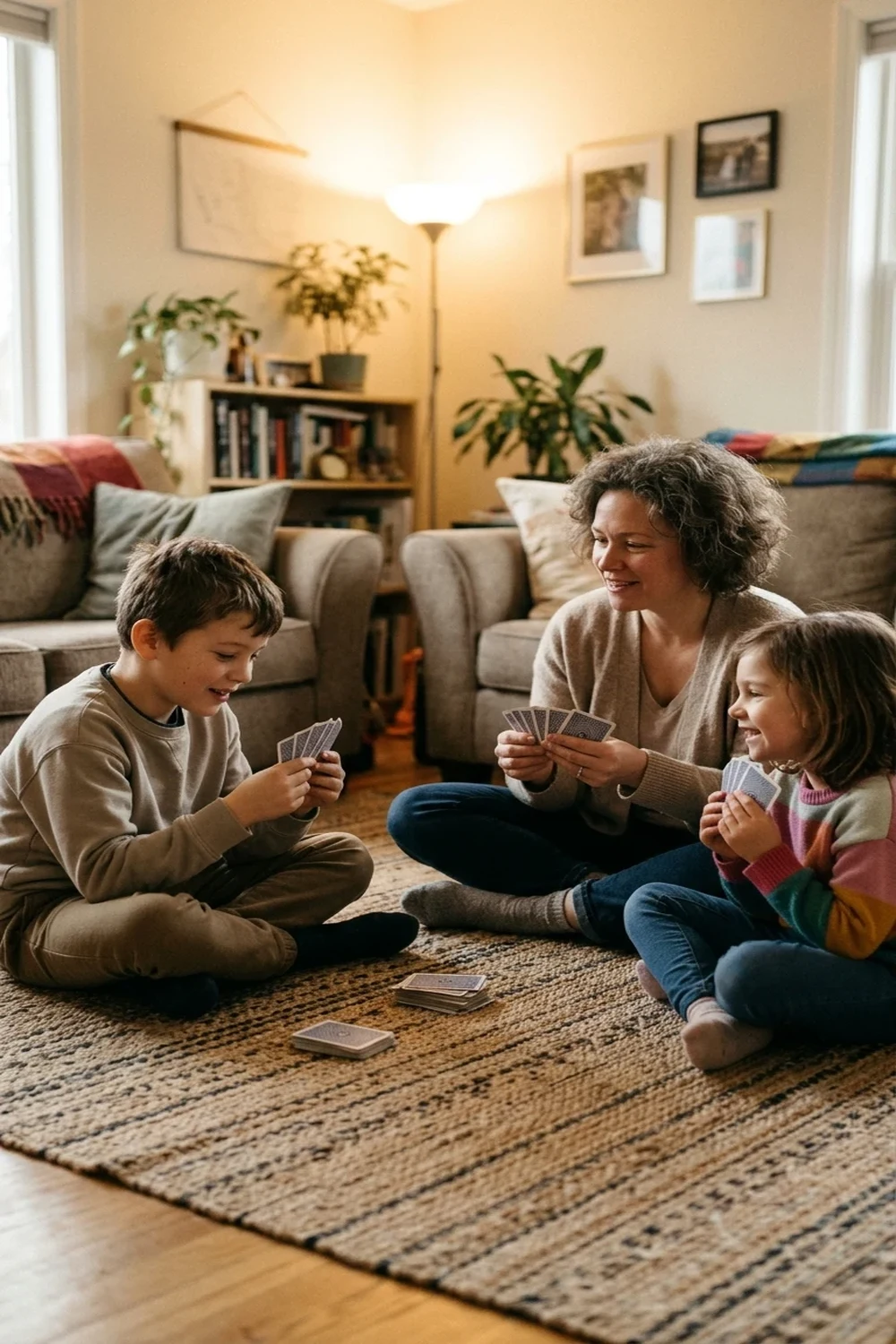
6. Go Fish: Foundational Card Game for Memory and Number Recognition
Go Fish is an introductory card game that trains working memory, deductive reasoning, and social turn-taking for 2 to 5 players using a standard 52-card deck. The objective centers on gathering complete four-of-a-kind sets or matching pairs through deliberate inquiry and tracking cards held by opponents.
- Initial Hand Deal: Each participant receives five cards from a standard deck, while the remaining cards form an unorganized central draw pile known as the pond.
- Targeted Interrogation: On their turn, a player asks a specific opponent for a rank they already hold, such as ‘Do you have any sevens?’
- Mandatory Transfer: If the targeted player possesses the requested rank, they must surrender all corresponding cards to the asker.
- Drawing from the Pond: If the opponent lacks the card, they declare ‘Go Fish’, prompting the active player to draw one card from the draw pile.
- Victory Target: Players lay down completed four-card sets immediately, and the participant with the highest quantity of completed books wins once hands are depleted.
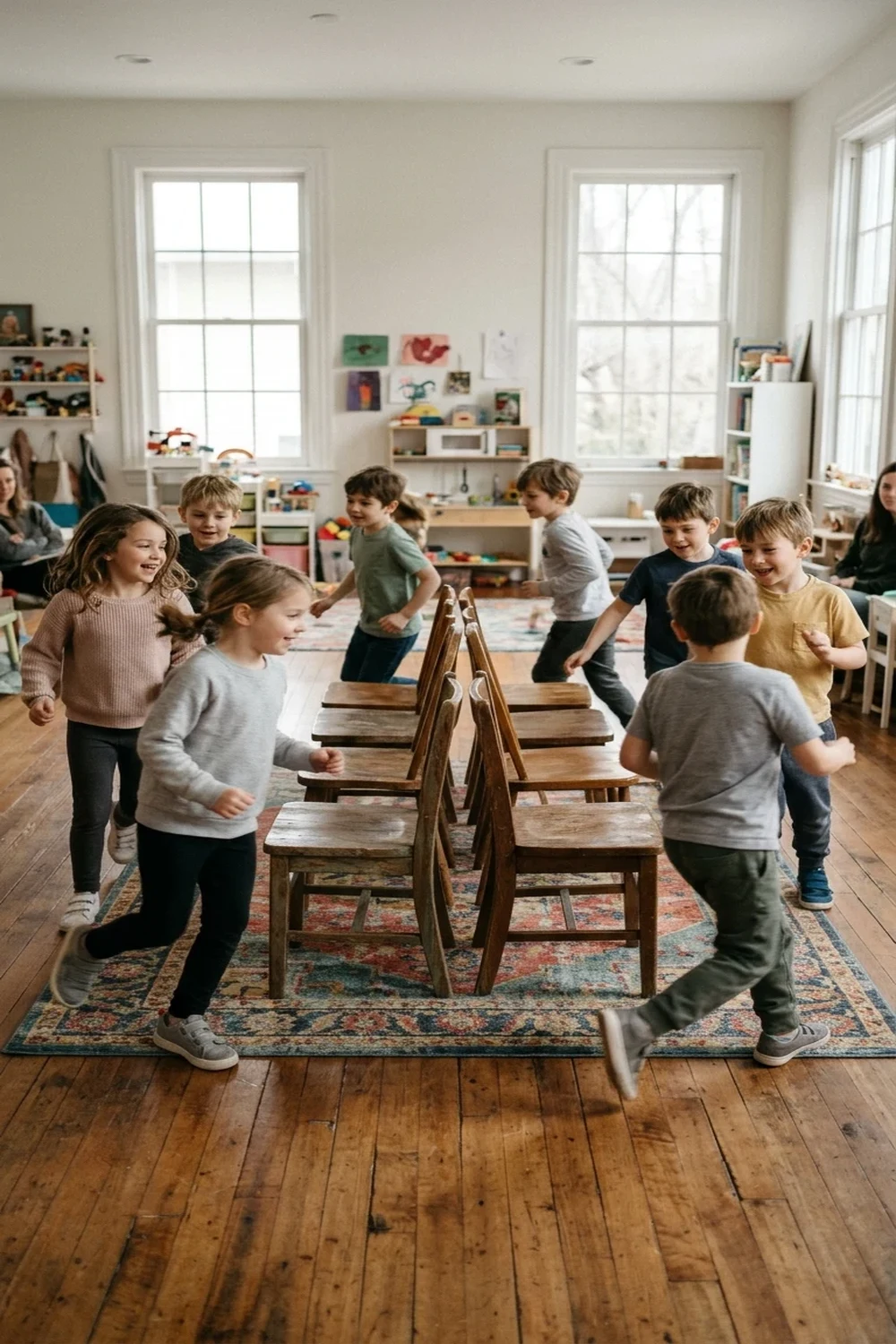
7. Musical Chairs: High-Energy Movement and Auditory Reaction Game
Musical Chairs is a high-tempo physical elimination game that sharpens auditory reaction time, spatial coordination, and rule adherence in children of all ages. By arranging indoor seating in a back-to-back sequence, parents can transform any living space into a focused balance and motor-skills activity that accommodates large family gatherings.
- Equipment Configuration: Place sturdy chairs back-to-back in a row, using exactly one fewer chair than the total count of participating players.
- Continuous Circuit: When background music plays, all children walk or dance clockwise in a single-file line around the chair perimeter.
- Auditory Reflex Trigger: The designated music controller abruptly stops the playback without warning at unpredictable intervals.
- Rapid Seating: Every child must immediately locate and sit on an unoccupied chair; the single player remaining standing is eliminated from the round.
- Sequential Elimination: Remove one chair before restarting the music, repeating rounds until a final showdown between two players yields the winner.
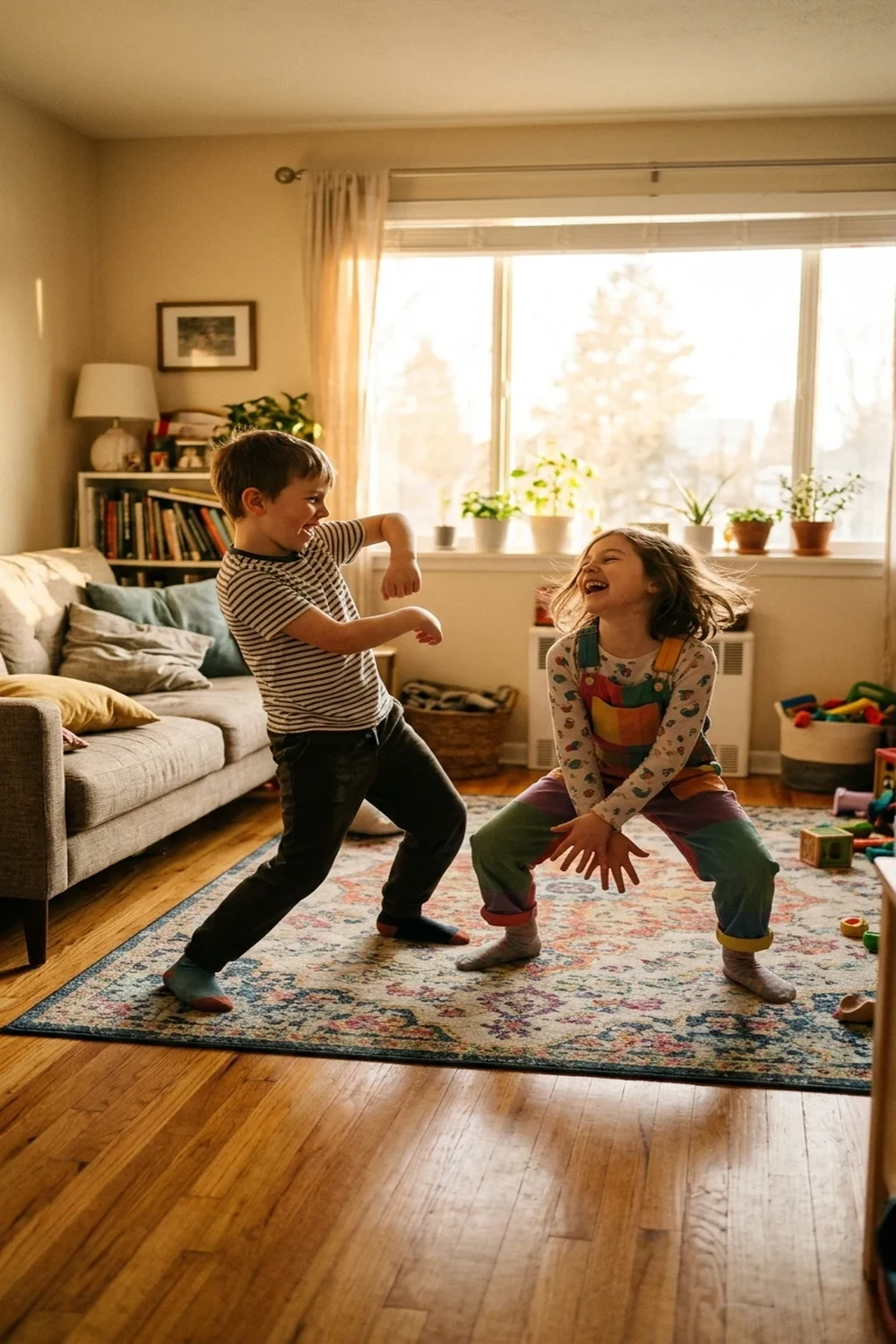
8. How to Play Freeze Dance: The Ultimate Indoor Energy Burner
Freeze dance is an interactive listening and movement game where children dance vigorously to upbeat music and hold completely still the exact moment the track pauses. This high-tempo activity challenges executive function and auditory processing by requiring kids to instantly switch between active motor output and total physical restraint.
- Rules of Engagement: Designate one adult DJ to manage the playlist, pausing playback at random intervals between 5 and 20 seconds to catch moving participants.
- Elimination or Points Format: Have players sit out upon twitching during a pause, or award one resilience point per successful freeze across ten musical rounds.
- Movement Variations: Command distinct motor challenges before restarting each track, such as jumping like frogs, tiptoeing like ninjas, or spinning like ballerinas.
- Cognitive Benefits: Enhances inhibitory control and sensory integration while burning an estimated 150 calories per thirty minutes of vigorous dancing.
- Zero Equipment Setup: Requires solely an open living room floor clear of tripping hazards and any basic smartphone or Bluetooth audio speaker.
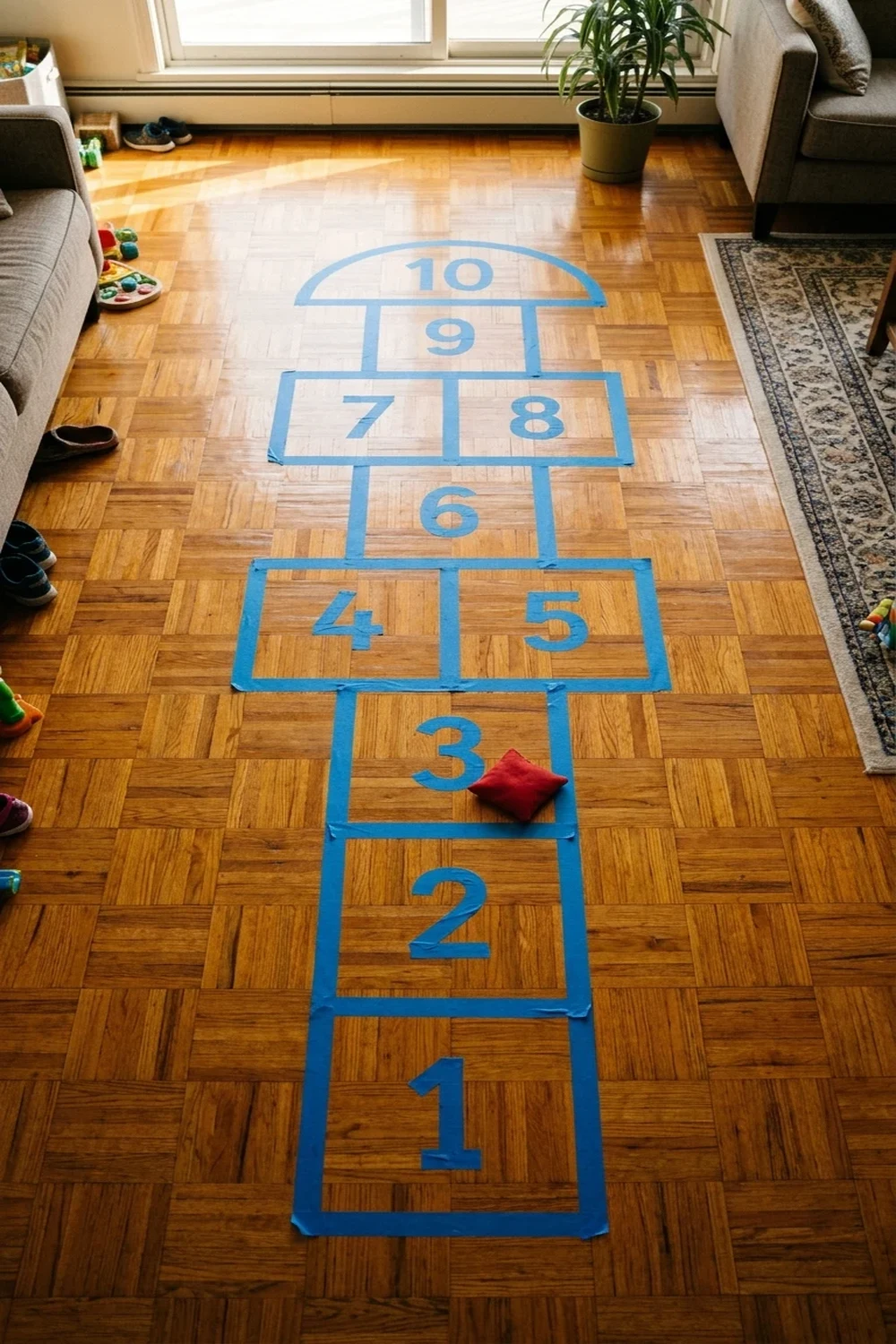
9. Indoor Hopscotch: Balancing Fun and Motor Skills Development
Indoor hopscotch transforms traditional asphalt playground stepping grids into a safe indoor gross motor challenge using residue-free painter tape adhered directly to hard floors or low-pile rugs. This classic sequential hopping activity reinforces single-leg balance, bilateral coordination, and spatial awareness without risking damage to household surfaces.
- Grid Layout Blueprint: Lay down ten contiguous 12-by-12-inch tape squares numbered consecutively, featuring alternating single-square stances and paired double-square landings.
- Safe Indoor Markers: Replace traditional outdoor pebbles with soft beanbags, rolled socks, or silicone coasters to protect interior flooring from impact.
- Step-by-Step Gameplay: Toss the marker onto square one, complete the course hopping over the marked cell on one foot, turn around at square ten, and retrieve the item on return.
- Academic Adaptations: Replace numerical digits with sight words, math problems, or foreign language vocabulary words written on index cards taped inside each square.
- Balance and Joint Strength: Reinforces ankle stabilizer muscles, vestibular orientation, and proprioception across early elementary developmental milestones.
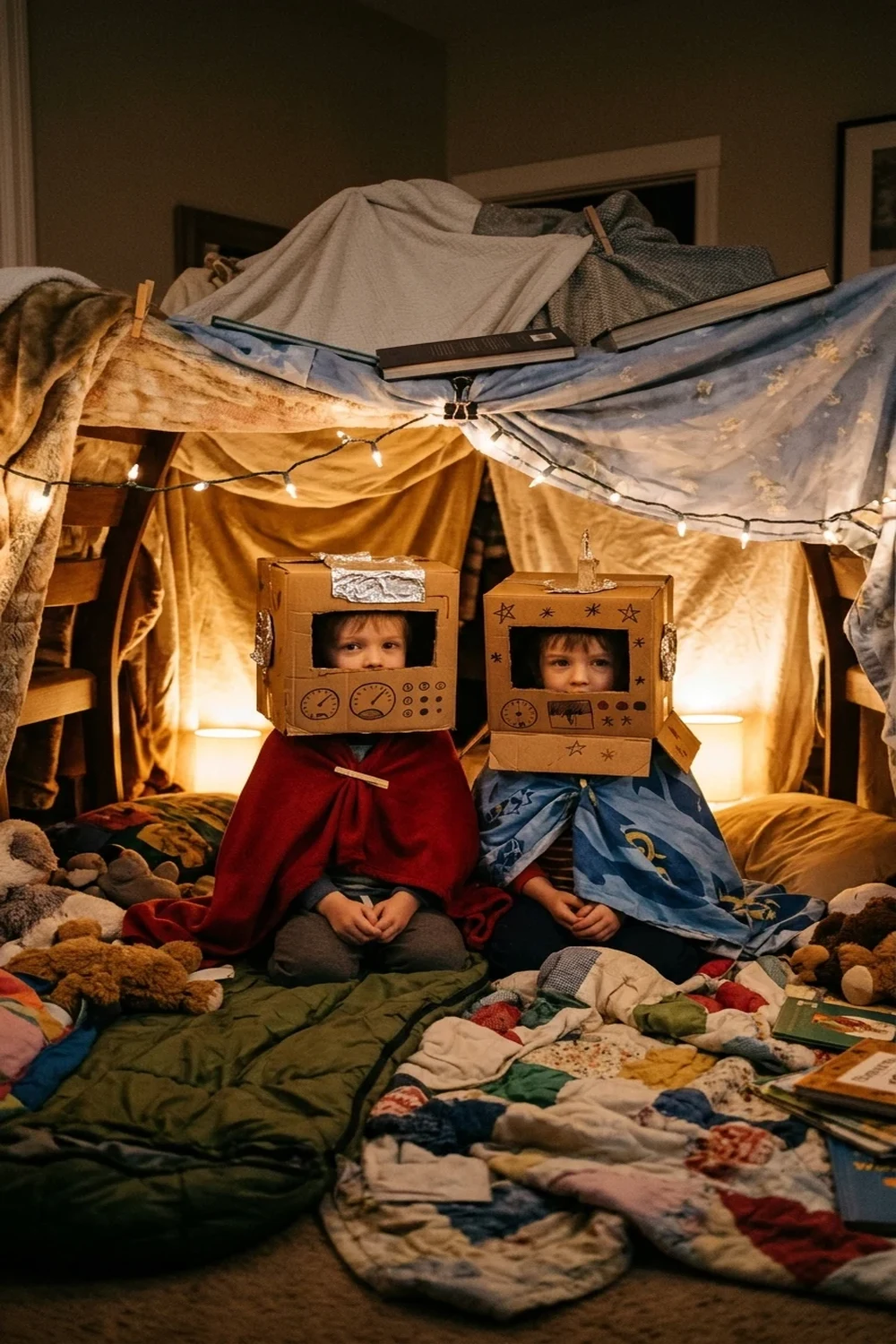
10. Creative Play Pretend: Imaginative Dramatic Scenarios at Home
Play pretend is a dramatic open-ended roleplay activity where children adopt fictional personas, build improvised scenarios, and explore real-world problem solving through narrative acting. Engaging in regular cooperative pretend scenarios dramatically expands expressive vocabulary, empathy, and social-emotional regulation across children aged three to nine.
- Everyday Scenario Themes: Set up distinct stations for vet clinics, veterinary hospitals, restaurant kitchens, space expeditions, or grocery checkout lanes.
- Repurposed Household Props: Collect empty cardboard boxes, colanders, wooden spoons, bathrobes, and clean plastic containers to create authentic character toolkits.
- Guided Story Challenges: Introduce unexpected plot complications, such as ordering an unusual recipe at the pretend restaurant or announcing a meteor shower during a spaceship voyage.
- Emotional Intelligence Growth: Fosters cognitive perspective taking by encouraging kids to express and navigate complex character motivations and cooperative dialogue.
- Screen-Free Immersion: Sustains independent or collaborative focus for 45 to 90 minutes without needing electronic entertainment or digital assistance.

11. DIY Obstacle Course: Active Problem-Solving and Agility Training
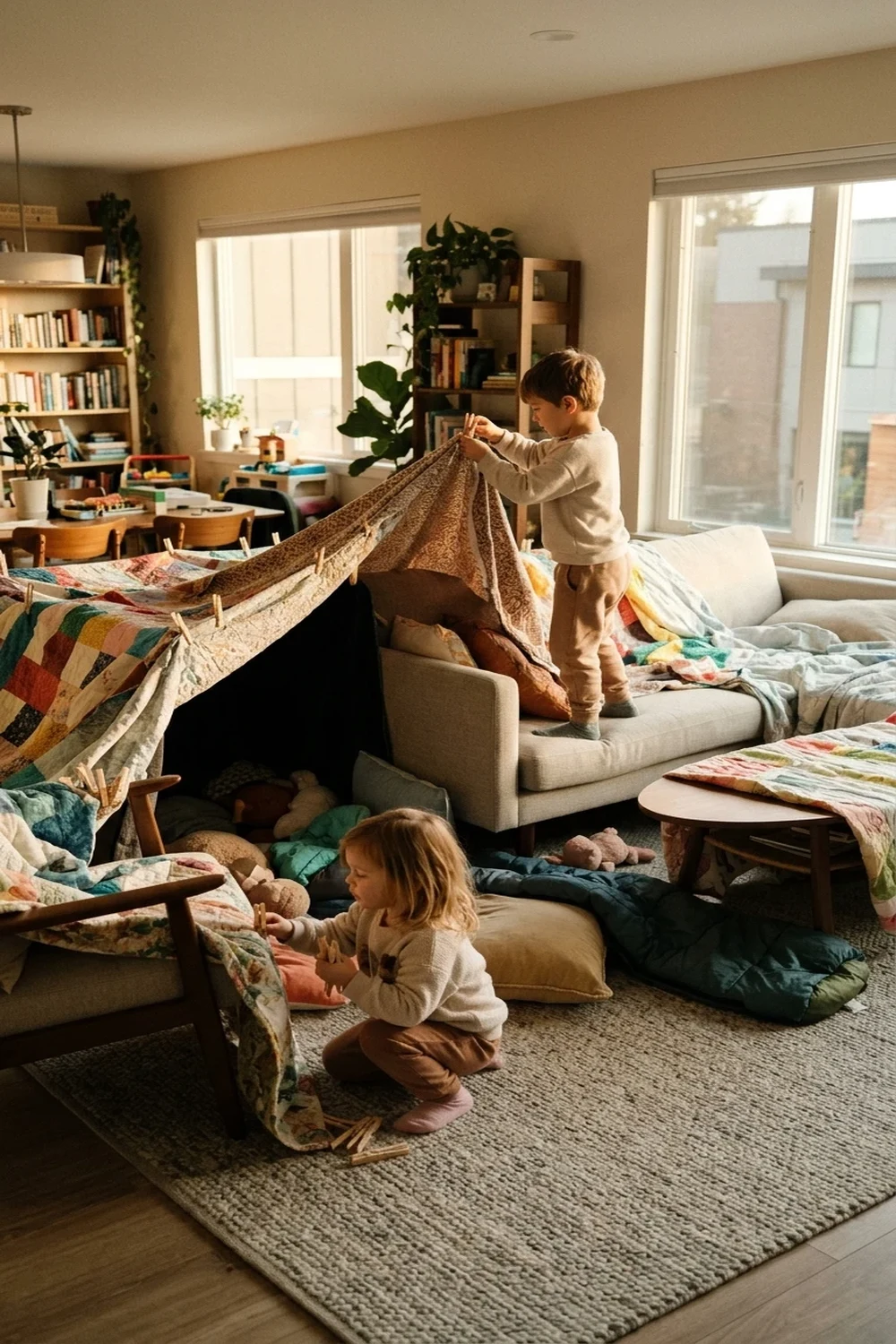
A DIY obstacle course is an indoor physical obstacle track constructed from furniture, cushions, and household items designed to challenge children in agility, crawling, jumping, and balance navigation. When integrated with floor-is-lava safety rules, this structured adventure improves motor planning, spatial reasoning, and dynamic stability in indoor environments.
- Station Architecture: Arrange sofa cushions as stepping stones, dining chairs draped with blankets as crawling tunnels, and yarn spans taped as laser grids.
- Floor-Is-Lava Protocol: Forbid touching exposed rug or carpet sections between obstacle check-ins, mandating precise footwork across designated safe landing zones.
- Agility Sequence Tasks: Alternate crawling under tables, balancing across rolled bath towels, jumping through hula hoops, and executing five star-jumps at completion.
- Timed Trial Progression: Use a digital stopwatch to record baseline run times, challenging children to optimize their pathing efficiency and foot placement.
- Safety and Space Clearance: Push sharp coffee tables and fragile ornaments against room perimeters to ensure a safe, padded movement corridor.

12. How to Race Paper Planes for Indoor Aerodynamic Fun
Racing paper airplanes is a competitive indoor STEM activity where children engineer, customize, and launch folded aircraft along a household runway to test flight distance and velocity. This budget-friendly game introduces foundational principles of aerodynamics like lift, drag, and thrust while keeping kids physically active indoors.
- Aerodynamic Folding Technique: Precise creases along the wings create optimal surface tension, enabling paper dart gliders to travel up to 30 feet down standard home hallways.
- Custom Flight Testing: Children decorate wings with colored markers, learning how added mass and tape balance affect flight stability.
- Target Runway Setup: Mark landing zones at 5-foot increments using low-tack painter tape along hardwood floors to track scores.
- Engineering Iteration: Folding winglet elevators allows participants to analyze how minor aerodynamic adjustments alter looping trajectory.
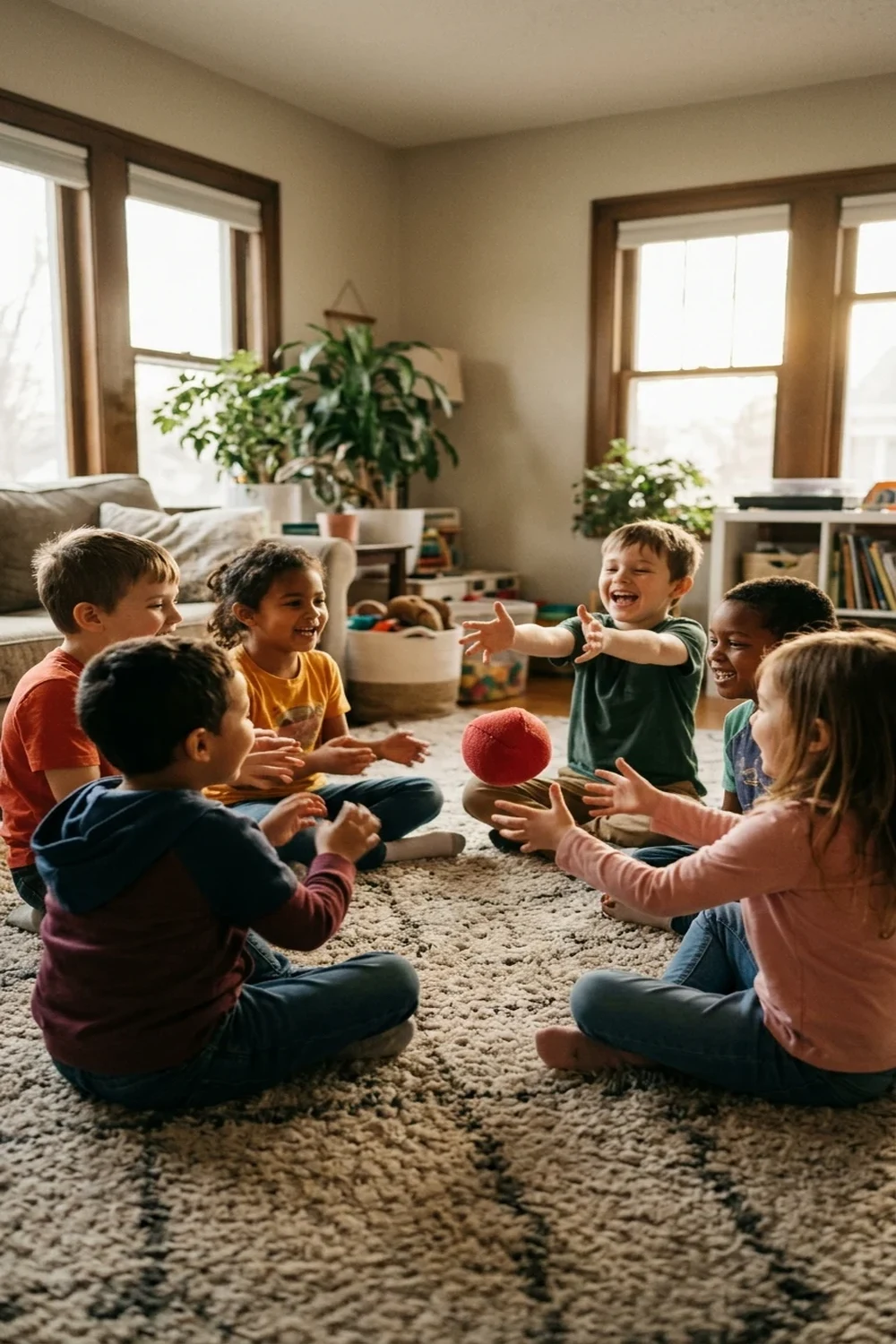
13. Fast-Paced Hot Potato Game Rules for Reflex Training
Hot potato is a rapid reflex elimination game where seated children continuously toss an object underhand around a circle until sudden audio pauses stop play. The activity develops auditory processing, reaction speed, and hand-eye coordination without requiring specialized athletic equipment.
- Simple Material Preparation: A soft foam ball, rolled sock pair, or real russet potato serves as the harmless hand-off token.
- Audio Controller Role: A designated referee operates music playback facing outward to ensure completely blind, unbiased musical pauses.
- Rapid Reflex Tossing: Participants hold the object for less than one second, cultivating quick motor responsiveness under pressure.
- Gradual Speed Escalation: Increasing music tempo across consecutive rounds challenges older children to refine rhythmic passing mechanics.
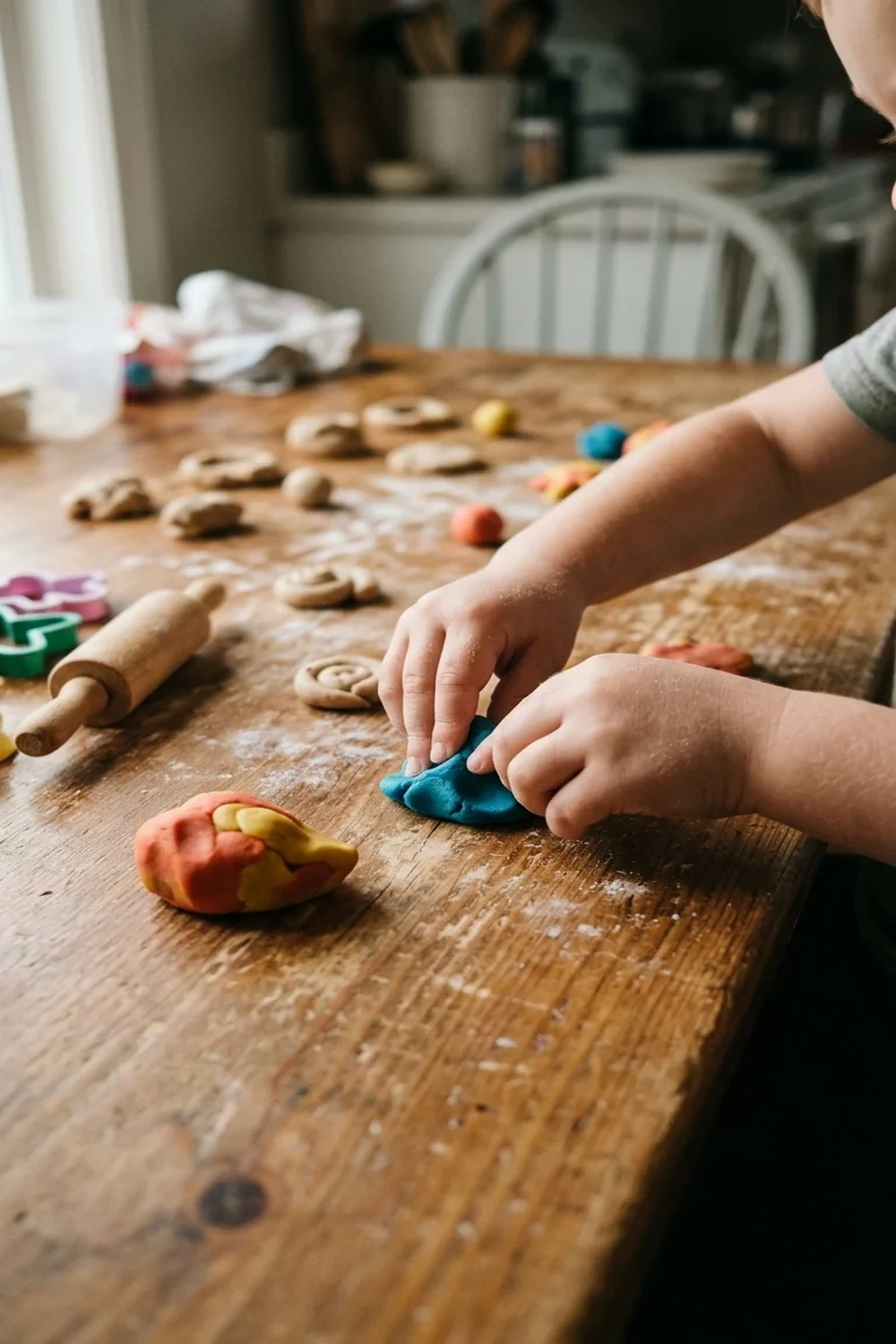
14. Creative Play Dough Art Activities to Build Fine Motor Skills
Play dough art is a tactile sculpting activity where children utilize non-toxic modeling compound to mold three-dimensional figures, architectural miniatures, and textured landscape portraits. This multisensory game strengthens intrinsic hand muscles, spatial visualization, and artistic expression for children ages three through nine.
- Sensory Muscle Strengthening: Kneading, rolling, and flattening compound exercises hand arch stability and pincer grasp precision.
- Texture Tool Integration: Plastic rolling pins, cookie cutters, and blunt craft spatulas teach structured structural detailing techniques.
- Themed Sculpting Challenges: Establishing time-limited prompts like wild safari animals or miniature pizzas stimulates problem-solving creativity.
- Color Theory Exploration: Blending primary shades produces secondary color spectrums, reinforcing early childhood visual science concepts.
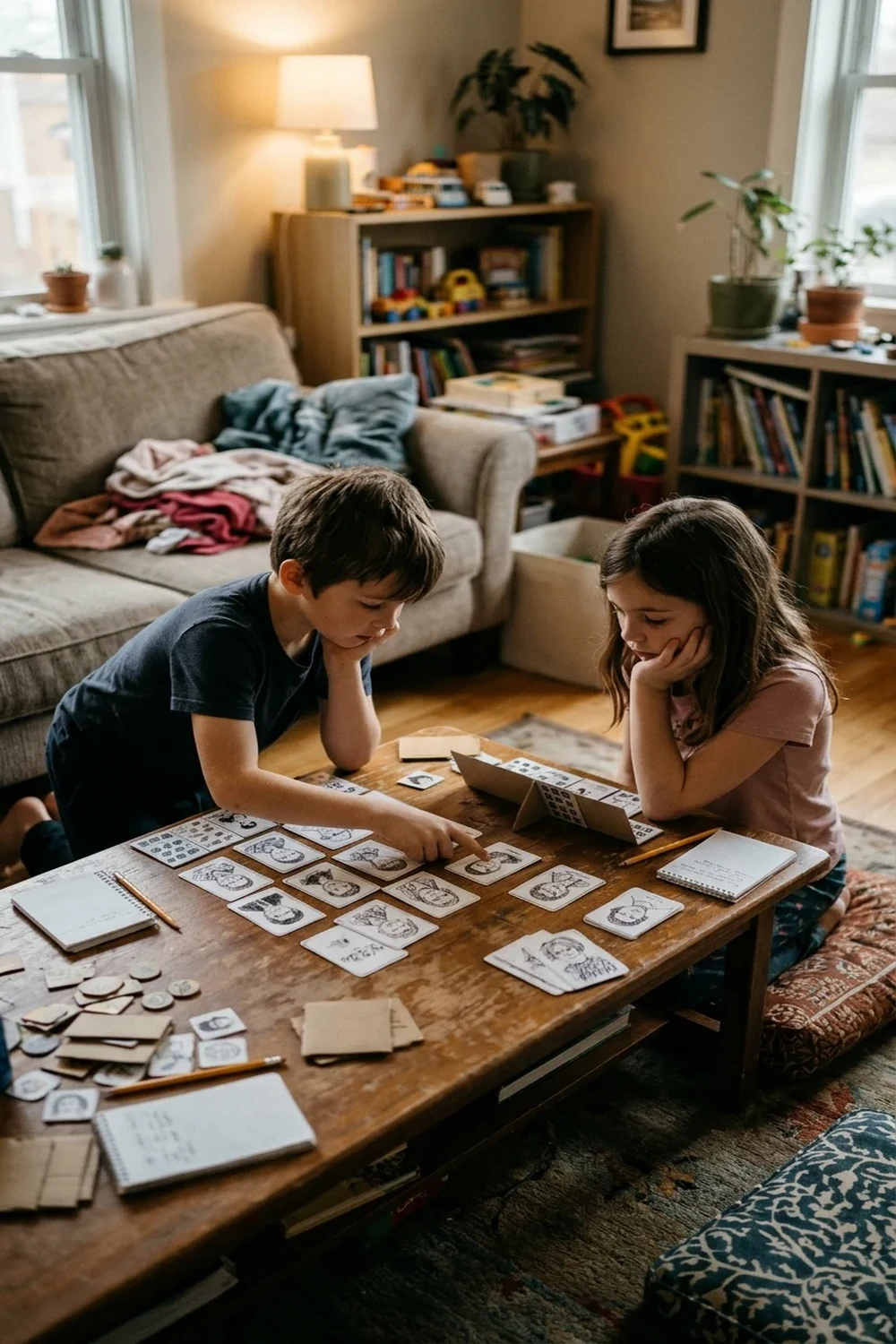
15. Classic Guess Who Deduction Game for Critical Thinking
Guess Who is a deductive reasoning game where players take turns asking strategic binary yes-or-no questions to isolate and identify a secret portrait card. The process-of-elimination gameplay hones categorical vocabulary, facial feature observation, and critical analytical thinking.
- Binary Logic Framework: Formulating targeted questions regarding glasses or hair color systematically eliminates multiple candidate tiles simultaneously.
- Customizable Photo Roster: Printing pictures of family members or pet photos creates an engaging personalized memory alternative.
- Vocabulary Expansion: Inquiring about specific traits like mustaches, braids, and headwear sharpens expressive descriptive vocabulary.
- Strategic Risk Balance: Deciding between safe broad elimination questions and high-stakes specific guesses teaches calculated decision-making.

16. Paint Your Dreams: Creative Indoor Art Activities for Kids
Paint Your Dreams is a guided artistic activity where children transform blank canvases into visual representations of their future goals, aspirations, and imaginative worlds. Providing structured creative prompts allows kids to develop emotional literacy while exploring color theory and spatial relationships in a calm, focused environment.
- Emotional Expression: Children translate complex feelings and future ambitions into tangible visual artwork, strengthening emotional regulation and creative confidence.
- Fine Motor Development: Manipulating brushes, blending acrylics or tempera, and executing detailed brushstrokes refines finger dexterity and hand-eye coordination.
- Goal Visualization: Translating abstract dreams onto canvas serves as an early introduction to creative visualization and intrinsic motivation.
- Home Gallery Display: Exhibiting the finished artwork on family walls validates children’s creative efforts and delivers a lasting sense of personal accomplishment.

17. Ping Pong: Fast-Paced Indoor Table Tennis Games for Kids
Indoor ping pong is an active table game that delivers high-energy cardiovascular exercise and lightning-fast reflexes without requiring commercial stadium equipment. Families can convert any standard dining table or kitchen island into a regulation playing field in under two minutes using retractable table tennis nets.
- Lightning Reflexes: Rapid back-and-forth volleys require split-second anticipation, significantly sharpening bilateral coordination and dynamic visual tracking.
- Rapid Dining Table Setup: Retractable clamp-on net kits turn standard 6-foot kitchen tables into instant table tennis arenas without damaging furniture surfaces.
- High-Yield Calorie Burn: Continuous movement, lunges, and paddle strokes provide aerobic indoor conditioning that helps children release excess indoor energy safely.
- Scalable Player Formats: The game readily adapts for solo wall drills, competitive one-on-one matches, or round-robin family tournaments to suit any household group.
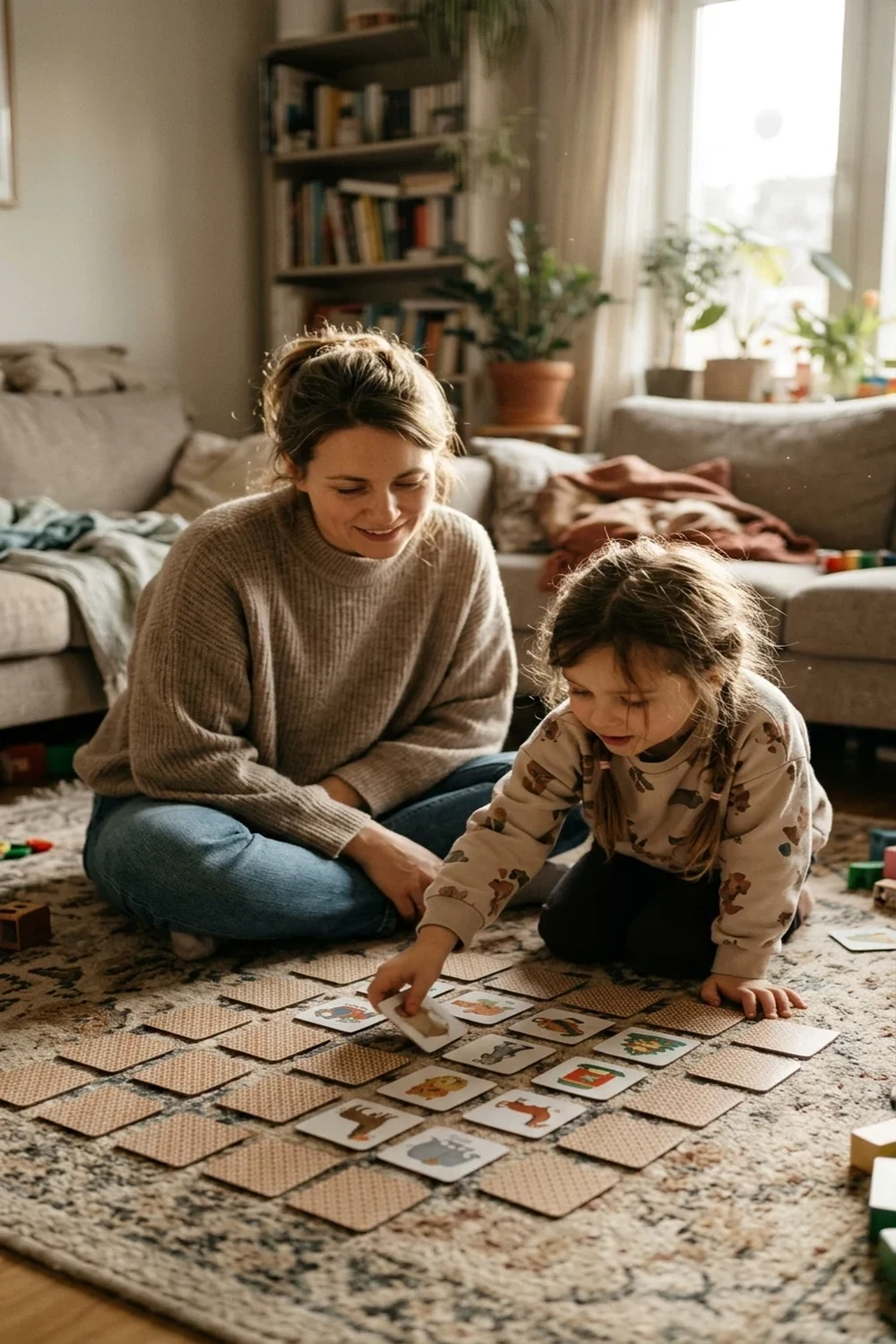
18. Memory Games: Cognitive Brain Training and Matching Pairs for Children
Memory matching games are systematic cognitive exercises where children locate concealed pairs from an inverted card grid using recall and spatial reasoning. Regular memory-card gameplay enhances visual retention by training the prefrontal cortex to store and retrieve location coordinates under light competitive pressure.
- Working Memory Boost: Players systematically exercise short-term visual recall by memorizing tile coordinates and card attributes across each round.
- Enhanced Concentration: Sustained attention is required during opposing players’ turns, training children to maintain focus and resist digital distractions.
- Customizable Difficulty Scales: Grids scale easily from 8 cards for toddlers up to 36 cards for older children, matching precise cognitive development milestones.
- Zero-Cost Personalization: Decks can be quickly crafted at home using index cards, family photographs, or alphabet drawings for tailored thematic learning.
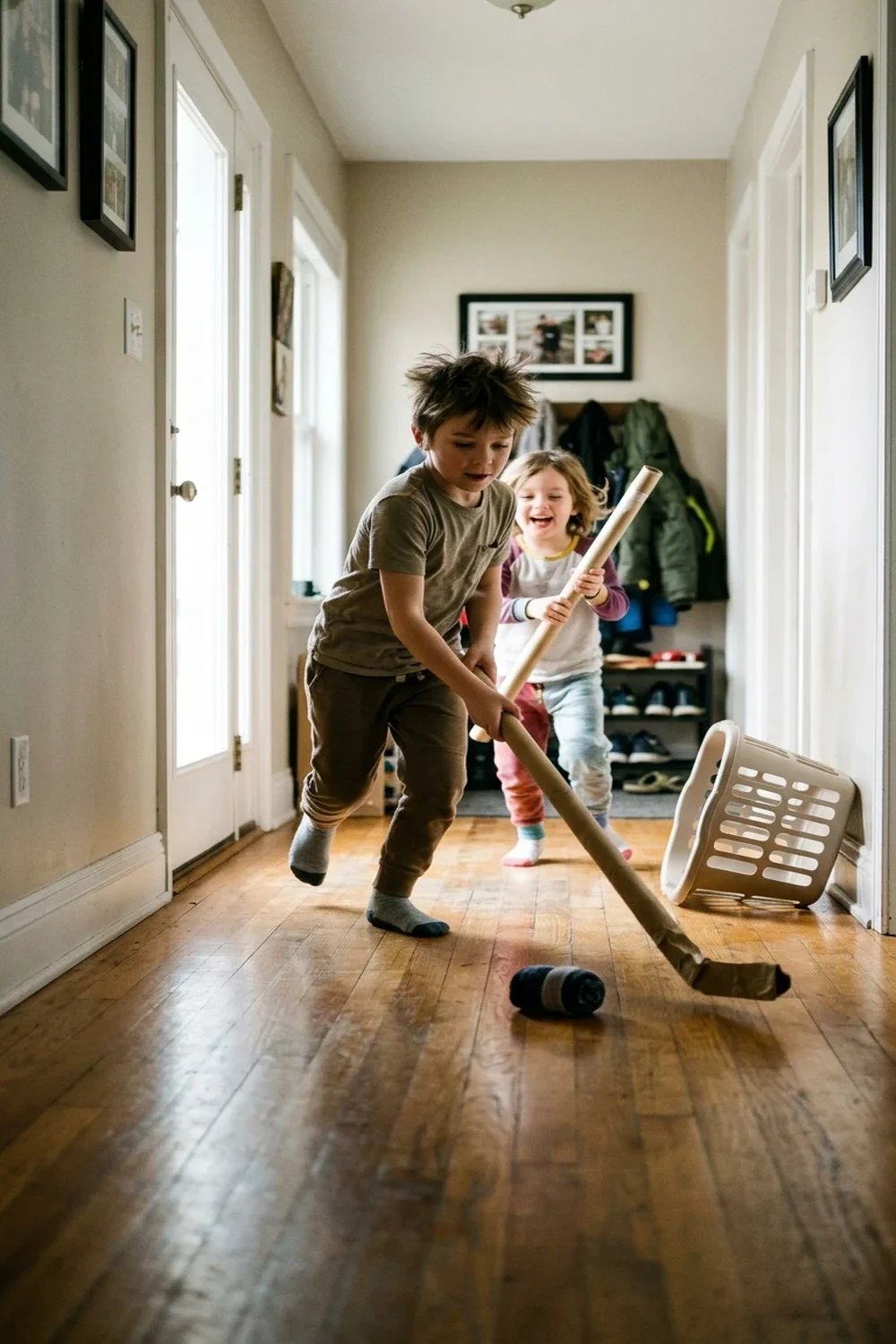
19. Indoor Hockey: Safe Active Living Room Sports for Kids
Indoor hockey is an active floor sport adapted for residential hallways and living rooms using rolled-up socks as pucks and cardboard tubes or broom handles as sticks. This modified contact sport eliminates broken furniture risks while teaching children spatial awareness, passing fundamentals, and energetic team cooperation.
- Furniture-Safe Equipment: Utilizing rolled woolen socks or foam disks prevents scratched flooring, chipped baseboards, and broken decorative items.
- Cardboard Stick Construction: Recycled wrapping paper tubes or lightweight plastic brooms serve as safe, low-impact hockey sticks for children of all ages.
- Pop-Up Laundry Goals: Inverted laundry baskets or storage tubs placed at opposite hallway ends create instantaneous targets for shooting and defending drills.
- Gross Motor Conditioning: Players engage core stabilizer muscles, lateral balance, and agility through constant sprinting, turning, and stick handling.
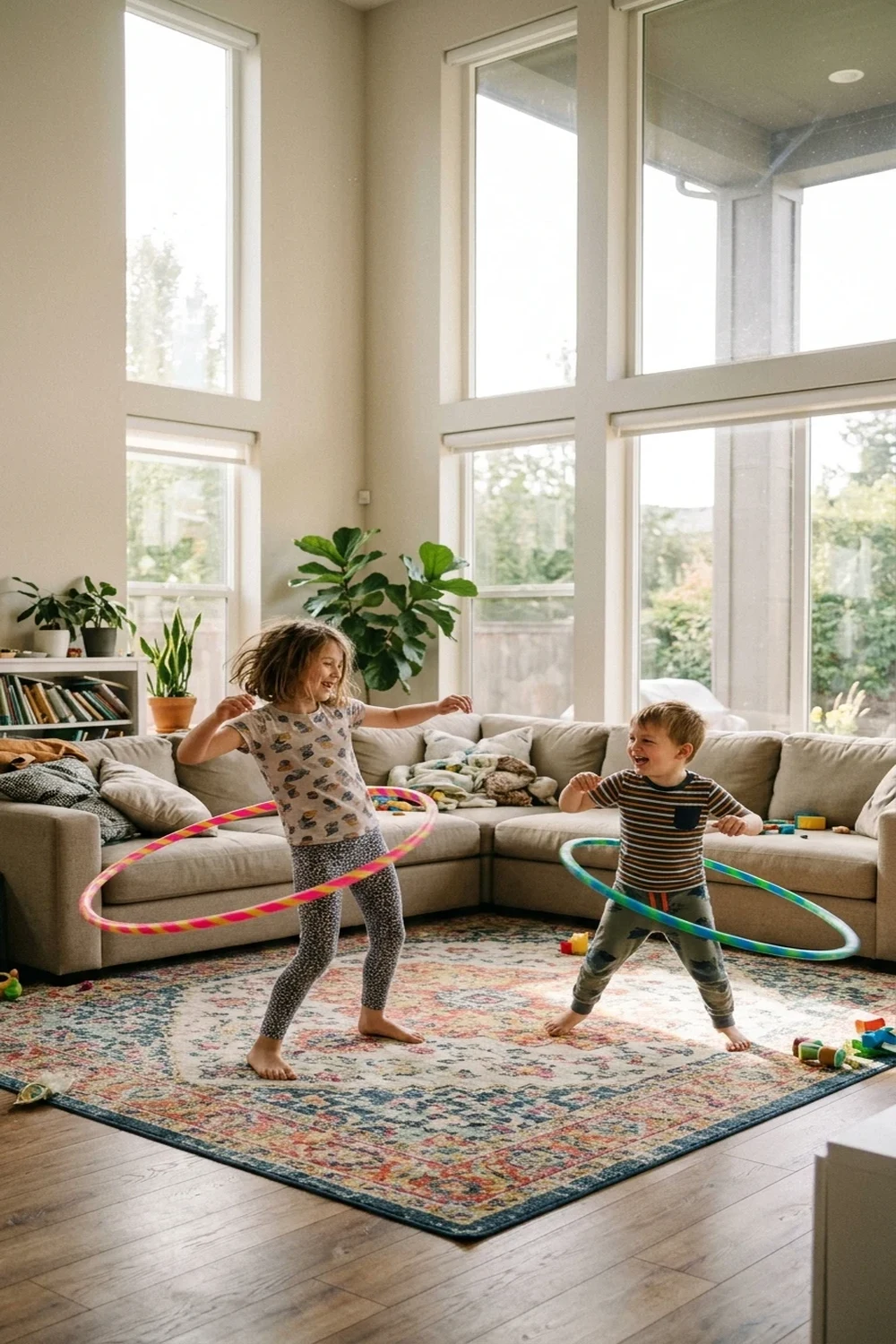
20. Hula Hoop Challenge: How Can Kids Master Indoor Core Balance and Coordination?
Indoor hula hooping is an active coordination game where children rotate a lightweight plastic hoop around their waist, arms, or legs using continuous rhythmic core movement. This low-impact activity builds balance, cardiovascular endurance, and spatial awareness within confined living spaces without risking damage to household furniture.
- Target Setup: Clear a minimum 6-foot circular radius on a non-slip rug or hardwood floor to allow unrestricted arm and hip motion.
- Primary Gameplay: Each child starts the hoop spinning at waist level and attempts to sustain steady rotation for maximum elapsed seconds.
- Skill Progression: Encourage intermediate trick variations including single-arm spinning, knee rotations, or walking forward while maintaining momentum.
- Timed Tournaments: Use a digital smartphone stopwatch to record personal best times across successive three-round balance heats.
- Developmental Benefits: Continuous waist spinning engages abdominal core stabilizers, increases hip flexibility, and refines bilateral motor planning in young children.
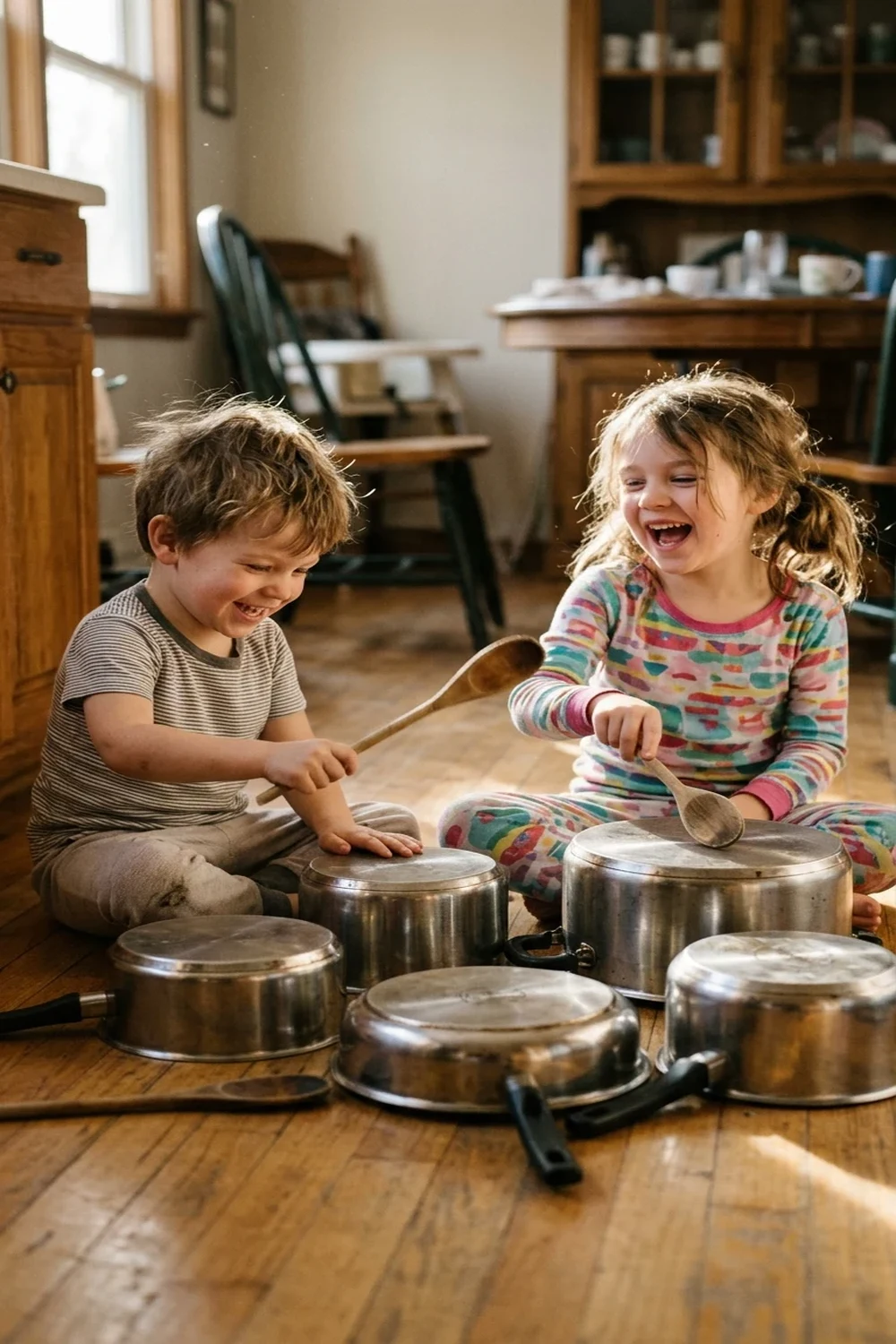
21. Start A Band: How to Create a DIY Kitchen Percussion Ensemble with Household Items
Starting a home rhythm band is a collaborative musical activity where children transform common kitchen cookware and dry pantry goods into functional acoustic instruments. This creative sound-play exercise introduces fundamental rhythm, acoustic vibration, and cooperative listening skills while turning ordinary household items into an energetic indoor performance.
- Instrument Fabrication: Invert metal saucepans and cake pans to serve as resonant drums, paired with wooden mixing spoons for drumsticks.
- Pantry Shakers: Fill clean plastic containers with dried beans, uncooked rice, or split lentils to create dual-pitch percussion maracas.
- Cardboard Strummers: Stretch heavy-duty rubber bands around empty tissue boxes to construct miniature acoustic string instruments.
- Rhythm Synchronization: Appoint a band conductor who sets dynamic tempo shifts between slow quarter-notes, rapid rolls, and sudden silent pauses.
- Cognitive Development: Active music-making refines auditory processing, enhances social teamwork, and sharpens fine-motor control through expressive acoustic exploration.
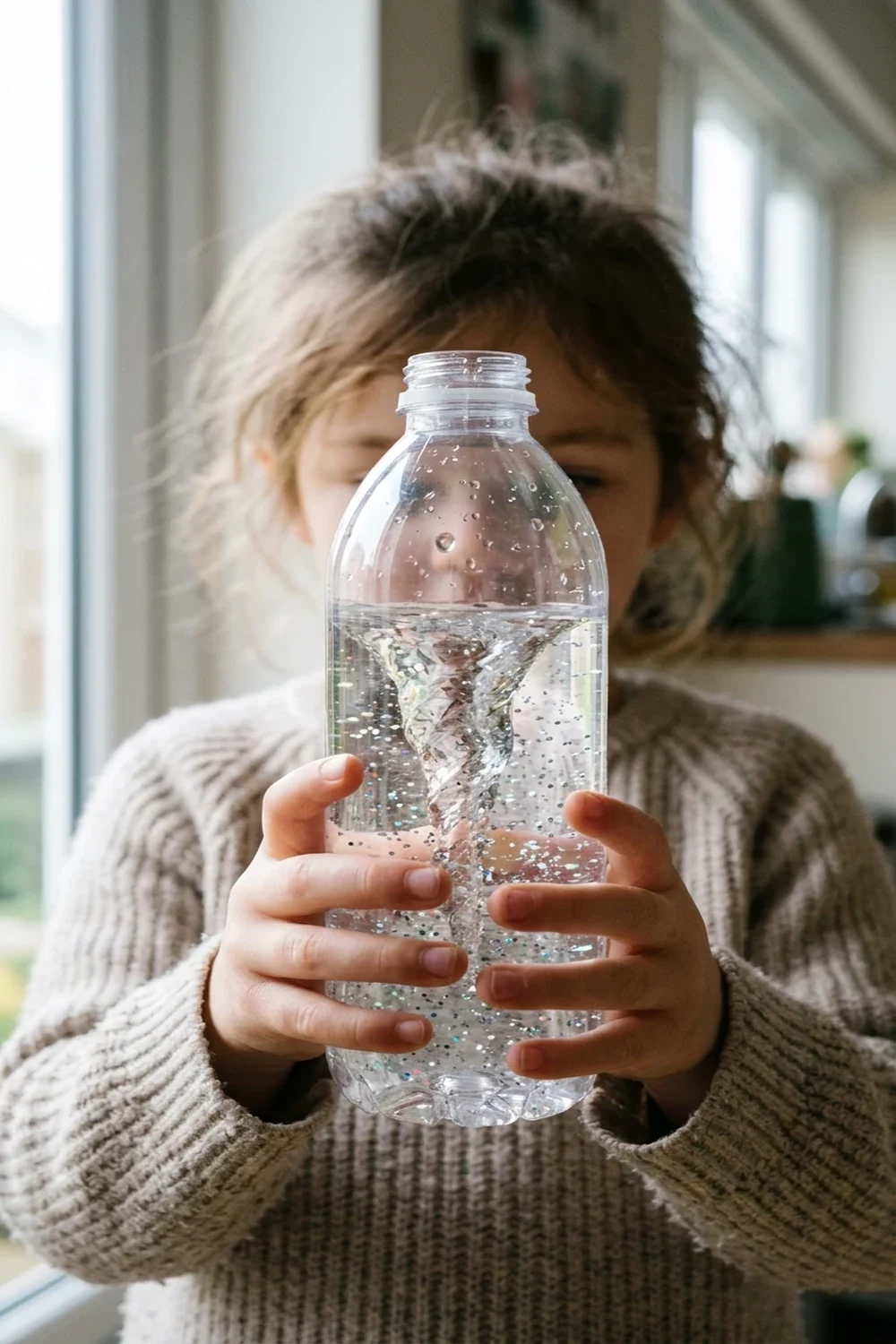
22. Make Bottle Hurricanes: How to Craft a Calming STEM Vortex Sensor Bottle
A bottle hurricane is an educational sensory craft and science demonstration where children simulate a swirling meteorological vortex inside a sealed transparent container using water, liquid soap, and glitter. This hands-on STEM project demonstrates fluid dynamics, centrifugal force, and rotational inertia while providing an effective calming focus tool for overwhelmed children.
- Material Assembly: Fill a clear 16-ounce smooth plastic bottle approximately three-quarters full with lukewarm tap water.
- Vortex Additives: Add two drops of concentrated liquid dish soap and one teaspoon of fine metallic glitter or seed beads to reveal current vectors.
- Leakproof Sealing: Apply hot glue or waterproof electrical tape across the bottle cap threads to guarantee zero accidental spills during vigorous handling.
- Vortex Activation: Swirl the bottle in a rapid circular wrist motion, then set the base upright to watch a distinct cyclonic funnel form instantly.
- Calming Sensory Value: Tracking the descending glitter currents promotes emotional self-regulation, steady breathing, and curiosity about atmospheric storm systems.
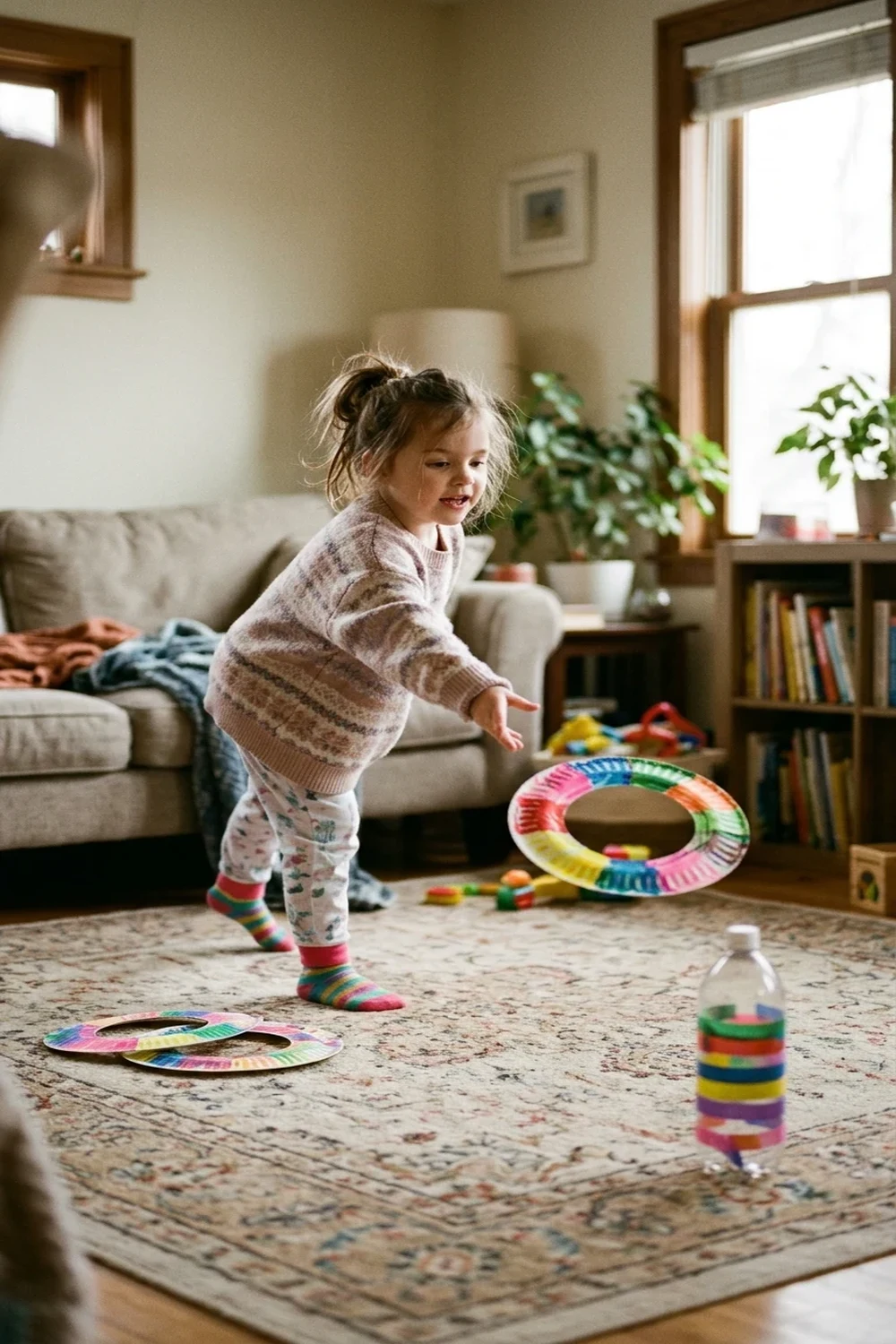
23. Ring Toss: How to Build an Easy Recycled Target Game for Hand-Eye Precision
DIY ring toss is an indoor motor-skill target game where participants throw lightweight circular rings over stationary vertical targets to accumulate precision points. Fabricated from standard paper plates and weighted upright bottles, this budget-friendly game sharpens gross motor calibration, depth perception, and spatial estimation in children of all ages.
- Ring Construction: Cut out the inner circular core of four paper plates, leaving a durable 1.5-inch outer rim to serve as aerodynamic tossing rings.
- Target Preparation: Place a sturdy water bottle or cardboard paper-towel core on the floor, weighted with dry sand or pennies for stability.
- Distance Marking: Place painter tape lines at 3-foot, 5-foot, and 8-foot distances to create progressive difficulty tiers tailored to player age.
- Scoring System: Award one point for outer rim touches and three points for successfully looping the ring entirely over the center target.
- Motor Coordination: Controlled underhand tossing reinforces visual-motor integration, wrist calibration, and competitive sportsmanship during rainy indoor afternoons.
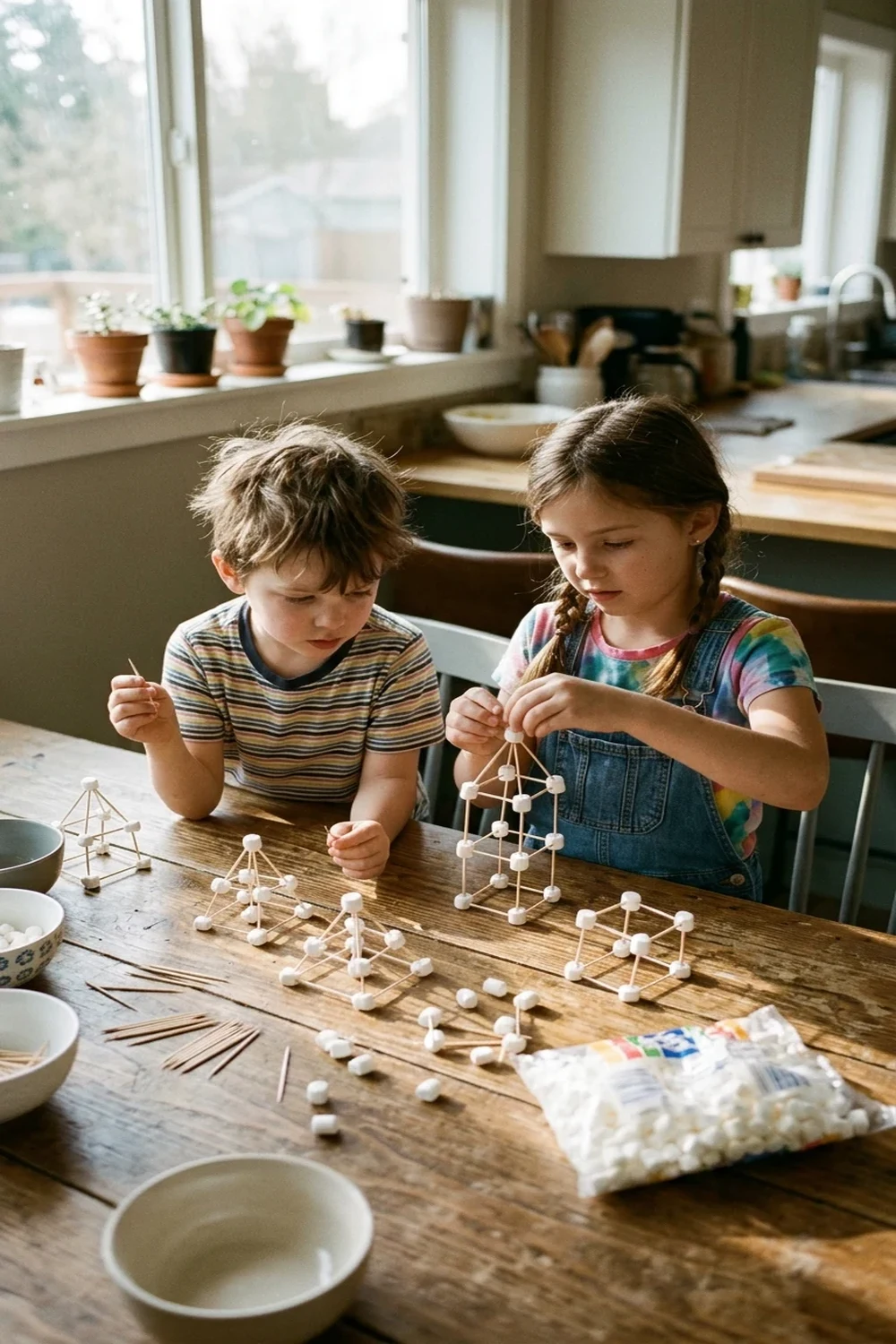
24. Marshmallow Tinkertoys: How to Build Creative STEM Structures at Home
Marshmallow Tinkertoys is a hands-on STEM building activity that teaches children architectural principles, spatial reasoning, and structural balance using mini marshmallows and dry pretzel sticks or wooden toothpicks as connectors. This indoor construction challenge lets kids design freestanding 3D geometric shapes, towering skyscrapers, and geodesic domes while strengthening fine motor control.
- Core Learning Objective: Children learn foundational engineering concepts including load distribution, geometric triangulation, and center of gravity through iterative trial-and-error construction.
- Required Materials: One bag of standard or miniature marshmallows, two boxes of sturdy round toothpicks or pretzel sticks, and a clean flat building tray.
- Step-by-Step Assembly: Begin by connecting four toothpicks into a flat square base using marshmallows at each vertex, then extend vertical struts upward to anchor a pyramid or cube apex.
- Structural Durability Tip: Stale marshmallows provide firmer structural hold than fresh ones; opening the bag two hours before playtime hardens the exterior gelatin coating significantly.
- Target Age Range: Ideal for builders aged 4 to 11, with younger participants using larger marshmallows and blunt pretzel sticks to eliminate poke hazards.
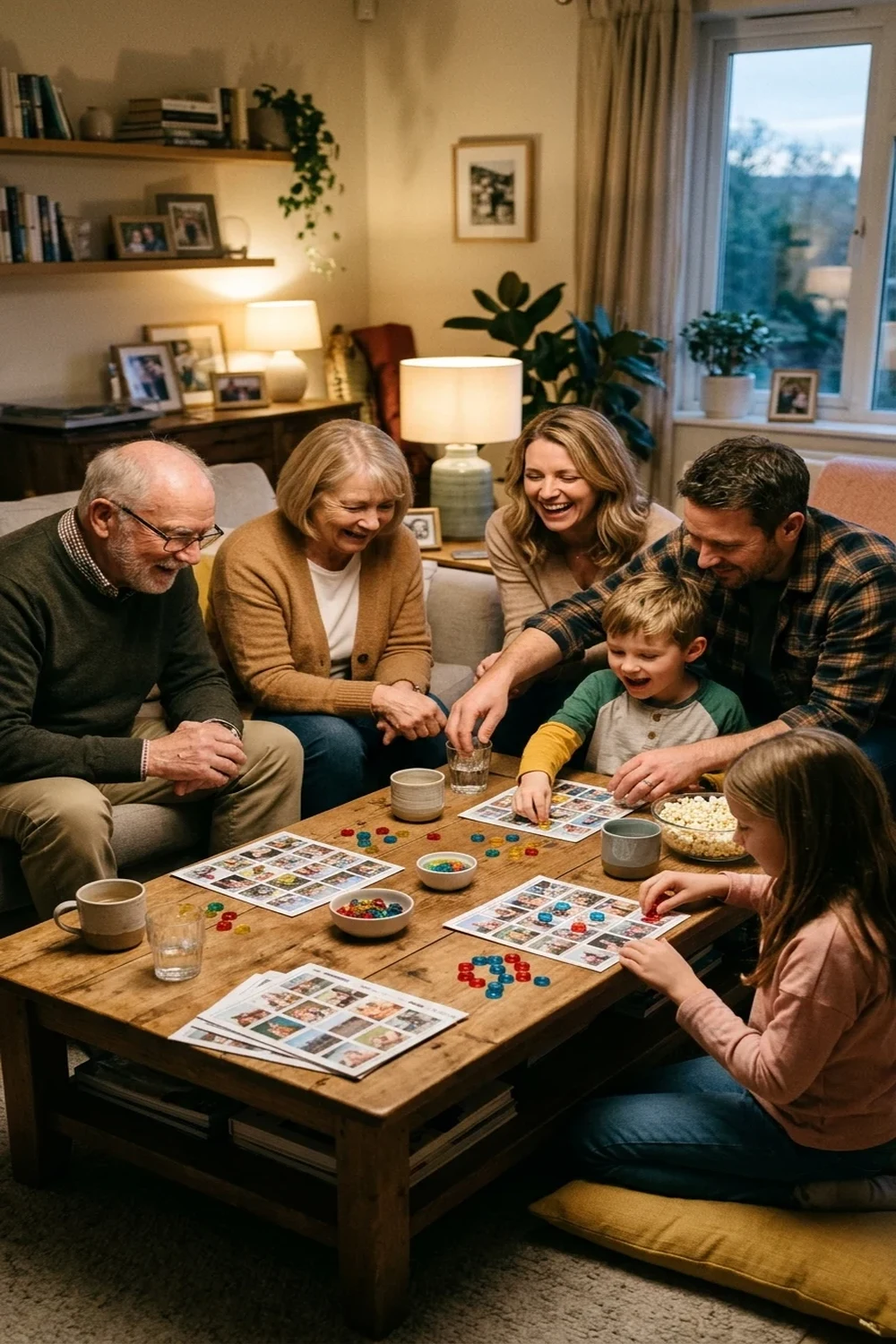
25. Family-Photo Bingo: A Meaningful Custom Memory Game for All Ages
Family-Photo Bingo is an interactive visual recognition game that transforms ordinary family portrait albums into customized 5×5 bingo boards to reinforce generational connections and facial recall. Players match printed headshots of relatives, ancestors, and family pets against randomized caller cards, making it an exceptional indoor icebreaker for multigenerational gatherings.
- Core Learning Objective: The game accelerates facial recognition, autobiographical memory, and social-emotional bonding by associating family names with distinctive personal photographs.
- DIY Board Setup: Print 5×5 grids featuring 24 unique square family portraits with one central free space, laminating the cardstock sheets for long-term liquid resistance.
- Gameplay Mechanism: A designated caller draws individual relative portrait cards from a bowl while players mark corresponding matching faces using buttons, dried beans, or dry-erase markers.
- Custom Rule Variation: Require older children to state one biographical fact, such as a relative’s birthplace or favorite hobby, before placing their marker on the matching square.
- Recommended Group Size: Accommodates 3 to 12 participants across toddlers, school-aged children, parents, and grandparents simultaneously.
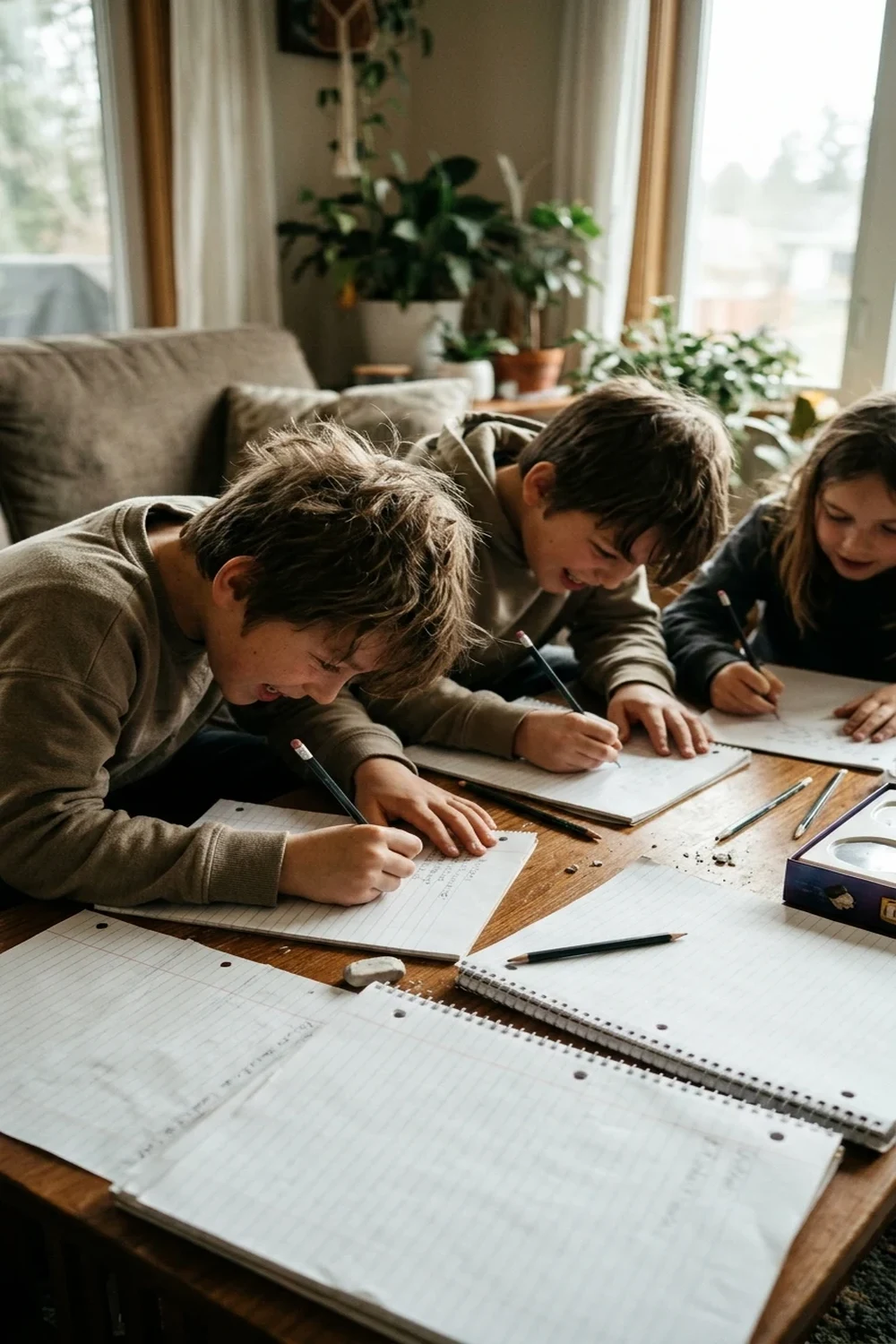
26. Stop the Bus: Fast-Paced Indoor Vocabulary and Word Recall Game
Stop the Bus is a fast-paced word game where players race against each other to write down words starting with a chosen letter across specific categories like Animals, Cities, Foods, and Objects. The round abruptly ends the exact second one player completes every category on their scoresheet and shouts ‘Stop the Bus!’, forcing competitors to drop pencils immediately.
- Core Learning Objective: Rapid retrieval exercises strengthen cognitive flexibility, vocabulary recall, active spelling, and general world knowledge under light time pressure.
- Score Sheet Configuration: Each player divides a blank paper into five columns labeled Category Letter, Animal, Food, City or Country, and Household Item.
- Scoring Breakdown: Players earn 10 points for unique correct answers, 5 points for matching answers shared with another player, and 0 points for blank or invalid entries.
- Competitive Callout Rule: The first individual to finish all designated columns shouts ‘Stop the Bus!’, instantly ending the round and requiring all players to tally points.
- Handicap Adjustment: Younger players receive 60 bonus seconds or simpler custom categories such as cartoon characters and basic colors to balance cross-age play.

27. Indoor Treasure Hunt: Engaging Clue-Based Scavenger Adventure at Home
An Indoor Treasure Hunt is a structured investigative scavenger quest that guides children across household rooms using sequential rhyming riddles, cipher maps, and puzzle clues leading to a hidden final prize. This classic problem-solving game channels boundless childhood energy into focused deductive deduction, making rainy indoor days feel like thrilling exploratory adventures.
- Core Learning Objective: Deciphering riddles develops deductive reasoning, reading comprehension, lateral thinking, and spatial navigation through real-world environmental interaction.
- Clue Routing Mechanics: Hide each successive riddle inside the physical location described by the prior clue, creating a continuous 8-to-12 station navigational chain throughout the house.
- Sample Rhyming Clue: ‘I keep food cold and drinks on chill, open my door when you need a refill’ directs children straight toward the refrigerator magnet pouch.
- Multi-Age Puzzle Formats: Incorporate mirror-writing, picture symbols for pre-readers, and backward-spelled words for older children to sustain challenging interest levels.
- Final Reward Ideas: Conclude the final station inside a laundry basket or toy chest containing a shared healthy snack, family board game, or craft kit.