25 Best Brain Games for Dogs to Beat Boredom in 2026
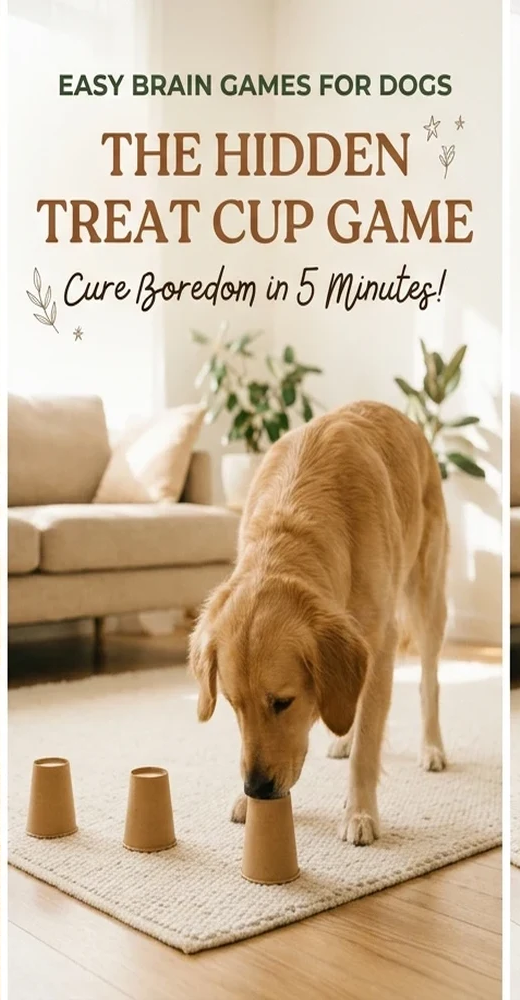
Brain games for dogs are structured cognitive activities that stimulate canine problem-solving skills, satisfy natural foraging instincts, and prevent boredom-induced behavioral issues. Canine behavior research indicates that just 15 minutes of focused mental stimulation expends as much energy as a 60-minute physical walk. Introducing regular olfactory and puzzle-based challenges strengthens neural plasticity while deepening the owner-canine communication bond.
Why Canine Enrichment and Brain Games for Dogs Are Essential
Brain games for dogs provide essential mental stimulation that activates canine problem-solving pathways, reduces chronic stress, and curtails destructive boredom behaviors far more effectively than physical exercise alone. Canine cognitive research demonstrates that twenty minutes of targeted olfactory or problem-solving activity expends energy equivalent to an hour-long brisk walk by heavily engaging the canine cortex and sensory olfactory bulbs.
- Boredom Reduction: Targeted canine mental puzzles redirect natural chewing, excessive barking, and digging impulses into productive problem-solving activities.
- Cognitive Health Support: Consistent neuro-enrichment routines actively slow age-related canine cognitive dysfunction syndrome in senior dogs.
- Cortisol Regulation: Structured canine sniffing puzzles lower systemic cortisol levels by triggering dopamine release in working sensory pathways.
- Confidence Building: Incremental task success builds environmental resilience and reduces anxiety in rescue and sound-sensitive dogs.
- Handler Bond Strengthening: Cooperative play protocols foster higher cooperative focus and responsive obedience between dogs and handlers.
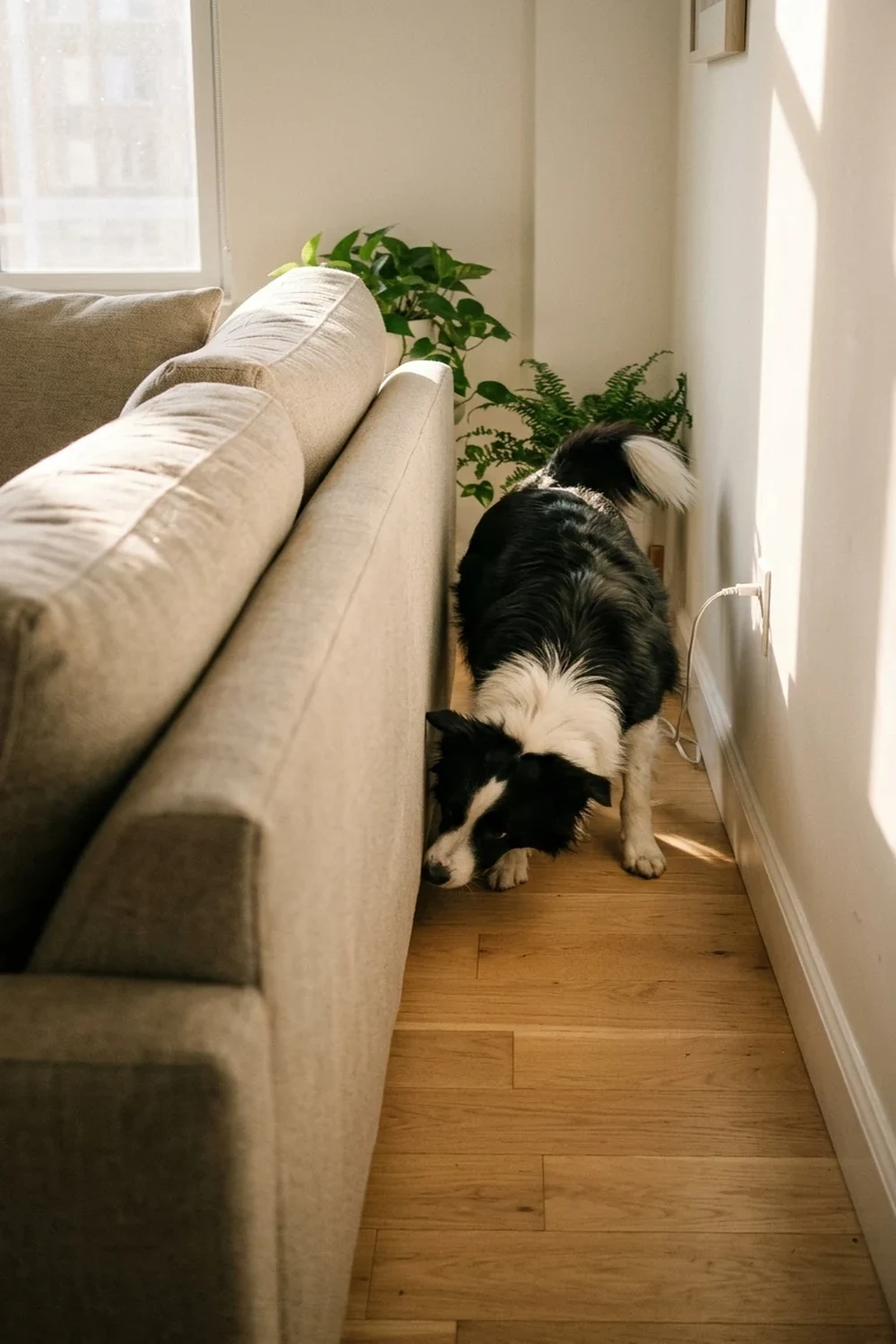
1. Hide and Seek: Olfactory Scent Tracking for Canine Enrichment
Hide and seek is a canine scent work game where a dog searches for hidden owners, aromatic treats, or toys to activate canine olfactory tracking instincts. Because domestic dogs possess up to 300 million olfactory receptors in their nasal cavities compared to just six million in humans, scent-based hide and seek delivers rapid mental fatigue and sensory fulfillment indoors without requiring specialized agility equipment.
- Olfactory Processing Power: Hunting for hidden scent markers engages the canine vomeronasal organ, delivering high mental enrichment through natural foraging.
- Impulse Control Reinforcement: Holding a structured stay command while scents are concealed builds robust emotional regulation.
- Indoor Space Optimization: Complex navigation around household furniture challenges spatial memory across apartments or multi-story homes.
- Adaptable Difficulty Levels: Scent trails scale seamlessly from visible ground placements to elevated, concealed hideaways behind closed curtains.
- High-Arousal Calming Effect: Rhythmic searching patterns activate the parasympathetic nervous system to settle hyperactive dogs.
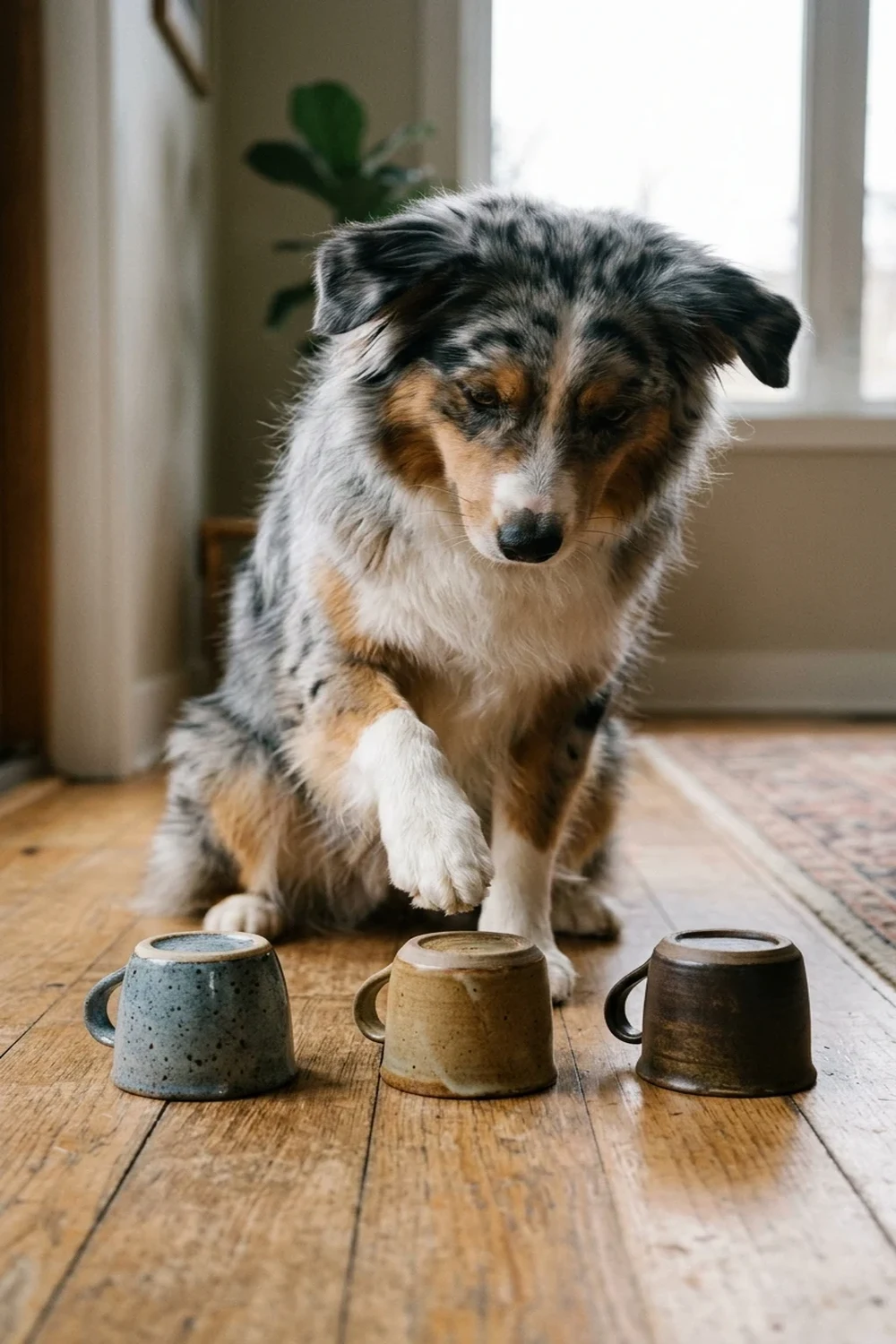
2. The Shell Game: Visual Tracking and Canine Focus Training
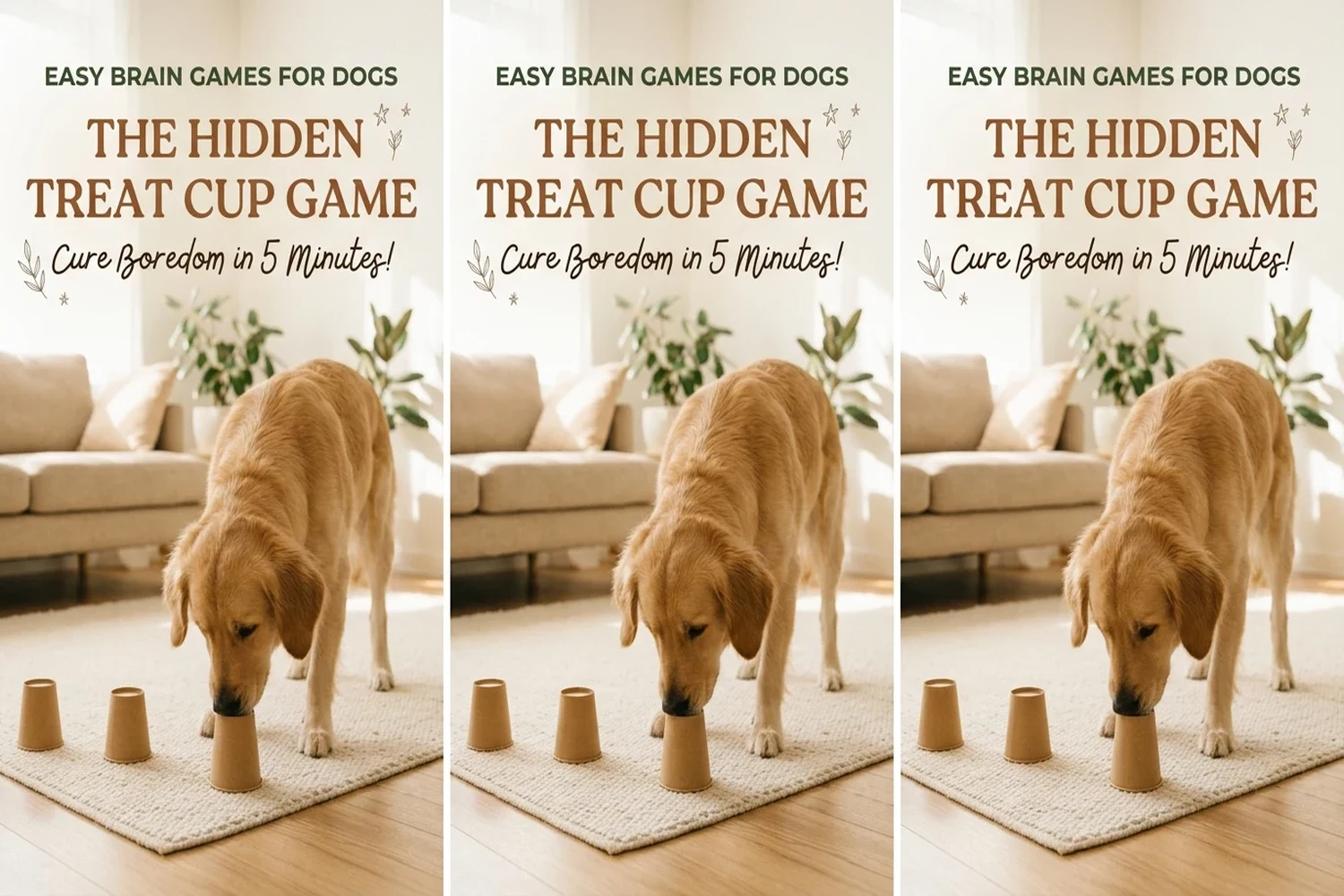
The shell game is a canine visual tracking and working memory exercise where a dog identifies which of three opaque shuffled cups conceals a food reward. This cognitive challenge sharpens canine executive functioning by forcing the dog to suppress impulsive pawing and instead apply focused observation, spatial tracking, and discriminating scent confirmation to identify the correct vessel.
- Executive Function Development: Watching rotating containers trains visual tracking and short-term working memory retention in puppies and adults alike.
- Impulse Inhibition Practice: Requiring your dog to wait until movement stops prevents erratic lunging and cultivates calm, measured decision-making.
- Clear Communication Cues: Encouraging a deliberate nose touch or gentle paw point refines precise handler-canine communication.
- Minimal Setup Overhead: Three lightweight opaque cups and high-value training treats create an immediate cognitive testing station anywhere.
- Progressive Difficulty Scaling: Handlers can introduce identical cups, deceptive shuffling patterns, or decoy smells to elevate problem-solving complexity.

3. Puzzle Toys: Interactive Treat Dispensers for Independent Problem-Solving
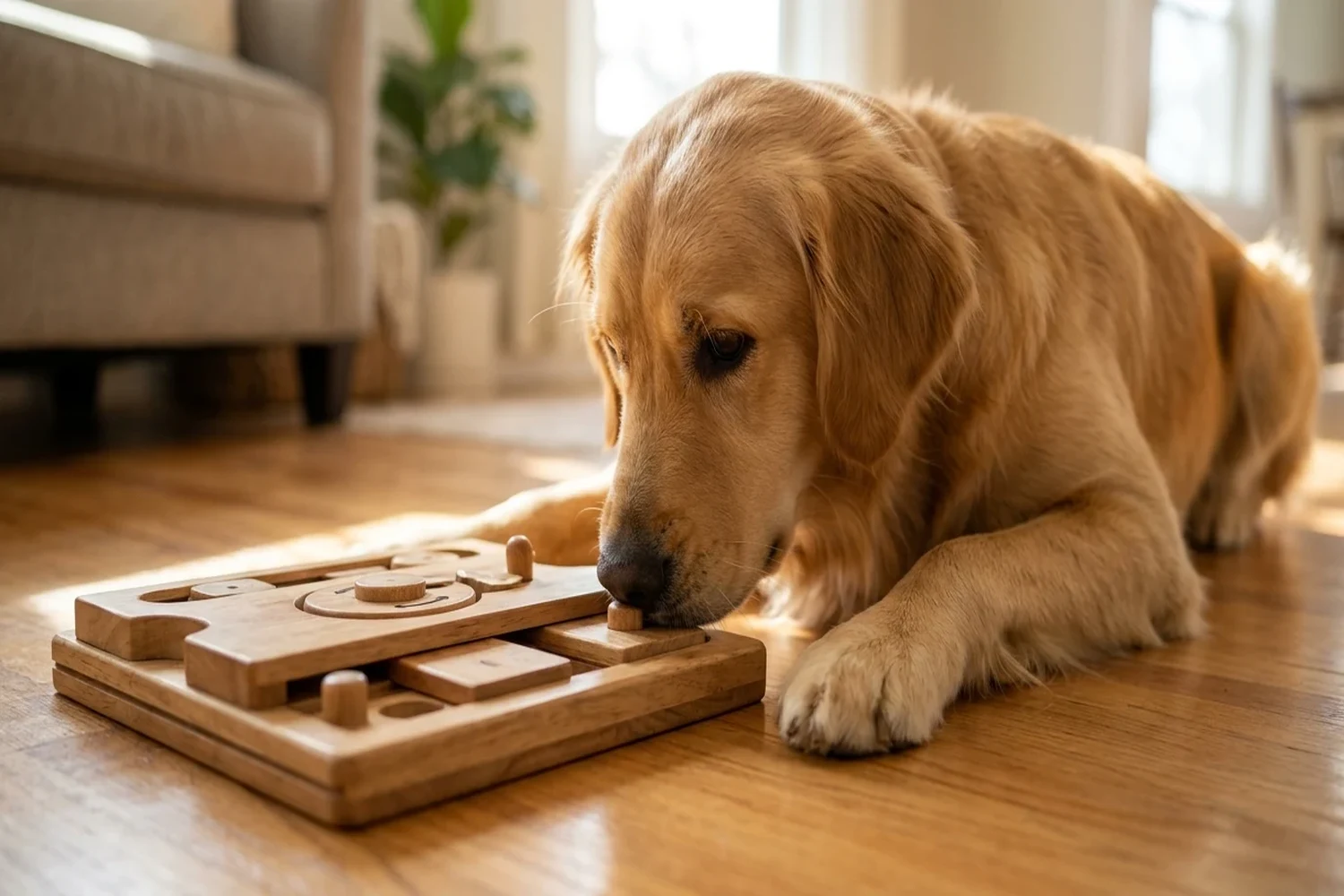
Canine puzzle toys are interactive mechanical feeders designed with sliding tiles, rotating discs, and lifting pegs that dogs must manipulate to access hidden kibble. These durable enrichment devices satisfy natural canine foraging drives, foster autonomous critical thinking, and encourage solitary focus, making them indispensable tools for curbing separation anxiety and slowing down rapid eaters.
- Independent Problem Solving: Mechanical sliders, latches, and tumblers encourage dogs to test spatial hypotheses without needing continuous handler direction.
- Slow Feeding Benefits: Dispensing meal rations through interactive chambers prevents gastric torsion and improves canine gastrointestinal nutrient digestion.
- Tiered Skill Progression: Industry standard Level 1 through Level 4 puzzle designs allow dogs to systematically master increasingly intricate multi-step locks.
- Constructive Energy Redirection: Channeling foraging drives into durable puzzle mechanisms stops destructive gnawing on household furniture and baseboards.
- Dopamine Driven Satisfaction: Successfully unlocking concealed compartments triggers a natural neurological reward cycle that satisfies ancestral scavenging instincts.
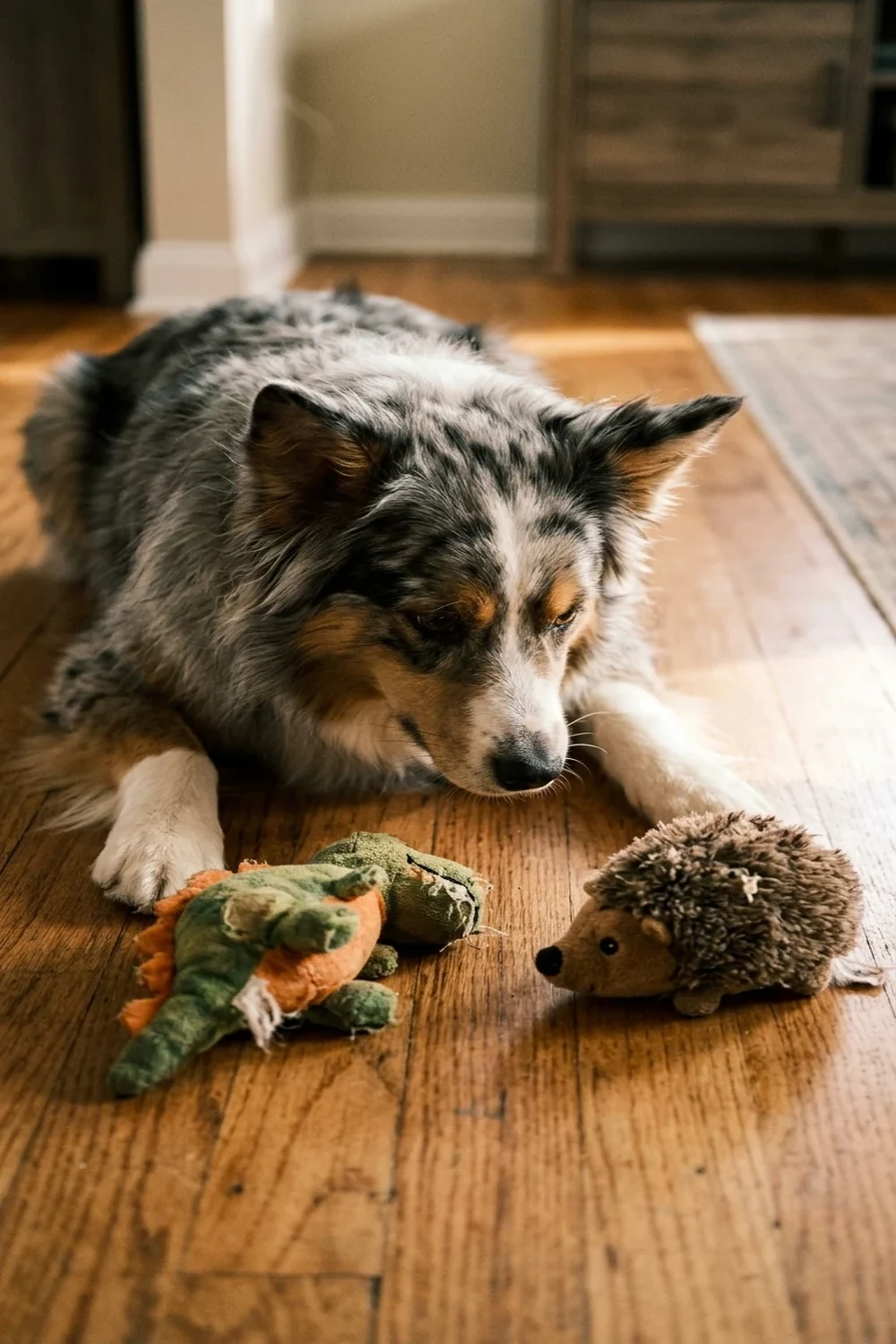
4. Name Game: How to Teach Your Dog Toy Vocabulary and Retrieval
The Name Game is a high-yield canine cognition exercise that trains dogs to identify and retrieve distinct household objects by their specific verbal labels. Canines possess the cognitive ability to map human auditory words to unique referents through fast-mapping, expanding their working memory and verbal comprehension well beyond basic obedience cues.
- Cognitive Vocabulary Expansion: Canine language studies show that dogs can learn dozens of object labels, stimulating the cerebral cortex and preventing daily behavioral boredom.
- Step-by-Step Association: Present a single distinct toy such as a squeaky ball, repeat the item name clearly three times, and deliver an immediate high-value reward when the dog touches it.
- Targeted Discrimination Phase: Introduce a distractor object alongside the labeled target, prompting the dog with the specific item name to reinforce deliberate choice over visual guessing.
- Errorless Learning Protocol: If the dog selects the incorrect item, withhold reinforcement without reprimand, reset the objects three feet apart, and re-cue the targeted label.
- Gradual Catalog Scaling: Add one new toy name only after your dog achieves an 80% correct retrieval rate across three consecutive training sessions.
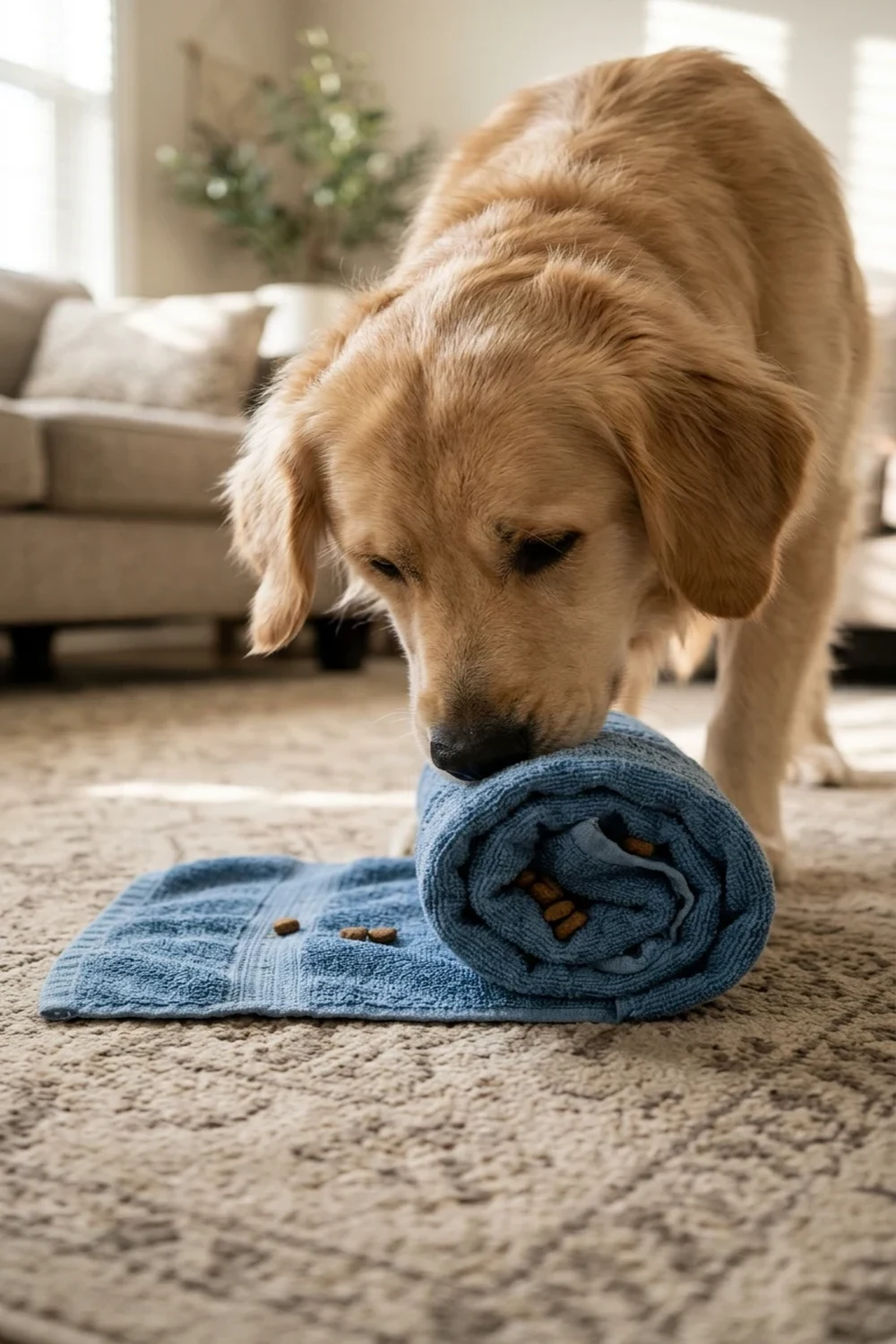
5. Towel Roll: A Fast DIY Mental Stimulation Puzzle for Bored Dogs
The Towel Roll game is an accessible DIY canine enrichment puzzle that challenges a dog to use both nose nudges and paw coordination to unroll hidden treats. This activity provides low-impact indoor mental stimulation that engages scent tracking and independent tactile problem-solving within a secure, bite-safe textile format.
- Olfactory Foraging Activation: Rolling dry kibble or dehydrated liver inside a dense cotton towel activates the canine sensory olfactory bulb, satisfying fundamental foraging drives.
- Progressive Difficulty Adjustment: Beginners start with loosely folded terrycloth layers, while advanced canine problem-solvers navigate tightly rolled bath towels tied with loose fabric loops.
- Calming Endorphin Release: Focused canine sniffing and repetitive licking lower salivary cortisol levels, promoting emotional regulation and post-play rest.
- Pacing and Digestion Control: Spreading evening food rations throughout the towel folds prevents rapid gulping, reducing gastric dilation risks in fast-eating dogs.
- Active Human Supervision: Monitor play continuously to guide dogs that attempt chewing through fabric rather than unrolling the textile layers systematically.
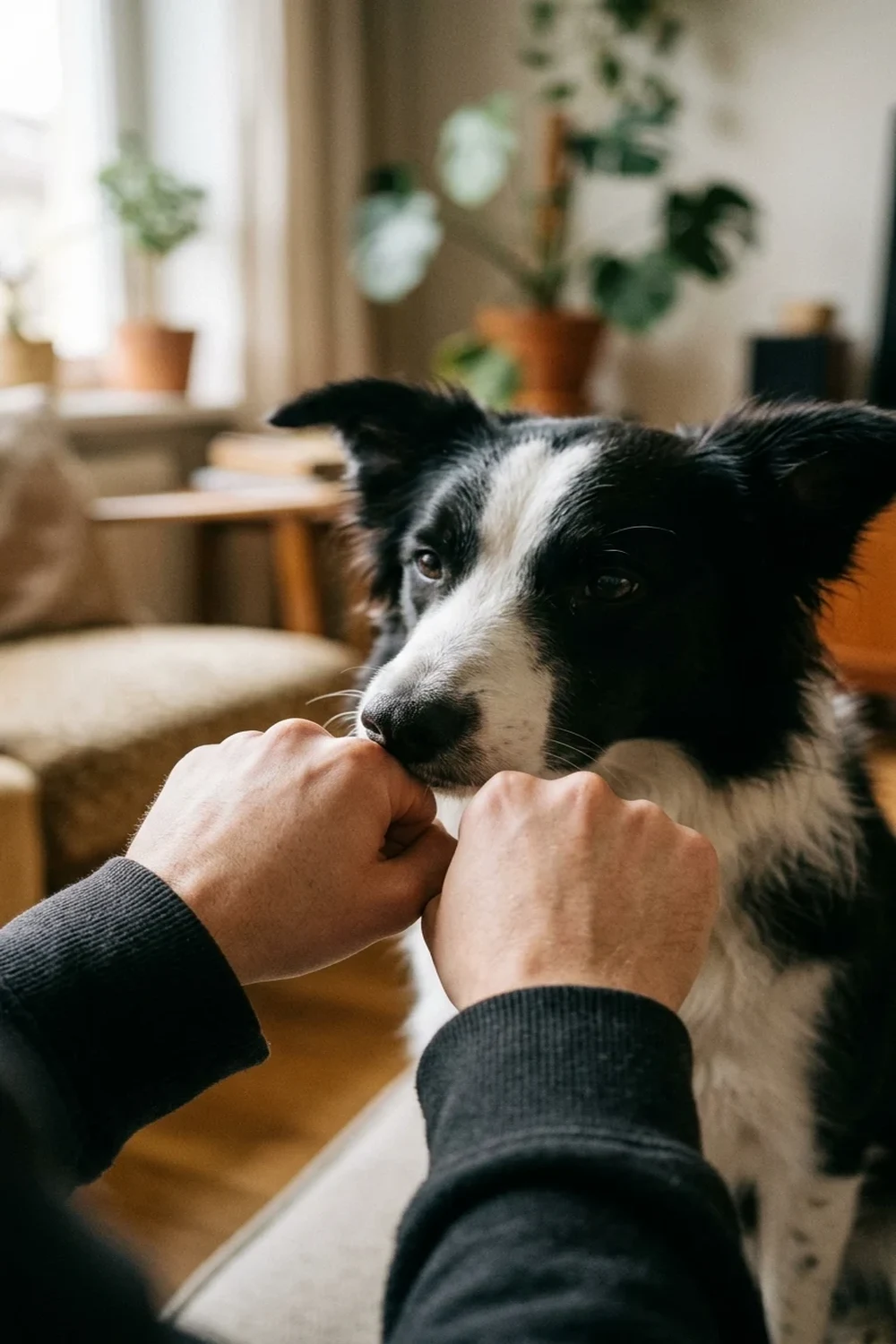
6. Which Hand Game: Scent Discrimination and Impulse Control Exercise
The Which Hand game is an introductory scent discrimination test that teaches canines to isolate olfactory signals and indicate the winning hand using polite paw or nose touches. By requiring the dog to solve a visual and scent puzzle before receiving food, this game simultaneously strengthens impulse control and sharpens canine scent accuracy.
- Bilateral Olfactory Processing: Dogs compare scent molecule concentrations across both closed fists, using stereo olfaction to pinpoint the exact location of aromatic food rewards.
- Impulse Control Conditioning: Require your dog to maintain a calm seated posture for three seconds before permitting physical inspection of your closed hands.
- Polite Target Indication: Reward only deliberate nose-pokes or gentle paw taps while ignoring frantic paw scratching or mouth nibbling directed at the knuckles.
- Systematic Hand Alternation: Switch treat placements randomly between left and right hands to prevent positional bias and force genuine sensory discrimination.
- Variable Reward Upgrades: Transition from fragrant freeze-dried meat treats to standard kibble to challenge and sharpen canine scent sensitivity over time.
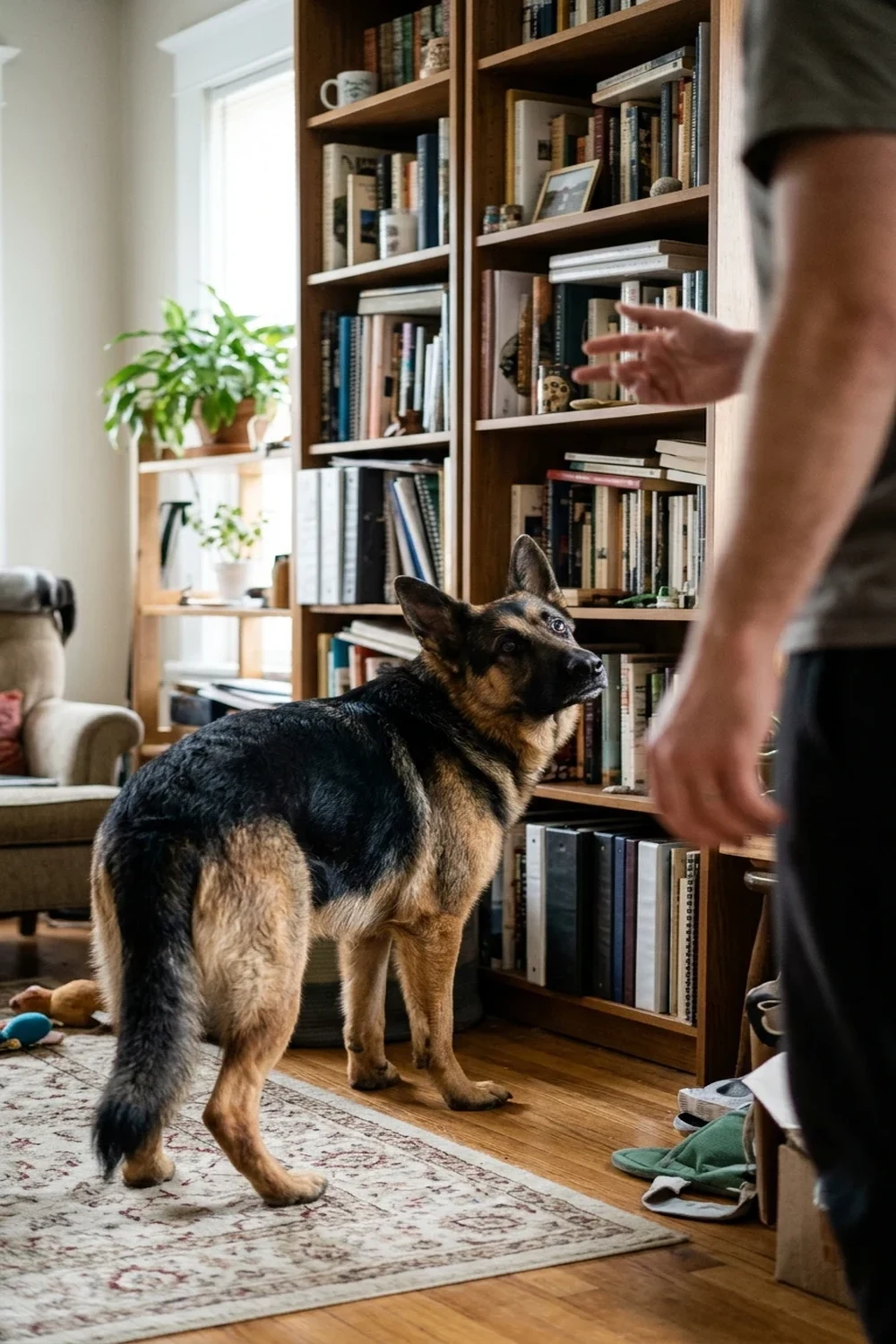
7. Hot and Cold Game: Directional Vocal Cues for Canine Problem-Solving
The Hot and Cold game is a cooperative communication exercise that uses variable human vocal pitch to guide a searching dog toward concealed items. By decoding changes in vocal tone as directional feedback, dogs refine auditory listening comprehension and build collaborative problem-solving skills alongside their handler.
- Vocal Feedback Modulation: Deliver rhythmic, high-pitched verbal encouragement as your dog approaches the target hide, and switch to a calm, low-tone verbal cue when the dog moves away.
- Auditory Processing Engagement: Dogs process human vocal inflection through specialized temporal brain regions, translating handler pitch variations into navigational adjustments.
- Spatial Deduction Challenge: Hiding target items behind indoor furniture forces the dog to integrate spatial triangulation with handler vocal guidance.
- Proximity-Based Marking: Mark the precise discovery moment with a crisp verbal click or reward word the instant the dog reaches within six inches of the hidden prize.
- Bonding and Handler Focus: Regular cooperative navigation games increase owner-oriented attention and improve real-world off-leash recall responsiveness.
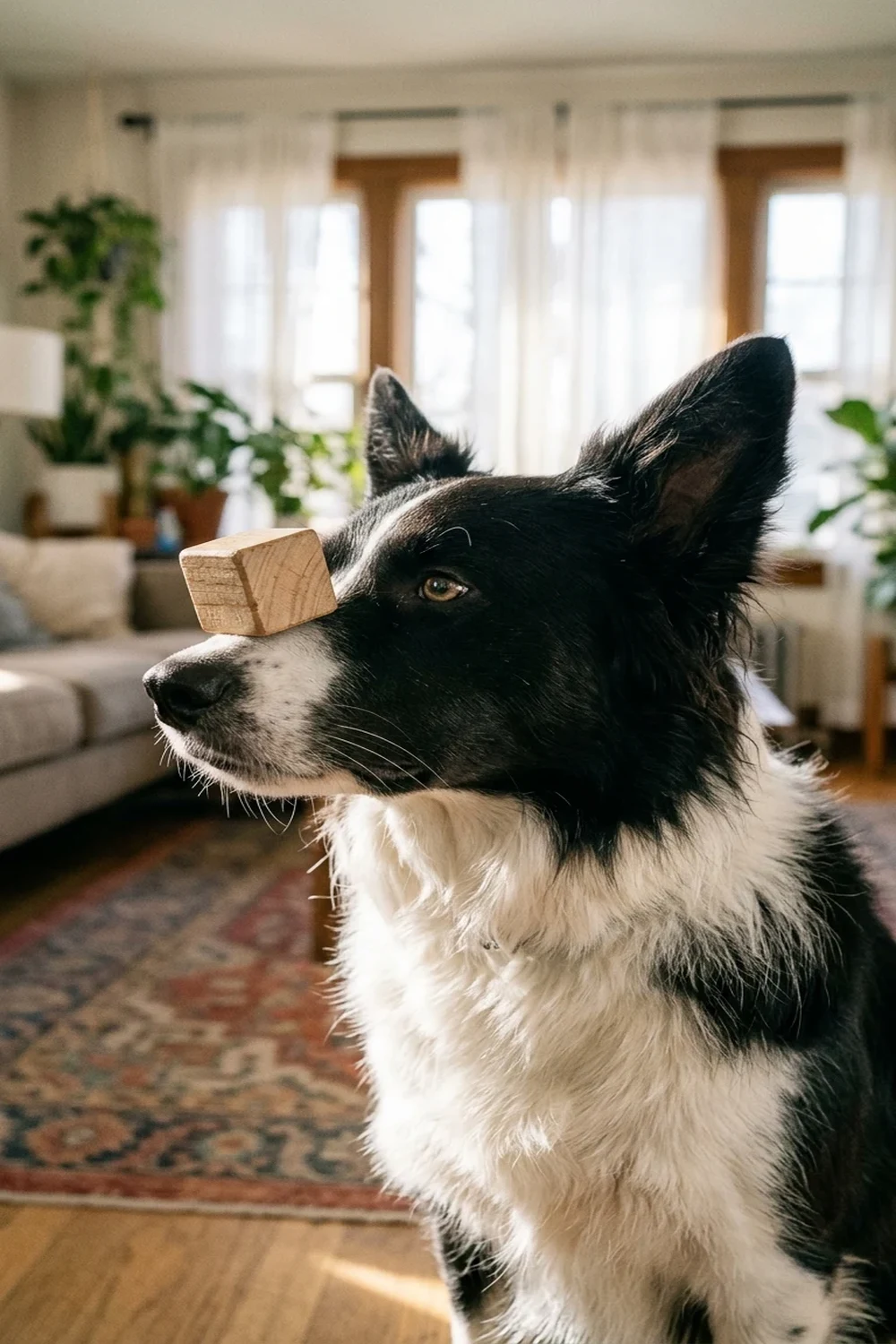
8. How to Teach New Tricks to Keep Your Dog’s Brain Active
Teaching your dog new tricks is a structured cognitive workout that stimulates canine neural pathways, improves working memory, and significantly curbs destructive boredom behaviors. While basic obedience establishes core household boundaries, novel trick training demands active problem-solving and rapid communication processing between you and your pet. Introducing a fresh behavioral challenge every two weeks keeps adult dogs mentally flexible and builds deep operational confidence across all life stages.
- Cognitive Neuroplasticity: Novel trick training forms fresh synaptic connections in the canine brain, effectively slowing cognitive dysfunction syndrome in senior dogs.
- Dopamine-Driven Engagement: Positive reinforcement mechanics trigger natural dopamine releases, keeping high-drive working breeds engaged and eager to learn.
- Error-Free Shaping: Break complex behaviors like ‘roll over’ or ‘play dead’ into small two-second increments using clicker mechanics to avoid training frustration.
- Optimal Session Duration: Limit trick sessions to brief five-to-ten-minute intervals twice daily to maximize retention without causing cognitive fatigue.
- Confidence Acceleration: Shy or rescue dogs master environmental challenges faster when rewarded for mastering micro-steps of complex new physical postures.
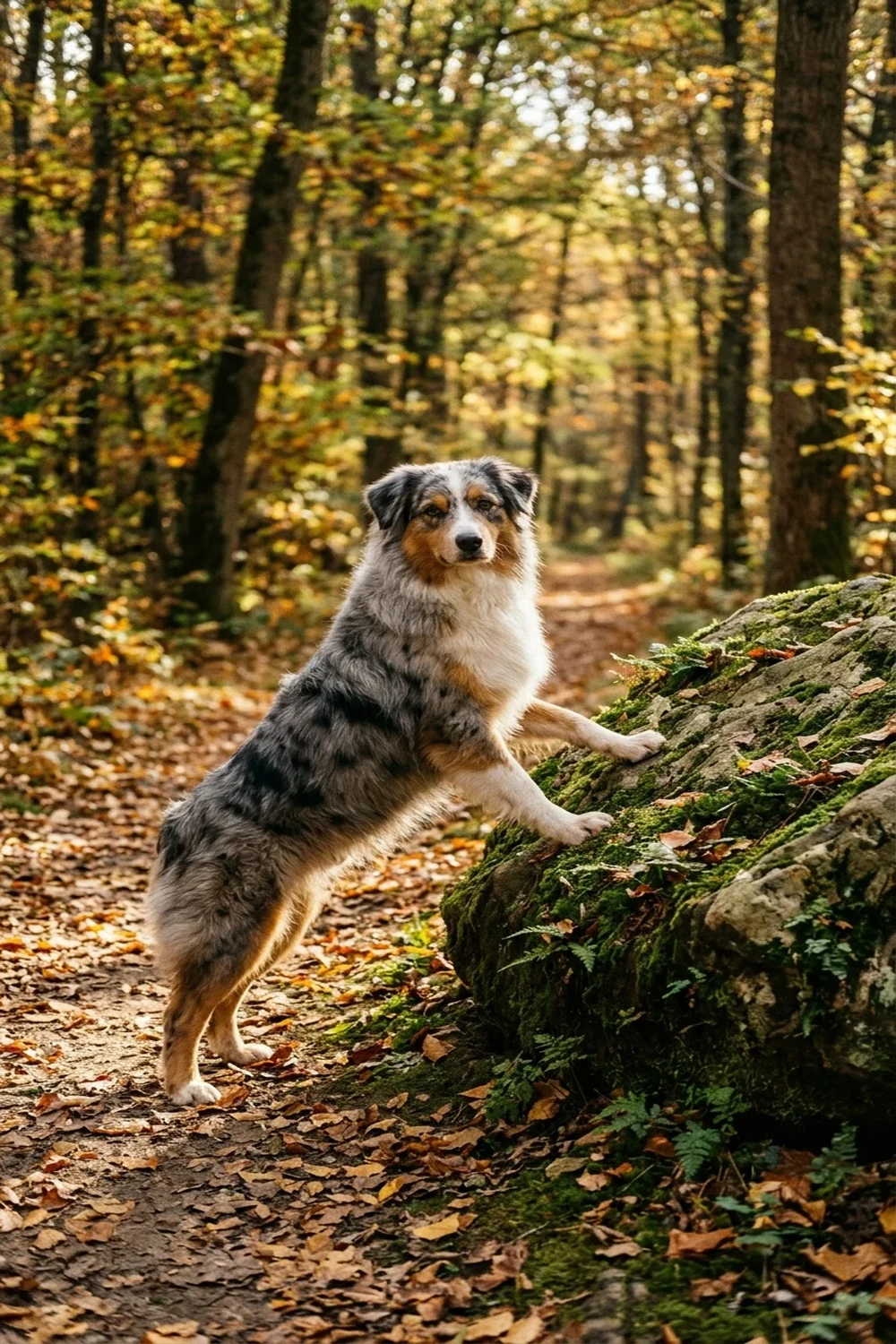
9. Dog Parkour: Transform Daily Walks into Urban Agility Brain Games
Dog parkour, often called urban agility, is a non-competitive mental enrichment sport that challenges dogs to safely interact with everyday urban and natural obstacles. By cueing your dog to balance on fallen logs, crawl under low park benches, or pivot on low masonry walls, you turn monotonous walks into sensory-rich navigational puzzles. This activity builds exceptional proprioception—your dog’s spatial awareness of their own body—while requiring intense focus and active impulse control under diverse outdoor distractions.
- Enhanced Proprioception: Navigating variable surfaces like smooth granite, metal grates, and tree bark sharpens your dog’s sensory feedback and body control.
- Core Environmental Obstacles: Utilize park benches for low crawls, sidewalk curbs for two-paw perches, and tree stumps for stationary balance drills.
- Low-Impact Joint Safety: Keep obstacle heights at or below your dog’s shoulder level to avoid unnecessary joint impact on elbows and carpal joints.
- Dynamic Mental Exhaustion: Twenty minutes of urban parkour provides superior mental stimulation compared to an hour of routine, linear leash walking.
- Positive Environmental Neutrality: Exposing anxious dogs to novel urban obstacles systematically desensitizes them to everyday city sights and neighborhood noises.
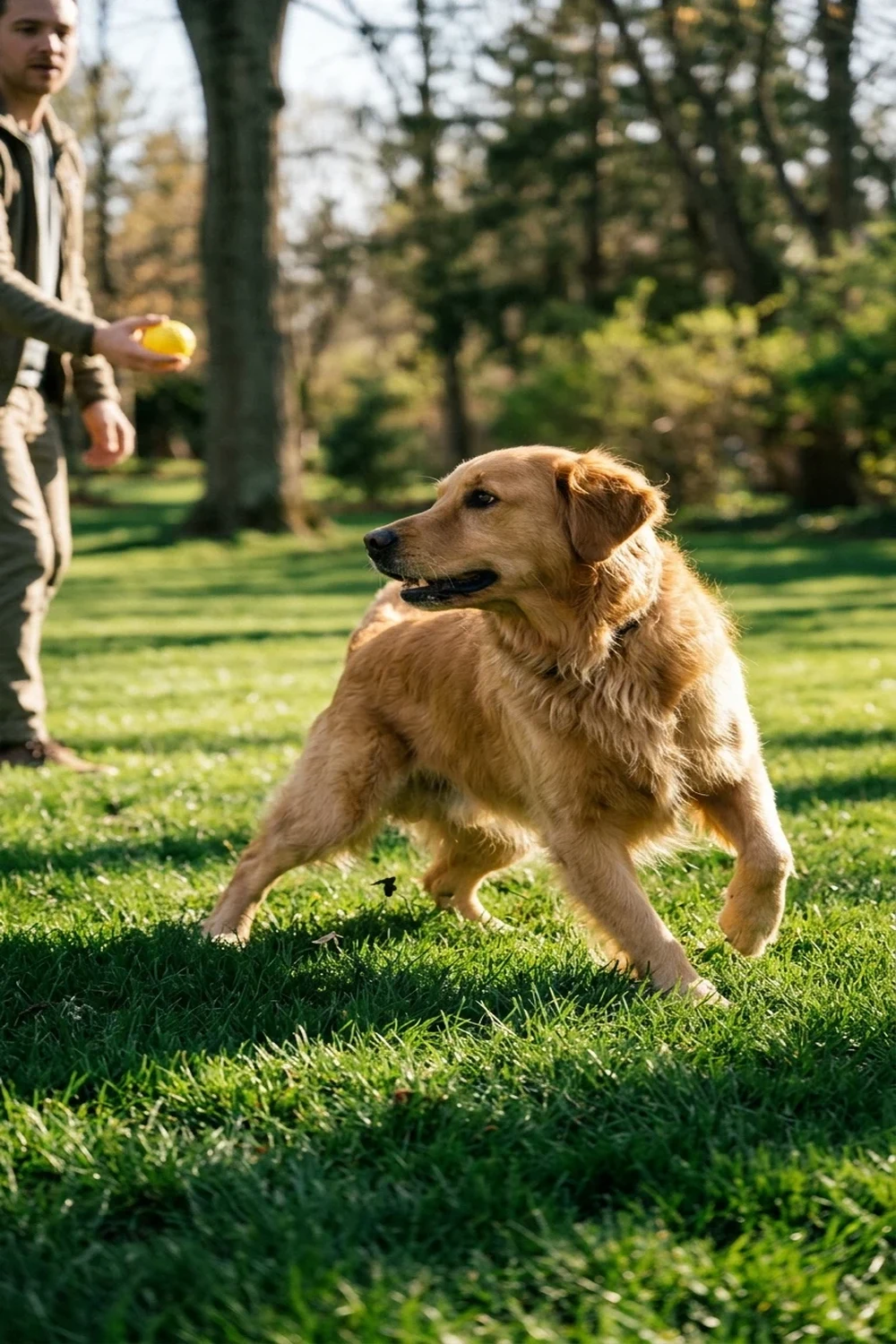
10. Fetch with a Twist: Impulse Control Games for High-Energy Dogs
Fetch with a twist is an advanced impulse-control brain game that turns mindless ball-chasing into an intensive cognitive obedience drill. Traditional repetitive fetch often spikes adrenaline and cortisol levels, whereas adding structured trick requirements before throwing the ball forces the canine brain to regulate arousal states. By requiring a stationary sit, a sudden drop-stay mid-stride, or an eye-contact cue prior to release, your dog exercises critical emotional restraint while burning physical energy.
- Adrenaline Regulation: Pausing before chasing prevents hyper-arousal and obsessive ball fixation, teaching your dog to think clearly through excitement.
- Rotational Obedience Cues: Require varying intermediate commands such as ‘down-stay’, ‘spin’, or ‘touch’ before granting ball release as the high-value reward.
- Emergency Recall Reinforcement: Interspersing sudden stop commands while your dog is in full pursuit sharpens split-second response times in high-distraction environments.
- Structured Turn-Taking: Training your dog to drop the ball cleanly into a basket reinforces patience and collaborative play mechanics over possessive resource guarding.
- Cardiovascular and Mental Synergy: Ten controlled repetitions exhaust both muscular and neurological systems substantially faster than thirty minutes of uncontrolled sprinting.
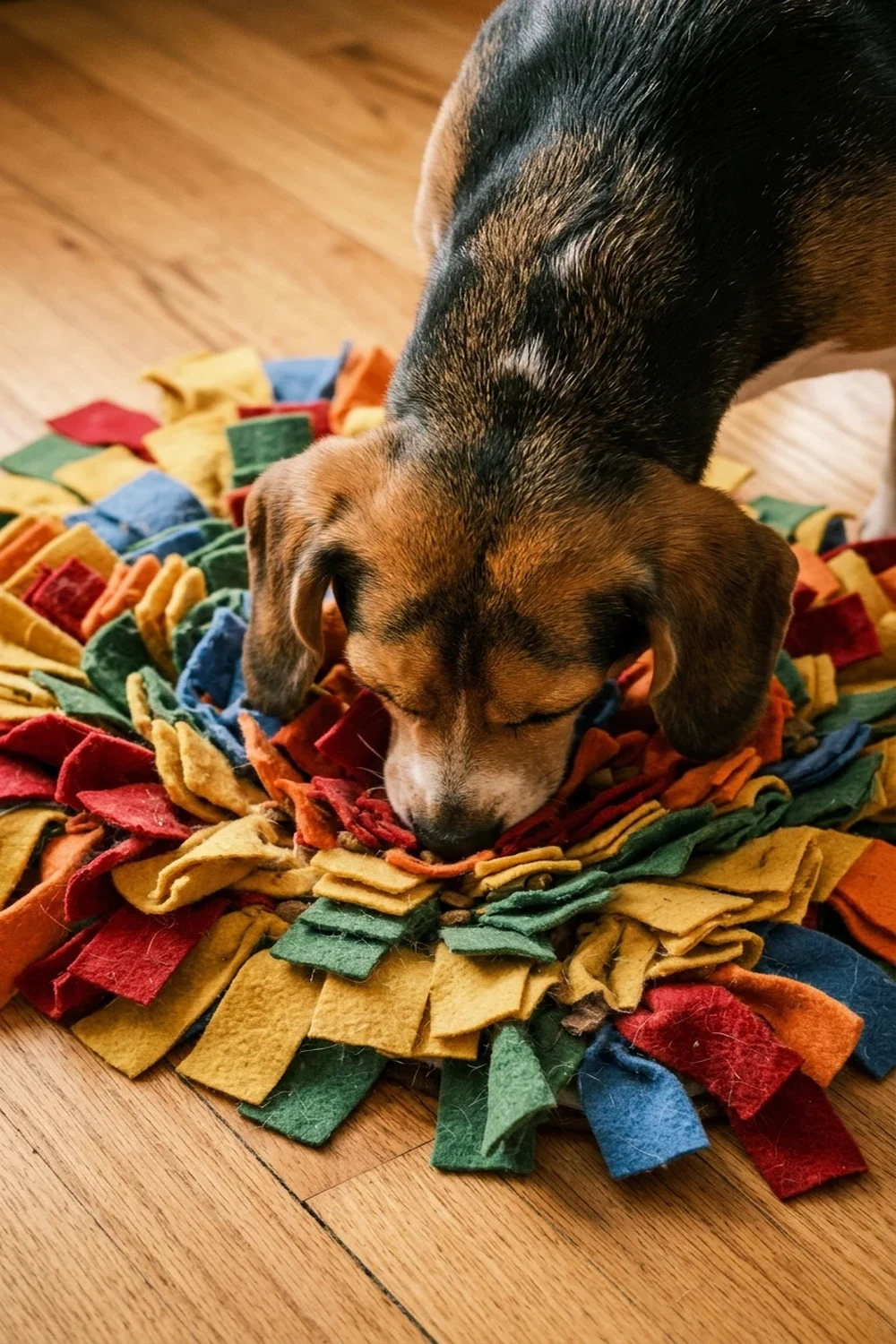
11. Snuffle Mat Foraging: Scent Work Enrichment That Calms Dog Anxiety
A snuffle mat is a dense fabric enrichment tool designed with interwoven fleece strips that mimics natural grassland foraging by concealing dry kibble and treats. Canine olfaction engages up to 300 million olfactory receptors, and intentional sniffing actively stimulates the canine brain’s sensory cortex while systematically reducing resting heart rates. Introducing a snuffle mat turns routine meal consumption into a sustained, independent problem-solving exercise that naturally satisfies instinctive searching drives.
- Autonomic Nervous System Regulation: Ten minutes of focused olfactory searching lowers canine pulse rates and naturally elevates calming endorphins.
- Slow-Feeding Digestive Benefits: Scattering daily dry meals across tight fabric folds stretches typical two-minute gulping into fifteen minutes of deliberate forage.
- Sensory Cortical Activation: Scent work activates nearly one-third of the canine brain, producing deeper mental relaxation than physical running.
- Independent Problem Solving: Dogs learn persistent, self-directed search strategies without relying on continuous verbal prompting from their guardians.
- Ideal Low-Mobility Enrichment: Senior dogs, post-surgery patients, and kennel-rested pups can safely expend excess cognitive energy without physical strain.
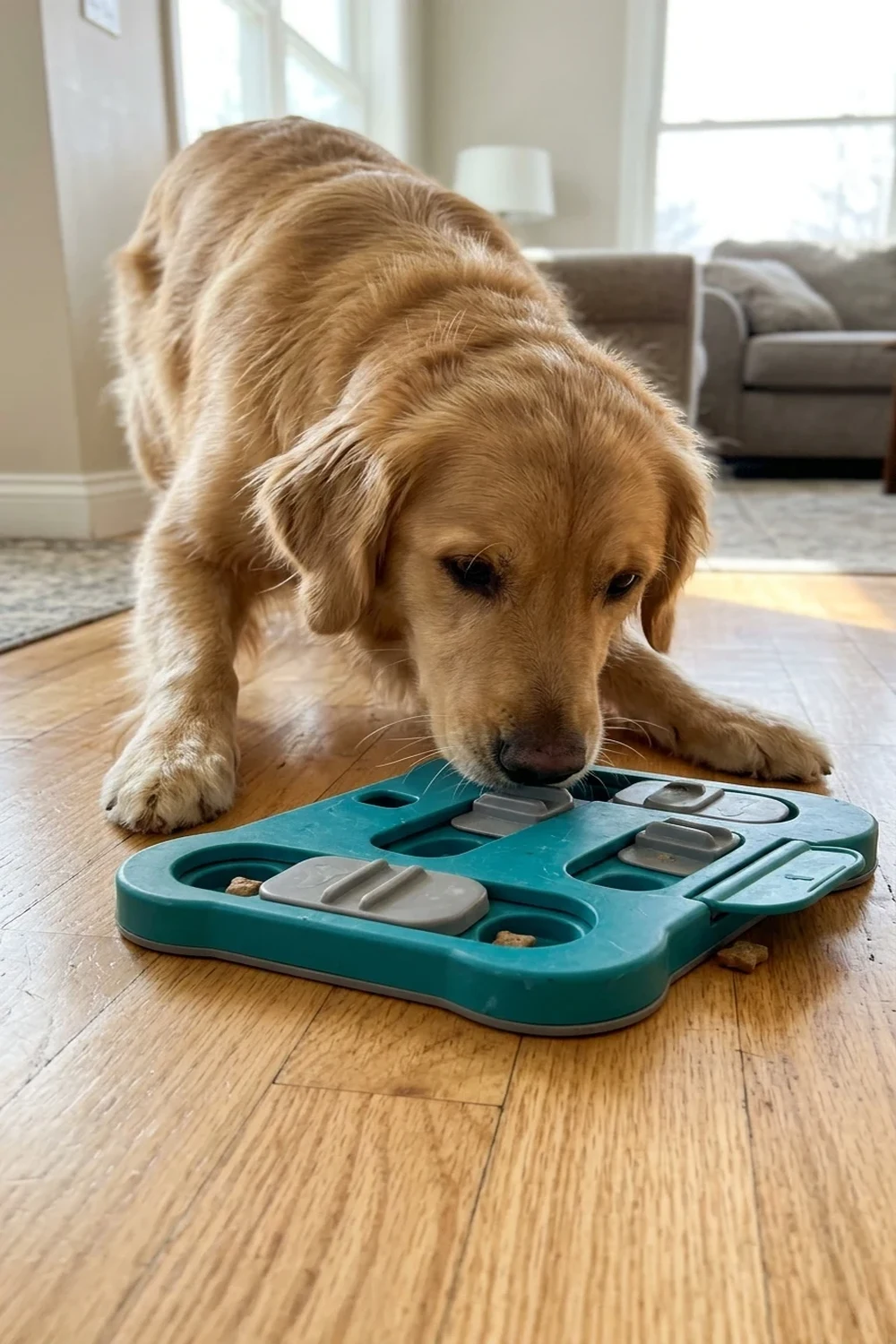
12. Interactive Feeding: Turn Mealtime into Brain Workouts
Interactive feeding transforms daily meals into cognitive enrichment by replacing standard dog bowls with puzzle dispensers, wobble toys, or slow-feeder mazes. Canines possess a natural behavioral instinct called contrafreeloading, meaning dogs actively prefer working to earn their food rather than eating freely from an open dish.
- Cognitive Stimulation: Solving mechanical food puzzles engages canine problem-solving networks and exhausts mental energy faster than basic physical exercise.
- Digestive Health Support: Slowing consumption rates from 30 seconds to over 15 minutes reduces risks of canine gastric dilatation-volvulus (bloat) and post-meal regurgitation.
- Weight Management: Dispensing kibble gradually extends satisfaction per portion, assisting overweight dogs in maintaining satiety during dietary calorie reductions.
- Recommended Gear: Robust rubber wobble toys like the KONG Wobbler and multi-compartment sliding disks deliver progressive challenge levels for all dog breeds.
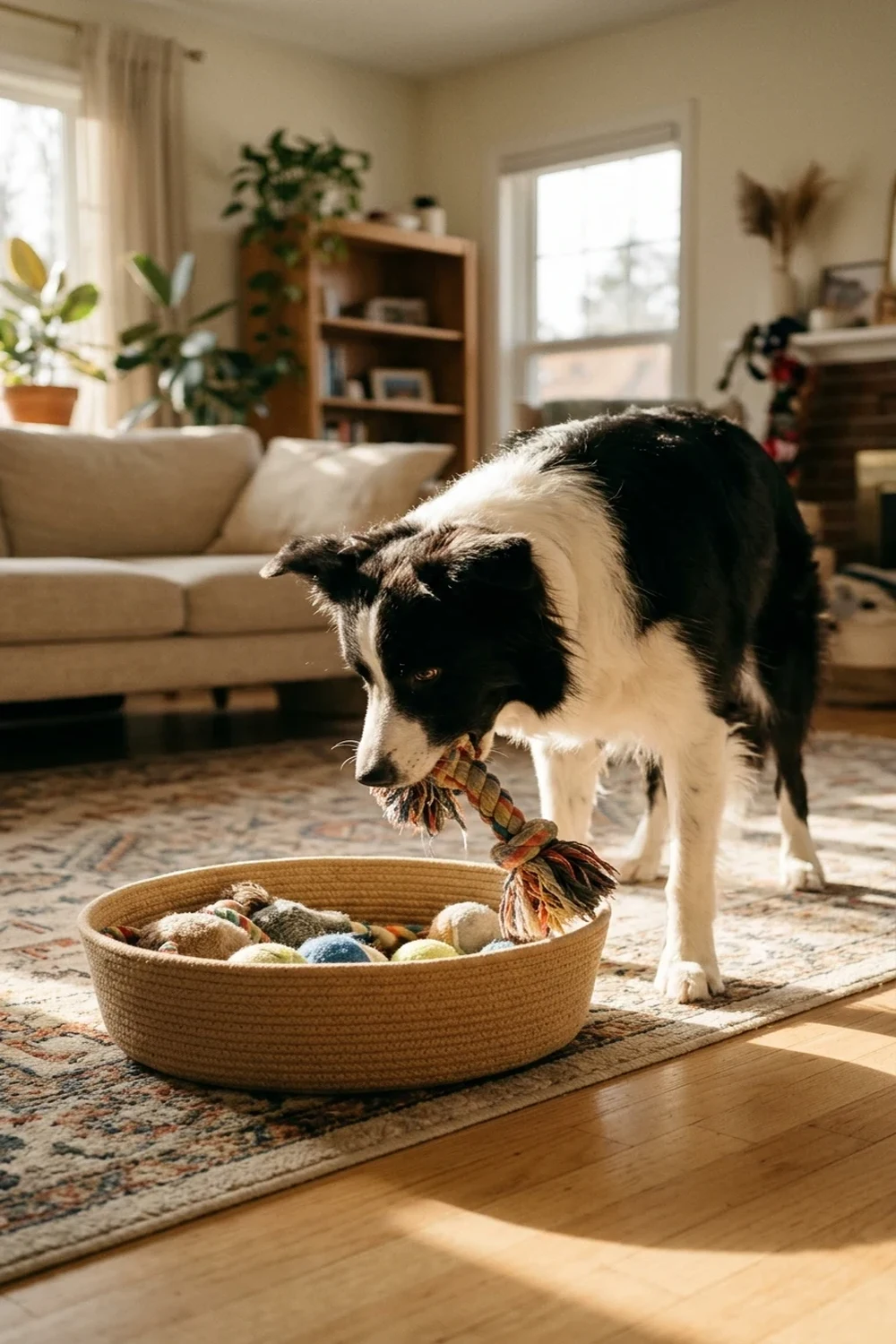
13. Toy Pick-Up: Teach Your Dog to Clean Up Toys
Teaching your dog the toy pick-up game combines multi-step object retrieval, auditory recognition, and impulse control into one practical household task. This complex chain behavior sharpens executive functioning by requiring your dog to locate an item, carry it directly to a designated container, and release it cleanly on cue.
- Step-by-Step Training: Chain together the established commands ‘take it’, ‘bring it’, and ‘drop it’ directly positioned over an open storage basket.
- Impulse Control Conditioning: Reinforce patience by delivering high-value rewards exclusively when the selected toy drops fully inside the toy storage box.
- Working Memory Expansion: Generalize the behavior by scattering toys across multiple rooms, prompting dogs to remember storage bin placement without visual guidance.
- Cognitive Exhaustion: Executing compound command sequences demands intense canine concentration, converting routine cleanup into a calming ten-minute mental workout.
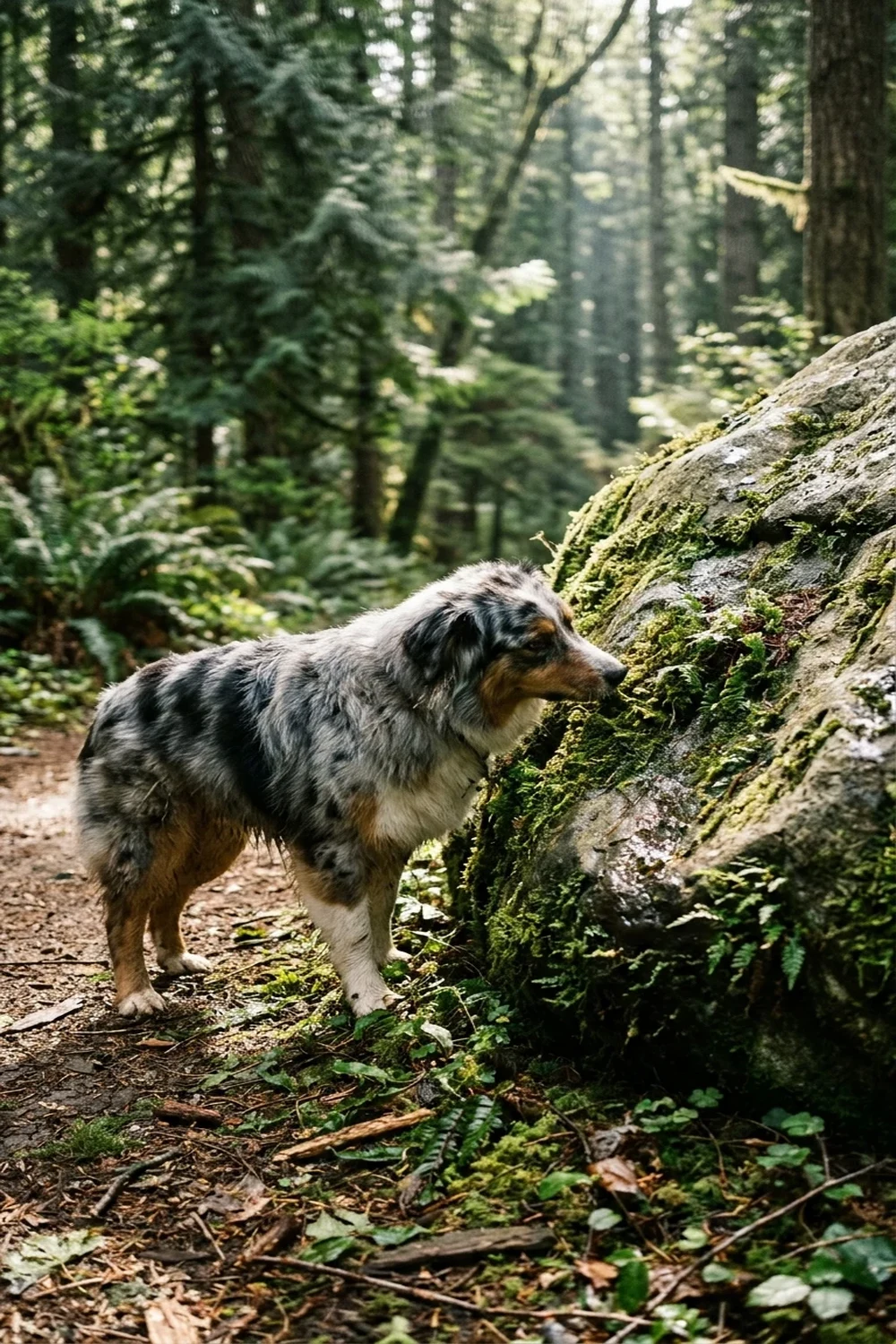
14. Switch Up Walks: Decompression Scent Walks for Mental Health
Switching up walking routines and allowing unrestricted sniffing stimulates the canine olfactory bulb, which occupies roughly 10% of a dog’s total brain mass. Alternating regular neighborhood routes exposes dogs to unfamiliar environmental scents, drastically reducing chronic stress levels through sensory exploration rather than brisk physical pacing.
- The Sensory ‘Sniffari’ Principle: Give your dog agency to dictate pace and path choices, prioritizing olfactory tracking over forward walking distance.
- Novelty Exposure: Introducing new terrain surfaces like woodland trails, sandy shores, or quiet commercial strips fires dormant neurosensory pathways.
- Cortisol Reduction: Sniffing lowering heart rate and sensory exploration stimulates canine endorphin release, directly diminishing indoor reactivity and destructive behaviors.
- Long-Leash Freedom: Utilize a standard ten-foot training lead attached to a back-clip harness to allow natural foraging behaviors safely.
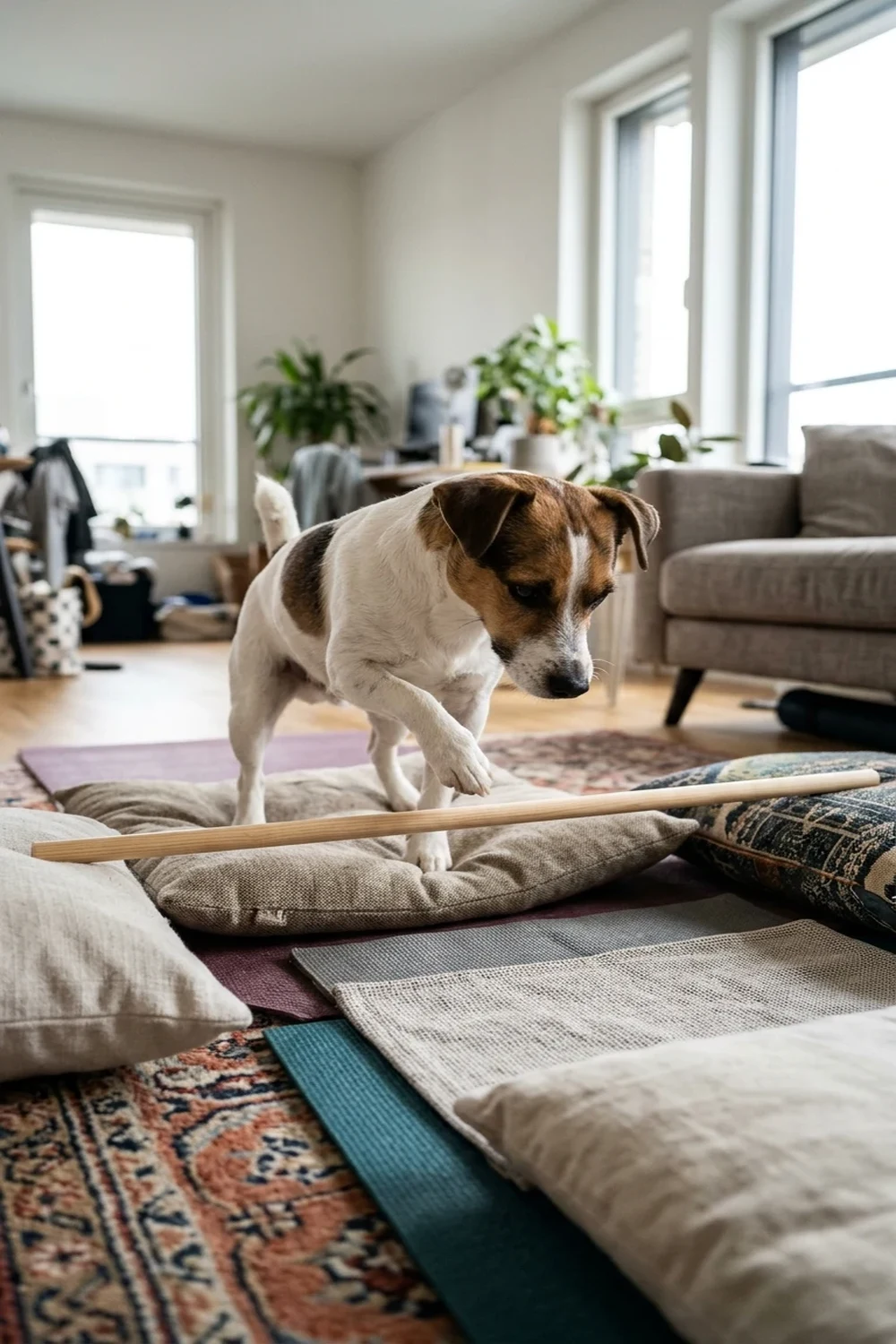
15. Obstacle Course: DIY Indoor Agility and Proprioception Games
Creating a homemade obstacle course challenges your dog’s spatial awareness, balance, and physical proprioception using common household items. Navigating varied physical barriers requires calculated limb placement and careful deliberation, reinforcing canine self-confidence while simultaneously tiring high-drive working breeds indoors.
- Broomstick Cavaletti Rails: Elevate light broom handles across two books to train conscious rear-paw placement, rhythm, and stepping precision.
- Cardboard Box Tunnels: Open opposite ends of sturdy shipping containers to encourage dogs to conquer enclosed spaces and unfamiliar footing textures.
- Cushion Balance Pods: Stack dense couch cushions to formulate an unstable surface that engages deep core musculature and vestibular balance reflexes.
- Chair Slalom Weaves: Line up upright dining chairs spaced two feet apart, steering your dog through the slalom pattern using gentle directional hand targets.
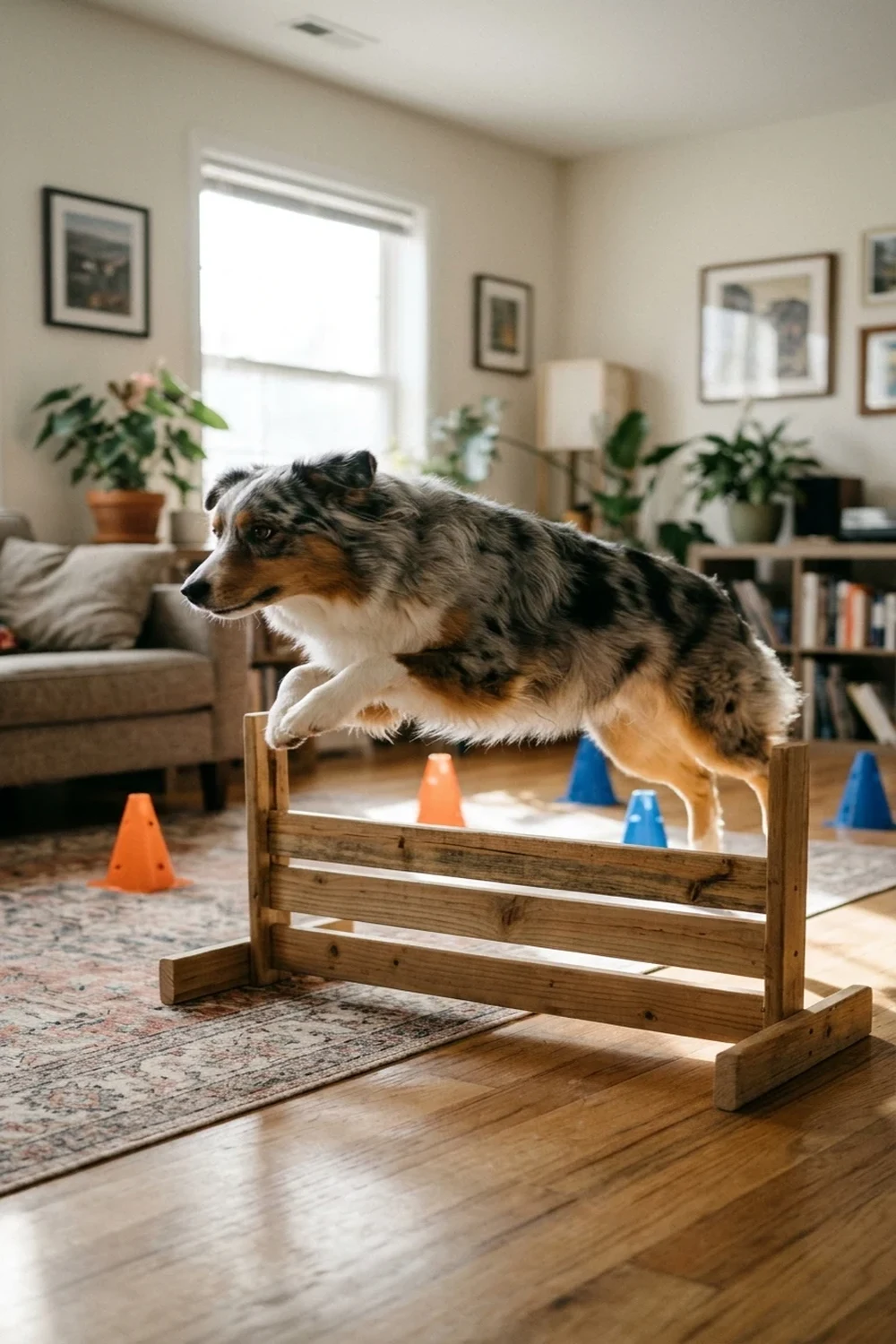
16. DIY Agility Course: How to Build an Indoor Obstacle Course for Canine Mental Enrichment
A DIY agility course is a homemade obstacle circuit designed to enhance canine proprioception, spatial reasoning, and obedience skills using everyday household objects. Setting up structured physical challenges indoors or across a backyard forces dogs to calculate movement, control impulses, and follow complex directional cues rather than relying on mindless running.
- Jump Barriers: Place a lightweight broomstick across two low laundry baskets or sturdy book stacks 6 to 12 inches off the ground to train controlled leaps and vertical coordination without risking joint strain.
- Weave Poles: Position four to six upright traffic cones or filled reusable water bottles 24 inches apart in a straight line, guiding your dog through zigzag patterns with directional hand gestures.
- Tunnel Navigation: Open an expandable fabric play tunnel or drape a bedsheet over two parallel chairs to stimulate exploratory confidence through confined spaces.
- Pause Platform: Designate a low nonslip footstool or yoga block where the dog must hold an immobile five-second sit-stay before receiving a release marker, dramatically strengthening impulse regulation.
- Sequential Sequencing: Chain individual obstacles together into a fluid three-station circuit, rewarding your dog upon completing the entire sequence to build sustained cognitive focus.
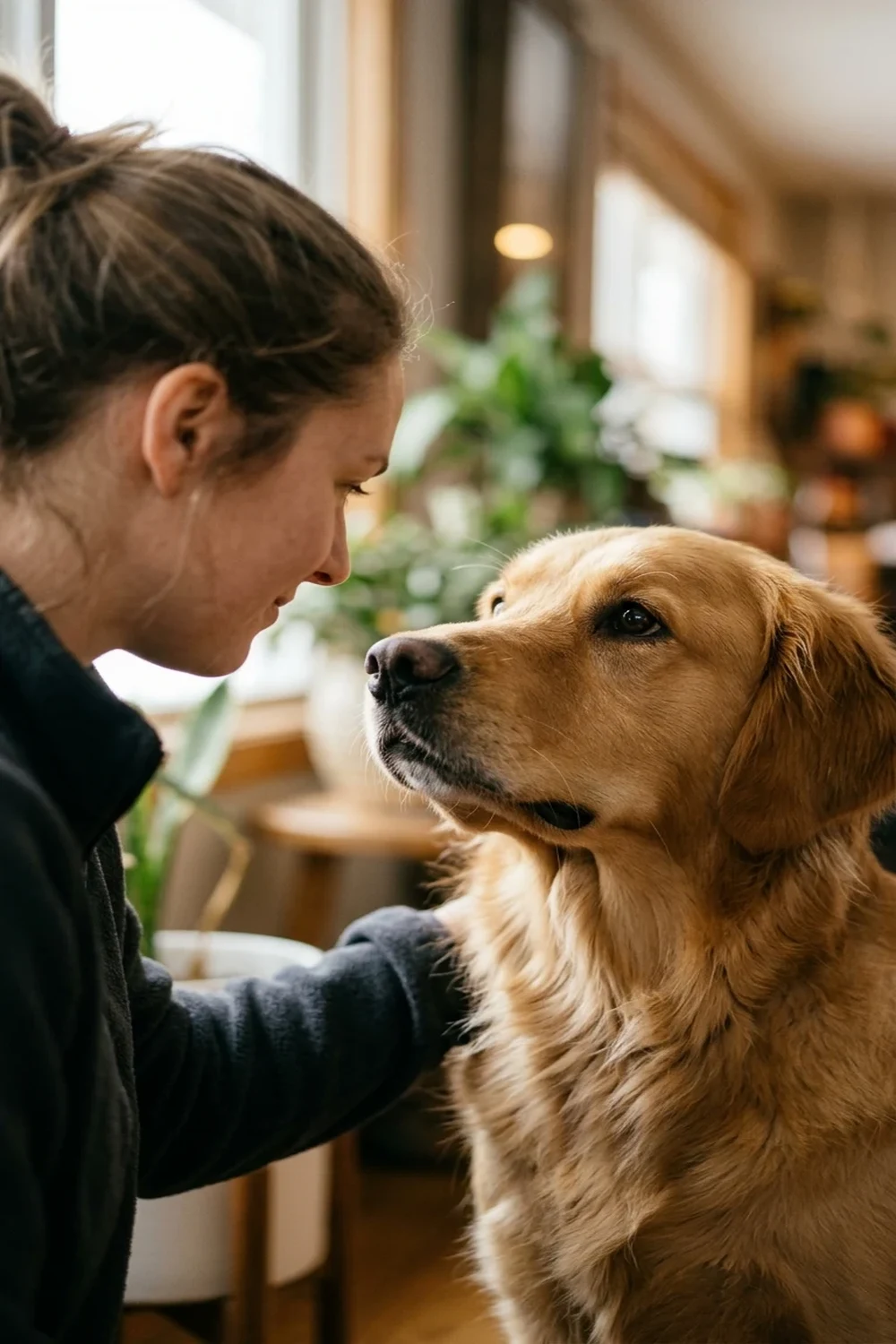
17. Learn to Make Eye Contact: Sustained Attention Training for Canine Focus and Impulse Control
Teaching voluntary eye contact is a foundational focus protocol that conditions dogs to check in with their handlers before acting on environmental stimuli. By reinforcing direct mutual gaze, owners stimulate bilateral oxytocin release and condition impulse control, transforming high-distraction scenarios into opportunities for calm attentiveness.
- The Baseline Lure: Hold a high-value treat directly between your thumb and forefinger, moving the morsel from your dog’s nose straight toward the bridge of your nose while remaining completely silent.
- The Verbal Marker: Utter a sharp verbal marker like ‘yes’ the split second your dog shifts pupil fixation from your hand to your eyes, delivering the reward immediately to cement the association.
- Fading Physical Prompts: Lower your treat hand to your hip and wait quietly, allowing your dog to problem-solve through trial and error until eye contact occurs naturally without visual guidance.
- Duration Building: Delay the reward marker by three to five seconds while maintaining continuous eye contact, training sustained neural concentration against mild ambient distractions.
- Real-World Application: Require three seconds of voluntary eye contact before unlocking exterior doors, setting food bowls down, or releasing leashes for off-leash park access.
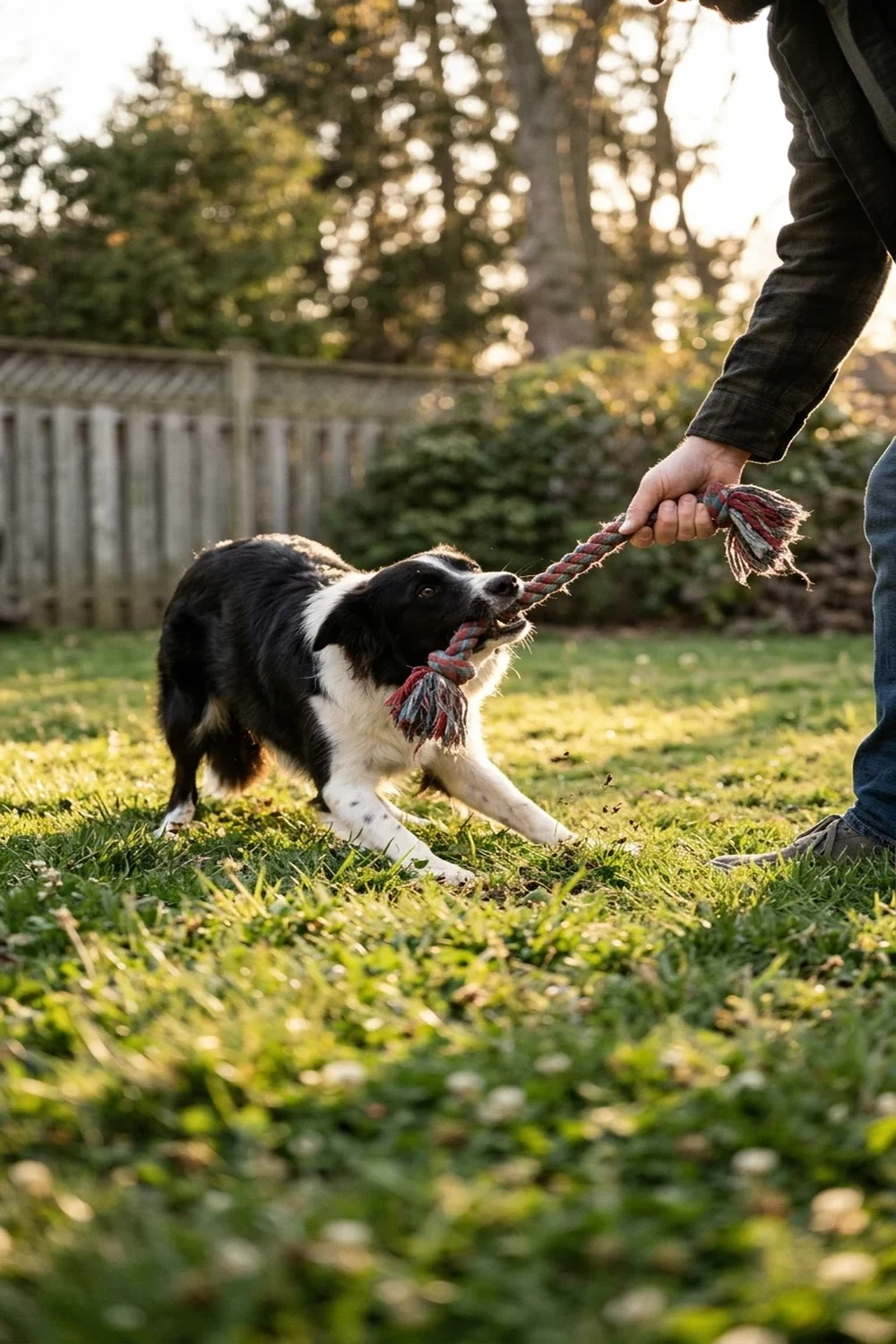
18. Interactive Tug-of-War: Impulse Control Rules for Cooperative Play and Brain Stimulation
Interactive tug-of-war is a structured predatory-play simulation that builds canine emotional regulation, bite inhibition, and handler responsiveness under peak arousal states. When executed with strict start-and-stop criteria, this high-energy game shifts from raw physical exercise into an advanced cognitive listening exercise.
- The Invitation Cue: Require a mandatory sit-stay before initiating play, presenting the woven rope toy only after delivering a distinct release command such as ‘take it’.
- Side-to-Side Motion: Pull the tug toy with lateral, horizontal motions that mimic natural prey dynamics, avoiding violent vertical jerks that could hyperextend your dog’s cervical spine.
- The Freeze Protocol: Freeze all arm movement entirely and stand upright while holding the toy securely against your thigh, neutralizing the toy’s appeal and signaling an immediate transition into quiet obedience.
- The Drop Command: Issue a calm ‘out’ or ‘drop it’ cue, offering a secondary high-value training treat right at your dog’s muzzle to reward an instant, clean release of the toy.
- Arousal Reset Cycles: Run consecutive 45-second tug intervals separated by compulsory ten-second stationary sits, training your dog to dial excitement down from peak intensity to zero on cue.
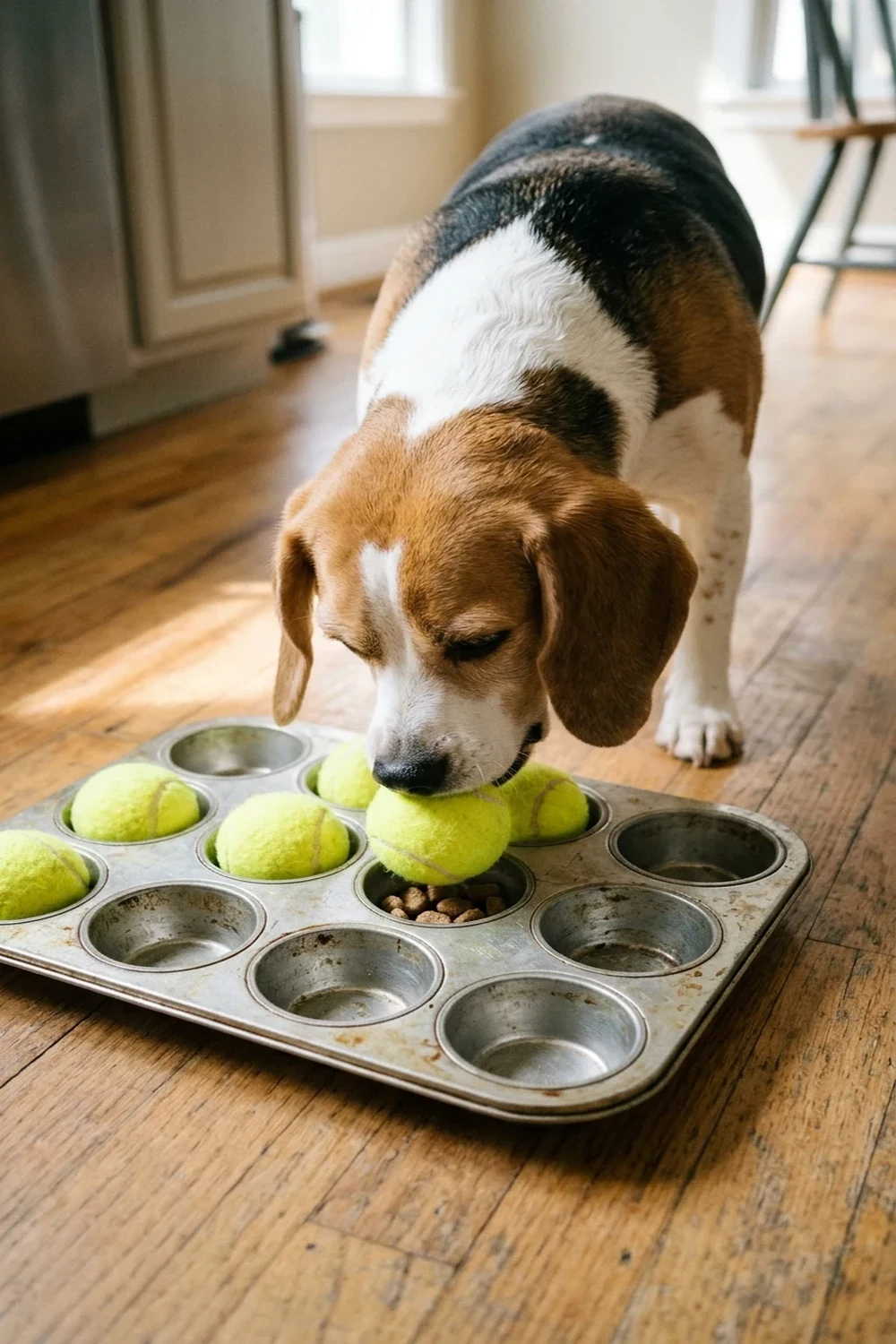
19. Treat Under Tennis Balls: Scent Discrimination and Problem-Solving with a DIY Muffin Tin Puzzle
The treat under tennis balls game is an accessible canine puzzle protocol that utilizes a standard 12-cup muffin tin and regulation tennis balls to challenge olfactory discrimination and dexterity. Dogs must decipher microscopic scent cues beneath identical visual barriers and manipulate physical objects with paw or muzzle to retrieve concealed rewards.
- Hardware Preparation: Set a clean metal or silicone 12-cup muffin tin flat on a non-slip rubber mat to prevent sliding across hardwood or tile floors.
- Baiting the Cups: Drop dehydrated liver or pungent freeze-dried chicken bits into three randomly selected cups, leaving the remaining nine compartments completely empty.
- Visual Camouflage: Cover every single cup with a standard tennis ball so the entire tray looks visually identical, forcing your dog to abandon visual guessing in favor of active scent tracking.
- Tactile Manipulation: Encourage your dog to nudge, lift, or scoop individual tennis balls aside using their nose or paws to access the aromatic compartments beneath.
- Progression Scaling: Introduce low-odor kibble or increase the total number of empty decoys across two separate muffin tins to push your dog’s olfactory threshold and persistent problem-solving ability.
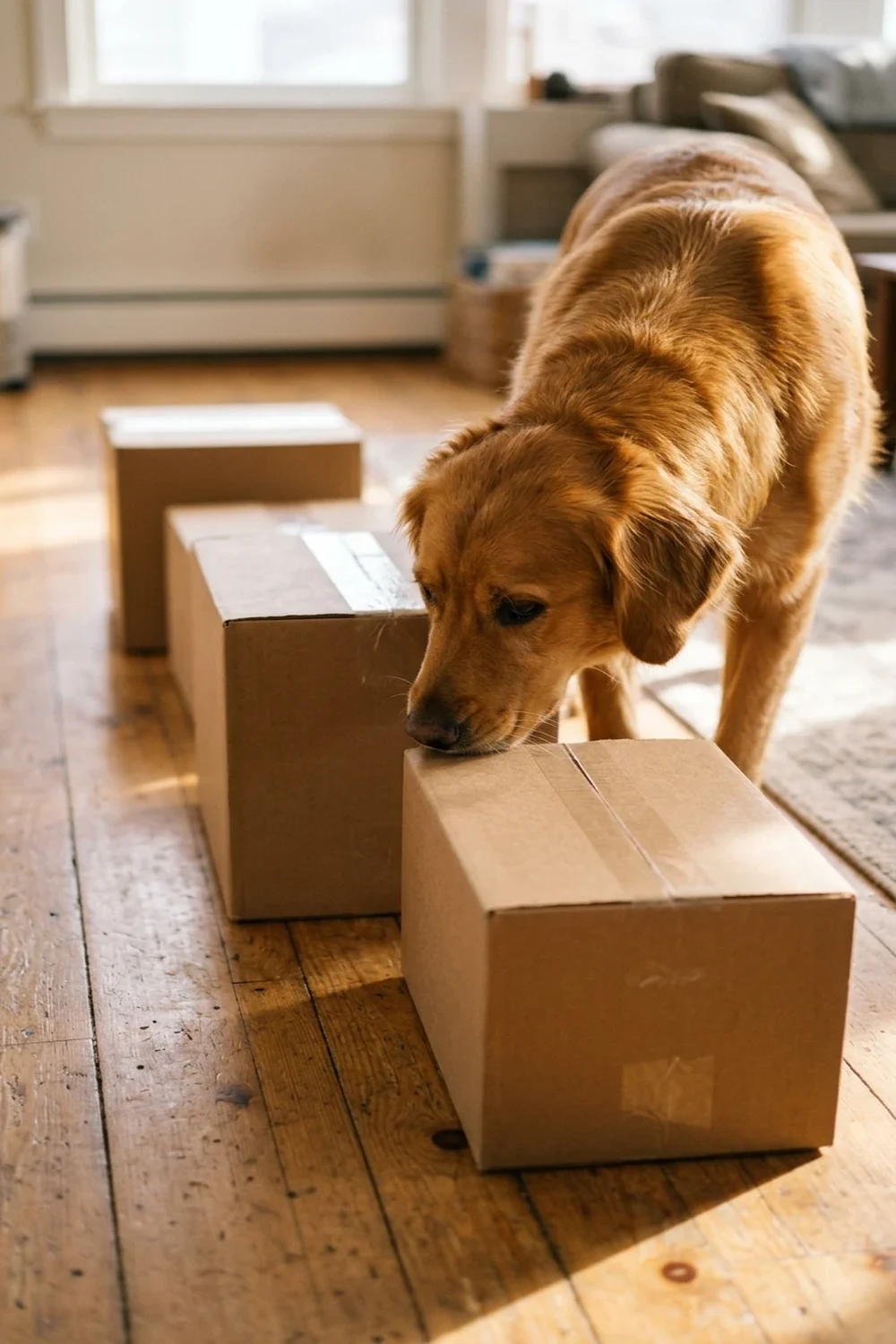
20. Scent Work: How to Train Nosework Games to Beat Canine Boredom
Scent work is a sensory enrichment activity that channels a dog’s olfactory system to search for, identify, and alert on specific hidden target odors. Because over 30 percent of a canine’s brain is dedicated to analyzing scent, ten minutes of nosework burns more mental energy than a thirty-minute physical walk.
- Primary Sensory Benefit: Scent tracking stimulates deep neural processing, which naturally calms canine hyperactivity and reduces boredom-driven behavioral problems.
- Starter Scent Selection: You should initiate training with high-value targets such as your own worn clothing, dried liver treats, or pet-safe natural herbs like birch oil.
- Search Complexity Ladder: Handlers should begin by concealing the target under cardboard boxes before progressing to multi-room searches and vertical scent elevations.
- Alert Cue Training: Dog owners must mark and reward passive freeze or active paw-touch alerts the instant the dog identifies the scent source.
- Daily Session Duration: Canines require only two to three short search runs totaling 10 to 15 minutes to achieve cognitive fatigue.

21. Follow the Leader: Interactive Focus Games for High-Energy Dogs
Follow the leader is a dynamic cognitive obedience game where a dog must continuously mirror handler movement, pace changes, and postural shifts in real time. This exercise replaces routine automated walking with active handler check-ins, dramatically boosting impulse control and attentional focus.
- Attention Reinforcement: Canine participants learn continuous voluntary eye contact by anticipating unpredictable sudden stops, pivots, and direction reversals.
- Pace Variability Integration: Alternating between rapid heel walks, slow-motion steps, and complete halts conditions your dog to regulate internal arousal levels.
- Postural Mimicry Challenges: Incorporating abrupt down-stays, sit transitions, and target spins keeps high-energy dogs mentally locked on your physical cues.
- Distraction Layering: Handlers should advance the game from a quiet hallway to a fenced backyard containing mild environmental distractions.
- Reward Timing Precision: Delivering high-value training rewards immediately upon rapid directional adjustments cements responsive walking habits.
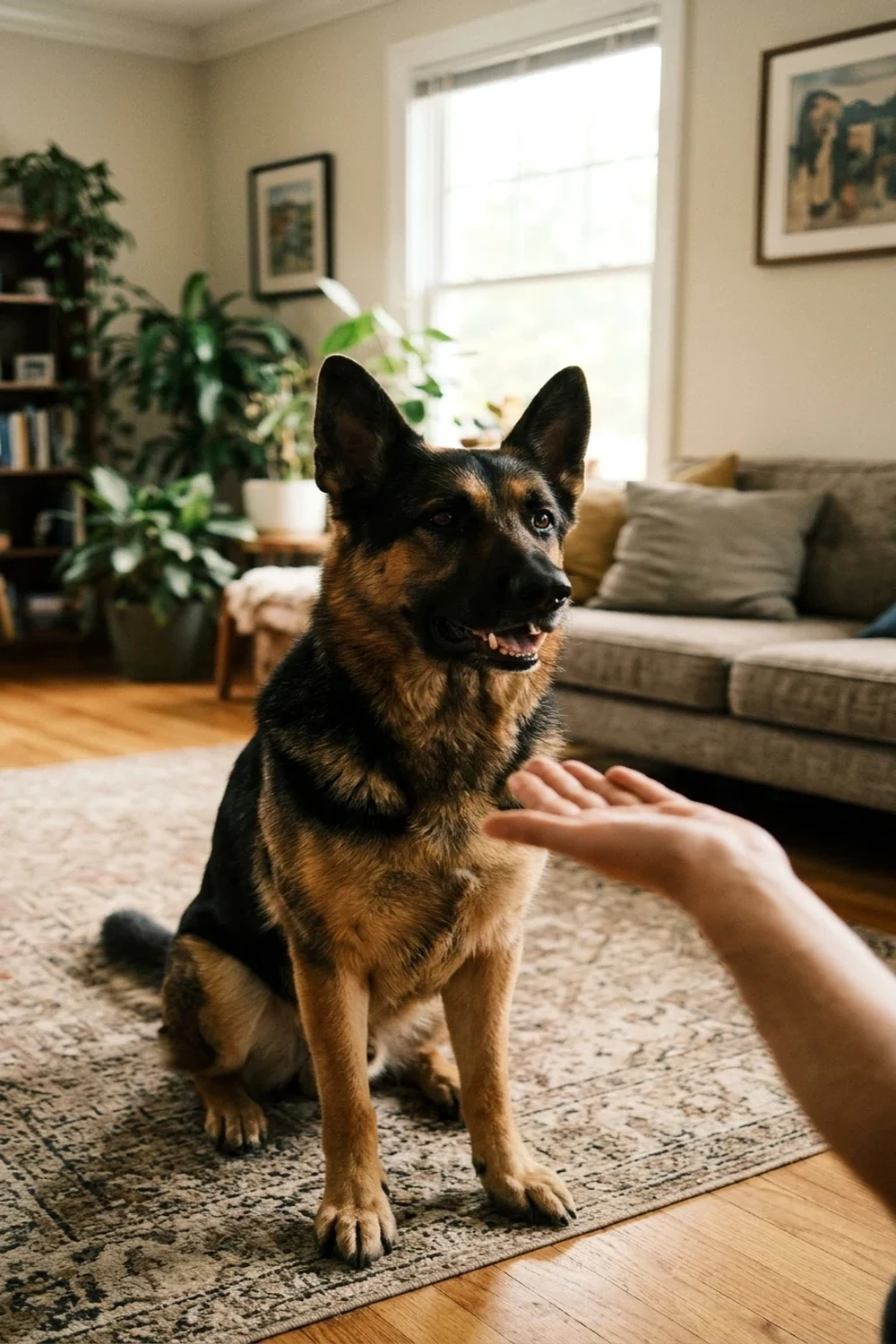
22. Hand Signals: Silent Communication Games to Boost Cognitive Flexibility
Hand signals are non-verbal visual cues that guide canine obedience through structured physical gestures rather than auditory voice prompts. Canines process visual body language faster than spoken language, making silent gestural training an exceptional exercise for developing canine working memory.
- Visual Cue Dominance: Dogs naturally prioritize optical movement over vocal commands, which reinforces canine cognitive flexibility and deepens handler focus.
- Gesture Pairing Protocol: Trainers should introduce the physical hand signal one full second before offering the familiar verbal cue to create clear associative learning.
- Auditory Cue Fading: Handlers must systematically drop vocal commands after two successful practice sets, relying solely on crisp, repeatable hand positions.
- Visual Contrast Maintenance: Use unmistakable body language gestures, such as an open palm for stay and an upward sweep for sit, to prevent canine confusion.
- Distance Progression Drills: Practicing silent commands from across a room forces dogs to maintain visual lock and mental concentration from afar.

23. Teach Your Dog to Read: Visual Word Discrimination Brain Games
Visual word discrimination is an advanced cognitive training exercise where a dog learns to match specific printed graphic cues on cards to physical motor actions. By leveraging a canine’s shape-recognition capabilities, this reading game tests memory retention and problem-solving at an advanced level.
- Graphic Pattern Recognition: Dogs identify bold visual shapes and letter silhouettes rather than phonetically reading letters, connecting printed ink designs to trained actions.
- Simultaneous Prompt Pairing: Trainers present a large white card featuring bold black lettering while delivering a verbal command and known hand gesture.
- Prompt Fading Strategy: Handlers gradually soften verbal and gesture cues over several daily repetitions, leaving only the printed flashcard as the operative trigger.
- Word Discrimination Testing: Presenting two distinct command cards simultaneously challenges the canine to select the correct cue and execute matching behavior.
- Errorless Learning Reinforcement: Keeping initial training cards visually distinct, such as contrasting Sit with Spin, prevents canine frustration and accelerates success.

24. DIY Treat Dispenser: How to Build an Interactive Dog Enrichment Toy
A DIY treat dispenser is a homemade puzzle feeder that releases dry kibble as your canine rolls or nudges the container across the floor. This budget-friendly brain game encourages active problem-solving, slows down fast eaters, and satisfies natural foraging instincts without requiring expensive specialty gear.
- Preparation: Clean a standard rigid plastic water bottle thoroughly, remove the plastic cap and wrapper completely, and discard the plastic safety ring.
- Hole Placement: Cut 3 to 4 circular holes around the midsection using utility shears, sizing each hole to roughly twice the diameter of your chosen kibble.
- Dispenser Filling: Place a half-cup measure of dry treats or crunchy kibble inside the bottle cavity, ensuring the food rattles freely when nudged.
- Initial Demonstration: Place the dispenser horizontally on a non-slip rug and gently nudge the bottle with your hand to reveal how rolling scatters food.
- Safety Protocol: Supervise play directly to prevent chewing, replacing the plastic bottle immediately if plastic edges crack or deform.

25. Treasure Hunt: Canine Scent Work Games for High-Drive Dogs
A treasure hunt is a canine scent work game where dogs use olfactory tracking to locate hidden rewards concealed throughout living spaces. Olfactory games engage your dog’s 300 million scent receptors, lowering resting pulse rates and relieving canine boredom through sustained mental effort.
- Command Staging: Place your dog in a stationary sit-stay command behind a closed door or baby gate before setting up the search perimeter.
- Trail Concealment: Hide 5 to 8 aromatic training treats beneath throw blankets, behind chair legs, or on low bookshelf ledges along baseboards.
- Release Cue: Open the entryway and issue a clear vocal search cue such as ‘find it’ while gesturing toward the general room perimeter.
- Variable Elevation: Increase problem-solving complexity over time by hiding items on sturdy footstools or inside slightly ajar cabinet doors.
- Jackpot Reward: Mark the final discovered treat with exuberant verbal praise and a bonus high-value reward to reinforce completion drive.