
Baby Registry Checklist 2026: Complete Essentials


Building a baby registry checklist for 2026 requires prioritizing multi-stage safety gear, certified nursery staples, and everyday care essentials while cutting unnecessary infant clutter. Pediatric-approved registries focus on foundational mobility, feeding, hygiene, and safe-sleep hardware to simplify newborn care. This curated guide outlines the exact gear parents need to prepare comfortably for their infant’s arrival.

Big Items for Baby Registry: High-Ticket Nursery and Gear Essentials
Big-ticket baby registry items represent the essential nursery furniture and high-utility transportation systems designed to keep infants safe throughout their first three years of life. Investing in durable, multi-stage gear early minimizes long-term replacement costs and ensures full compliance with federal safety benchmarks.
- Budget Allocation: High-ticket nursery essentials typically consume 60% to 70% of an overall baby registry budget due to rigorous structural engineering and multi-year longevity requirements.
- Group Gifting Strategy: Modern baby registries enable group funding features on major gear, allowing multiple contributors to chip in toward large-ticket nursery fixtures together.
- Safety Certification Standards: Every major gear piece must comply with current Juvenile Products Manufacturers Association (JPMA) and ASTM International certification standards.
- Multi-Stage Adaptability: Selecting convertible models guarantees modular gear transitions seamlessly from newborn care through active toddler stages without duplicate spending.

1. Stroller: How to Choose the Best Stroller for Your Everyday Lifestyle
A baby stroller is a wheeled mobility device engineered to transport infants safely across everyday neighborhood terrain, shopping venues, and family travel routes. Choosing the right configuration requires evaluating all-wheel suspension systems, one-handed folding mechanisms, and direct modular car seat attachment options.
- Travel System Compatibility: Modular travel systems allow an infant car seat to click directly into the stroller chassis without waking a sleeping newborn during vehicle transitions.
- Suspension and Wheel Engineering: All-wheel suspension systems equipped with polyurethane foam-filled tires absorb pavement vibrations and provide smooth handling on uneven sidewalks.
- Folding Mechanism Efficiency: One-hand gravity fold designs simplify vehicle trunk storage and public transit navigation while holding a baby securely in your arms.
- Storage Basket Capacity: Under-seat cargo baskets rated for at least 10 to 15 pounds comfortably accommodate heavy diaper bags, extra blankets, and daily grocery items.
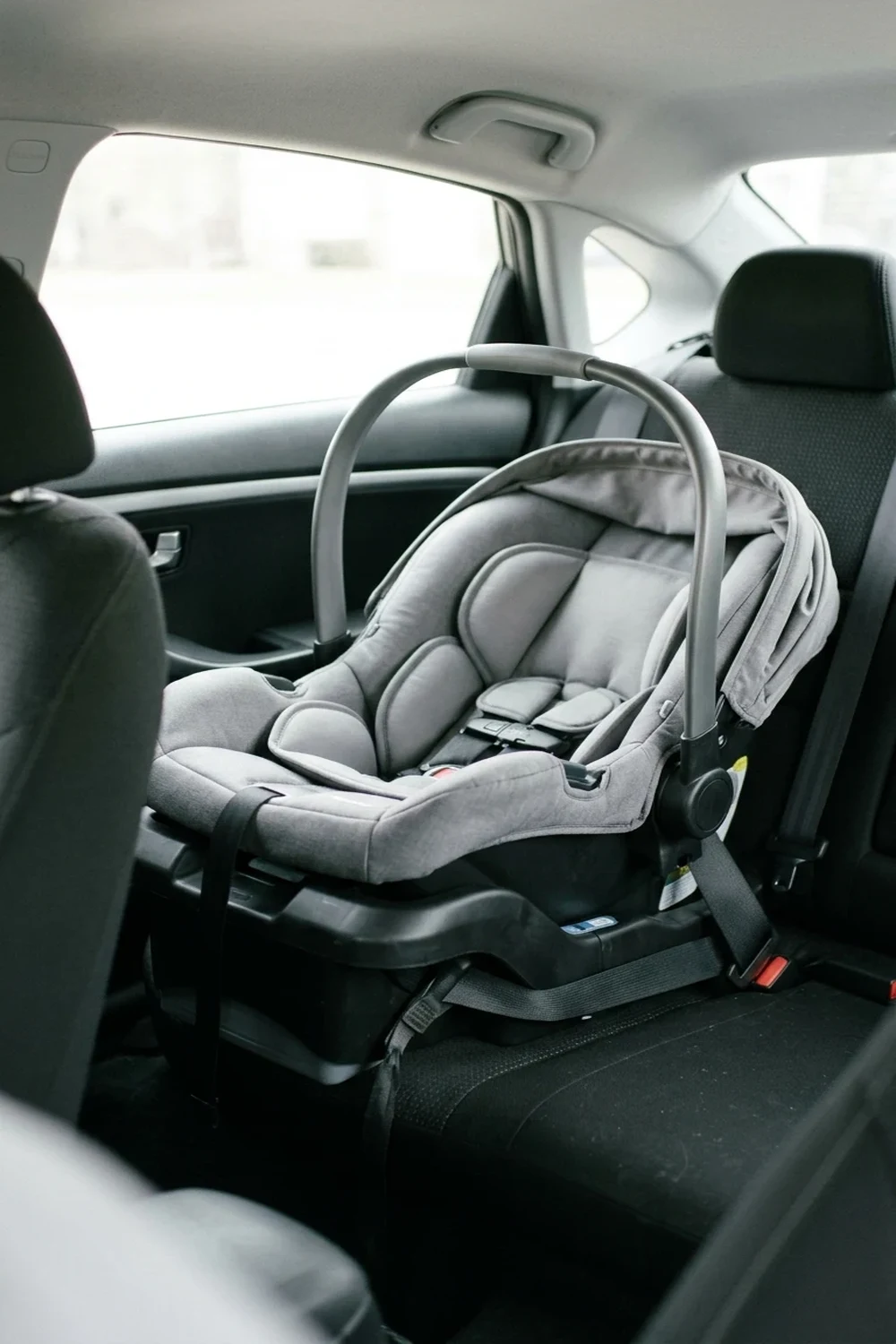
2. Car Seat: Infant Car Seat Safety Standards and Installation Essentials
An infant car seat is a rear-facing protective restraint system engineered to shield newborns during motor vehicle travel by absorbing impact forces through rigid side-impact energy management. Proper installation using either the vehicle seatbelt lockoff or LATCH anchors directly dictates real-world crash safety performance.
- Crash Safety Regulations: Infant car seats sold in the United States must comply with Federal Motor Vehicle Safety Standard 213 (FMVSS 213) to maximize side and frontal impact safety.
- Installation Verification Indicators: Modern car seat bases feature integrated bubble level indicators and tensioning lockoff clamps to prevent loose vehicle seatbelt fits.
- Growth Milestones and Expirations: Rear-facing infant carriers accommodate infants from 4 up to 35 pounds before transitioning to rear-facing convertible car seats.
- Fabric Breathability and Washability: Removable, flame-retardant-free machine-washable fabrics streamline sanitation after inevitable milk spit-ups and diaper blowouts on the road.

3. Crib: Safe Sleep Nursery Standards and Adjustable Convertible Cribs
A standard baby crib is a dedicated, rigid sleep station engineered to provide a firm, flat, and secure resting environment that meets American Academy of Pediatrics safe sleep standards. Multi-position mattress support rails adjust downward as infants achieve rolling, sitting, and standing developmental milestones.
- Slatted Enclosure Requirements: Federal safety standards mandate crib slat spacing remain under 2 3/8 inches apart to eliminate head entrapment and limb slippage hazards.
- Multi-Level Mattress Support: Adjustable height metal mattress support platforms lower as infants gain physical mobility to prevent unexpected toddler climbing falls.
- Convertible 4-in-1 Frameworks: Modular wooden crib frameworks convert effortlessly into toddler daybeds and full-size headboards to extend product utility across several years.
- Toxic Emission Certifications: Prioritizing Greenguard Gold Certified finishes prevents harmful volatile organic compound (VOC) emissions inside enclosed nursery spaces.

4. Bassinet: Safe Sleep Solution for the First Six Months
A bedside bassinet is a compact infant sleep space designed to keep your newborn safely within arms reach during the first four to six months of life. The American Academy of Pediatrics recommends room-sharing without bed-sharing for at least six months to reduce the risk of SIDS by up to 50 percent, making a dedicated bassinet the gold standard for newborn nighttime care.
- Room-Sharing Safety: Keeps your infant within immediate reach beside adult beds without the physical hazards of shared sleeping surfaces.
- Compact Footprint: Occupies roughly half the floor space of a standard crib, fitting comfortably in master bedrooms and tight spaces.
- Mesh Breathability: Breathable mesh sidewalls maximize continuous airflow while giving parents an unobstructed visual check on baby.
- Effortless Portability: Lightweight frames and locking swivel casters allow simple room-to-room transitions for daytime naps anywhere in the home.
- Transition Timeline: Newborns safely transition to a full-size crib once reaching 20 pounds or demonstrating rolling capabilities around month five.

Clothing for Baby Registry: Wardrobe Essentials by Season and Size
Curating newborn apparel on your baby registry requires selecting breathable, functional garments in mixed sizing to accommodate rapid developmental growth spurts. Newborns typically cycle through four to six outfit changes daily due to spit-up and diaper leaks, meaning parents should register for essentials spanning both Newborn (0-3M) and 3-6 month sizes rather than buying heavily in one bracket.
- Size Distribution Strategy: Register for 10 to 15 garments across 0-3M and 3-6M brackets instead of overstocking newborn items that baby outgrows in weeks.
- Fabric Breathability: Choose 100 percent organic cotton, bamboo viscose, or OEKO-TEX certified knits that safeguard delicate skin barriers against contact rashes.
- Two-Way Zipper Fasteners: Two-way zippers streamline midnight diaper adjustments without exposing baby chest to drafty nursery air.
- Easy Layering Basics: Keep four seasonal layers handy to regulate body temperature without adding loose, hazardous crib bedding.
- Wash and Wear Durability: High-tensile pre-shrunk cotton blends withstand recurring 60-degree machine sanitizing cycles without losing seam shape.
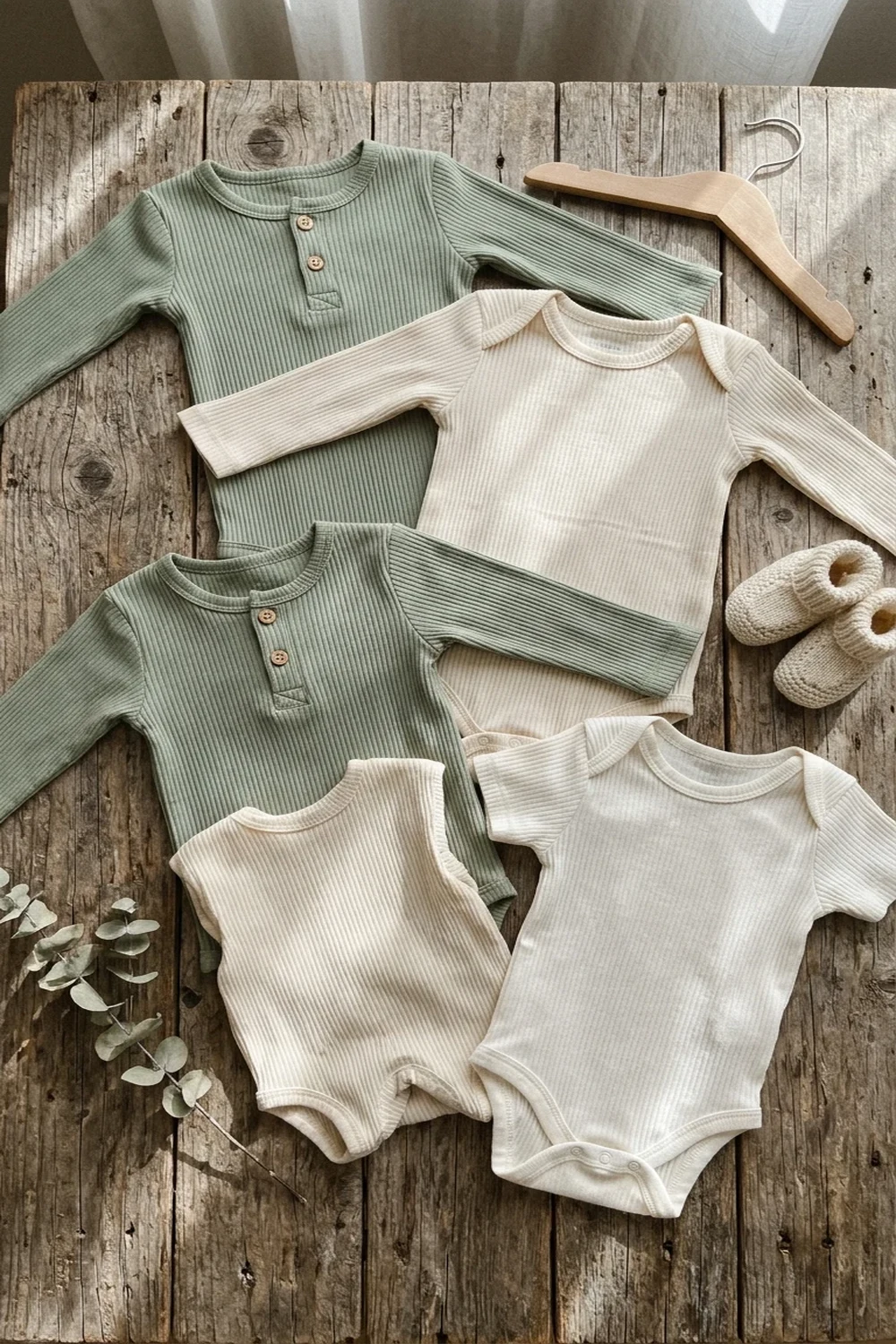
1. Onesies: Versatile Everyday Bodysuits for Effortless Diaper Changes
A baby onesie is a close-fitting infant bodysuit featuring bottom snap closures that anchor diapers securely while preventing bare skin exposure. Because infants wear bodysuits as primary base layers day and night, adding a bundle of 12 to 15 short-sleeve and long-sleeve onesies provides sufficient weekly buffer against daily spit-up incidents.
- Envelope Neckline Utility: Expandable shoulder lap-collars pull downwards over hips rather than upwards over the head during major diaper blowouts.
- Reinforced Nickel-Free Snaps: Triple bottom snaps hold heavy diapers securely without popping open during vigorous tummy time kicking.
- Tagless Interior Comfort: Screen-printed interior sizing labels eliminate neck abrasions and sensitive skin chafing.
- All-Season Layering Base: Acts as a gentle thermal barrier underneath wearable sleep bags, footies, and stroller bunting.
- Multipack Registry Value: Registering for neutral 5-pack sets delivers exceptional everyday utility while lowering cost per wear.

2. Outfit Sets: Coordinated Two-Piece Ensembles for Outings and Milestones
Coordinated baby outfit sets combine matching tops, bottoms, and accessories into pre-styled ensembles designed for pediatrician visits, family introductions, and social outings. Unlike basic sleepwear, these two-piece garment combinations offer structured presentation while retaining elastic waistbands and stretchy fibers that maintain complete infant abdominal comfort.
- Pre-Styled Visual Appeal: Coordinated prints and tailored cuts produce picture-ready outfits without the frustration of matching individual garments.
- Gentle Elastic Waistbands: Covered waistband elastics prevent belly compression and accommodate umbilical cord healing in early weeks.
- Mix-and-Match Versatility: Modular tops and bloomers pair seamlessly with basic onesies to double your infant total wardrobe combinations.
- Hypoallergenic Textile Blends: Premium combed cotton blends protect delicate thigh and waist creases against friction and moisture dermatitis.
- Thoughtful Registry Quantities: Register for three to four curated sets per size bracket to cover special gatherings and milestone photoshoots.

3. Baby Caps and Scratch Mittens: Essential Protection for Newborns
Newborn caps and scratch mittens are specialized infant accessories designed to regulate head temperature and protect fragile facial skin during the first three months of life. Newborn babies lose roughly twenty percent of their body heat through their heads, making breathable headwear a medical essential rather than purely aesthetic attire. In addition, involuntary neonatal startle reflexes cause unpredictable hand movements that frequently scratch sensitive cheek tissue unless shielded with soft hand covers.
- Thermal Regulation: Newborn beanies crafted from 100% certified organic cotton prevent rapid core temperature drops without trapping excessive moisture or heat.
- Skin Barrier Defense: Scratch mittens create a gentle protective barrier over sharp neonatal fingernails to prevent facial abrasions and micro-cuts.
- Gentle Elastic Cuffs: High-grade infant mittens feature wide knit wristbands rather than tight internal elastic that could constrict peripheral blood circulation.
- Optimal Registry Count: Most parents require four to six breathable cotton caps and four pairs of stay-on scratch mittens to handle frequent spit-up cycles.
- Breathable Fabric Selection: Hypoallergenic bamboo rayon and combed organic rib-knit fabrics offer maximum breathability and reduce the risk of contact dermatitis.

4. Infant Footwear and Booties: Keeping Little Feet Warm and Supported
Infant footwear consists of soft-soled booties, grippy stay-on socks, and flexible pre-walker shoes intended to insulate developing feet rather than restrict skeletal movement. Pediatric podiatrists emphasize that non-walking infants do not require rigid structural shoes because barefoot movement or flexible fabrics encourage natural arch and muscle development. Prioritizing fleece-lined booties with adjustable closures prevents the chronic issue of lost socks during daily stroller outings.
- Barefoot-Style Development: Soft fabric booties allow infant toes to splay and grip naturally, promoting proper neuromuscular growth and sensory tactile feedback.
- Secure Fastener Designs: Snap-closure booties or adjustable hook-and-loop heel wraps stay firmly anchored on active baby feet far better than traditional elastic socks.
- Stay-On Ankle Socks: High-density cotton socks with seamless toe closures eliminate friction blisters while keeping tiny toes comfortable in all seasons.
- Non-Slip Traction Soles: Grippy silicone tread patterns on footwear soles provide traction when infants begin cruising along furniture or pulling to stand around nine months.
- Registry Quantity Recommendation: Register for six to eight pairs of stay-on cotton socks and two pairs of adjustable fleece booties sized zero to six months.

Baby Care Items for Registry: Everyday Health and Hygiene Essentials
Baby care essentials comprise dedicated grooming tools, health diagnostics, and sanitization instruments configured specifically for the delicate anatomy of infants under age one. Setting up a dedicated health station before your due date ensures parents can respond calmly to nighttime fevers, nasal blockages, or routine grooming requirements. Selecting pediatric-tested hygiene tools guarantees safe skin-to-blade tolerances and minimizes infection risks throughout the infant stage.
- Infant-Specific Safety Standards: Purpose-built baby hygiene tools feature blunt probe tips, rounded clipper edges, and BPA-free silicone components that safeguard delicate anatomy.
- Centralized Health Caddy: Storing daily grooming and medical supplies in a portable divided caddy allows seamless transfers between the nursery changing table and the master bedroom.
- Pediatrician-Approved Diagnostic Tools: Equipping your home with an infrared temporal thermometer ensures accurate body temperature readings within two seconds during fussy nighttime episodes.
- Preventative Skin and Scalp Care: Soft goat-hair bristle brushes stimulate blood circulation across the scalp while gently dislodging common cradle cap flakes without irritation.
- Safe Clipping Ergonomics: Electric baby nail trimmers or specialized safety clippers with built-in LED lights eliminate the fear of accidental skin nips during manicure sessions.

1. Baby Nasal Aspirator: Clearing Congestion for Easy Breathing and Sleep
A baby nasal aspirator is a medical-grade suction device engineered to extract excess mucus from an infant’s nasal passages to restore unrestricted breathing and comfortable feeding. Because infants are obligate nasal breathers who cannot independently blow their noses until age two, clearing nasal congestion directly impacts their ability to nurse, latch onto bottles, and sleep through the night. Modern aspirators range from hospital-grade silicone suction bulbs to controlled parent-powered suction tubes and motorized electric units.
- Obligate Nasal Airway Support: Removing stubborn mucus with controlled suction clears congested upper airways so infants can feed and swallow comfortably without gasping for air.
- Parent-Powered Filtered Aspirators: Manual tube aspirators utilize disposable hygiene filters to stop bacterial and viral transfer while giving parents precise suction control.
- Battery-Operated Electric Models: Continuous gentle suction settings on electric aspirators extract thick secretions rapidly without requiring repetitive manual bulb squeezing.
- Saline Mist Integration: Administering two to three drops of sterile isotonic saline mist two minutes prior to suctioning loosens dried crusts for painless extraction.
- Hygienic Disassembly: Selecting dishwasher-safe aspirator chambers that detach completely prevents mold accumulation and cross-contamination between viral cold cycles.

2. Baby Grooming Kit Essentials for Newborn Care
A baby grooming kit is a curated set of personal hygiene tools engineered specifically to maintain infant health while safeguarding sensitive skin and fragile nails. Investing in a specialized kit prevents accidental cuts and simplifies daily infant maintenance routines.
- Ergonomic Safety Nail Clippers: Feature curved micro-blades and an integrated safety guard to safely trim soft, fast-growing baby nails and eliminate face scratching.
- Natural Soft-Bristle Scalp Brush: Uses 100 percent natural goat hair or hypoallergenic nylon bristles to stimulate blood flow and gently clear cradle cap without irritating sensitive fontanelles.
- Fine-Tooth Cradle Cap Comb: Gently detangles fine newborn hair and lifts dry scalp flakes using smooth, rounded plastic teeth designed to glide friction-free.
- Silicone Fingertip Toothbrush: Slips directly over an adult finger to gently cleanse milk residue from infant gums and emerging teeth while easing teething pain.
- Compact Travel Storage Case: Keeps all grooming instruments organized, sanitary, and readily accessible in diaper bags for quick on-the-go touchups.
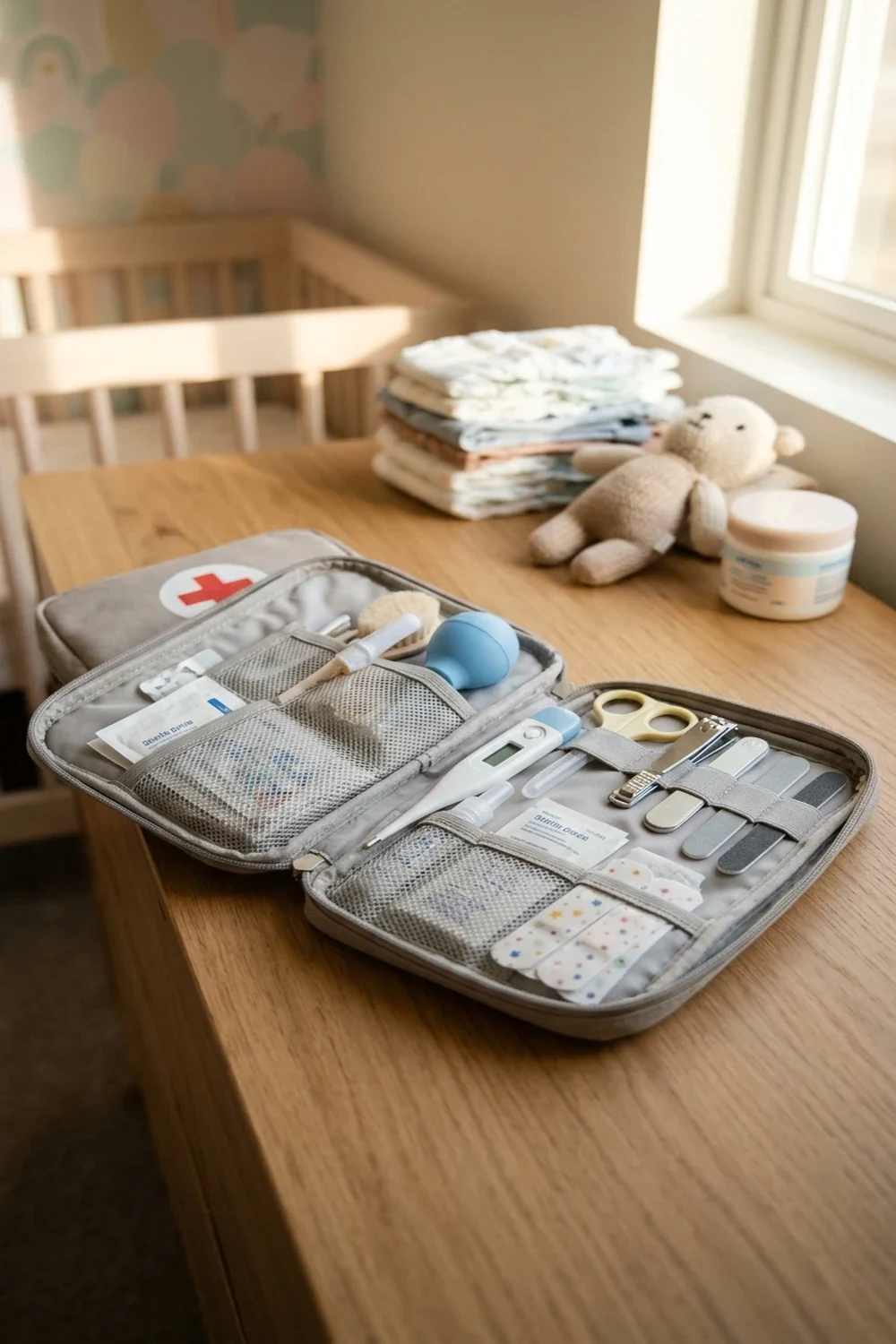
3. Infant First Aid Kit Must-Haves for Everyday Safety
A dedicated infant first aid kit is an essential medical station assembled to treat minor injuries, monitor fevers, and deliver pediatric medications safely at home. Pediatricians recommend setting up dedicated baby medicine essentials before bringing your newborn home.
- Infant Digital Rectal Thermometer: Provides clinically precise, rapid 10-second temperature readings, serving as the gold standard for detecting fevers in infants under three months.
- Liquid Infant Pain and Fever Reducer: Delivers pediatrician-approved, dye-free acetaminophen with calibrated oral dosing syringes to safely address unexpected fevers and teething distress.
- Sterile Saline Drops and Gauze Pads: Cleanses sensitive eyes and clears crusty nasal passages without stinging or introducing harsh chemicals to delicate tissues.
- Hypoallergenic Adhesive Bandages: Shields small cuts and scrapes with breathable, skin-safe adhesive strips designed for pain-free removal on tender infant skin.
- Pediatric Urgent Care Contact Card: Keeps poison control numbers, pediatrician contact details, and precise weight-based dosage charts visible inside the emergency kit case.

Feeding Items for Baby Registry: Top Essentials to Register For
Baby registry feeding essentials encompass supportive tools, nutritional hardware, and cleanup gear required to nourish infants efficiently through breast milk, formula, and solid stages. Selecting versatile feeding gear ensures smooth daily nutritional transitions from birth through year one.
- Ergonomic Nursing and Feeding Pillow: Wraps securely around caregiver waists to lift babies to optimal chest height, preventing back fatigue during long feeding sessions.
- Multi-Stage Anti-Colic Feeding Bottles: Utilizes specialized internal venting valves to minimize air intake, significantly reducing reflux, painful gas bubbles, and nighttime fussiness.
- Hospital-Grade Double Electric Breast Pump: Features adjustable suction rhythms and portable rechargeable battery packs to optimize milk expression efficiency for busy working parents.
- Silicone Bibs with Deep Food Catchers: Captures stray drips and messy meal drops with waterproof, food-grade silicone that rinses clean in seconds.
- Quick-Clean Steam Sterilizer and Dryer: Disinfects bottles, pump parts, and pacifiers in under 15 minutes, drying items completely to inhibit bacterial growth.

1. Absorbent Burp Cloths for Clean and Mess-Free Feedings
Burp cloths are ultra-absorbent fabric shields designed to protect adult clothing and clean up spit-up, reflux, and formula spills during and after feeding sessions. Stocking 12 to 18 high-quality cloths guarantees a clean layer is always within arm reach.
- Multi-Layer 100 Percent Muslin Cotton: Offers four to eight layers of breathable, highly absorbent woven cotton that grows noticeably softer with every machine wash cycle.
- Contoured Ergonomic Shoulder Shape: Drapes naturally over the caregiver shoulder without sliding off, catching spit-up drips across chest and back seams.
- Generous Oversized Surface Coverage: Measures approximately 20 by 10 inches, providing maximum spill defense against unpredictable newborn reflux.
- Fast-Drying Hypoallergenic Weave: Absorbs moisture instantly while drying quickly between washes to prevent persistent damp odors and skin chafing.
- Multi-Functional Nursery Utility: Doubles effectively as an impromptu changing pad barrier, highchair spill wiper, or portable pram shade during travel.

2. Baby Eating Utensils and Feeding Sets
Baby eating utensils are ergonomic self-feeding tools designed specifically for infants transitioning to solid foods around six months of age. Introducing durable silicone spoons and suction bowls early supports motor skill development while minimizing mealtime messes.
- Soft Silicone Spoons: Gentle silicone tipped spoons protect sensitive gums and prevent dental irritation during the teething phase.
- Suction Base Bowls: Sturdy suction plates and bowls adhere firmly to high chair trays to prevent accidental spills and table flips.
- Ergonomic Short Handles: Chunky, contoured handles allow tiny infant hands to develop an effective palmar grasp for independent eating.
- BPA-Free Food Grade Materials: Certified non-toxic, 100% food-grade silicone components ensure zero chemical leaching during hot meals.
- Dishwasher Safe Construction: Heat-resistant feeding utensils streamline daily sanitization in top-rack residential dishwashers.
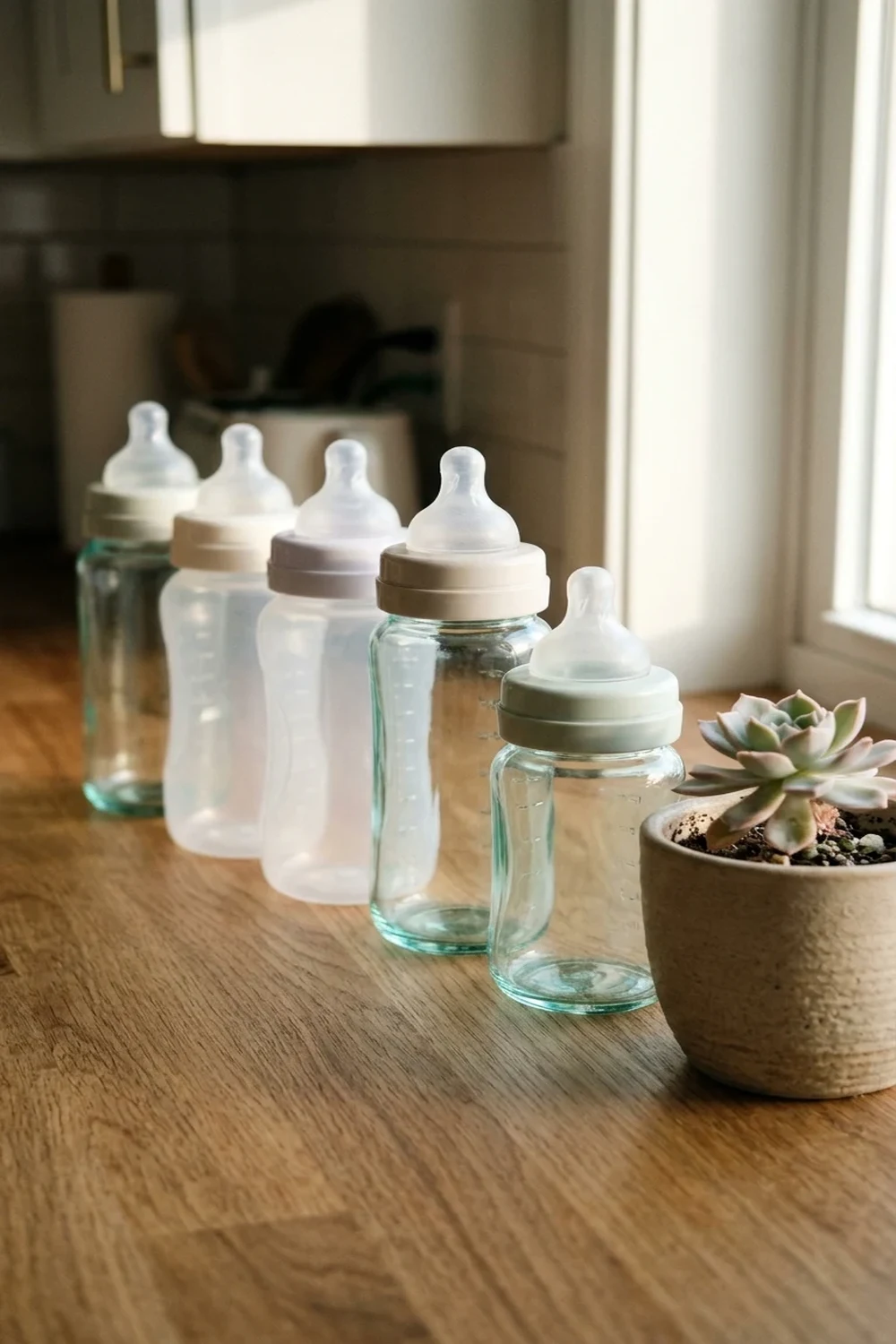
3. Anti-Colic Baby Bottles and Starter Sets
Baby bottles are specialized feeding vessels engineered to deliver breast milk or infant formula while regulating air ingestion to minimize colic and gas. Selecting a curated starter kit featuring varied nipple flow rates ensures smooth nutritional transitions throughout your infant’s first year.
- Ventilation Anti-Colic Valves: Integrated venting tubes actively channel air bubbles away from liquid contents to reduce painful tummy gas.
- Slow-Flow Newborn Nipples: Level-one silicone nipples mimic natural maternal milk letdown to prevent bottle preference or choking.
- Thermal Glass and Safe Polypropylene: Durable borosilicate glass or BPA-free polypropylene bottles withstand frequent steam sterilization cycles.
- Wide-Neck Bottle Architecture: Broad openings facilitate quick formula scooping without powder spills and allow effortless bottle brush cleaning.
- Multi-Stage Volume Sizing: Registering for four-ounce starter sizes alongside eight-ounce bottles accommodates growing appetites through twelve months.

4. Electric and Manual Breast Pump Options
A breast pump is a medical-grade extraction device that enables lactating mothers to express, store, and preserve breast milk efficiently. Utilizing a high-performance double electric or hands-free wearable pump preserves milk supply while giving parenting partners equal opportunities to share feedings.
- Hospital-Grade Double Electric Pumps: Dual collection motors offer customizable suction strength and expression cycles for optimal daily milk output.
- Hands-Free Wearable Pumping Cups: Discreet wireless pumps tuck directly into standard nursing bras to allow untethered pumping during work or travel.
- Two-Phase Milk Expression Technology: Automatic stimulation mode simulates an infant’s rapid sucking reflex before shifting into deep extraction draws.
- Closed System Hygiene Barriers: Protective backflow barriers prevent breast milk from entering tubing and motor units to stop mold formation.
- Quiet Motor Sound Dampening: Whisper-quiet decibel motors ensure peaceful nighttime pumping sessions without waking a sleeping newborn.

Diapering Items for Baby Registry: Diapers, Wipes, and Creams
Diapering items encompass the daily hygiene essentials required to manage an infant’s frequent diaper changes while safeguarding delicate newborn skin. Stocking a dedicated diaper changing station with versatile diaper sizes, water-based wipes, and barrier creams prevents painful diaper dermatitis from day one.
- Multi-Size Diaper Registry Packs: Registering for sizes Newborn through Size 2 prepares parents for rapid infant growth spurts without diaper waste.
- Hypoallergenic Unscented Wet Wipes: Pure 99% water wipes formulated without fragrances or alcohol protect delicate newborn skin barriers from allergic flare-ups.
- Zinc Oxide Barrier Ointments: Thick therapeutic creams containing 10% to 40% zinc oxide seal out wetness and soothe chafed skin on contact.
- Temperature Regulated Wipe Warmers: Gentle top-down heating units warm individual wipes to body temperature to prevent infant startle reflexes during midnight changes.
- Waterproof Changing Pad Liners: Washable plush covers with wipe-clean surfaces ensure rapid sanitization after unexpected diaper leaks.

1. Diapers (Multiple Sizes): How Many Diaper Sizes Should You Register For?
Registering for multiple diaper sizes ensures parents avoid midnight emergency store runs during rapid infant growth spurts. Newborn infants use approximately 8 to 12 diapers daily, meaning a single newborn consumes nearly 300 diapers in their first month alone. Because infants frequently outgrow newborn sizes within two to four weeks, building a strategic inventory across sizes N, 1, and 2 guarantees continuous leak protection without overstocking unusable units.
- Newborn Size Strategy: Register for only one or two economy packs of newborn diapers because many babies weigh over eight pounds at birth and outgrow this size within three weeks.
- Size 1 and 2 Cushion: Request two to three large bulk boxes of Size 1 (8 to 14 pounds) and Size 2 (12 to 18 pounds), which represent the longest-lasting early growth windows.
- Wetness Indicator Requirement: Select diaper brands featuring color-changing wetness strips and umbilical cord cutouts to protect healing infant belly buttons from chafing.
- Leak-Lock Elastic Bands: Choose hypoallergenic options equipped with dual leak-guard barriers and breathable outer liners to minimize dermatitis flare-ups.
- Exchange Policy Verification: Verify that chosen retail registries allow unopened box exchanges for larger diaper sizes without requiring store receipts.

2. Baby Wipes: Choosing Gentle Hypoallergenic Wipes for Sensitive Skin
Registering for fragrance-free, water-based baby wipes protects delicate newborn skin barriers from moisture imbalance and chemical contact dermatitis. Caregivers average 20 to 30 wipe sheets per day for diaper cleanups, surface sanitization, and mealtime spills, totaling over 700 wipes monthly. Dermatologist-approved formulations containing 99% purified water and plant-based fibers minimize irritation while providing heavy-duty tensile strength for messy blowouts.
- Water-First Formulations: Prioritize wipes composed of 99% purified water and soothing organic fruit extracts to prevent contact dermatitis on fresh skin.
- Zero Harsh Chemicals: Exclude brands that contain parabens, alcohol, phthalates, synthetic perfumes, or phenoxyethanol from your primary baby registry list.
- Textured Thickness Rating: Select embossed, high-gsm (grams per square meter) plant-based cloth wipes that resist tearing during demanding cleanups.
- Flip-Top Lid Packs: Choose dispense-ready hard plastic flip lids rather than resealable peel stickers to preserve essential inner moisture levels.
- Bulk Multi-Pack Allocation: Add at least one 12-pack bulk carton to your registry to maintain supplies across your nursery changing station and diaper bag.

3. Wipe Warmer: Is a Heated Baby Wipe Dispenser Necessary for Newborns?
A wipe warmer prevents infant temperature shock during nighttime changes by heating disposable wipes to a soothing, body-temperature warmth of 100 to 105 degrees Fahrenheit. Cold wipes often startle resting newborns awake, elevating infant cortisol levels and disrupting established sleep cycles. Modern wipe warmers utilize top-down heating systems that warm top sheets instantly while sealing the main reservoir to prevent moisture loss and brown discoloration.
- Top-Down Heating Elements: Select models featuring top-down thermal lids so only the immediate top wipes stay heated while lower stacks remain fresh and moist.
- Integrated Nightlight Feature: Opt for units with dim LED nightlights that illuminate the changing pad without disturbing the baby with bright nursery lights.
- Anti-Microbial Silicone Seals: Verify the unit contains silicone gasket seals and antimicrobial basin walls to stop mold spores and bacterial proliferation.
- Continuous Moisture Traps: Choose transparent viewing windows so caregivers can monitor internal water levels without breaking the thermal seal.
- Universal Wipe Compatibility: Ensure the warmer chamber accommodates popular standard bulk flip-top and pop-up wipe packaging without jam issues.

4. Diaper Rash Ointment: Best Barrier Creams to Prevent Skin Irritation
Applying zinc oxide barrier ointment during every diaper change creates a hydrophobic shield that defends delicate perineal skin against acidic stool enzymes and trapped moisture. Pediatric dermatologists emphasize that persistent moisture exposure breaks down stratum corneum lipids within hours, resulting in painful diaper dermatitis. Incorporating both a daily petroleum-based preventative balm and a thick, therapeutic 40% zinc oxide paste guarantees comprehensive rash defense.
- High Zinc Oxide Concentrations: Register for a maximum-strength paste containing 40% zinc oxide to immediately soothe active inflammation and raw flare-ups.
- Daily Preventative Balms: Include petroleum- or beeswax-based barrier ointments enriched with calendula and vitamin E for regular, routine skin hydration.
- Fragrance-Free Purity: Select hypoallergenic, National Eczema Association-accepted pastes free from synthetic dyes, mineral oils, and strong perfumes.
- Easy-Spread Viscosity: Choose creamy, spreadable textures that glide effortlessly over tender skin without requiring painful rubbing friction.
- Hygienic Squeeze Tubes: Pick squeeze tubes or pump bottles over wide open-mouth jars to eliminate bacterial contamination from diaper changing hands.

Essential Bathing Items for Baby Registry: Safe Bath Time Setup
Setting up essential bathing items for baby registry checklists ensures every infant bath remains safe, soothing, and dermatologically secure from birth through the first year. According to pediatric dermatology standards, newborns only require baths 2 to 3 times per week to prevent excessive moisture loss and preserve the delicate neonatal skin barrier. Equipping your nursery with dedicated bathing supplies streamlines the transition from post-cord-detachment sponge bathing to supportive tub routines.
- Ergonomic Support: Select an infant bathtub equipped with a contoured newborn mesh sling and non-slip rubber grips to keep wet infants safely positioned.
- Temperature Monitoring: Utilize a digital bath thermometer with alert sensors to maintain water temperatures strictly between 98°F and 100°F (36.7°C to 37.8°C).
- Skin Barrier Protection: Stock designated hypoallergenic washcloths and hooded towels separate from household laundry to avoid contact with harsh residual detergents.
- Registry Quantity Formula: Register for 1 infant tub, 8 to 12 dedicated washcloths, 3 to 4 hooded towels, and 2 bottles of pediatric wash for adequate rotation.

1. Baby Washcloths: How Many Do You Need on Your Registry?
Baby washcloths are specialized, ultra-soft textile squares designed to clean fragile newborn skin, sensitive neck folds, and cradle-cap-prone scalps without abrasive friction. Standard adult terrycloth towels feature dense, coarse loops that cause micro-abrasions on immature skin surfaces. Adding 8 to 12 dedicated organic baby washcloths to your registry guarantees clean supplies for daily spit-up cleanups, gentle mealtime wipes, and scheduled bath sessions.
- Optimal Material Choice: Select multi-layer bamboo rayon or GOTS-certified organic cotton muslin for superior absorbency and quick-drying anti-mildew qualities.
- Recommended Registry Count: Register for 8 to 12 washcloths to cover 2 to 3 daily face wipes, diaper-area touchups, and bi-weekly baths without running daily laundry.
- Sensitive Zone Care: Use separate single-use warm damp corners across each facial eye quadrant from inner to outer canthus to reduce cross-contamination risks.
- Maintenance Protocol: Launder baby cloths in fragrance-free, enzyme-free detergent and dry on low heat to preserve cellular fiber softness over repetitive washing.

2. Hooded Baby Towels: Best Materials for Newborn Warmth
Hooded baby towels are purpose-built infant bath sheets featuring an integrated corner pocket that envelopes the head to prevent post-bath hypothermia. Newborn infants lose body heat four times faster than adults, primarily through exposed wet scalps immediately after emerging from warm water. Equipping your nursery with 3 to 4 high-absorbency hooded towels prevents temperature drops while gently drying delicate skin without excessive rubbing.
- Thermoregulation Support: The integrated fabric head hood traps cranial warmth directly upon tub exit, stabilizing neonatal core body temperatures efficiently.
- Recommended GSM Weight: Look for towels rated between 450 and 550 GSM (grams per square meter) to balance thick absorbency with rapid air-drying capability.
- Generous Sizing: Choose 30×30 inch to 35×35 inch square dimensions to ensure coverage accommodates infant growth from newborn up to 18 months.
- Sensory Fabric Safety: Prioritize plush organic cotton terry backing paired with smooth muslin outer layers to eliminate rough seams and synthetic dyes.

3. Tear-Free Baby Shampoo and Soap: Gentle Skincare Essentials
Baby shampoo and soap formulas are mild, low-surfactant pediatric cleansers calibrated to match the natural pH balance (5.5) of infant skin while protecting the developing ocular surface. Standard household soaps contain alkaline detergent bases that strip protective epidermal sebum lipids, triggering contact dermatitis and cradle cap flare-ups. Choosing pediatrician-tested 2-in-1 foaming body washes simplifies bathtime routines and prevents accidental eye stinging.
- pH-Balanced Formulation: Select syndet (synthetic detergent) cleansers with a skin-neutral pH range of 5.5 to 6.0 to preserve natural cutaneous acid mantles.
- True Tear-Free Surfactants: Choose formulas utilizing amphoteric cleansers like cocamidopropyl betaine rather than harsh sodium lauryl sulfates (SLS) to protect ocular tissue.
- Exclusion Criteria: Avoid all products containing added synthetic parfum, parabens, phthalates, artificial dyes, and essential oils that provoke neonatal allergic responses.
- All-in-One Efficiency: Choose pump-dispenser 2-in-1 hair and body cleansers to allow one-handed single-pump operation while maintaining secure infant support.
Key Takeaways & Final Thoughts
- Prioritize Safety and Longevity: Invest in certified convertible car seats, adjustable cribs, and modular travel systems that adapt as infants advance through developmental milestones.
- Focus on High-Frequency Essentials: Stock ample multi-size diapering kits, soft cotton onesies, anti-colic feeding bottles, and reliable health monitoring tools over temporary novelty gadgets.
- Keep Gear Practical and Streamlined: Selecting durable, multi-functional nursery gear reduces household clutter while ensuring parents are fully prepared for newborn recovery and daily infant care.